
Reviewed · ANGKOR TEMPLE TOURS
Two Day Angkor Temples Tours
Angkor in two days, without the stress. This private, two-day Angkor temples tour in Siem Reap strings together the main highlights with a route your guide can flex based on your interests. You get pickup and an air-conditioned vehicle, so you spend more time walking through carvings and less time melting in traffic.
I particularly liked how the stops stay art-first, not checklist-only. Banteay Srei is treated like the centerpiece it is, with its pinkish stone and Lord Shiva theme, and the day also includes quieter, more atmospheric ruins like Preah Khan. I also like the way guides connect the dots between Hindu and Buddhist traditions, and help with practical details like photo spots and photography tips, with guides named Borey Hang, Mr Kim, and Mr Bunleat showing up repeatedly in past experiences.
One consideration: temple admission tickets are not included, so you’ll want to budget for that separately. Also, the route is meant for people with moderate fitness, since you’ll be walking through uneven ground and temple steps.
Key things to know before you go
- Private group, flexible pacing: your guide can adjust the order and time if your family is lingering longer at a favorite temple.
- Air-conditioned transport plus cold water: car comfort matters in Siem Reap heat, and guides have provided endless cold water.
- A balanced route: Day 1 leans into smaller, art-heavy sites, while Day 2 hits the big classics.
- Hindu and Buddhist context: you’ll get explanations that make mixed symbols easier to read on the stone.
- Photo-minded guidance: you’re not just shown where to stand, you’re coached toward better angles.
- Comfortable timing on most stops: many stops are about 30 to 60 minutes, so you avoid full-day temple fatigue.
More temple circuits, set side by side
- Angkor Wat Sunrise or Sunset Tour with Guide from Siem Reap★ 5.0 · 12,109 reviews
- Siem Reap: Angkor Wat: Small-Group Sunrise or Sunset Tour★ 5.0 · 9,444 reviews
- Siem Reap: Angkor Wat 2-Day Tour with Sunrise and Sunset★ 4.9 · 4,429 reviews
- Siem Reap: Full-Day Angkor Wat Guided Tour with Sunset★ 4.9 · 3,803 reviews
Price and logistics: what $102.57 really buys you
At $102.57 per person, this is priced for a straightforward two-day Angkor run where the value is in the guide and the smooth ride between sites. The big “yes” here is that the tour includes an air-conditioned vehicle and pickup, which is not a small thing at Angkor. Heat and transfer time can quietly wreck your energy.
What’s not included is equally important. Temple admission tickets are not included on the listed stops, and you’ll also see GST listed as not included. That means the final amount you spend will be higher than the base tour price once you add entrance fees.
The tour is also described as a private activity, meaning only your group participates. That helps if you have kids, prefer a slower pace, or want your guide to answer questions without feeling like you’re competing for attention.
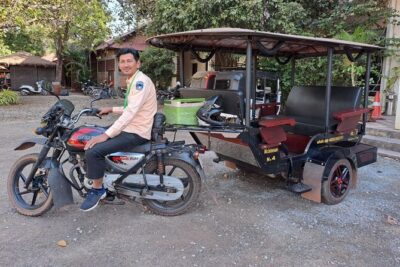
For meeting, the ticket redemption point is Angkor Enterprise on Apsara Rd in Siem Reap. If you’re arriving by tuk-tuk or Grab-style rides, plan extra time to find the exact spot and get your group together.
Your guide is the difference maker at Angkor
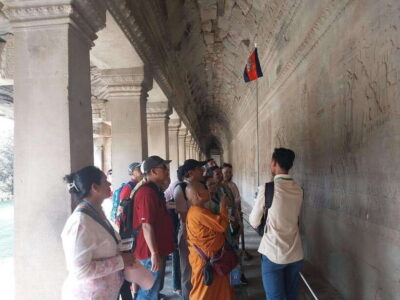
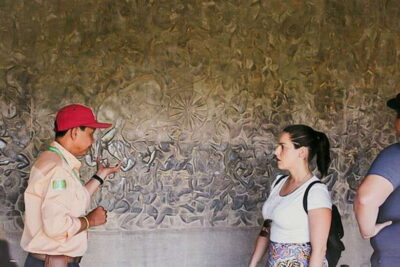
Angkor can feel like a stone museum with no labels, unless you have someone who can translate what you’re seeing. The standout theme from past experiences is how guides explain both temple history and cultural context, especially how Hindu and Buddhist layers show up in different carvings and layouts.
You’ll hear names like Borey Hang, Mr Kim, and Mr Bunleat in the feedback. Across those experiences, the pattern is consistent: guides are described as friendly, responsive, and very focused on giving you the story behind the monuments, not just where to walk next.
Even better, the guidance isn’t only academic. There’s a practical photography angle too. One recurring detail is that guides help people find strong photo spots and offer photography tips, including for iPhone photography. If you’ve ever taken photos at Angkor that look fine on your screen but lack the “wow” you expected, this kind of coaching can turn your results into something you’ll actually like later.
Finally, there’s a flexibility factor. One past experience notes that when a family enjoyed Ta Prohm a lot on Day 1, the guide suggested a pivot for the schedule. That’s the kind of small service upgrade that makes a short trip feel customized.
Day 1 route: art-heavy Angkor temples with breathing room
Day 1 is built like a slow reveal. You start with high-impact carvings and distinctive temple styles, then work your way toward smaller sites that reward quick, close looking.
Plan for a full day on the ground, but note that most stops are around 30 to 60 minutes. That’s a good structure for first-timers because you avoid the trap of spending the entire day at one complex and rushing the rest.
Banteay Srei: the “jewel” with pinkish stone
Banteay Srei is often singled out because it’s considered the jewel in the crown of Angkorian art. The temple is dedicated to Lord Shiva and was built in the 10th century, and the stonework is famous for its pinkish hue.
Why I like it for a first day: it’s detailed. If you like to look closely, this is a place where you can slow down without feeling lost. The drawback is that because it’s detail-heavy, you may want more than an hour if you’re the type who stops to read every surface.
More time at the temples, spread over days

Banteay Samre: Vishnu devotion and strong preservation
Next is Banteay Samre, dating from the same broad period as Angkor Wat. It was built by Suryavarman II in the 12th century and dedicated to Lord Vishnu. It’s described as fairly healthy in preservation, which matters because you get to see forms clearly rather than relying on imagination.
This stop works well after Banteay Srei because you’re still in that “temple craft” mindset. The tradeoff is that if you’re only interested in the biggest names, you may need your guide’s explanations to keep your attention locked in.
Preah Khan: a large maze with fewer crowds
Preah Khan is one of the largest complexes at Angkor. Expect maze-like vaulted corridors, fine carvings, and lichen-clad stonework. It’s also noted as seeing slightly fewer visitors than Ta Prohm, which can make a real difference in how easy it is to enjoy the space.
In practice, you’ll likely feel this stop as a slower wander, because complex layouts naturally force you to turn and re-orient. If your group likes exploring, it’s a great fit. If you’re short on time or easily overwhelmed by branching corridors, you’ll appreciate having a guide keep you moving in the right direction.
Neak Pean: a small Buddhist island temple
Neak Pean is described as a petite perfect temple built by Jayavarman VII. It sits on an artificial island in the middle of the manmade lake Jayatataka, also called the north Baray.
This is the kind of stop where you get a contrast. After dense carvings and corridors, you get a more contained, scenic moment. The practical drawback is that because it’s shorter (around 40 minutes), you’ll want to be sure you don’t rush it. Let your guide point out the symbolism so you don’t just take photos and leave.
Ta Som: quick satellite temple, big head at the gate
Ta Som is a satellite temple of Preah Khan, built by Jayavarman VII in the late 12th century. It’s noted as very small, but still worth a stop for a quick look, including the big head at the eastern gate.
In a two-day plan, this kind of stop is valuable. It gives you variety without eating your whole day. The only downside is exactly what the name suggests: you can miss the best parts if you don’t slow down for a few minutes.
Eastern Mebon: a temple that shifted from islet to dry land
Eastern Mebon is a Hindu temple erected by Rajendravarman II, and it would have been on an islet in the center of the Eastern Baray. Today, it’s described as much more on dry land.
This stop is a good moment to talk with your guide about how landscapes change over time. Even if you’re not a geology person, it helps explain why Angkor’s “water temple” feel can vary depending on season and today’s conditions. Because it’s around 50 minutes, you can absorb the setting without feeling rushed.
Pre Rup: pyramid-mountain views and 10th-century design
Pre Rup is built by Rajendravarman II in the 10th century and is shaped like a pyramid-style temple-mountain. The description highlights that it has three tiers, with the uppermost tier being a key visual feature.
This is an ending note for Day 1 because the form gives you a chance to look out and reset your eyes. The practical consideration: temple-mountain steps and uneven surfaces can add up. If your group has mobility concerns, tell your guide early so they can adjust how you move.
Day 2: Angkor Wat first, then the big city zones
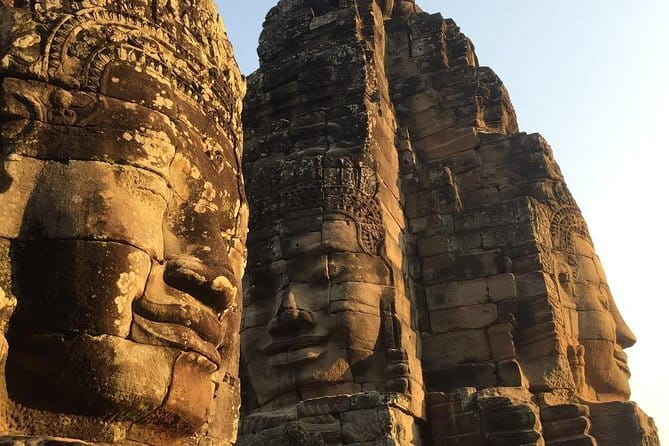
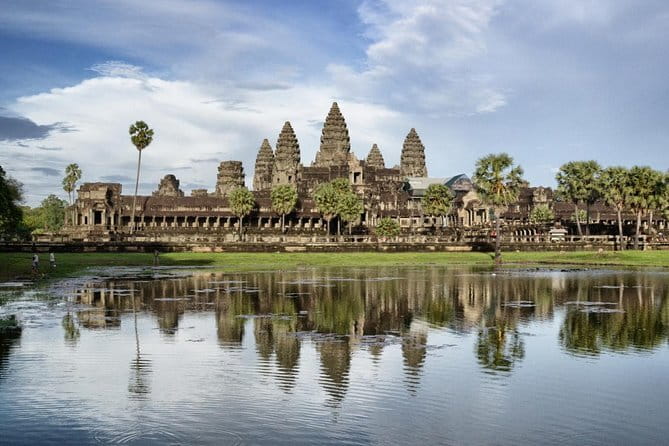
Day 2 is where most people’s highlight anxiety fades and turns into pure awe. You start at Angkor Wat and then move through the Angkor Thom area and Ta Prohm.
It’s also structured with a mix of longer and shorter stops. Angkor Wat is listed at about 2 hours. Angkor Thom is about 2 hours too. Ta Prohm gets about 1 hour. Some other spots are brief, so you still end the day feeling like you saw a lot, not like you burned all your time.
Angkor Wat: biggest monument, Vishnu dedication
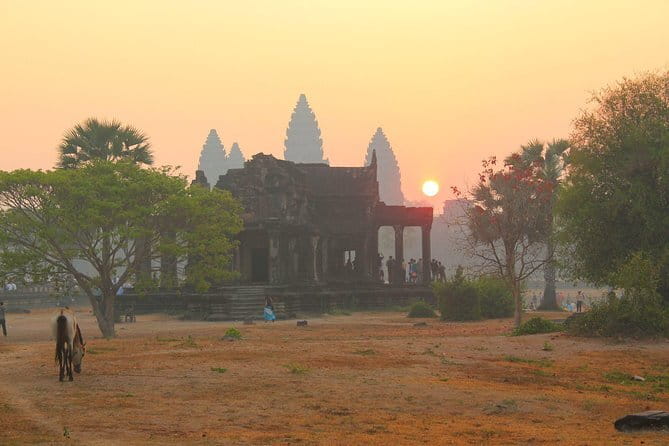
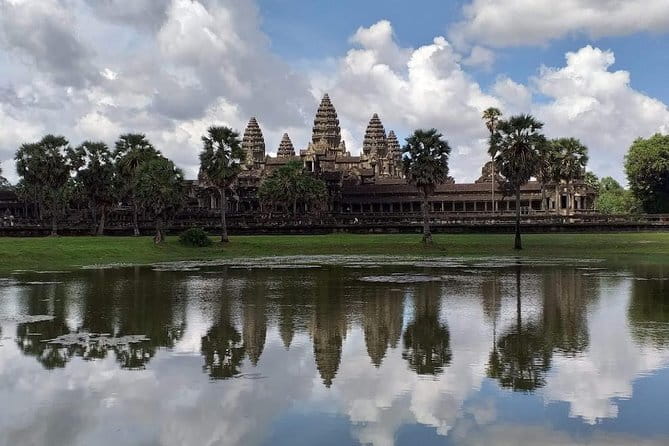
Angkor Wat was built by Suryavarman II in the 12th century to honor Lord Vishnu. It’s described as the largest and the most breathtaking of Angkor’s monuments.
What makes it work in a guided two-day plan: you’re not only looking at scale, you’re learning what that scale is trying to say. With the Hindu context explained clearly, the carvings and structure feel less random.
The only real drawback is logistics, not the temple. This is a main attraction, so you’ll want your guide’s advice for pacing so you’re not stuck waiting or moving in the crowd all day.
Phnom Bakheng: a quick look at an early temple-mountain
Phnom Bakheng is built by Yasovarman I in the early 10th century. It’s described as the first temple-mountain built in the vicinity of Angkor, with five tiers and multiple levels noted in the description.
The stop duration is listed as extremely short, about 1 minute. So think of it like a quick orientation stop rather than a deep, slow exploration. If you want longer here, you can ask your guide, but the tour schedule clearly treats it as a brief add-on.
Angkor Thom: last city of Angkor around the Bayon
Angkor Thom, meaning great city, is described as the last city of Angkor, built by Jayavarman VII. The description claims that at its height it may have supported a population of one million people in the surrounding region, and that it’s centered on the Bayon.
This stop tends to feel like a lot because you’re moving through a city-scale layout. That’s where your guide helps again, translating how an urban plan becomes a symbolic space. If you’re short on patience for big complexes, agree on a simple plan with your guide early, like what you want to prioritize.
Ta Prohm: trees swallowing the ruins
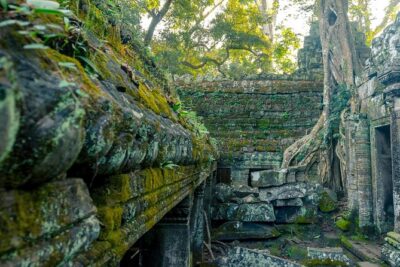
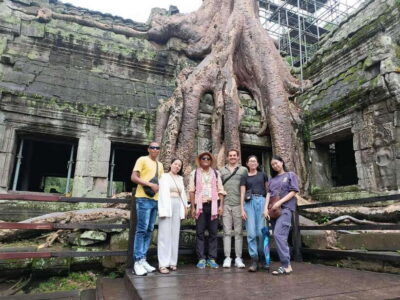
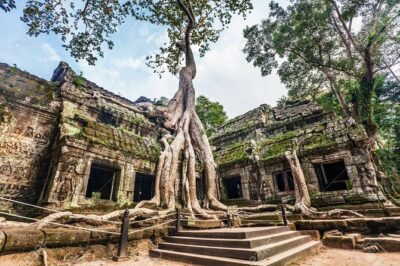
Ta Prohm is described as the most atmospheric ruin at Angkor and should be high on your list. It’s famous for being swallowed by trees, creating that immediate “how is this real” vibe.
In a two-day schedule, Ta Prohm is the payoff. The 1-hour slot is enough for photos and for the sense of place, as long as you don’t spend that time only looking down at your camera. Bring your guide’s story into the scene and you’ll get more out of it than just images.
What makes this tour feel worth it: pacing, comfort, and story
Here’s where this two-day tour earns its rating. It’s not only about seeing famous temples. It’s the combination of comfort and meaning.
First, the air-conditioned vehicle helps you keep your focus. Angkor days can feel endless because you’re constantly moving, and the heat makes even short distances feel longer. When the ride is comfortable, you arrive calmer and can actually enjoy what you see next.
Second, the tour is built with stop lengths that keep your attention from running out. Day 1 has more shorter, varied sites. Day 2 has the longer anchors. That structure is good for first-timers and for groups with mixed ages.
Third, the best-rated experiences stress that guides add depth by explaining the religious and cultural contexts of Hinduism and Buddhism. That matters because Angkor’s “same shape, different meaning” theme is all over the place. With the context explained, carvings stop being decorative and start being readable.
Finally, there’s a people factor. Past feedback includes notes about guides being honest, reliable, flexible, and responsive to what visitors want. If you’re the kind of person who asks questions, you’ll probably appreciate that.
Practical tips for your own day plan (based on how this runs)
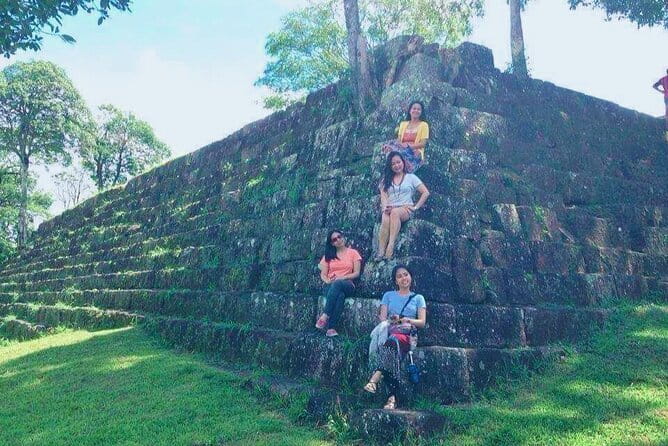
You’ll get the most from this tour if you treat it like a guided museum day outside, not like a photo sprint.
- Go in expecting uneven surfaces. Temple floors and steps can be rough. The tour is for moderate fitness, so plan for walking time and small climbs.
- Wear shoes you can trust. You’ll be on stone and dirt, not mall flooring.
- Use the guide for faster orientation. Because complex layouts can confuse you, ask where to start and where to pause for photos.
- Hydrate, even if you feel fine. One guide note includes endless cold water, which is a big help when you’re out all day.
- Let the guide set the pace. With flexibility, you can slow down at the temples that grab you, but if you push too fast, you’ll miss the story.
Who should book this two-day Angkor tour
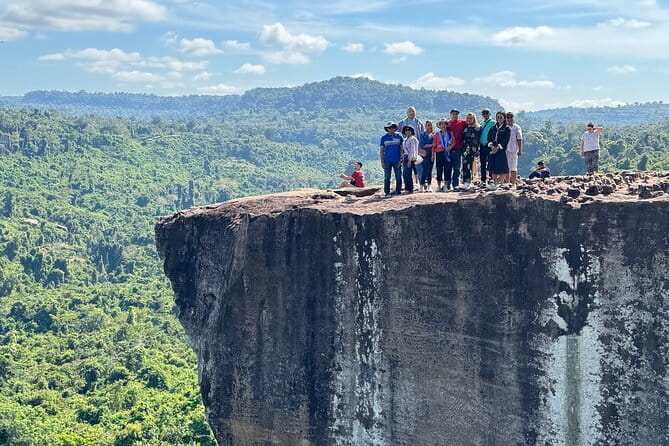
This tour is a strong fit if you want:
- A private, guided Angkor experience in a short window
- A route that mixes major names with smaller sites that still have real art and symbolism
- A guide who can connect what you see to Hindu and Buddhist context
- Help with photography spots, including tips geared toward iPhone users
It may be less ideal if you want to fully self-navigate every moment, or if you only care about one or two temples. In that case, you might spend less on a simpler plan and allocate your time elsewhere.
Also, if your group wants minimal walking, be honest with your guide about your limits early. The tour mentions moderate fitness, so manage expectations and plan on slower movement if needed.
Should you book this two-day Angkor Temples tour?
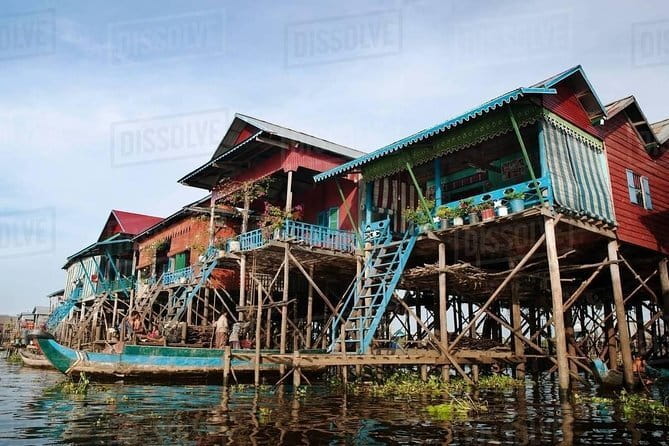
If you want Angkor in two days without turning your trip into logistics math, I’d say this is a solid booking. The biggest reasons are practical: pickup and an air-conditioned ride keep you functional, and the guide layer adds meaning that makes the stones feel alive. The route also balances big icons like Angkor Wat and Ta Prohm with high-art stops like Banteay Srei, so you don’t just see what everyone else posts.
Before you book, do two quick checks:
- Confirm you’re ready to pay temple admission separately since it’s not included.
- Decide whether your group is comfortable with moderate walking and temple steps, since that’s the pace this plan assumes.
If those two boxes are true, you’ll likely come away with photos you like, stories you remember, and a calmer sense of how Angkor fits together.
FAQ
How long is the two-day Angkor temples tour?
The experience runs for 2 days, with each day built around multiple temple stops.
What’s included in the tour price?
The tour includes an air-conditioned vehicle. Admission tickets are not included.
Are pickup and transportation included?
Pickup is offered, and you travel by an air-conditioned vehicle.
Where do I meet the tour?
The ticket redemption point is Angkor Enterprise, Apsara Rd, Krong Siem Reap, Cambodia.
Are temple admission tickets included?
No. Admission tickets are listed as not included for the temple stops.
What is the price and what’s excluded?
The price is $102.57 per person. GST (Goods and Services Tax) is not included.
Is this tour private?
Yes. It’s a private tour/activity, and only your group will participate.
What’s the cancellation and weather rule?
You can cancel up to 24 hours in advance for a full refund. If the experience is canceled due to poor weather, you’ll be offered a different date or a full refund.
More Tour Reviews in Siem Reap
- Angkor Wat Sunrise or Sunset Tour with Guide from Siem Reap
★ 5.0 · 12,109 reviews - Siem Reap: Angkor Wat: Small-Group Sunrise or Sunset Tour
★ 5.0 · 9,444 reviews - From Siem Reap: Kampong Phluk Floating Village Tour by Boat
★ 4.9 · 6,979 reviews - Sunset tour of Kampong Phluk stilts home village on the Tonle Sap
★ 5.0 · 4,865 reviews - Siem Reap: Angkor Wat 2-Day Tour with Sunrise and Sunset
★ 4.9 · 4,429 reviews
More Days at the Temples
- Siem Reap: Angkor Wat 2-Day Tour with Sunrise and Sunset
★ 4.9 · 4,429 reviews - Angkor 2-Day Sunset & Sunrise Small-Group Tour
★ 5.0 · 2,567 reviews - 2 Days Exclusive Temple Highlights with Sunset and Sunrise Tour
★ 5.0 · 1,157 reviews - Siem Reap: Angkor Sunrise 1- or 2-Day Guided Temples Tour
★ 4.9 · 1,132 reviews - 2 Days Guided Historical Tour in Angkor
★ 5.0 · 855 reviews
More Temple Circuits Around Siem Reap
- Angkor Wat Sunrise or Sunset Tour with Guide from Siem Reap
★ 5.0 · 12,109 reviews - Siem Reap: Angkor Wat: Small-Group Sunrise or Sunset Tour
★ 5.0 · 9,444 reviews - Siem Reap: Angkor Wat 2-Day Tour with Sunrise and Sunset
★ 4.9 · 4,429 reviews - Siem Reap: Full-Day Angkor Wat Guided Tour with Sunset
★ 4.9 · 3,803 reviews - Angkor Wat Sunrise tour with Small – Group and Guide tours
★ 5.0 · 3,655 reviews
Just Added: Fresh Siem Reap Tour Reviews
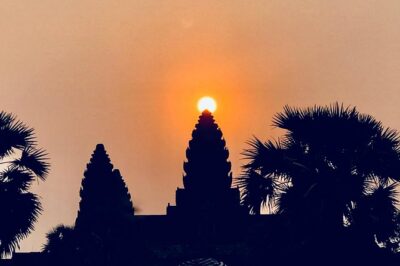

Angkor Temple Tours, compared.
 ★ 5.0Angkor Wat Sunrise or Sunset Tour with Guide from Siem ReapFrom $1812,109 reviews
 ★ 5.0Angkor Wat: Small-Group Sunrise or Sunset TourFrom $159,444 reviews
 ★ 4.9Angkor Wat 2-Day Tour with Sunrise and SunsetFrom $344,429 reviews
 ★ 4.9Full-Day Angkor Wat Guided Tour with SunsetFrom $153,803 reviews
 ★ 5.0Angkor Wat Sunrise tour with Small – Group and Guide toursFrom $143,655 reviews
 ★ 5.0Angkor Wat Highlights and Sunrise Guided Tour from Siem ReapFrom $233,213 reviews
 ★ 5.0Angkor Wat Sunset Small Group Tour with Lunch IncludedFrom $203,059 reviews
 ★ 5.0Full-Day Angkor Wat Sunrise Private Tour with Guide from Siem ReapFrom $602,920 reviews
Browse the lists this tour appears in