
Reviewed · ANGKOR WAT TEMPLE TOURS
1 Day | Angkor Wat Sunrise with Small Tour
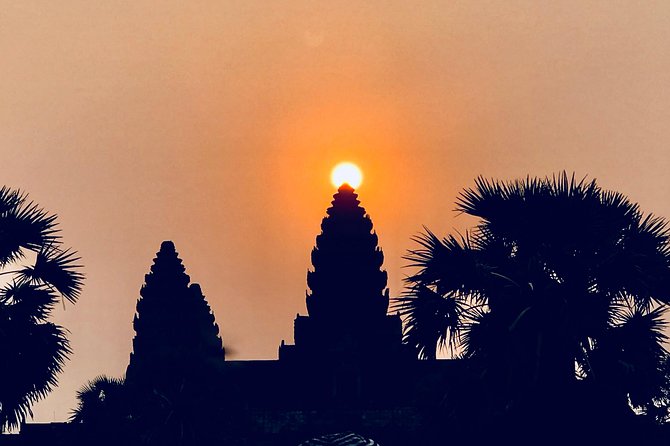
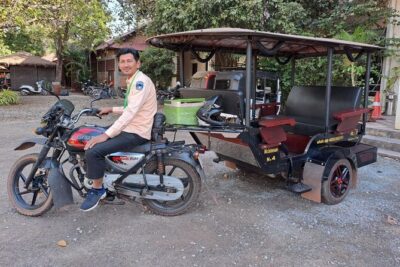
Sleep optional, sunrise guaranteed. Angkor Wat at first light is the big reason to go, and this small tour is built around getting you in the right place early. I especially liked the early start and the comfort of a private air-con vehicle, plus guide Hok’s clear explanations from the moment you arrive.
One thing to plan for: the Angkor Temple Pass is not included, so you’ll need to budget extra for entry. And because this is a sunrise experience, good weather matters for the timing and sky conditions.
Key things you’ll remember from this half-day Angkor tour
- 4:30 AM hotel pickup gets you moving before the heat and crowds take over the day
- Small-group feel with only your group, led by senior English-speaking guide Hok
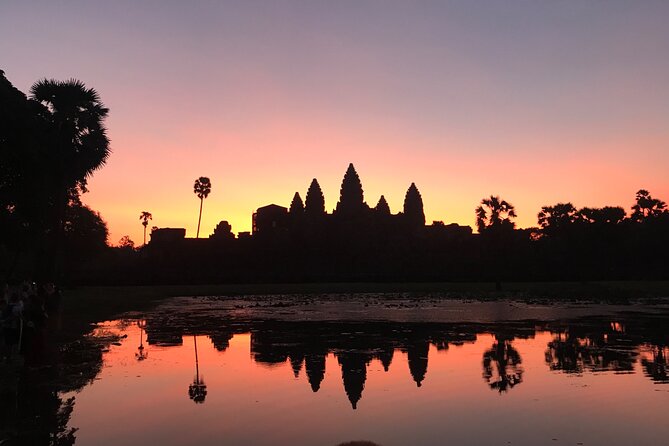
- Angkor Wat sunrise at the reflection pool area, then time for the main temple complex
- Real Khmer context as you move through Angkor Thom, Bayon, and Ta Prohm
- Cool water, towels, and local snacks to keep you going during the long morning
- Guide Hok is also a serious photographer, so you can expect helpful photo guidance
Other ways to walk the great temple
- Angkor Wat Sunrise or Sunset Tour with Guide from Siem Reap★ 5.0 · 12,109 reviews
- Siem Reap: Angkor Wat: Small-Group Sunrise or Sunset Tour★ 5.0 · 9,444 reviews
- Siem Reap: Angkor Wat 2-Day Tour with Sunrise and Sunset★ 4.9 · 4,429 reviews
- Siem Reap: Full-Day Angkor Wat Guided Tour with Sunset★ 4.9 · 3,803 reviews
Why Angkor Wat Sunrise feels different when you get there early
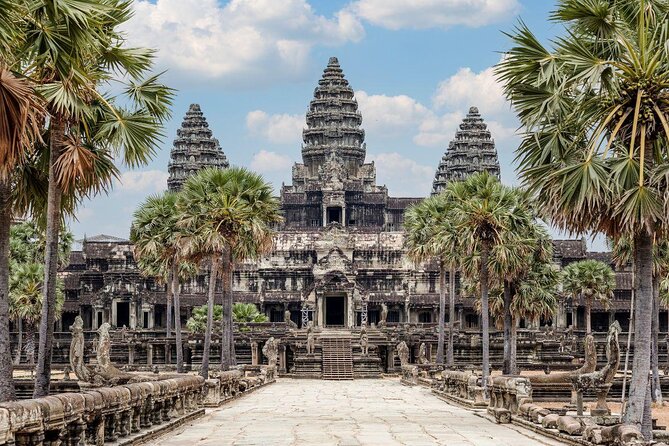
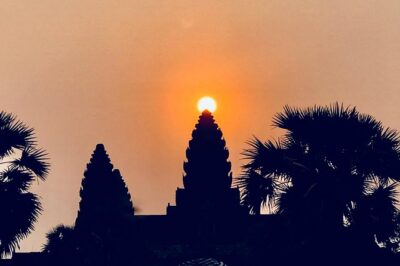
Angkor Wat is famous for a reason, but sunrise is the part that turns it from impressive to unforgettable. The temple is aligned with the cardinal points, and that kind of precision is part of the mystery you feel when the sky is still changing.
This tour is designed around that early window. You start at 4:30 AM, and you’re positioned with the goal of seeing the temple lit by the rising sun, not just seeing it after the day warms up and the light flattens.
There’s also a special astronomical backdrop to Angkor Wat that makes sunrise extra meaningful. It’s tied to equinox timing, with the sunrise phenomenon described as occurring around the spring and autumn equinoxes. Even if your visit is not on a specific equinox day, the “alignments and sky” idea is something your guide can bring to life as you look at the monument.
If you care about photos, the early timing matters more than most people expect. Low light changes everything, and the reflection pool location makes it easier to capture the classic view.
Meet Hok: the guide makes the temples make sense
The best part of this tour is how it’s guided. Hok, also known in messages as Heng Seng Hok, is the kind of guide who doesn’t just recite facts. He explains what you’re looking at and why it was built that way.
You’ll see that style in how he moves with your group, stays patient, and keeps an eye on comfort and safety. That matters on a long morning when you’re up early, walking around stone, and trying to keep your attention on both history and the sky.
Hok also brings a practical, photo-aware mindset. One guest feedback highlighted that he’s not only a guide but also a professional photographer. That typically translates into better positioning, calmer pacing, and tips that help you get shots without turning the whole morning into a photo drill.
Because this is a small tour, you’re not stuck with a loud megaphone pace. You get time to ask questions and to slow down when something catches your eye, especially around Bayon and Ta Prohm.
Stop 1: Angkor Wat, sunrise first, then the main complex
Your morning centers on Angkor Wat, with about two hours on site. Sunrise is the headline, but don’t miss what happens after, because that’s where the temple turns from view to story.
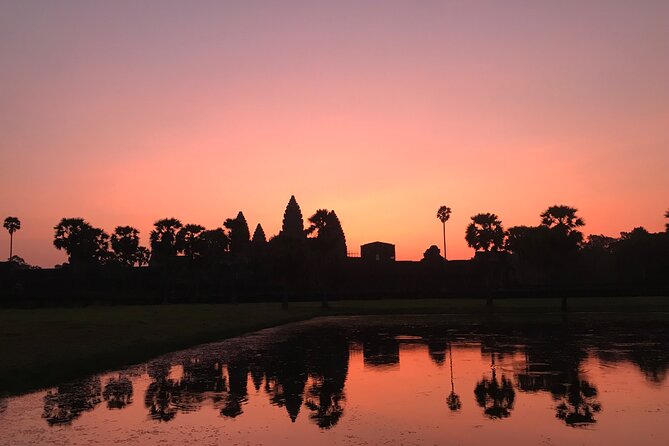
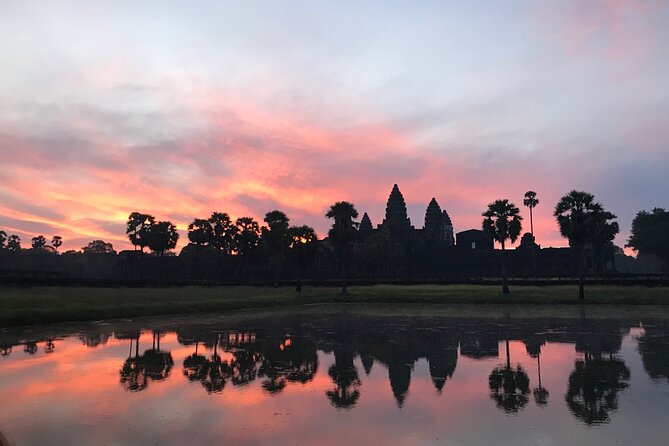
You’ll begin with the sunrise moment, with the plan to be in front of the reflection pool. That location helps you see why the temple looks so iconic in pictures, but it also helps you understand the geometry of the place. The temple’s design is not casual, and the guide can connect the alignment idea to the way the monument sits in the world.
When the light changes and the sunrise moment settles, you shift into exploration with Hok guiding you through the main building and around the complex. This is where the “largest religious monument” reputation turns tangible. It’s one thing to know Angkor Wat is massive, but it’s another thing to walk through the rhythm of courtyards and gateways and realize how deliberate everything feels.
Practical reality check: the entry ticket is not included. The tour focuses on guiding and timing, while the Angkor Temple Pass is something you buy separately. So arrive ready to show your pass or purchase it as instructed, otherwise you’ll lose precious sunrise and photo time.
Also, with a sunrise start, you’ll likely feel the early wake-up more than the walking. Pack for that, hydrate, and trust the pace. Hok’s job is to keep the morning smooth, not rush you through stone like you’re in a hurry.
Stop 2: Angkor Thom’s Great City and the gate symbolism
After Angkor Wat, you head to Angkor Thom, the fortified capital area of the Khmer Empire at its height. You get about 30 minutes here, so treat it as a focused “orientation stop” rather than a long wander.
Angkor Thom translates to the Great City, and the design reflects that importance. Hok’s explanations here matter because the city is laid out with an intentional sense of direction and meaning. You’re not just moving between buildings, you’re tracing how the capital was imagined.
A key highlight is the monumental gate symbolism. Each gate corresponds to the cardinal directions, and the statues are described as demons and gods, representing a cosmic struggle between good and evil. This is one of those details that’s easy to miss if you’re walking quickly or snapping photos without context.
Because the time is short, you’ll get the value if you stay attentive during the gate and layout moments. If you want to ask questions, do it here. Angkor Thom is where the rest of the day starts making deeper sense.
Chasing the light? More dawn and dusk runs
Bayon Temple: the smiling faces and the blend of faith
Next up is Bayon Temple, with about 45 minutes at the heart of Angkor Thom. This is the stop where you see the iconic smiling faces that put Bayon on the map worldwide.
Bayon is often described as the masterpiece connected to King Jayavarman VII. What I found most important here is the message behind the artwork. The temple represents a mix of Hindu and Buddhist art, and that blend reflects a period when religious conflict was eased and different communities coexisted.
Hok’s job is to connect what you see to that idea of tolerance and cultural overlap. If you’ve ever felt like temple tours only list dates and names, this is where you’ll likely appreciate the meaning of the art style, not just the architecture.
Also, since Bayon sits within Angkor Thom, it benefits from the short grounding you got at the gates and layout. You’re not starting from zero, you’re building on what you just understood.
Stop 4: Ta Prohm, the jungle temple look that inspired movies
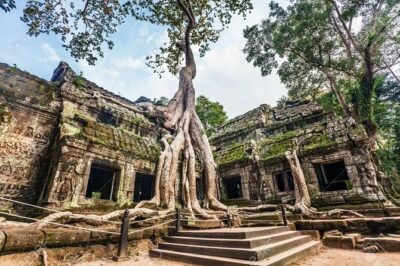
The final major temple stop is Ta Prohm, typically known as the jungle temple. You get about one hour here, which is enough time to appreciate the famous visual without rushing.
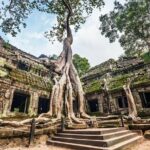
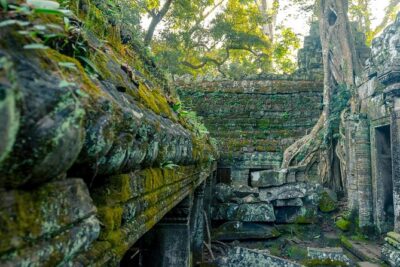
Ta Prohm is closely tied to pop culture because it’s associated with the Tomb Raider look. But the deeper appeal is physical: the ruins feel swallowed by nature, with intertwining trees and roots wrapping around ancient stone.
The tour framing also connects the temple to its purpose. Ta Prohm was built under King Jayavarman VII and is dedicated to his mother, represented by Prachnabaramita, the goddess of mercy and wisdom in Mahayana Buddhism. The name Ta Prohm is also tied to earlier naming ideas, and Hok can explain how the temple’s identity connects to that faith.
What you should watch for is not getting “stuck” in one photo spot. Ta Prohm rewards slow turning. The roots, doorways, and window-like gaps each catch light differently, and the one-hour window is perfect for that.
If sunrise gave you the cinematic start, Ta Prohm gives you the overgrown, lived-in feeling. It’s a nice contrast inside one morning.
Price and value: what $66 actually buys you
The listed price is $66 per person, and it’s structured around comfort and guidance for a long morning. What’s included is the private air-con vehicle, a senior English-speaking guide, plus cool water, towels, and local snacks.
The big separate cost is the Angkor Temple Pass, listed at $37 per person, and it’s not included in the tour price. So your real budget is closer to the sum of both amounts if you’re paying for the pass directly.
Where the value shows up is that you’re not paying extra for “just transportation.” You’re paying for timing, guiding, and support during the early start. Sunrise access without stress is worth something, especially if it’s your first visit or you’re not sure how to pace the sites.
There’s also a hint of pricing logic in the way this tour is booked. On average, people reserve about 15 days in advance, which suggests demand for a good morning slot. If you wait too long, you may end up with fewer options.
If you’re traveling as a family or in a small group, the small-tour setup can feel more practical than a big bus day. You get more flexibility for questions and fewer moments where you have to catch up.
Timing that works: a morning built like a route, not a checklist
The whole experience is about six hours total, paced to fit four major temple stops. That’s not “see everything,” but it is a strong, classic route that covers three of the biggest Angkor hits and anchors them with Angkor Wat sunrise.
The sequence also helps you understand the region. Angkor Wat gives you the iconic alignment and the sunrise atmosphere. Then Angkor Thom and Bayon shift you into city layout and artistic symbolism. Ta Prohm ends with a different mood, the jungle-wrapped ruins.
This kind of half-day is good if you want a memorable Angkor morning without giving up an entire day to temple hopping. It’s also a manageable length if you’re not sure how you’ll handle early starts and walking.
And because the tour offers pickup, you avoid the “how do I get there in the dark” problem. That sounds minor, but it’s the kind of friction that can ruin a sunrise plan.
What to consider before you commit
This tour is a sunrise-focused experience, so your biggest considerations are simple.
First, sunrise timing depends on weather. The experience notes that it requires good weather, and if it’s canceled due to poor weather, you’ll be offered a different date or a full refund. That doesn’t guarantee a perfect sky, but it tells you the operator is treating sunrise as a real condition, not just a schedule.
Second, entry costs are separate. You’ll pay for the Angkor Temple Pass on top of the $66 tour fee. Make sure you budget that early so it doesn’t feel like a surprise when you’re standing at the entrance.
Third, it starts early. 4:30 AM is not gentle. If you’re the type who struggles with early mornings, plan an easy evening before, set a firm alarm, and don’t try to squeeze in last-minute plans the night before.
Who this small Angkor tour is best for
This works for a wide range of visitors because it’s designed to be doable for most travelers. The key is your preference for structure.
If you want:
- a guided morning with clear explanations,
- a route that covers the biggest highlights in a single block of time,
- and a comfortable setup with pickup, towels, snacks, and a private vehicle,
then you’ll likely like it.
I’d also point out that the tone of guide Hok’s service comes through in feedback for different travel styles, including family trips and first-time visits. The common thread is that he’s patient, checks on comfort and safety, and explains in a way that keeps the temples from feeling like random stone.
If you’re the type who hates rushing, this style is a good fit because the guide’s approach is about pacing and care, not pushing you out the door.
Should you book this Angkor Wat sunrise small tour?
I’d book it if sunrise is your priority and you want help making sense of what you see. The early start and reflection pool positioning give you the best shot at that classic Angkor Wat look. The other temple stops keep the morning from feeling like a one-photo event, because you move into Angkor Thom, Bayon, and Ta Prohm with context.
Skip it only if you’re looking for a very flexible, self-guided schedule. This is a structured route, and you’ll get the most value by going along with the timing and letting Hok guide you from stop to stop.
If you want a comfortable half-day that balances photos, meaning, and smooth logistics, this is a solid choice.
FAQ
What time does the tour start?
The tour begins at 4:30 AM, departing from your hotel.
How long is the experience?
It runs for about 6 hours total.
Is hotel pickup included?
Yes, pickup is offered.
Is the Angkor Temple Pass included in the price?
No. The Angkor Temple Pass is not included and is listed at $37 per person.
What’s included besides the guide?
The tour includes a private air-con vehicle, a senior English-speaking guide, cool water and towels, and local snacks.
Where do the stops go during the morning?
You visit Angkor Wat, Angkor Thom, Bayon Temple, and Ta Prohm.
What if the weather is poor for sunrise?
The experience requires good weather. If it is canceled due to poor weather, you will be offered a different date or a full refund.
More Temple Circuits Around Siem Reap
- Angkor Wat Sunrise or Sunset Tour with Guide from Siem Reap
★ 5.0 · 12,109 reviews - Siem Reap: Angkor Wat: Small-Group Sunrise or Sunset Tour
★ 5.0 · 9,444 reviews - Siem Reap: Angkor Wat 2-Day Tour with Sunrise and Sunset
★ 4.9 · 4,429 reviews - Siem Reap: Full-Day Angkor Wat Guided Tour with Sunset
★ 4.9 · 3,803 reviews - Angkor Wat Sunrise tour with Small – Group and Guide tours
★ 5.0 · 3,655 reviews
Dawn and Dusk Over Angkor
- Angkor Wat Sunrise or Sunset Tour with Guide from Siem Reap
★ 5.0 · 12,109 reviews - Siem Reap: Angkor Wat: Small-Group Sunrise or Sunset Tour
★ 5.0 · 9,444 reviews - Sunset tour of Kampong Phluk stilts home village on the Tonle Sap
★ 5.0 · 4,865 reviews - Siem Reap: Angkor Wat 2-Day Tour with Sunrise and Sunset
★ 4.9 · 4,429 reviews - Siem Reap: Full-Day Angkor Wat Guided Tour with Sunset
★ 4.9 · 3,803 reviews
Angkor Wat, a Few More Ways In
- Angkor Wat Sunrise or Sunset Tour with Guide from Siem Reap
★ 5.0 · 12,109 reviews - Siem Reap: Angkor Wat: Small-Group Sunrise or Sunset Tour
★ 5.0 · 9,444 reviews - Siem Reap: Angkor Wat 2-Day Tour with Sunrise and Sunset
★ 4.9 · 4,429 reviews - Siem Reap: Full-Day Angkor Wat Guided Tour with Sunset
★ 4.9 · 3,803 reviews - Angkor Wat Sunrise tour with Small – Group and Guide tours
★ 5.0 · 3,655 reviews
Just Added: Fresh Siem Reap Tour Reviews

Angkor Wat Temple Tours, compared.
 ★ 5.0Angkor Wat Sunrise or Sunset Tour with Guide from Siem ReapFrom $1812,109 reviews
 ★ 5.0Angkor Wat: Small-Group Sunrise or Sunset TourFrom $159,444 reviews
 ★ 4.9Angkor Wat 2-Day Tour with Sunrise and SunsetFrom $344,429 reviews
 ★ 4.9Full-Day Angkor Wat Guided Tour with SunsetFrom $153,803 reviews
 ★ 5.0Angkor Wat Sunrise tour with Small – Group and Guide toursFrom $143,655 reviews
 ★ 5.0Angkor Wat Highlights and Sunrise Guided Tour from Siem ReapFrom $233,213 reviews
 ★ 5.0Angkor Wat Sunset Small Group Tour with Lunch IncludedFrom $203,059 reviews
 ★ 5.0Full-Day Angkor Wat Sunrise Private Tour with Guide from Siem ReapFrom $602,920 reviews
Browse the lists this tour appears in