
Reviewed · ANGKOR TEMPLE TOURS
2 Days Guided Historical Tour in Angkor
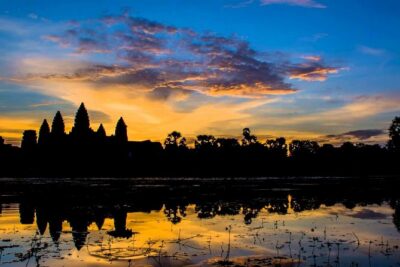
Sunrise at Angkor Wat makes the morning feel unreal. This 2-day guided route is built to show you more temples than the usual quick trip, with an early start, cool breaks, and a plan that keeps you moving. My favorite part is how the guide’s stories connect the main sites to the surrounding Khmer-era temples, not just the postcard views. One thing to consider: temple entrance fees are not included, so you’ll pay extra on top of the $35 tour price.
You’ll travel in an air-conditioned vehicle with hotel pickup and drop-off, and the group stays small (a maximum of 15). You’ll also get practical comfort extras like cold water and a wet towel, which matters fast in the heat. The only real drawback is the pace, because you’re packing in 11 temples across two long days, with lots of walking and early mornings.
Key things I’d circle before you book
- 4:30 am pickup and sunrise at Angkor Wat, so you can see the temple before the biggest crowds form.
- Maximum of 15 people, which keeps the tour feeling personal instead of cattle-car speed.
- Two-day plan covering 11 temples, including both headline stops and lesser-visited ones.
- Cold water plus a wet towel, a small thing that makes a big difference on hot days.
- Sunset on day two, capped with Phnom Bakheng for that late-day finale.
- Entrance tickets not included, with a stated temple ticket cost of $62 per person.
More temple circuits, set side by side
- Angkor Wat Sunrise or Sunset Tour with Guide from Siem Reap★ 5.0 · 12,109 reviews
- Siem Reap: Angkor Wat: Small-Group Sunrise or Sunset Tour★ 5.0 · 9,444 reviews
- Siem Reap: Angkor Wat 2-Day Tour with Sunrise and Sunset★ 4.9 · 4,429 reviews
- Siem Reap: Full-Day Angkor Wat Guided Tour with Sunset★ 4.9 · 3,803 reviews
What you’re really paying for: $35 tour plus $62 temple ticket
On the surface, $35 for a 2-day guided tour in Siem Reap sounds like a bargain. The catch is that the temple admission is separate. The tour price is $35 per person, and the temple ticket is listed as $62 per person, bringing your likely total to $97 before any meals you choose.
For that money, you are buying three things that are hard to replicate on your own. First is an efficient route that hits sunrise on day one and sunset on day two. Second is guided time inside key temples like Angkor Wat and Bayon, where the explanations help you notice details you would probably miss. Third is the logistics support: air-conditioned transport, hotel pickup and drop-off, and comfort items like cold water and a wet towel.
Meals are not included. You may have scheduled breaks (breakfast on day one is mentioned as not included), so budget for food stops during the day. If you want the cheapest possible experience, you can bring snacks for some of those breaks, then eat at the restaurant stop when it’s offered.
Small group touring: why a maximum of 15 matters at Angkor
Angkor is massive, and the main temples are easy to experience the wrong way: rushed, crowded, and stuck in the flow. This tour keeps the group capped at 15 travelers, which shows up in how the day feels. You’re not swallowed by a huge busload, and you’re more likely to get answers when you ask questions.
That small group size also helps with the handoffs between stops. Day one moves through the most famous sites, and day two shifts toward quieter temples. If you’ve ever tried to stitch together multiple temples on your own, you know how tiring it gets to constantly rethink timing, routes, and how long you’ll need at each place. This plan handles that for you, and it’s a big part of the value.
The comfort setup: AC vehicle, cold water, wet towel, and breaks
Two-day Angkor tours rise or fall on comfort. This one includes an air-conditioned vehicle, plus cold water and a wet towel. That matters because you’ll start very early on day one (pickup around 4:30 am) and you’ll still be out during hot hours on both days.
The itinerary also builds in time for breaks. Day one includes a break for breakfast, and on top of that, guides often manage restroom and waiting time between temples. One of the most repeated themes in the feedback is how guides keep things moving while still handling the heat well, including making sure you get water during the day and using the bus air conditioning when needed.
Day 1: Angkor Wat sunrise and the main-temple circuit
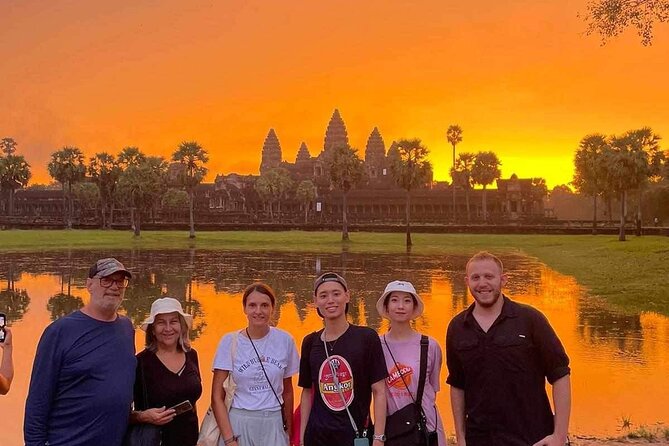
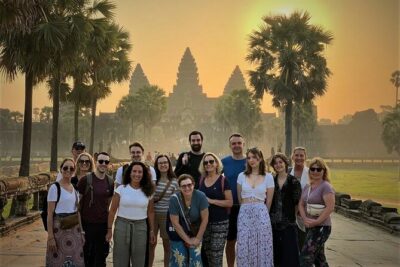
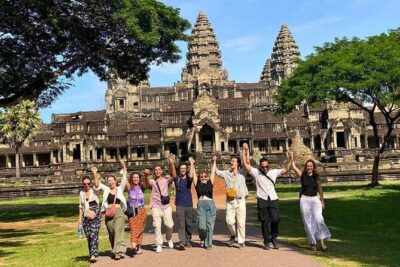
Day one is where you get the iconic Angkor Wat moment: sunrise followed by time inside with your guide. You’ll start with pickup from your hotel (where pickup is offered) and head out early. The schedule gives you about two hours at Angkor Wat, and your guide explains what you’re seeing as you explore.
More time at the temples, spread over days

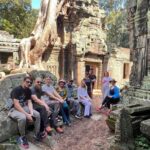
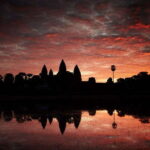
Stop 1, Angkor Wat: sunrise first, then guided viewing
The value here is timing. Angkor Wat at sunrise is different from Angkor Wat later in the day. Your tour is designed to get you there early, so you’re not arriving after the biggest waves of visitors.
Your guide also provides context before you wander on your own within the temple area. Even if you’ve seen photos, Angkor Wat’s scale can feel confusing. A guide helps you connect the buildings you see with the temple purpose and the way the site is laid out, so your time inside feels intentional, not random.
Practical note: the tour description mentions early arrival and exploration inside with the guide, but it also notes that temple admission is not included in the tour price. Plan to pay the temple ticket separately.
Stop 2, Angkor Thom South Gate: carved faces and the causeway
After Angkor Wat, you shift to the fortified area of Angkor Thom. The first stop there is the South Gate, described as dating to the 12th century with carved faces, plus stone figures lining a causeway.
This is a good contrast stop. Angkor Wat is famous worldwide, but Angkor Thom’s gates feel like a different world: more defensive, more theatrical, and a bit more “entering a story” than “admiring a monument.”
Stop 3, Bayon: four smiling faces and temple symbolism
Next comes the Bayon Temple, a richly decorated Khmer temple related to Buddhism at Angkor, built in the late 12th or early 13th century as a state temple.
If Angkor Wat is about grand symmetry, Bayon feels more human. The faces are the headline, but the guide’s job is to help you understand the temple context so the carvings do not read as just decoration. Your schedule gives you about two hours here, which is enough for a real walk-through rather than a photo sprint.
Stop 4, Ta Keo: sandstone temple-mountain
Then you move to Ta Keo, a “temple-mountain” in Angkor that is possibly the first built entirely of sandstone by the Khmer. Your itinerary shows about one hour, and it also includes a breakfast break before entering.
Ta Keo is a nice spot for your brain. You’ll have seen busy icons already, and now the focus becomes form and materials. Stonework detail stands out more when you’re not constantly dealing with bottlenecks.
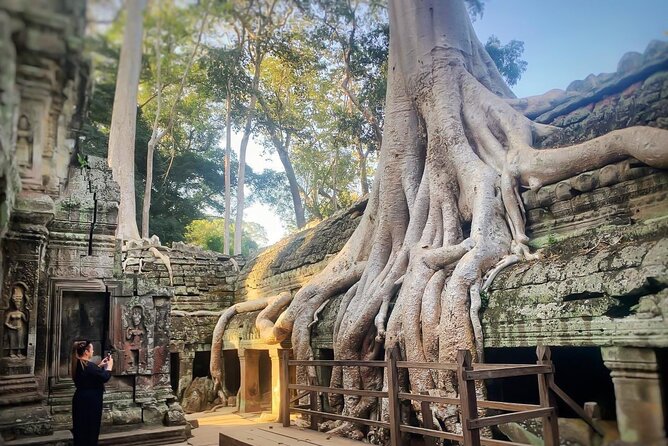
Stop 5, Ta Prohm: the temple visitors love for a reason
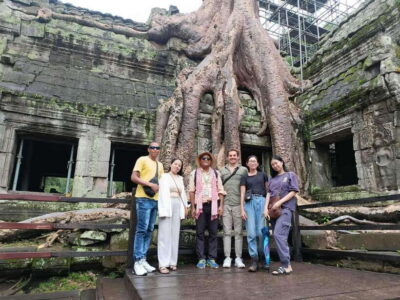
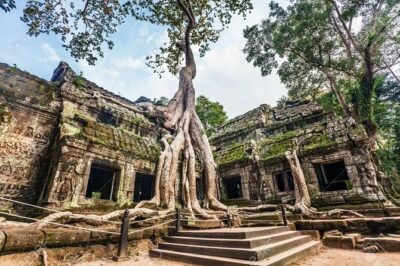
Last on day one is Ta Prohm. It’s described as near Siem Reap, about one kilometer east of Angkor Thom, on the southern edge of the East Baray. Your schedule includes about one hour.
Ta Prohm is famous, but a guided visit changes the experience. You’re not just hunting for famous angles. The guide’s notes on how the temple is associated with Bayon style help you see it in a bigger Angkor picture.
End of day one is a lot of walking. The upside is you’ll go to bed knowing you’ve nailed the headline circuit while still getting some interpretation, not only sightseeing.
Day 2: quieter temples, temple-mountain viewpoints, and sunset at Phnom Bakheng
Day two is a smart change of pace. The tour aims at lesser-visited temples, plus it includes time for the sunset finale at Phnom Bakheng.
You’ll start with Pre Rup, then work through Ta Som, Neak Pean, and Preah Khan, before ending at Phnom Bakheng.
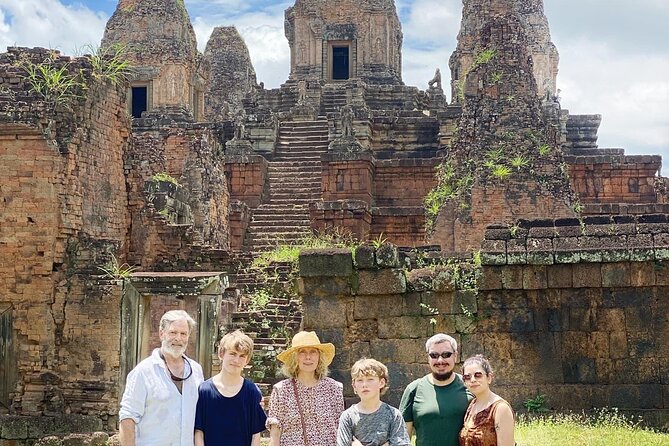
Stop 1, Pre Rup: a state temple dated to 961 or early 962
Pre Rup is listed as a Hindu temple built as the state temple of Khmer king Rajendravarman and dedicated in 961 or early 962. Your itinerary shows about two hours.
This stop gives you something important: historical anchoring. Instead of treating every temple like the same “old stone pile,” you get dates and a clear link to a ruler and religious purpose. That context helps your second day feel like learning, not just moving.
Stop 2, Ta Som: small temple linked to Jayavarman VII
Next is Ta Som, described as a small temple built at the end of the 12th century for King Jayavarman VII. Your schedule allows about one hour.
Ta Som is the type of stop that can be overlooked if you only chase the most famous names. In a guided route, it becomes a breather, and the guide can point out what makes it distinct in the broader network around Angkor Thom.
Stop 3, Neak Pean: an artificial island temple in Jayatataka Baray
Then you visit Neak Pean, described as an artificial island with a Hindu temple on a circular island in Jayatataka Baray. It’s also associated with the Preah Khan temple area built during Jayavarman VII’s reign.
This is one of those spots where the setting matters as much as the structure. The “artificial island” idea is a clue that Angkor’s temple planning involved more than stone buildings. It involved shaping space and water-linked environments around the complex.
Stop 4, Preah Khan: built for Jayavarman VII to honor his father
After Neak Pean, you get Preah Khan, a 12th-century temple built for King Jayavarman VII to honor his father. Your itinerary gives about two hours.
This is a great temple for a guided explanation because the description gives you the reason for the temple. When you know who it was built for and why, carvings and spatial choices start to make more sense. It also helps you compare it to other temples on your route, because the purpose shifts from site to site.
Stop 5, Phnom Bakheng: sunset finale, short on paper, big in feel
Your last stop is Phnom Bakheng, described as a Hindu temple mountain dedicated to Shiva, built at the end of the 9th century during the reign of King Yasovarman.
The schedule lists a very short duration at this stop, about two minutes. I read that as a schedule shorthand, not as a sign you will not have time to watch the sunset. In practice, this is your viewpoint moment, so the priority is the late-day light and the final sights before you head back.
The guides are a real part of the value
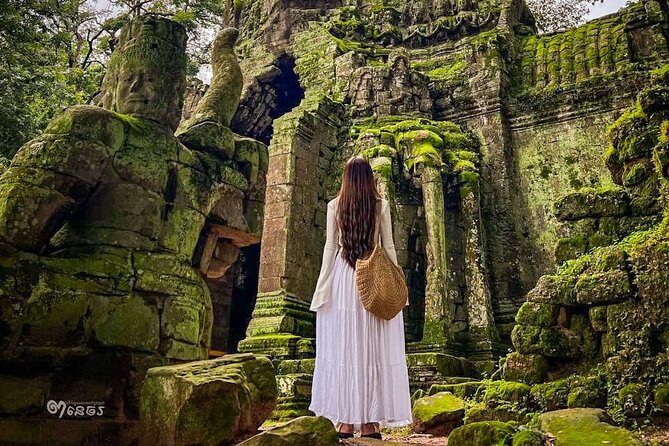
The most consistent praise centers on the guides. Names that come up include Sok, Vone, Sam, Ho Heang, Heang, Pheap, Sem, Sayon, and Sary. Across these mentions, the pattern is the same: you get temple context, explanations tied to history, and help when the day gets hot.
A helpful detail from the feedback is how some guides manage the flow so you still get time to explore on your own at major stops like Angkor Wat, Bayon, and Ta Prohm. That balance is key. If you’re only herded, you never slow down. If you’re completely unguided, you often miss the points that make the temples click.
If you care about language fit, this is also worth noting. One set of guests mentioned a language challenge due to group mix. If you have a specific language need, it’s smart to ask ahead during booking.
How to make the most of the schedule (and not hate it)
This is a two-day plan with 11 temples. That means you should prepare for heat, walking, and early mornings.
Here’s what helps most:
- Wear comfortable walking shoes, not sandals you have to babysit.
- Bring sunscreen and something to cover your shoulders or arms. The guide provides water and a wet towel, but you still need sun protection.
- Plan for breakfast and lunch breaks, since meals are not included. The day one itinerary mentions a breakfast break, and day two includes a long chain of temple stops.
- If you want photos without stress, give yourself a little buffer time at each stop. The tour pace is organized, but you’ll do better when you’re not trying to sprint to every angle.
Also, since your day two ends with Phnom Bakheng at sunset, wear something you can feel good in during evening temperatures, not just the midday heat.
Where this tour fits best
This tour is a strong fit if you want:
- A structured route that saves you from planning Angkor by trial and error.
- Both major sights (Angkor Wat, Bayon, Ta Prohm) and temples beyond the headline list (Pre Rup, Ta Som, Neak Pean, Preah Khan).
- A guide-led experience where you learn what you are looking at while still getting time to wander.
It may be less ideal if you hate early starts and long days. Starting around 4:30 am is not optional here. And even with breaks and AC, you will be on your feet a lot.
Should you book this 2-day Angkor guided tour?
If you want the classic sunrise and sunset moments and you prefer not to spend your days figuring out routes, this is a solid choice. The value comes from the combo of small group size, guided time at major temples, and comfort support like cold water and a wet towel.
I would book it if you’re the type who enjoys learning what a temple was built for, not just taking pictures. Bring cash or plan for the stated $62 temple ticket, plan for meals separately, and go into it expecting lots of walking and sun. Do that, and two days here can feel like a real Angkor education, not a hurried hits-and-photos exercise.
FAQ
What time does the tour start?
The tour starts at 4:30 am.
Where do we meet in Siem Reap?
The meeting point is Siem Reap Pub Hostel, behind Angkor Night Market area in Siem Reap.
Is hotel pickup included?
Yes. Pickup and drop-off are included, and an air-conditioned vehicle is used.
How many temples does the tour include over the 2 days?
The tour includes 11 temples across two days.
Are meals included?
No. Meals are not included in the tour price, though breakfast and lunch breaks may be scheduled.
Are entrance fees included in the $35 price?
No. Temple entrance fees are listed as not included, with a stated temple ticket cost of $62 per person.
What group size should I expect?
The tour has a maximum group size of 15 travelers.
What comfort items are provided during the day?
The tour includes cool water and a wet towel, plus air-conditioned transportation.
What is the cancellation policy for a full refund?
You can cancel up to 24 hours in advance for a full refund. Changes within 24 hours of the start time are not accepted, and refunds are not given if you cancel less than 24 hours before the experience starts.
More Tour Reviews in Siem Reap
- Angkor Wat Sunrise or Sunset Tour with Guide from Siem Reap
★ 5.0 · 12,109 reviews - Siem Reap: Angkor Wat: Small-Group Sunrise or Sunset Tour
★ 5.0 · 9,444 reviews - From Siem Reap: Kampong Phluk Floating Village Tour by Boat
★ 4.9 · 6,979 reviews - Sunset tour of Kampong Phluk stilts home village on the Tonle Sap
★ 5.0 · 4,865 reviews - Siem Reap: Angkor Wat 2-Day Tour with Sunrise and Sunset
★ 4.9 · 4,429 reviews
More Days at the Temples
- Siem Reap: Angkor Wat 2-Day Tour with Sunrise and Sunset
★ 4.9 · 4,429 reviews - Angkor 2-Day Sunset & Sunrise Small-Group Tour
★ 5.0 · 2,567 reviews - 2 Days Exclusive Temple Highlights with Sunset and Sunrise Tour
★ 5.0 · 1,157 reviews - Siem Reap: Angkor Sunrise 1- or 2-Day Guided Temples Tour
★ 4.9 · 1,132 reviews - 2-Day Angkor Wat With Small, Big Circuit and Banteay Srei Tour
★ 5.0 · 545 reviews
More Temple Circuits Around Siem Reap
- Angkor Wat Sunrise or Sunset Tour with Guide from Siem Reap
★ 5.0 · 12,109 reviews - Siem Reap: Angkor Wat: Small-Group Sunrise or Sunset Tour
★ 5.0 · 9,444 reviews - Siem Reap: Angkor Wat 2-Day Tour with Sunrise and Sunset
★ 4.9 · 4,429 reviews - Siem Reap: Full-Day Angkor Wat Guided Tour with Sunset
★ 4.9 · 3,803 reviews - Angkor Wat Sunrise tour with Small – Group and Guide tours
★ 5.0 · 3,655 reviews
Just Added: Fresh Siem Reap Tour Reviews
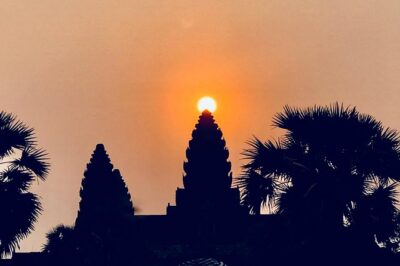

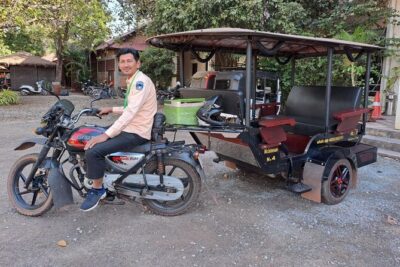
Angkor Temple Tours, compared.
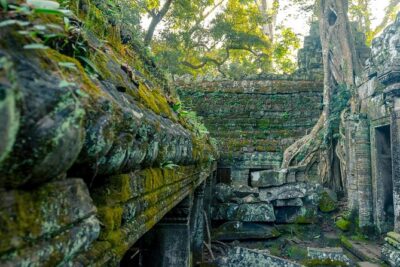 ★ 5.0Angkor Wat Sunrise or Sunset Tour with Guide from Siem ReapFrom $1812,109 reviews
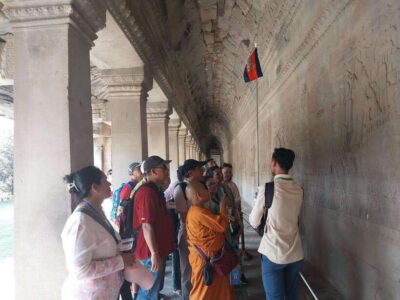 ★ 5.0Angkor Wat: Small-Group Sunrise or Sunset TourFrom $159,444 reviews
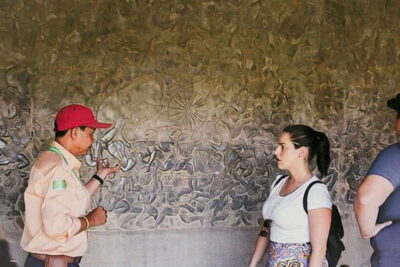 ★ 4.9Angkor Wat 2-Day Tour with Sunrise and SunsetFrom $344,429 reviews
 ★ 4.9Full-Day Angkor Wat Guided Tour with SunsetFrom $153,803 reviews
 ★ 5.0Angkor Wat Sunrise tour with Small – Group and Guide toursFrom $143,655 reviews
 ★ 5.0Angkor Wat Highlights and Sunrise Guided Tour from Siem ReapFrom $233,213 reviews
 ★ 5.0Angkor Wat Sunset Small Group Tour with Lunch IncludedFrom $203,059 reviews
 ★ 5.0Full-Day Angkor Wat Sunrise Private Tour with Guide from Siem ReapFrom $602,920 reviews
Browse the lists this tour appears in