
Angkor at sunrise, then waterfalls the next day. This private 3-day plan links big-name temples with lesser-known Phnom Kulen, and I especially like the door-to-door A/C pickup and the early starts for sunrise and sunset. The main thing to plan for is added temple ticket and meal costs, since entrance fees and lunch are not included.
You’ll have your own guide and vehicle, so the day feels paced for people, not for schedules. Expect a classic Angkor sequence on Days 1 and 3, then a full change of scenery on Day 2 with the Kulen waterfall, pink sandstone at Banteay Srei, and the Tonle Sap floating village.
Key things that make this tour work
- Private, door-to-door comfort: pickup and drop-off in Siem Reap, plus an A/C car, van, or minibus.
- Real timing for light: Angkor Wat sunrise and a sunset stop at Phnom Bakheng or Pre Rup.
- Fewer “only the famous ones” moments: Phnom Kulen and the long lineup at Angkor Thom and Preah Khan get real time.
- Cooling extras: cold water and cool towels during the hot part of the day.
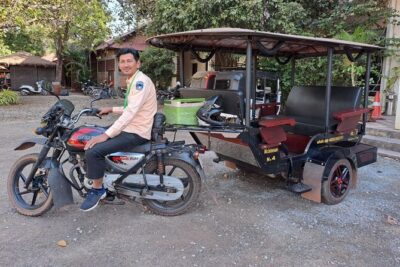
- Guides who can raise the photo odds: guides mentioned in past groups include Young, Makara, and Boy (with driver Chantha).
More temple circuits, set side by side
- Angkor Wat Sunrise or Sunset Tour with Guide from Siem Reap★ 5.0 · 12,109 reviews
- Siem Reap: Angkor Wat: Small-Group Sunrise or Sunset Tour★ 5.0 · 9,444 reviews
- Siem Reap: Angkor Wat 2-Day Tour with Sunrise and Sunset★ 4.9 · 4,429 reviews
- Siem Reap: Full-Day Angkor Wat Guided Tour with Sunset★ 4.9 · 3,803 reviews
Why three days of Angkor and Phnom Kulen makes more sense than shortcuts
Siem Reap is built for temple days, but the temples are spread out and there is no convenient public transport hop-by-hop. A tour like this is the practical fix, because it strings together distant sites into a route that actually flows.
What I like about the itinerary is the mix. You get the headline moments (Angkor Wat, Angkor Thom) and you also get Phnom Kulen, which is less visited and a nice change from stone-only days. That matters because after a couple hours at major temple complexes, your brain wants variety, not more identical corridors.
You’re also doing this with a private guide, meaning you can move at a rhythm that fits your group. One review even mentions a 4-year-old child in the party, which hints that the plan can be reasonable for mixed ages when the guide keeps things organized.
Entering Angkor at 5:00 am, plus the dress code that prevents hassle
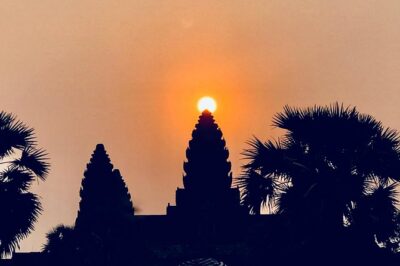
This is not a sleep-in trip. Day 3 starts at 5:00 am for Angkor Wat sunrise, and both Day 1 and Day 2 begin at 8:00 am. That early timing is the whole point for sunrise, and it also helps you beat some of the biggest crowds.
There is also a practical dress code, and it is worth treating as part of your planning, not an afterthought. You need to dress properly for temples: shorts and T-shirts are okay only if they cover to knee length and shoulders are covered. No scarf or shawl and no tank top are allowed. Light cotton clothes are recommended for hot and humid weather, with November, December, and January noted as nicer.
My suggestion: pack one simple “temple layer” you can put on fast if you are sweating. And bring a small bag for temple day items since you will be out a lot longer than you think.
Day 1 plan: Angkor Thom South Gate, Bayon faces, then Angkor Wat sunset
Your day starts at 8:00 am with Angkor Thom. First stop is the South Gate, the classic entrance that sets the tone for everything inside. From there you move through key temples within the Angkor Thom city area, which is a big part of why Day 1 feels full.
The star inside Angkor Thom is Prasat Bayon, the Buddhist state temple built in the late 12th century and dedicated to Avalokitesvara. The description you are given for this temple is specific: hundreds of smiling faces, plus reliefs that depict real-life stories, including war history involving the Champa Kingdom.
Next, you head toward Prasat Baphoun, a pyramid-shaped temple, and you cross the rainbow bridge of Prasat Baphoun. Then it’s Prasat Pimeanakas by the Royal swimming pool. If you like your temples with context, this sequence helps because each stop sits in a larger story about the city.
Lunch and a rest happen at Angkor Park. That break is not just food. It’s a practical reset when the heat starts doing what heat does. If you are camera-heavy, this is also the moment to wipe lenses, refill water, and plan your next shots.
In the afternoon, you switch over to Angkor Wat. You’ll have time to see Angkor Wat after it is uncovered, then your driver or guide takes you to a sunset viewpoint at either Phnom Bakheng or Pre Rup. If your group is torn between sunset vibes and less climbing, it helps that you have two options listed.
Day 2 plan: Kulen Waterfall morning, Banteay Srei afternoon, Tonle Sap end-of-day
Day 2 starts again at 8:00 am, but the setting shifts fast. The morning is Phnom Kulen and the waterfall area, reached with stops that let you see Khmer daily life along the way. The route is described as having beautiful views and village moments, which helps the day feel less like nonstop ruins.
Kulen is framed as the first main shrine and the place where the Khmer empire was born. Then the itinerary turns to natural and religious elements: waterfall, the River of 1000 Lingas, and a large reclining Buddha image.
This combination is one of the reasons I’d pick this tour even if you have only a few days in Cambodia. Angkor is all stone and geometry, while Kulen brings water, movement, and a different kind of “why people came here” feeling.
After lunch and a bit of downtime, you head to Prasat Banteay Srei. This is the pink sandstone temple, often described as jewelry-like Khmer art. The route calls it a small-scale temple on low land of Angkor, which is a good heads-up: it may not feel huge, but it tends to be rich in detail.
The final stop is Tonle Sap, with the floating village and floating market. This is a real change from temple stone, and it is also a good way to end a temple-heavy tour with something that shows living culture. Since lunch is not included on the tour, you’ll want to plan for that gap, especially if the floating market timing doesn’t align perfectly with your meal preferences.
Up the holy mountain to the falls


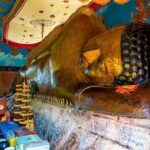
Day 3 plan: Angkor Wat sunrise, Ta Prohm early, then Preah Khan, Neak Poan, Ta Som, Pre Rup
Day 3 is the big one for temple fans who care about crowd control. At 5:00 am, you get picked up from your hotel area in Siem Reap to see the Angkor Wat sunrise. After sunrise, you go to a local restaurant for breakfast. That little detail helps because you are not hunting for food while your body is still waking up.
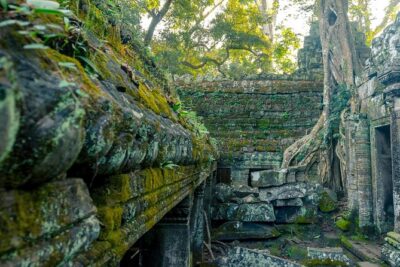
Then comes Ta Prohm, the temple linked to the Tomb Raider movie footage. The itinerary specifically notes visiting before huge crowds arrive. Even if you do not care about movies, Ta Prohm is the kind of place where “timing” matters, because once buses arrive, the lines and photo waits can stretch.
Next, you visit Prasat Preah Khan, described as the biggest ancestor temple built by a Buddhist king in honor of his father. The route then includes Prasat Neak Poan, said to be a holy pool right in the middle of the reservoir. After that, you stop at Prasat Ta Som, on the bank of the water reservoir.
Finally, you land at Pre Rup, the royal state temples built in the 10th century. It is described as the biggest brick sanctuary still standing from hundreds of years ago. If you want a “finish line” temple, Pre Rup is a solid choice.
A practical note: after three days, your feet will be tired. So I like that the itinerary includes a sunrise plus a full day of stops, rather than trying to squeeze another extra location at the end. This one ends cleanly with a major temple.
How the $171.50 price adds up, and where extra costs are hiding
The tour price is listed at $171.50 per person and it does not include accommodation or entrance fees. Lunch is also not included, along with personal expenses.
The big add-on is the temple ticket requirement: $37 per person for a single day. Since this is a three-day itinerary with temple visits across multiple days, you should budget for the ticket on each day you enter temples. The tour itself is the guide, transportation, and the route, while the temples you enter are separate.
Here’s the value angle though. You are getting:
- pickup and drop-off in Siem Reap
- an A/C vehicle for the entire route
- cool water and cool towels
- a private guide and group experience rather than a large join-in style
Compared to doing this yourself, you avoid the hardest part, which is timing and logistics between distant sites. Compared to a basic day tour, you get the sunrise and sunset planning across multiple days, plus the Kulen and Tonle Sap curveball.
Also, you receive a mobile ticket, which can simplify last-minute paperwork.
Guide and driver quality: the human factor that shows up on day three
This kind of tour can only be as good as its pacing and people. In the examples shared, the operator’s guides include Young, Makara, and Boy, and drivers have included Chantha.
Young is described as professional, kind, and also good at keeping things fun, with a sense of humor that helps long temple days feel lighter. Makara is noted as professional and kind, and a bonus detail is that he made many amazing photos. Boy is also mentioned with a driver, Chantha, as part of the smooth timing that helped the itinerary feel well-planned.
What you can do with this: when you book, think about how you want the day to feel. If photography matters, ask your guide to help with picture timing and positioning when the light changes at key stops. If your group has kids or mobility limits, communicate early so the guide can adjust pace inside temple areas.
Even with the best route, good guiding turns “I saw temples” into “I understood what I saw.” And at Angkor, that difference is huge.
Who should book this tour, and who might want a different option
I think this tour fits best if you:
- want Angkor Wat sunrise without gambling on timing
- like the classic must-sees plus at least one change of scenery (Kulen and Tonle Sap)
- prefer private day structure and a comfortable A/C vehicle
- do not want to coordinate transportation on your own
It may be less ideal if you:
- are on a strict budget that cannot absorb entrance fees and meal gaps
- hate early mornings (Day 3 is 5:00 am pickup)
- want full flexibility to linger for hours at one temple, because the route is planned as a multi-site circuit
Should you book the Siem Reap Temple and Waterfall 3-Day Tour?
If you have three days in Siem Reap and you want the trip to feel organized without being rushed, I would book this. The biggest reason is simple: you get sunrise planning at Angkor Wat, sunset timing built into your Angkor Wat day, and a Day 2 that breaks the stone-only pattern with Kulen waterfall, Banteay Srei, and Tonle Sap.
The main caution is budget math. The tour price is only part of the cost, and the $37 per person per single day temple ticket plus lunch need to be in your plan. If you go in knowing that, you avoid the “why is this costing more” surprise.
If you value a private guide who can manage timing and keep the day enjoyable, this is a strong match. You’ll see a lot, but the itinerary is built to give those sights an actual place in the day, not just a checkbox.
FAQ
What is the price for this Siem Reap Temple and Waterfall 3-Day Tour?
The price is $171.50 per person.
How long is the tour?
The duration is about 3 days.
What is included in the tour price?
It includes pickup and drop-off in Siem Reap, transportation in a car, van, or minibus with A/C, and cool water and cool towels.
Are entrance fees included?
No. Entrance fees are not included, and a temple ticket is required. The temple ticket is listed as $37 per person for a single day.
What time does the sunrise day start?
Day 3 starts at 5:00 am for Angkor Wat sunrise.
Is this a private tour?
Yes. It is a private tour/activity, and only your group will participate.
Can I cancel and get a full refund?
Yes, there is free cancellation. You can cancel up to 24 hours in advance for a full refund, and cancellations made less than 24 hours before the start time are not refundable.
More Days at the Temples
- Siem Reap: Angkor Wat 2-Day Tour with Sunrise and Sunset
★ 4.9 · 4,429 reviews - Angkor 2-Day Sunset & Sunrise Small-Group Tour
★ 5.0 · 2,567 reviews - 2 Days Exclusive Temple Highlights with Sunset and Sunrise Tour
★ 5.0 · 1,157 reviews - Siem Reap: Angkor Sunrise 1- or 2-Day Guided Temples Tour
★ 4.9 · 1,132 reviews - 2 Days Guided Historical Tour in Angkor
★ 5.0 · 855 reviews
Kulen Mountain and the Falls
- Kulen Waterfall Join-in Tour (local Picnic lunch)
★ 5.0 · 2,434 reviews - Kulen Mountain: Small-Group Tour and Picnic lunch
★ 4.9 · 1,802 reviews - Siem Reap: Kulen Mountain, Beng Mealea and Tonle Sap Tour
★ 5.0 · 1,483 reviews - Phnom Kulen Waterfall & the Sacred 1000 Lingas (with Lunch)
★ 4.8 · 974 reviews - Kulen Mountain with Beng Mealea and Tonle Sap Small Group Tour
★ 5.0 · 780 reviews
More Temple Circuits Around Siem Reap
- Angkor Wat Sunrise or Sunset Tour with Guide from Siem Reap
★ 5.0 · 12,109 reviews - Siem Reap: Angkor Wat: Small-Group Sunrise or Sunset Tour
★ 5.0 · 9,444 reviews - Siem Reap: Angkor Wat 2-Day Tour with Sunrise and Sunset
★ 4.9 · 4,429 reviews - Siem Reap: Full-Day Angkor Wat Guided Tour with Sunset
★ 4.9 · 3,803 reviews - Angkor Wat Sunrise tour with Small – Group and Guide tours
★ 5.0 · 3,655 reviews
Just Added: Fresh Siem Reap Tour Reviews

Angkor Temple Tours, compared.
 ★ 5.0Angkor Wat Sunrise or Sunset Tour with Guide from Siem ReapFrom $1812,109 reviews
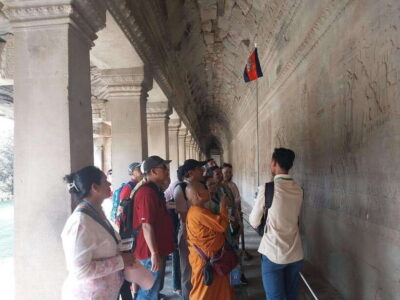 ★ 5.0Angkor Wat: Small-Group Sunrise or Sunset TourFrom $159,444 reviews
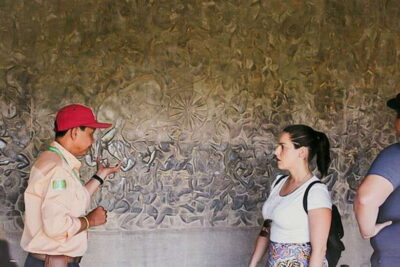 ★ 4.9Angkor Wat 2-Day Tour with Sunrise and SunsetFrom $344,429 reviews
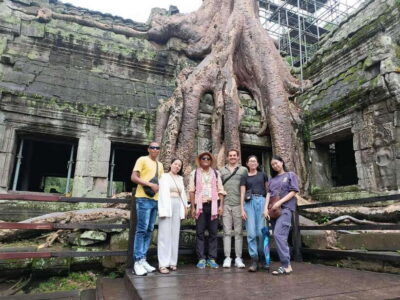 ★ 4.9Full-Day Angkor Wat Guided Tour with SunsetFrom $153,803 reviews
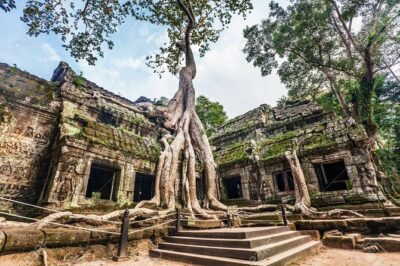 ★ 5.0Angkor Wat Sunrise tour with Small – Group and Guide toursFrom $143,655 reviews
 ★ 5.0Angkor Wat Highlights and Sunrise Guided Tour from Siem ReapFrom $233,213 reviews
 ★ 5.0Angkor Wat Sunset Small Group Tour with Lunch IncludedFrom $203,059 reviews
 ★ 5.0Full-Day Angkor Wat Sunrise Private Tour with Guide from Siem ReapFrom $602,920 reviews
Browse the lists this tour appears in