
Reviewed · BANTEAY SREI TOURS
Siem Reap: Kulen Waterfall and Banteay Srei Exploration
Kulen Mountain has a way of changing your day fast. I love the big cliff viewpoint energy at Poeng Ta Kho and the refresh factor of swimming under Kulen Waterfall. You also get strong cultural variety, from a reclining Buddha carved into stone to Banteay Srei’s delicate red sandstone carvings, with a taste of daily village life in Preah Dak. The one downside to plan for is that the sites can get crowded, especially on Cambodian public holidays, so you may need patience and good timing.
What makes this trip especially practical is how it flows: ridge views first, then sacred sites, then water, then temples, then food and village details. I also like that the tour keeps groups small (up to 12) and uses an air-conditioned vehicle, which matters in Siem Reap heat. One more consideration, if you hate rough terrain, is that the day includes walking and climbing at pagoda and riverbed areas, and the tour team advises the group option may not suit lower physical fitness levels.
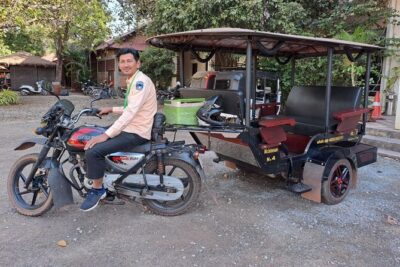
On the guide side, I look for people who can explain without turning it into a lecture. Names you’ll see praised here include Tan and Sam for English clarity, plus drivers like Pan and Ton for careful, smooth handling. Expect photo help too, since guides like Tan are known for taking great shots and pointing out better angles.
Key highlights you’ll actually feel
- Poeng Ta Kho cliff viewpoint gives you a panoramic reset before the temples
- Preah Ang Thom reclining Buddha is carved into an enormous sandstone boulder, with stairs and shelter added for access
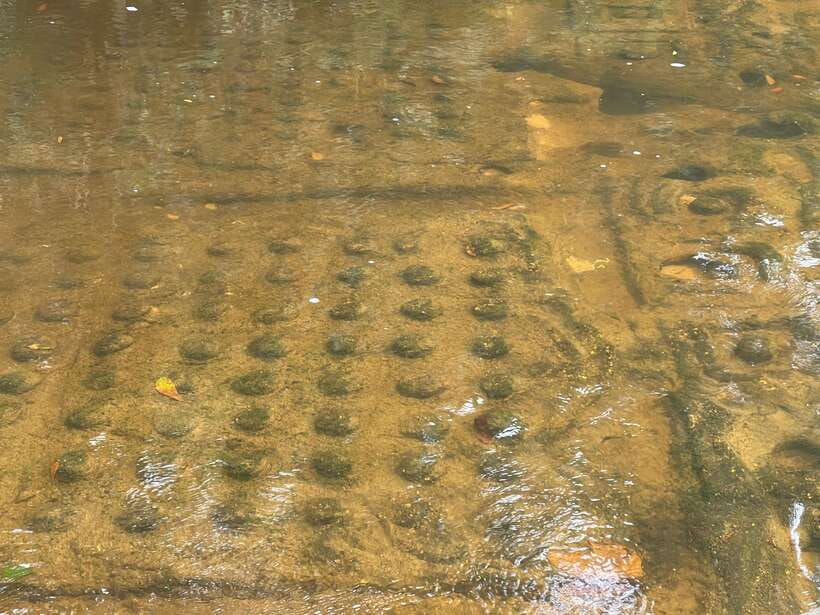
- Anlong Pong Phkay, the River of 1000 Lingas shows old Khmer sacred carvings where the water and rock meet
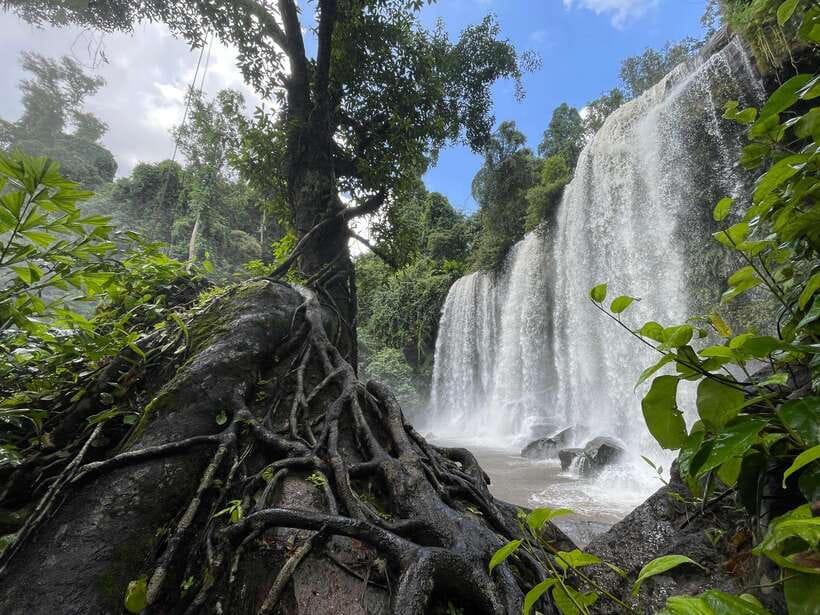
- Kulen Waterfall swim is real time outdoors, with two main falls that change a lot with season
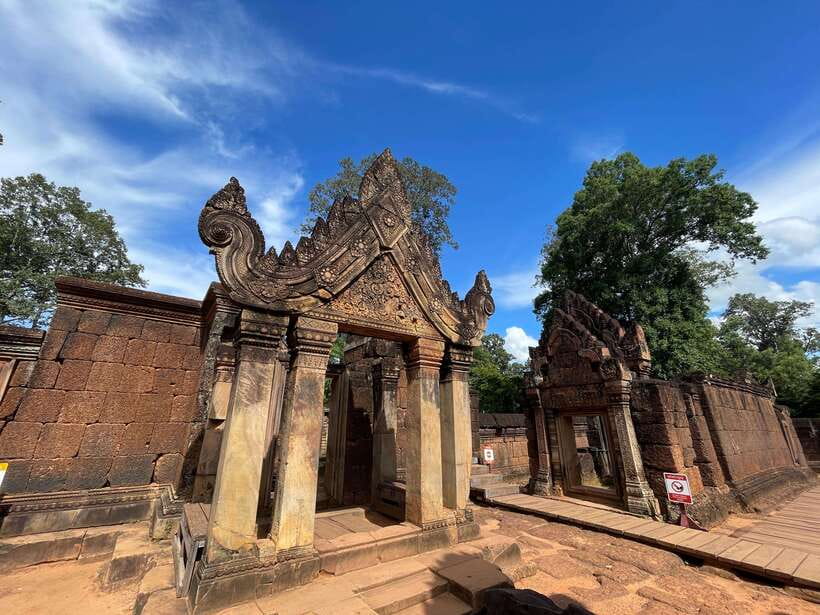
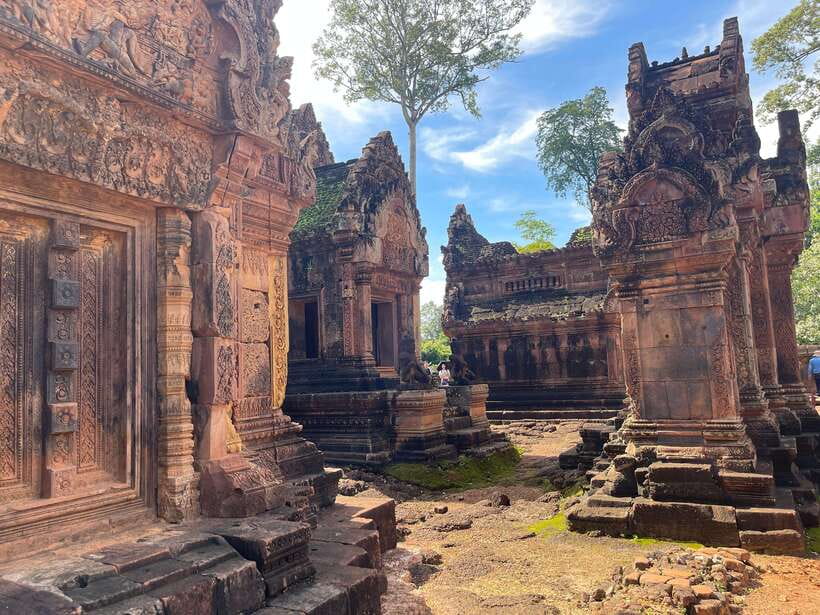
- Banteay Srei’s red sandstone artistry earns its nickname, Citadel of Women, for precision carvings
- Preah Dak village palm cakes and solar light connect you to everyday Cambodian life, not just monuments
The pink sandstone carvings, a few more runs
- Full-Day Banteay Srei & 4 Temples – Grand Tours Join-in Tour★ 5.0 · 1,155 reviews
- Siem Reap Tour: Angkor Wat Sunrise, Bayon, Ta Prohm, Banteay Srei★ 5.0 · 931 reviews
- 2-Day Angkor Wat With Small, Big Circuit and Banteay Srei Tour★ 5.0 · 545 reviews
- From Siem Reap: Banteay Srei Temple & Grand 5 Temple Tour★ 4.8 · 262 reviews
Kulen Mountain plus Banteay Srei: Why this combo makes sense
Most Siem Reap days fall into a tight template: temples, temples, and more temples. This outing mixes the mood on purpose. You start high on Kulen Mountain for wide views, then you move to carved sacred sites, and eventually you go for a swim in cool waterfall water. That shift matters because it keeps the day from feeling repetitive.
You also get two different “types” of Khmer sacred spaces. Preah Ang Thom and the River of 1000 Lingas feel like spiritual geography, places where worship ties directly to stone, water, and fertility symbolism. Then Banteay Srei feels more like museum-level craft, with refined red sandstone carving detail dedicated to Shiva.
If you want a day that still feels cultural but also gives your body a break, the waterfall stop plus the village meal moments make this a smart choice. It is not a slow sightseeing day, but it does offer variety without feeling random.
Morning pickup to Kulen ridge: the 7:30 AM reality check
Your pickup is scheduled between 7:30 and 8:00 AM, and the exact time is confirmed the day before. You ride out in an air-conditioned vehicle, which helps because Kulen’s roads can feel long before you even reach the viewpoints.
This start time is also practical for two reasons. First, it gives you better chances to see the cliff and key sacred spots before the day peaks. Second, if you plan to swim, you want enough daylight and time buffer to enjoy the water stop without feeling rushed.
One more thing I’d plan for: you will be outdoors for most of the day, with sun and insects in the mix. Bring hat, insect repellent, comfortable shoes, and cash for entrance fees. If you can, pack swimwear and a towel in a way that’s easy to grab, because you will want to change fast when you arrive.
Poeng Ta Kho (Peung Takhu) cliff viewpoint: panoramic views that reset your brain
Poeng Ta Kho, also known as Peung Takhu, sits on the Kulen ridge and acts like a natural orientation point for the whole mountain area. The stop is short, about 25 minutes, but it is long enough to find a good spot, take photos, and actually enjoy the view.
What I love about this stop is the quiet contrast. You are not just looking at a temple facade. You are seeing the shape of the landscape, the cliff line, and the way the mountain opens out. On rainy season days, the scenery often looks greener and softer, which can make the viewpoint feel even more dramatic.
If you’re a photo person, this is where it pays to slow down. Guides like Tan are known for spotting strong angles and helping with pictures, so if that’s your thing, this is a great early moment to ask for photo guidance. The viewpoint experience also tends to feel calmer before later crowds build around the more specific sacred sites.
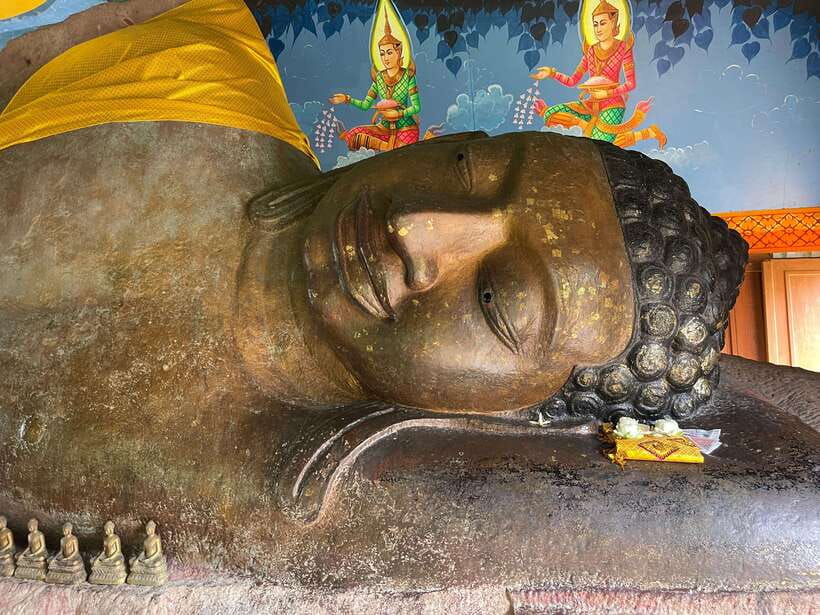
Preah Ang Thom reclining Buddha: an 8-meter slab carved from one boulder
Preah Ang Thom is one of those places that feels different as soon as you understand what you’re looking at. Instead of a standing statue on a pedestal, you see an 8-meter-long reclining Buddha carved into a giant sandstone boulder.
Access is improved with a staircase and shelter, which helps because you can focus on the spiritual feeling rather than fighting the environment. The site also draws local worshippers, so it is not just a tourist photo stop. You’ll often see people showing respect in a natural, everyday way, which makes the place feel alive rather than staged.
Timing matters here too. The tour gives you about 1 hour at this stop. That’s enough time to walk around, observe details, and not just rush past the main figure. If rain hits, the area can still be worthwhile, since the stone texture and shelter protect you better than open viewpoints.
One consideration: this is a sacred site. I recommend dressing with respect, keeping voices low, and being mindful when people are praying or resting.
Up the holy mountain to the falls


River of 1000 Lingas (Anlong Pong Phkay): sacred carvings where water meets stone
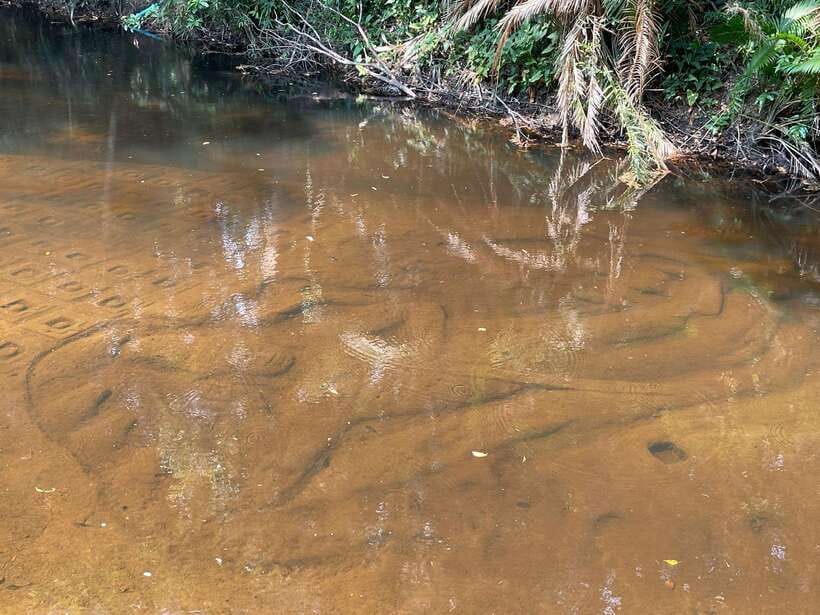
The River of 1000 Lingas is one of the most distinctive stops on the route because it is not a single monument. It’s a stretch of sacred carvings appearing across the riverbed and rock surfaces, including lingas, yonis, and a large Vishnu image.
This stop is about 25 minutes, which can feel short, but the space you see is more about seeing patterns than reading a wall of text. The carvings highlight the Khmer link between water, fertility, and spiritual symbolism. Even if you do not know the full technical meaning of every element, the site gives you a clear sense that water was historically central to belief systems.
Do expect variability depending on season and recent rain. If the river conditions are heavy, you might see more water and less exposed carving detail, but it still helps you understand how the sacred theme is tied to real water.
If you plan to take photos here, go slow. Look for angles where carvings show clearly, and be careful on slippery rocks. Comfortable shoes are not optional if you want to enjoy the walk.
Kulen Waterfall: why two falls feel like two different experiences
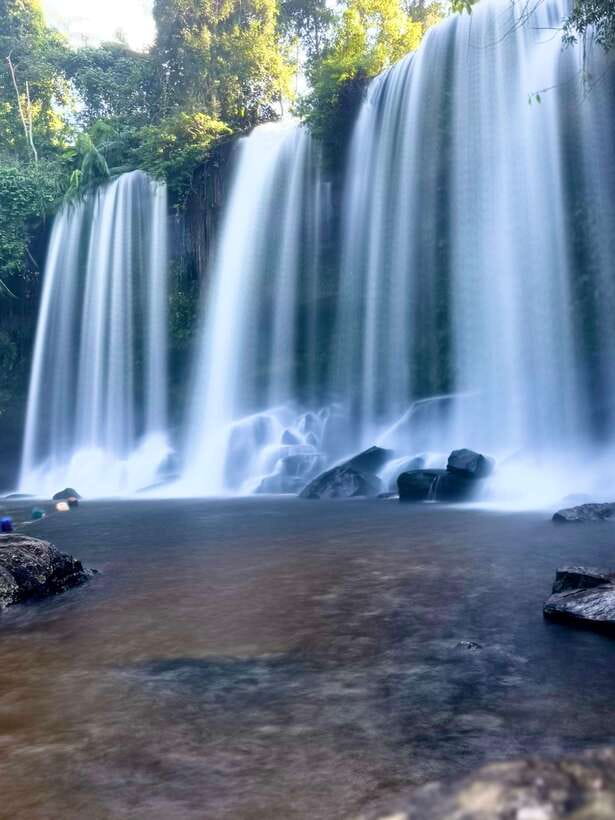
Kulen National Park’s waterfall stop is the big physical moment of the day, and the itinerary builds time for it at about 1 hour at the waterfall area. What makes it interesting is that there are two main waterfalls you’re likely to see, and they can feel totally different.
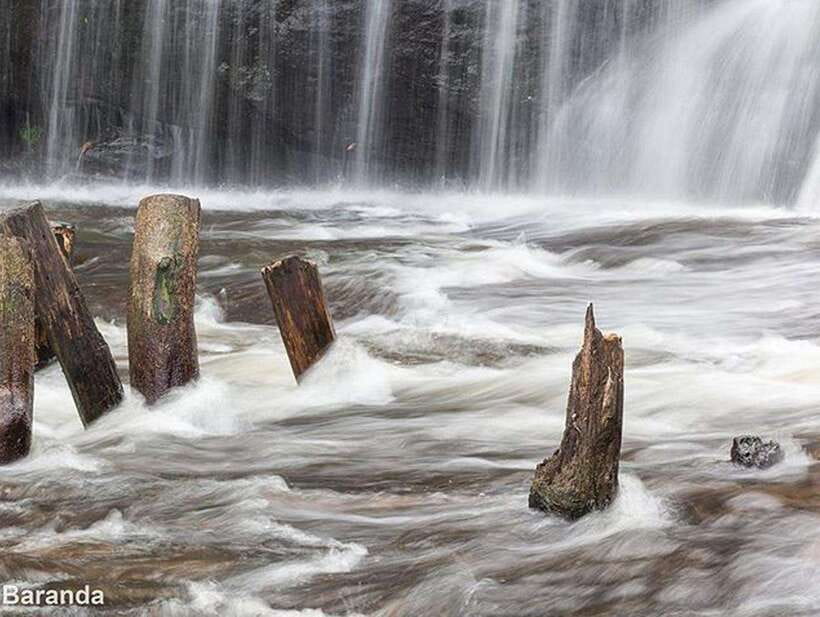
During the rainy season, one waterfall is around 4 to 5 meters high and about 25 meters wide. The second is taller, roughly 15 to 20 meters high and around 15 meters wide. When the water is moving strongly, you get a stronger sense of power and a more “wow” soundscape. If it has been dry, the flow can look and feel lighter.
Swimming is part of the experience here. The practical benefit is that it’s not a wet stop just for photos. You can actually refresh your body. There are changing rooms on-site, which makes the swim option far more comfortable.
What to bring is simple and worth following closely: swimwear, towel, and insect repellent. If you forget one of these, you can still enjoy the waterfalls, but the swim option becomes a lot less fun.
Lunch after waterfalls: refuel locally without losing the day
After the waterfall, you stop for lunch at a local restaurant. Lunch time is about 1 hour, and lunch is not included in the price.
This is one of those moments where you should keep expectations flexible. The goal here is simple: eat something local, rest for a bit, and get ready for Banteay Srei. If you want to keep the day moving smoothly, pick food that is filling but not too heavy, since you’ll still be walking and visiting another temple complex right after.
One nice element to look for: earlier in the day, you get tastes of seasonal fruits and palm cake, and later you’ll get the steamed palm cake from Preah Dak village. So lunch can be a chance to balance your day, rather than the main “event” meal.
If you are sensitive to heat, use lunch time to drink extra water. The tour includes bottled water, and the vehicle typically keeps you supplied, but hydration still matters after swimming.
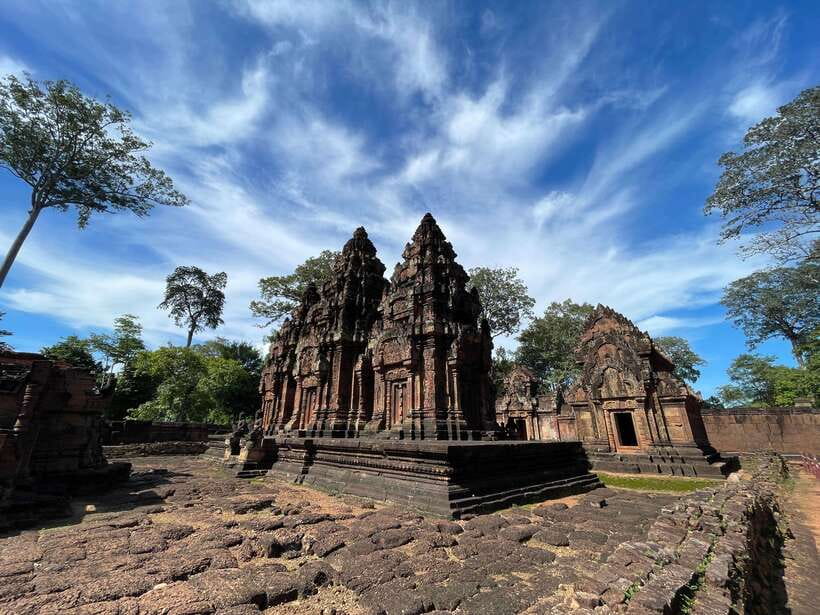
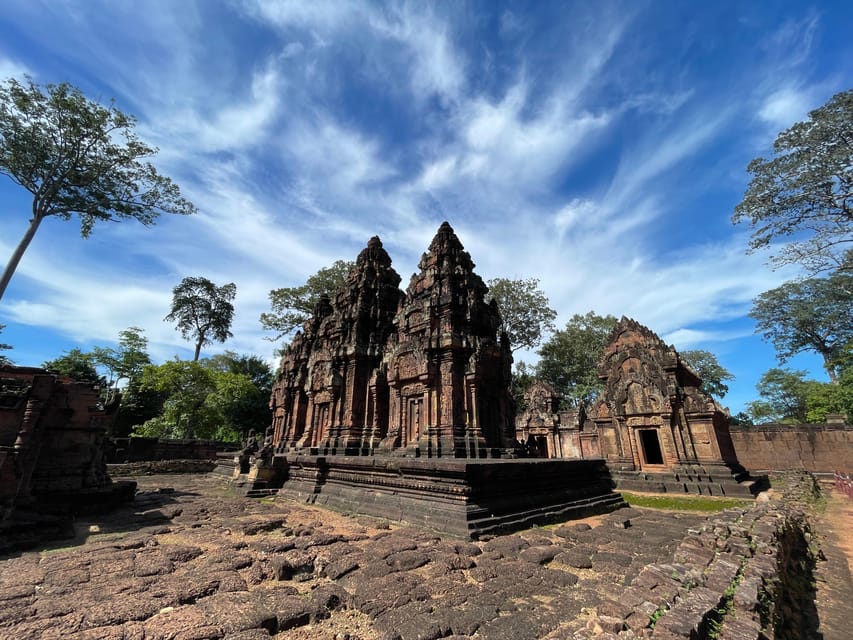
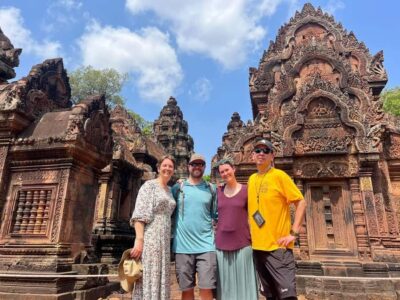
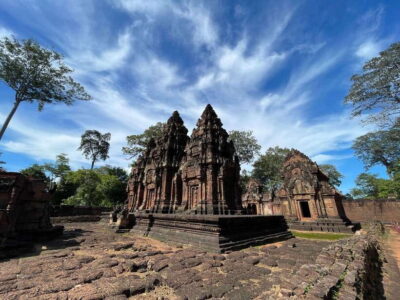
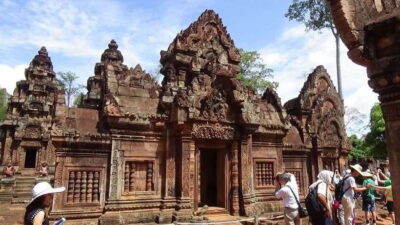
Banteay Srei temple: red sandstone carving, Shiva focus, and the Citadel of Women nickname
Banteay Srei is often described as one of Cambodia’s fine-art temple stops, and it lives up to that reputation. The temple dates to the 10th century and is dedicated to Shiva.
It’s called the Citadel of Women, and the reason is tied to the temple’s delicate, detailed carving style. The sandstone is red, and the workmanship is what you’ll remember. This is not the kind of temple where you only look once. You’ll want to move your eyes across carvings on surfaces because the details reward closer attention.
The tour gives you about 1 hour here. That’s the right length. Longer can become tiring if you’re trying to take in everything, but shorter can feel rushed, because the artistry is the point.
One practical note for many people: Banteay Srei requires an Angkor Pass. The tour mentions the 1 day pass is $37, so if you do not already have a pass, you’ll need to budget for it.
Also remember entrance costs are separate from the tour price, and you will need to carry the right payment method for each site.
Preah Dak village stop: steamed palm cake plus solar power pride
After Banteay Srei, you head to Preah Dak village, a short drive away, with about 20 minutes on-site. This is a compact stop, but it adds something many temple-focused days miss: everyday local life.
Instead of noodles, you taste the village’s famous steamed palm cakes. That food detail matters because it connects you to the place through taste, not just scenery. You also learn about the village’s environmental efforts, especially its One Village, One Light Bulb solar power project and its commitment to cleanliness and recycling.
What I like here is the human scale. You’re not standing behind ropes looking at stone from a distance. You are in a real community space, and the interaction can feel straightforward and friendly, especially compared to big tourist hubs.
This stop is also a reminder that the people living near historic sites are not just the backdrop. They manage daily routines, food, and local sustainability efforts, and that makes your visit feel more respectful and grounded.
Price and what you really get for $46
The price for this day trip is $46 per person, lasting 8 to 9 hours, with hotel pickup and drop-off included within Krong Siem Reap.
In practical value terms, you’re paying for four big things:
1) transportation in an air-conditioned vehicle
2) a professional English-speaking guide
3) entry guidance for the planned route plus bottled water and towels
4) food tasting moments, including local palm cake and seasonal fruits
The main extras you should budget separately are the temple and park fees. Banteay Srei requires an Angkor Pass (1 day pass $37). Kulen Mountain National Park entrance is $20 per person, paid in cash only, and credit cards are not accepted.
Lunch is also not included, so plan on spending on your own meal.
So does $46 feel fair? For me, it does if you like a day that combines multiple sites with a guide who can explain what you’re seeing. It also helps if you can make use of the swim time, because that turns the day into more than a dry sightseeing checklist.
Timing, crowds, and the season effect you can’t ignore
Two “invisible” variables affect how your day feels: crowd level and season.
The sites can be crowded, especially during Cambodian public holidays. That means you should arrive with patience, keep your expectations flexible, and try to stay calm if you wait for your turn at key viewpoints or within sacred areas.
Season makes a visible difference. The waterfall and the River of 1000 Lingas can look larger or smaller depending on conditions. If it rained heavily, you might see heavier waterfall flow and different river exposure. On at least one rainy season day, people report still enjoying the waterfall area even when swimming was not ideal due to weather, which is a good reminder to be ready for plan changes.
If you want the best shot at both views and swimming, choose a time of day that makes sense and bring the right gear. Changing rooms help, but your comfort comes from packing correctly.
Who this tour suits best, and who might prefer private time
This is best for active sightseers who want variety in one day. You should be comfortable with:
- walking around carved sacred areas
- stairs at Preah Ang Thom
- rocky riverbed areas at the River of 1000 Lingas
- time outdoors at the waterfalls
If you are lower fitness or prefer minimal walking, the tour itself notes that you may not enjoy a group tour, and a private tour option can be arranged. Also, if you are traveling with family or prefer more control over pacing, a smaller group can reduce stress.
On the upside, the tour limits groups to a maximum of 12 participants, which tends to make it feel more personal than mass tours. That smaller size also helps your guide manage questions and photography moments.
From the guide feedback, people really value that the guide is upbeat and clear, with names like Tan, Sam, and others mentioned, and that the driving is careful, with drivers such as Ton, Pan, and others praised for safety.
Should you book this Siem Reap day trip?
Book it if you want a full-day experience that goes beyond the usual Angkor routine, with a real swim option and two very different temple styles in one push. It’s also a good pick if you like a guide who helps with photos and keeps the pacing moving, because the day is structured but not frantic.
Skip or consider a private alternative if you strongly dislike walking on uneven ground, if you only want the most famous Angkor monuments, or if you are traveling during peak holidays and hate crowds. Also be sure you budget for separate fees, especially the Angkor Pass for Banteay Srei and the cash-only national park entrance for Kulen.
If you pack well and go with a curious mindset, this is one of those Siem Reap days that feels like Cambodia, not just a set of stops.
FAQ
What is the duration of the Kulen Waterfall and Banteay Srei day trip?
It runs about 8 to 9 hours.
What is included in the tour price?
The tour includes bottled water and a towel, free hotel pickup and drop-off in Siem Reap city, a professional English-speaking guide, transportation by air-conditioned vehicle, local palm cake tasting, and seasonal fruit tasting.
Do I need an Angkor Pass for Banteay Srei?
Yes. Banteay Srei requires an Angkor Pass. A 1 day pass is listed as $37.
Is Kulen Mountain National Park entrance included?
No. Kulen Mountain National Park entrance is listed as $20 per person and is cash only, credit cards are not accepted.
Can I swim at Kulen Waterfall?
Yes, bathing and swimming are part of the experience. Bring swimwear and a towel, and note that changing rooms are available on-site.
Where are you picked up in Siem Reap?
Pickup is included for city hotels in Krong Siem Reap.
What time is pickup scheduled?
Pickup is scheduled between 7:30 and 8:00 AM, and the exact details are confirmed the day before the tour.
What should I bring?
Bring comfortable shoes, a hat, swimwear, a towel, insect repellent, and cash.
More Tour Reviews in Siem Reap
- Angkor Wat Sunrise or Sunset Tour with Guide from Siem Reap
★ 5.0 · 12,109 reviews - Siem Reap: Angkor Wat: Small-Group Sunrise or Sunset Tour
★ 5.0 · 9,444 reviews - From Siem Reap: Kampong Phluk Floating Village Tour by Boat
★ 4.9 · 6,979 reviews - Sunset tour of Kampong Phluk stilts home village on the Tonle Sap
★ 5.0 · 4,865 reviews - Siem Reap: Angkor Wat 2-Day Tour with Sunrise and Sunset
★ 4.9 · 4,429 reviews
Kulen Mountain and the Falls
- Kulen Waterfall Join-in Tour (local Picnic lunch)
★ 5.0 · 2,434 reviews - Kulen Mountain: Small-Group Tour and Picnic lunch
★ 4.9 · 1,802 reviews - Siem Reap: Kulen Mountain, Beng Mealea and Tonle Sap Tour
★ 5.0 · 1,483 reviews - Phnom Kulen Waterfall & the Sacred 1000 Lingas (with Lunch)
★ 4.8 · 974 reviews - Kulen Mountain with Beng Mealea and Tonle Sap Small Group Tour
★ 5.0 · 780 reviews
The Carvings of Banteay Srei
- Full-Day Banteay Srei & 4 Temples – Grand Tours Join-in Tour
★ 5.0 · 1,155 reviews - Siem Reap Tour: Angkor Wat Sunrise, Bayon, Ta Prohm, Banteay Srei
★ 5.0 · 931 reviews - 2-Day Angkor Wat With Small, Big Circuit and Banteay Srei Tour
★ 5.0 · 545 reviews - From Siem Reap: Banteay Srei Temple & Grand 5 Temple Tour
★ 4.8 · 262 reviews - 3-Days Discovery Of Angkor: Waterfalls,Floating Village and Banteay Srei temple
★ 5.0 · 214 reviews
Just Added: Fresh Siem Reap Tour Reviews

Banteay Srei Tours, compared.
 ★ 5.0Full-Day Banteay Srei & 4 Temples – Grand Tours Join-in TourFrom $201,155 reviews
 ★ 5.0Siem Reap Tour: Angkor Wat Sunrise, Bayon, Ta Prohm, Banteay SreiFrom $130931 reviews
 ★ 5.02-Day Angkor Wat With Small, Big Circuit and Banteay Srei TourFrom $158545 reviews
 ★ 4.8From Siem Reap: Banteay Srei Temple & Grand 5 Temple TourFrom $20262 reviews
 ★ 5.03-Days Discovery Of Angkor: Waterfalls,Floating Village and Banteay Srei templeFrom $183214 reviews
 ★ 5.0Banteay Srei, Kulen Waterfall & Beng Mealea ExplorationFrom $49185 reviews
 ★ 4.9Banteay Srei and Grand Circuit Heritage TourFrom $18163 reviews
Kulen Waterfall, Banteay Srei, and Beng Mealea TourFrom $53148 reviews
Browse the lists this tour appears in