
Kulen Waterfall plus two temples in one day is a winning combo. You start early in Siem Reap and spend the day mixing serene nature breaks with temple details most people skip. The route is built for efficiency, not rushing, with a guide who can explain what you’re seeing along the way.
I especially love the small-group feel (capped at a maximum of 12) and the practical extras that make long days easier, like bottled water and small fresh towels in the vehicle. And the stops are well chosen: Banteay Srei’s carvings, Phnom Kulen’s riverbed carvings, and Beng Mealea’s half-reclaimed sprawl all give you different “moods” in the same itinerary.
One thing to plan around is the money and timing. Two major temples require the Angkor Pass, Kulen has an extra cash-only entrance fee, and lunch can land late depending on the schedule.
Key things to know before you go
- Early pickup saves daylight. You leave your hotel around 7:30 to 8:00 AM in an air-conditioned vehicle.
- Small-group pacing, capped at 12. That cap helps keep the day manageable and keeps guide time more personal.
- You’ll handle two ticket types. The Angkor Pass covers Banteay Srei and Beng Mealea, while Kulen Mountain has a separate entrance fee.
- Kulen has two main falls. The smaller one is about 4 to 5 meters tall, and the bigger falls can reach 15 to 20 meters in rainy season.
- Beng Mealea is less restored. Expect a walk-through feel, with lots of crumbling and discovery.
- Bring swim gear if you want the waterfall moment. Changing rooms are available on-site.
The pink sandstone carvings, a few more runs
- Full-Day Banteay Srei & 4 Temples – Grand Tours Join-in Tour★ 5.0 · 1,155 reviews
- Siem Reap Tour: Angkor Wat Sunrise, Bayon, Ta Prohm, Banteay Srei★ 5.0 · 931 reviews
- 2-Day Angkor Wat With Small, Big Circuit and Banteay Srei Tour★ 5.0 · 545 reviews
- From Siem Reap: Banteay Srei Temple & Grand 5 Temple Tour★ 4.8 · 262 reviews
Why this Siem Reap day tour hits the sweet spot
If you only have one day outside the main Angkor complex, this route is smart. It takes you from highly detailed temple craft to raw nature, then ends with a temple you feel more than you study.
The day also avoids the common trap of seeing three sites that all feel the same. Here, they don’t. Banteay Srei is precise and intricate. Phnom Kulen is about place and water, including the reclining Buddha statue carved into a huge sandstone boulder. Beng Mealea is more wild, with paths through an unrestored temple area that feels like you’re wandering through time.
And yes, the early start matters. You’ll be in position to see the main highlights without the day being completely cooked by heat and crowds.
Meeting time, transport comfort, and what your $53 buys
This tour runs about 9 to 10 hours. Pickup is scheduled between 7:30 and 8:00 AM from your Siem Reap hotel, then you’re in an air-conditioned vehicle for most of the travel.
The $53 per person price is not just “a ride to temples.” It covers the basics that usually slow people down: hotel pickup and drop-off, an English-speaking guide, bottled water and small fresh towels, and transportation between stops. You also get seasonal fruit testing, which sounds small, but it’s one of those Cambodia touches that makes the day feel lived-in.
Where value becomes clearer is how much you pack into one day. You’ll cover Banteay Srei, Phnom Kulen highlights (including Preah Ang Thom and the 1000 Lingas area), then Beng Mealea, with a single guide tying it together.
Banteay Srei: precision carving 25 kilometers north of Angkor Wat
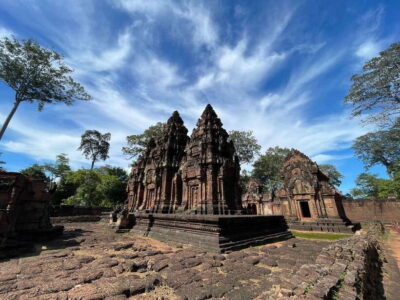
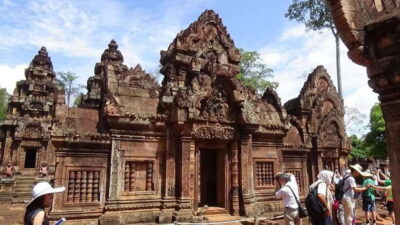
Banteay Srei is a 10th-century Cambodian temple dedicated to Shiva. It sits roughly 25 kilometers north of Angkor Wat, and its claim to fame is the carving. Think fine details rather than huge scale.
Plan to spend the full hour here. The carvings reward slow attention. You’ll want to look beyond the big shapes and notice the repetitive motifs and the way stonework creates depth. This is also one of the easier stops in terms of walking stress, so it’s a good place to reset and get your visual “lens” ready for what comes next.
Practical heads up: the Angkor Pass is required for Banteay Srei, and it is not included in the base price. Admission is not included for this stop, so budget and ticket setup is part of the day’s success.
Preah Ang Thom and the 1000 Lingas: sacred carvings in a sandstone world
After Banteay Srei, you shift from temple craft to a more dramatic setting. Preah Ang Thom is a reclining Buddha statue carved into a huge natural sandstone boulder. The statue is listed at about 8 meters tall, and a modern staircase gives you access up close.
This is a stop where you’ll feel the “engineering plus nature” combo. You get the scale of the rock, then the calm presence of the reclining form. If you’re tired, it’s still worth it because the statue is unmistakable and the viewing angle is good.
Next comes 1000 Lingas. This is not a quick scribble on a wall. Along a stretch of the riverbed for around 500 meters, you’ll see carvings of linga and several big and small yoni, plus a large carving of Vishnu. Along the riverbed walls there are also small carvings in the bedrock.
Why I like this stop for your first-time planning: it turns the day from “temples you visit” into “symbols you understand.” Even if you do not know the terms, seeing the scale and the layout makes it more than decoration.
A tip: wear shoes with solid grip. Riverbed areas and uneven stone can get slippery, especially when conditions are humid or after rain.
Deeper into the jungle temple
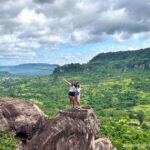
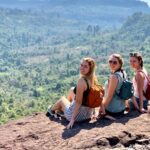
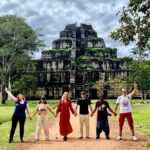
Phnom Kulen Waterfall: two falls, seasonal size, and a possible swim
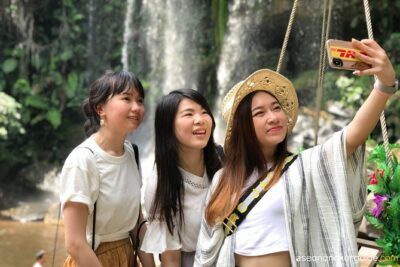
Phnom Kulen National Park is where the day turns into nature. There are two main waterfall areas.
- The first waterfall is listed at about 4 to 5 meters tall and around 25 meters wide during rainy seasons.
- The second waterfall is listed at about 15 to 20 meters tall during rainy season, so it’s the bigger wow moment when water flow is strong.
The tour gives you about 1 hour 30 minutes for the waterfall portion. That time window is realistic for walking, photos, and a careful look around, but it’s not a “half-day hangout.” If you want to swim, you’ll need to manage time and energy.
The tour specifically notes that if you plan to swim, bring a swimsuit and a towel. Changing rooms are available on-site. That’s the kind of detail that makes a difference. A lot of people show up with only a camera and then regret it when the chance to cool off happens right when you are least prepared.
Also take note of crowds. The tour can be crowded, especially on Cambodian public holidays, and waterfall size varies by season. In drier months you may get a more modest cascade, but the walk and the riverbed atmosphere still make the stop worthwhile.
Lunch timing: when the schedule can run late
Lunch is included as a break, but not as a meal you can count on. You’ll have lunch at a local restaurant near either Beng Mealea Temple or Banteay Srei Temple, depending on timing.
Here is the key practical idea: build flexibility into your day. One common issue with long temple tours is that lunch can land later than expected. If you want comfort, I recommend you carry a small snack or drink of your own so you are not stuck waiting with empty energy. The tour does provide bottled water, but food timing can still test your patience.
If you are picky about meals, you’ll also want to be ready for local options rather than a familiar menu style.
Beng Mealea: an early 12th-century temple that feels half discovered
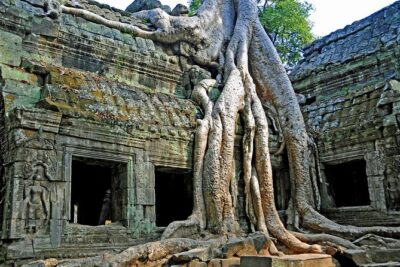
Beng Mealea is located about 40 kilometers east of Angkor Wat and is one of Cambodia’s more enigmatic temple sites. It was built in the early 12th century, and a major part of its appeal is that it remains largely unrestored.
That unrestored quality is a double-edged sword. The upside is the feeling of discovery. You can wander through collapsed structures and see how the temple exists in a more natural, less polished state. It feels closer to exploration than museum-style sightseeing.
The downside is that you may deal with uneven ground and more time spent watching your footing. This is not the place to sprint, and it’s not always the place to take it slow in the exact way you might at a restored monument. If you prefer smooth paths and clear signage, temper expectations.
This is also a good stop for people who want something a little off the main tourist route. Beng Mealea is famous, but it still does not feel like the same kind of experience as the big Angkor highlights.
Group size and the guide role: when So and Joe are on the day
This tour is led by a professional English-speaking guide, and the group is capped at a maximum of 12. That small size matters because the guide can actually keep the group together and explain the details you’d otherwise miss.
In the wild, you may meet guides with names like So or Joe. Guides like these tend to know how to connect temple forms and riverbed symbols to what you see in front of you. One thing to watch for, though: even in small groups, photo-heavy stops can stretch the moment. Stay close to your guide, especially at trail intersections or near stairways.
For the best experience, do your part too. If you have mobility limits, tell your guide early. If you prefer less time on photos and more time moving through, say so. A good guide will adjust your pace.
Tickets, cash, and the real cost of a full day
Here’s the part that trips people up, because the base price does not include everything you must pay onsite.
You’ll need:
- A 1-Day Angkor Pass for Banteay Srei and Beng Mealea. The price is listed at $37 USD per person.
- Kulen Mountain entrance fee. It is $20 USD per person and is cash only. Credit cards are not accepted.
So your all-in total is roughly:
- $53 tour price
- + $37 Angkor Pass
- + $20 Kulen entrance
That comes to about $110 per person, before lunch and personal expenses.
The big practical takeaway: have cash ready for Kulen, and do not plan on last-minute ticket fixes if you’re traveling without a buffer. Also, the day’s timing matters because you’ll be moving between sites with limited time at each.
Seasonal and crowd factors you can actually plan for
Two things change the whole feel of this trip: season and crowd levels.
Waterfall flow varies by season, so in rainy months you’ll likely see more dramatic water, especially at the second waterfall. In drier months, the scenery is still worth it, but you may not get the full size effect.
Crowds can spike on Cambodian public holidays. If you are sensitive to crowds, aim to stay close to the schedule and do not linger too long at the popular photo points. The guide can help you find the right moments to move through.
And if you like a swim, remember that water conditions change. Bring the gear, but also be ready to adapt.
Who should book this tour, and who should choose something else
This is a great fit if you want:
- Three major Siem Reap area highlights in one day
- A guided explanation that makes the carvings and symbols more meaningful
- Pickup convenience, air-conditioned comfort, and included water and towels
- A mix of temples plus the natural reset of Phnom Kulen
Choose another option if:
- You want a slower, more relaxed day with long, unscheduled breaks
- You strongly dislike cash-only fees and ticket juggling
- You are worried about uneven ground at Beng Mealea. This is one of the more demanding stops in terms of footing.
The tour itself notes that the experience can be physically demanding, and private tour options can be arranged for lower physical fitness. If that’s your situation, it’s worth upgrading your comfort level.
Should you book the Kulen Waterfall, Banteay Srei, and Beng Mealea tour?
I would book it if you want maximum variety in one day, with pickup and a guide who can connect the dots. The mix of Banteay Srei’s carvings, the symbolic riverbed stop at 1000 Lingas, and Beng Mealea’s unrestored maze gives you a trip that feels more varied than the standard temple checklist.
But go in with eyes open. The real cost is bigger than the $53 sticker price once you add the Angkor Pass and the Kulen cash entrance fee. Also, pack for a long day and consider a snack for potential late lunch.
If you can handle a full day, manage cash, and stay flexible, this is an efficient way to see parts of Cambodia that most people rush past.
FAQ
How long is the Siem Reap Kulen, Banteay Srei, and Beng Mealea tour?
It runs about 9 to 10 hours.
What time is pickup from my hotel?
Pickup is scheduled between 7:30 AM and 8:00 AM in Siem Reap.
What entrance fees are required, and what are the prices?
An Angkor Pass is required for Banteay Srei and Beng Mealea, priced at $37 USD per person. Kulen Mountain has an entrance fee of $20 USD per person.
Is lunch included?
Lunch is not included. You will have lunch at a local restaurant, near either Beng Mealea Temple or Banteay Srei Temple depending on timing.
Can I pay the Kulen Mountain entrance fee by credit card?
No. The Kulen Mountain entrance fee is cash only, and credit cards are not accepted.
Is swimming allowed at the waterfall, and what should I bring?
The tour notes that if you plan to swim, you should bring a swimsuit and a towel. Changing rooms are available on-site.
What is the cancellation policy?
You can cancel for a full refund up to 24 hours before the experience starts. If you cancel less than 24 hours in advance, the amount paid will not be refunded.
Kulen Mountain and the Falls
- Kulen Waterfall Join-in Tour (local Picnic lunch)
★ 5.0 · 2,434 reviews - Kulen Mountain: Small-Group Tour and Picnic lunch
★ 4.9 · 1,802 reviews - Siem Reap: Kulen Mountain, Beng Mealea and Tonle Sap Tour
★ 5.0 · 1,483 reviews - Phnom Kulen Waterfall & the Sacred 1000 Lingas (with Lunch)
★ 4.8 · 974 reviews - Kulen Mountain with Beng Mealea and Tonle Sap Small Group Tour
★ 5.0 · 780 reviews
Into the Jungle at Beng Mealea
- Siem Reap: Kulen Mountain, Beng Mealea and Tonle Sap Tour
★ 5.0 · 1,483 reviews - Kulen Mountain with Beng Mealea and Tonle Sap Small Group Tour
★ 5.0 · 780 reviews - Koh Ker Temple Group & Beng Mealea Full-Day Join-in Tour
★ 5.0 · 710 reviews - From Siem Reap: Koh Ker and Beng Mealea Temples Tour
★ 4.9 · 293 reviews - Banteay Srei, Kulen Waterfall & Beng Mealea Exploration
★ 5.0 · 185 reviews
The Carvings of Banteay Srei
- Full-Day Banteay Srei & 4 Temples – Grand Tours Join-in Tour
★ 5.0 · 1,155 reviews - Siem Reap Tour: Angkor Wat Sunrise, Bayon, Ta Prohm, Banteay Srei
★ 5.0 · 931 reviews - 2-Day Angkor Wat With Small, Big Circuit and Banteay Srei Tour
★ 5.0 · 545 reviews - From Siem Reap: Banteay Srei Temple & Grand 5 Temple Tour
★ 4.8 · 262 reviews - 3-Days Discovery Of Angkor: Waterfalls,Floating Village and Banteay Srei temple
★ 5.0 · 214 reviews
Just Added: Fresh Siem Reap Tour Reviews

Banteay Srei Tours, compared.
 ★ 5.0Full-Day Banteay Srei & 4 Temples – Grand Tours Join-in TourFrom $201,155 reviews
 ★ 5.0Siem Reap Tour: Angkor Wat Sunrise, Bayon, Ta Prohm, Banteay SreiFrom $130931 reviews
 ★ 5.02-Day Angkor Wat With Small, Big Circuit and Banteay Srei TourFrom $158545 reviews
 ★ 4.8From Siem Reap: Banteay Srei Temple & Grand 5 Temple TourFrom $20262 reviews
 ★ 5.03-Days Discovery Of Angkor: Waterfalls,Floating Village and Banteay Srei templeFrom $183214 reviews
 ★ 5.0Banteay Srei, Kulen Waterfall & Beng Mealea ExplorationFrom $49185 reviews
 ★ 4.9Banteay Srei and Grand Circuit Heritage TourFrom $18163 reviews
 ★ 5.0Banteay Srei and Grand Circuit Heritage Tour from Siem ReapFrom $24142 reviews
Browse the lists this tour appears in