
Reviewed · ANGKOR WAT TEMPLE TOURS
Siem Reap: Angkor Wat 2day Big and Small Circuit Guided Tour
Angkor looks different when the sun is low. This 2-day Big and Small Circuit tour strings together sunrise magic, quieter morning walks, and a guide who explains what you are actually seeing. I really like the way the schedule balances the big-name classics with smaller temples that are just as moving, and I also like the practical extras like AC van pickup plus cool water and a wipe towel. One thing to plan for: the days are early and walking is steady, so your feet will be part of the itinerary.
On Day 1, you start at sunset inside the Angkor complex with a temple loop that feels more personal than a checklist. You go from Preah Khan, through Neak Pean and Ta Som, then into East Mebon, Pre Rup, and Phnom Bakheang, with Khmer stories attached to the stones. The possible drawback is that temple entrance fees and food are not included, so bring a realistic budget for tickets and your own meals.
Day 2 is all about energy, because you wake up early for sunrise over Angkor Wat, then spend the morning and afternoon moving through Angkor Thom and other standout sites. You’ll see the South Gate, the bridge of statues of gods, Ta Prohm (famous from Tomb Raider), Bayon’s smiling faces, and more temples like Banteay Kdei and Ta Keo. If you have mobility limitations or you’re traveling with kids under 12, this is probably not the best fit.
Key Highlights You’ll Actually Feel
- Sunrise and sunset timing that changes the mood of the stones, not just the photos
- A smart mix of big icons (Angkor Wat, Ta Prohm, Bayon) and less-restored temples
- Real temple functions explained, like bathing and meditation links tied to the layouts
- Guides with strong English storytelling, including names like Sayon and Sam
- Practical comfort on the move, with AC transport, cool water, and wipe towel breaks
Other ways to walk the great temple
- Angkor Wat Sunrise or Sunset Tour with Guide from Siem Reap★ 5.0 · 12,109 reviews
- Siem Reap: Angkor Wat: Small-Group Sunrise or Sunset Tour★ 5.0 · 9,444 reviews
- Siem Reap: Angkor Wat 2-Day Tour with Sunrise and Sunset★ 4.9 · 4,429 reviews
- Siem Reap: Full-Day Angkor Wat Guided Tour with Sunset★ 4.9 · 3,803 reviews
Sunrise, Sunset, and Why the Timing Matters
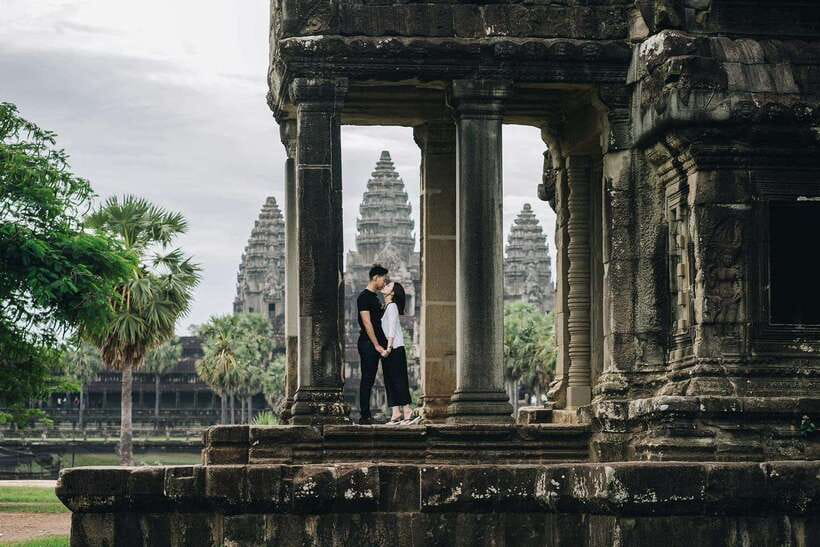
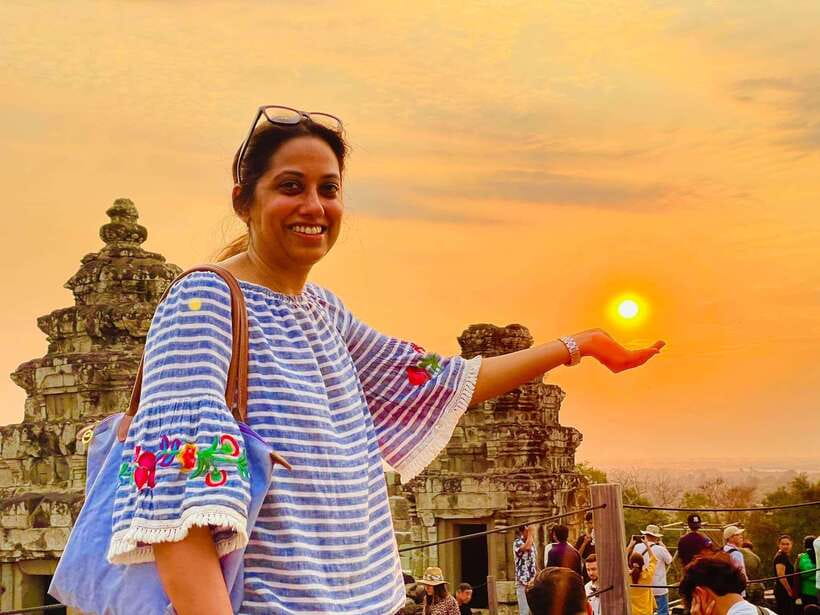
I love tours that treat light as part of the plan, not an afterthought. Here, you get both ends of the day: a sunset start on Day 1, then sunrise on Day 2. That matters because Angkor can feel overwhelming at midday, while early morning light helps temples look more three-dimensional and makes the walk easier.
On Day 2, you also get a built-in rhythm. After sunrise at Angkor Wat, the tour keeps you moving to other sites while the air is cooler and the crowds are less intense. As the day progresses, you’ll get rest and food breaks, plus time to explore instead of just passing through. You still need to manage the heat and sun yourself, but the schedule gives you the best chance to enjoy it.
One more reason this timing works: your guide can connect visuals to meaning when you are not rushing. When you hear how different temples were used, or what certain architectural choices were meant to represent, it sticks better when you are watching the same details in softer light.
Day 1 Sunset Circuit: Preah Khan to Phnom Bakheang
Day 1 is designed like a slow burn. You begin in the late light, then wind your way through several temples that people often skip when they only chase the headline names. If you want Angkor to feel like a story with chapters, this is the more satisfying day.
Preah Khan
Preah Khan is the biggest temple on this loop, and it has a personal family connection in the Khmer royal story. You’ll learn that it was built by King Jayavarman VII for his father, as part of a larger complex. What I like about starting here is that it immediately teaches you how to look: stone spaces, layout, and the sense of sacred geography.
The sunset atmosphere also helps. Even if you’ve seen photos, the real place feels more layered because you notice scale and angles as the sky changes.
Neak Pean
Next you’ll visit Neak Pean, where the setting matters as much as the building. The water around the island temple was used for bathing and health during the Angkor period. That’s the kind of detail that makes a temple stop feel more human, like it had daily purpose, not just symbolism.
If you’re the type who enjoys practical interpretation, this is a strong stop. You can look at the water and think about how people once used the space.
More temple circuits, set side by side
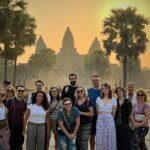
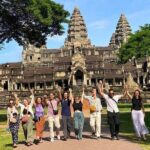
Ta Som
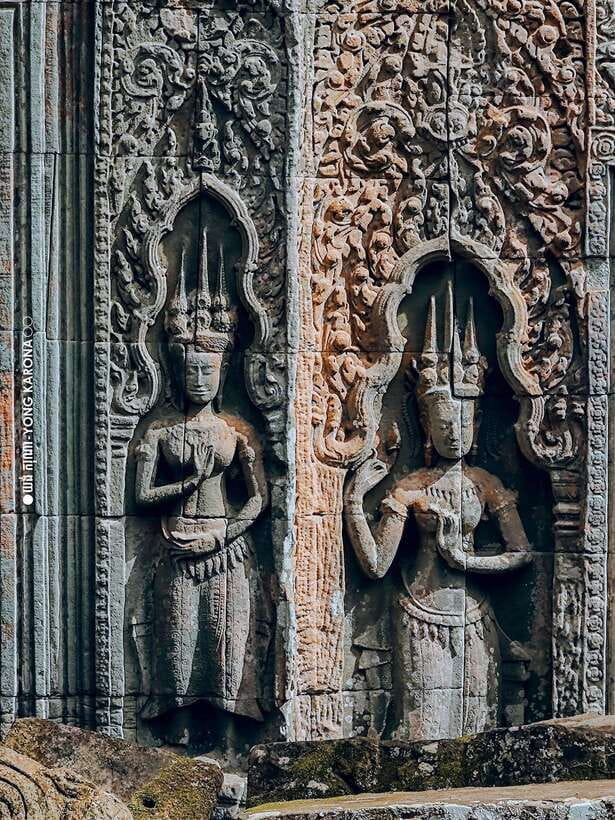
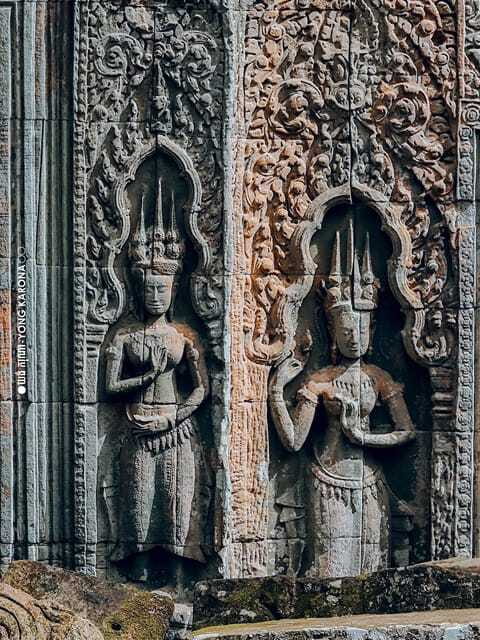
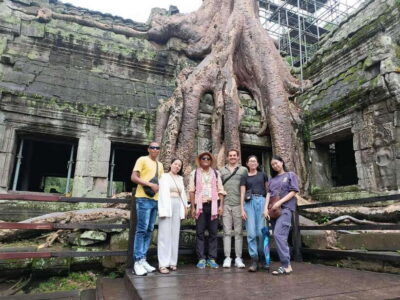
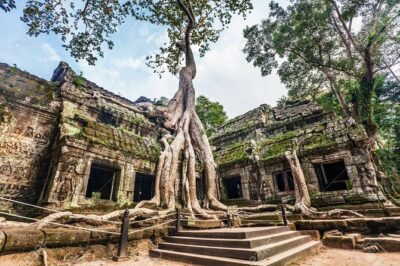
Ta Som is distinctive in a visual way. There’s a big tree over the east gate, and the temple is formed with sculptures of dancers with long hair. The site is tied to royalty again, built for the king’s sister. This combination, nature plus human art, makes Ta Som feel intimate compared with the larger, more monumental complexes.
A practical note: these are classic “look up and walk carefully” temples. Comfortable shoes are not optional.
East Mebon
East Mebon was built for ancestors and was originally in the middle of a reservoir. That early construction detail, as far back as the 10th century, helps you understand why some temples feel older and more foundational. You might also notice how water features shape the temple’s role in the landscape.
Pre Rup
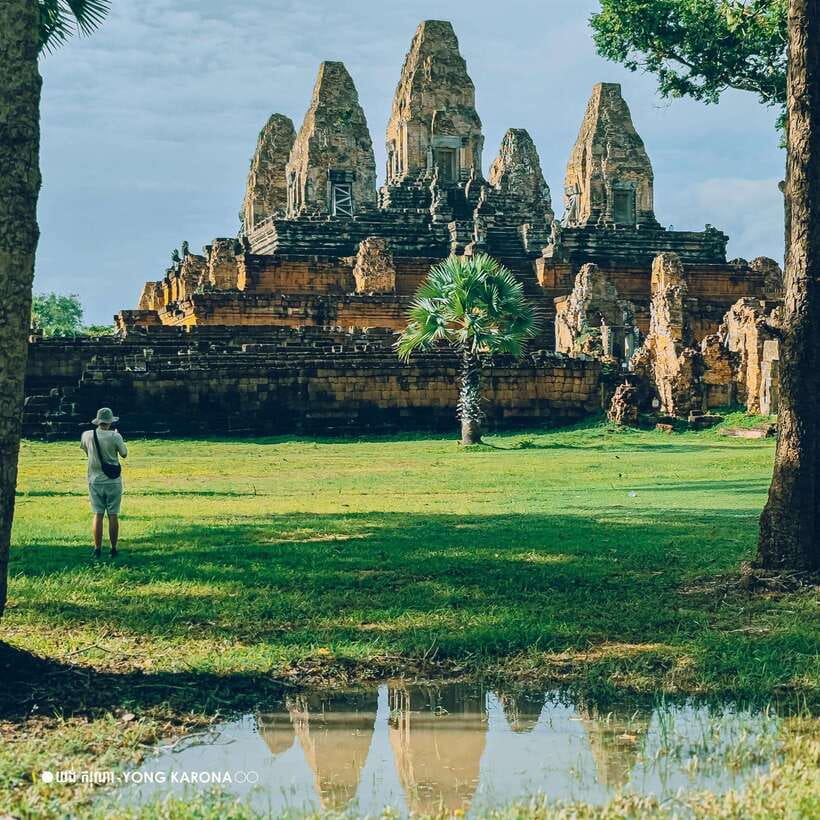
Pre Rup can be mistaken for a crematorium because of its stone structure shape, including a form similar to a coffin. The explanation you get is what turns confusion into clarity: Hindus used that kind of structure for meditation within at the full moon. It’s a reminder that even when a temple looks strange at first glance, it usually has a purpose.
When you visit in softer light, the stone edges look less harsh, and the site reads more like architecture than a mystery.
Phnom Bakheang
You finish Day 1 at Phnom Bakheang, up on a hill. The 33 towers represent the heavens, and the idea is pretty simple: life on earth is to be lived. I like ending here because the view and the symbolism feel connected, and you can catch your breath after a dense temple sequence.
If your camera batteries or phone storage tend to run out, Day 1 is when you will want them fully charged, since the light keeps changing.
Day 2 Sunrise at Angkor Wat and the Angkor Thom Core
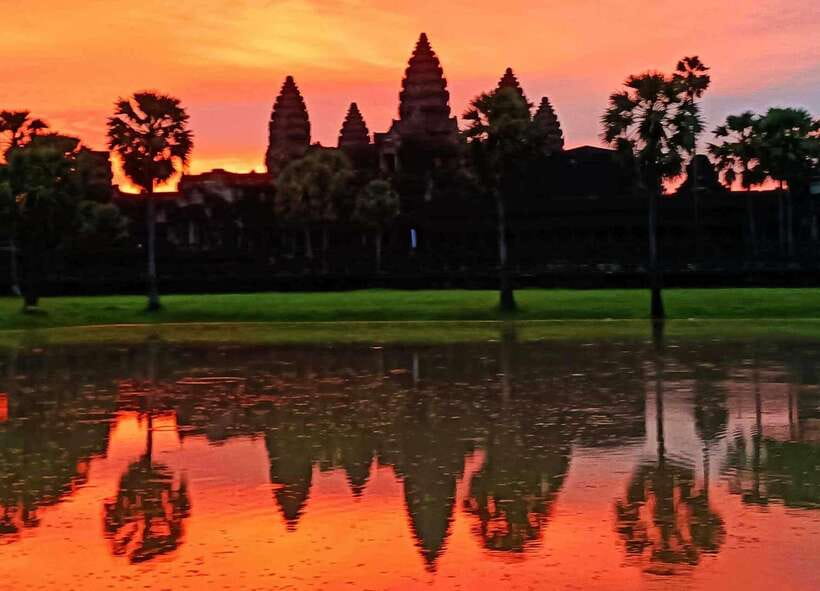
Day 2 is the famous one, but it’s not just repetition. Sunrise changes Angkor Wat from impressive to emotional. And then you keep moving so the day feels like a guided journey through the Khmer capital, not a single-site photo session.
Angkor Wat at sunrise
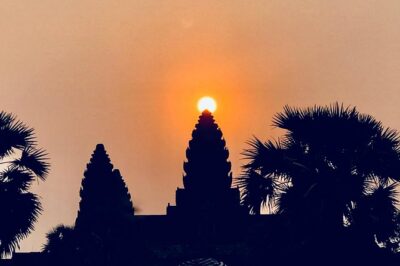
You start by watching the sunrise over Angkor Wat, then continue exploring in the morning and early hours of the day. The UNESCO-listed archaeological site still looks magnificent even under morning glow. What makes this moment worth the early start is that you get fewer crowds and cooler conditions, which helps you actually see carvings and proportions.
Bring your patience, not just your camera. The early hours can be the difference between a stressful scramble and a calm, meaningful start to the day.
South Gate of Angkor Thom and the bridge of statues
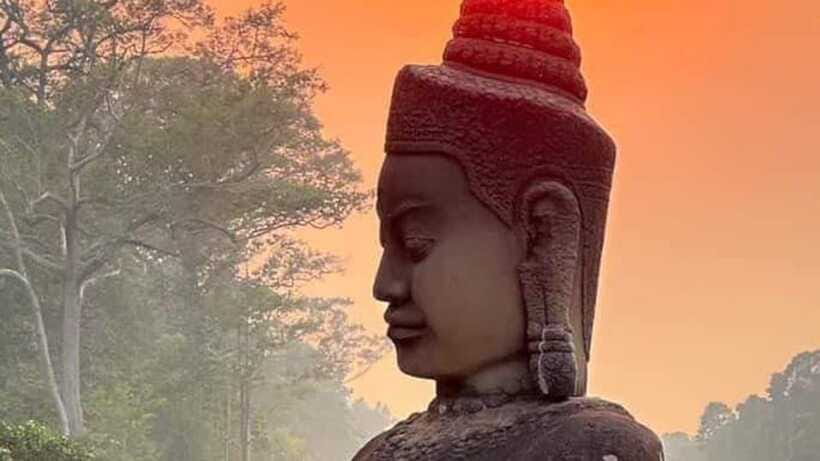
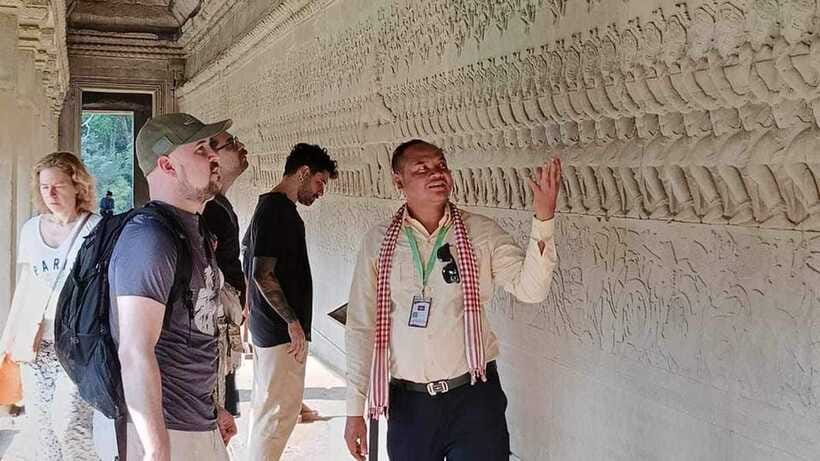
After Angkor Wat, you head to Angkor Thom and visit the South Gate. You also get to see the bridge of statues of gods, a visual statement that helps explain how power and belief were built into city design. This is one of those areas where a guide makes a real difference, because you can’t easily read the story just by walking through.
The good news is that once you understand what the bridge represents, your eyes start scanning details you would otherwise miss.
Ta Prohm
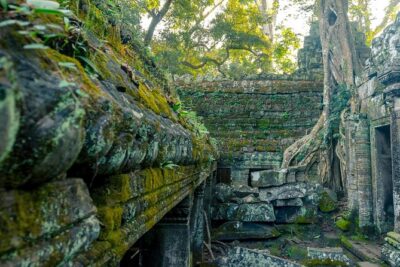
Ta Prohm is the jungle temple people recognize fast, partly because it was featured in Tomb Raider. Still, the real draw is seeing how nature and stone are in conversation here. The guide’s cultural context keeps it from turning into only a movie stop.
Ta Prohm can be busy in peak hours, so sunrise timing on Day 2 helps you manage the experience. Wear long enough layers for sun protection if you need them, but keep it breathable.
Bayon temple with the smiling faces
Then you reach Bayon, home to large smiling faces. This is the “center of attention” temple for many first-time visitors, and your guide will help explain what you’re seeing and why it mattered. I like this stop because the faces give you instant visual anchors while the explanations add depth.
If you’re prone to getting temple-fatigued, Bayon refreshes you because the expression detail makes your brain engage again.
Banteay Kdei and Ta Keo: How Lesser-Known Stops Change Your Angle
The tour doesn’t only chase fame. It also includes temples that feel less restored and more “in process,” like you’re seeing how monks and locals relate to these places now.
Banteay Kdei
Banteay Kdei is a Buddhist temple and a pyramid-style complex. It’s largely unrestored and used by monks. For me, that makes the visit feel grounded. You’re not just looking at history behind glass. You’re seeing how living religious practice continues alongside ancient stone.
This is also a good counterbalance after the more famous stops. If your brain wants a change of pace, Banteay Kdei delivers.
Ta Keo
Ta Keo is a mountain temple built in the 10th century. You’ll actually walk up between the ancient and modern eras, meaning you’ll experience the vertical scale instead of only viewing from below. That physical aspect matters because it changes how you interpret the design.
This is one of the places where your shoes and stamina really show. It’s included in the day, so you’ll want to start the walk feeling fresh enough to take it step by step.
Price and What You Really Pay For at $39
At $39 per person for 2 days, this tour can be good value if you care about logistics and guidance, not just temple access. What’s included is meaningful: a live English guide, AC van transportation, hotel pickup and drop-off, and the two major time-based experiences, sunset and sunrise viewings. You also get cool water and a wipe towel, plus rest breaks and local tax.
What’s not included can add up if you aren’t planning: temple entrance fees and foods. So your total trip cost is not just the $39, it’s $39 plus your temple pass and meals. If you want a smoother experience, budget for tickets ahead and bring a simple plan for where you’ll eat.
To me, the biggest cost saver here is the guidance plus transportation. Angkor independently is doable, but you either spend time figuring out routes and timing yourself or you pay in stress. This tour gives you structure, and structure is often the difference between enjoying temples and just collecting them.
Comfort, Photos, and Staying Sane in the Heat
You’ll spend a lot of time outdoors and moving between temple sites, so the packing list matters. Bring comfortable shoes, a hat, sunscreen, and your camera. You’ll also want to carry water, even though the tour provides cool water on breaks.
A few other practical points are worth taking seriously. Flash photography is not allowed, so plan photos like you actually have to work with natural light. Also, avoid littering and treat the temples as sacred places, not just scenery.
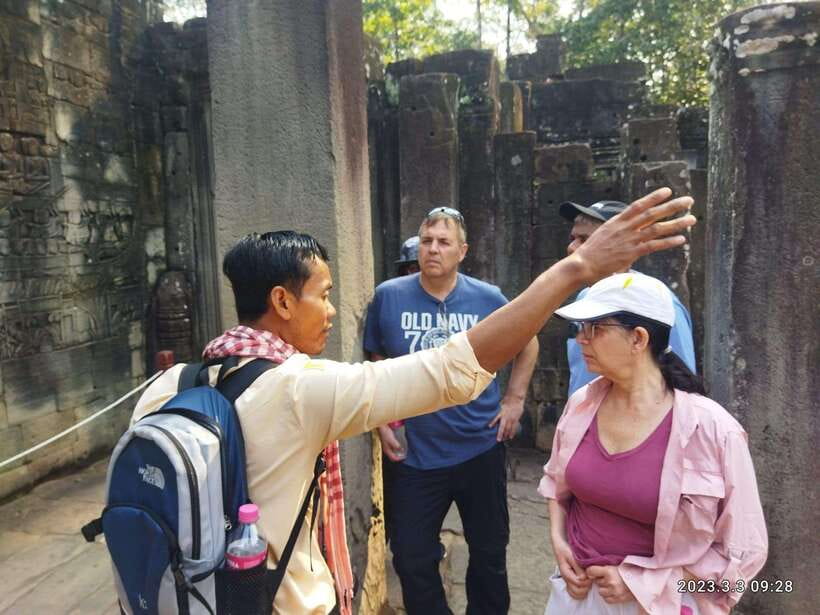
What you gain from a strong English guide is pacing and interpretation. In this tour format, guides like Sayon and Sam have a way of turning “I see stones” into “I understand why it was built.” When the guide explains the connection between Khmer culture and temple layout, your walk becomes less random.
Who This Tour Fits, and Who Should Rethink It
This isn’t a casual stroller-style experience. It’s not suitable for children under 12, and it’s also not suitable for people with mobility impairments or wheelchair users. Even if you can walk, there’s enough uphill and uneven ground that you should be honest with your own stamina.
If you do fine with early mornings, long temple days, and steady walking, this tour is a great match. It also works well for first-timers because you get Angkor Wat, Ta Prohm, and Bayon, plus extra temples that broaden your perspective without making the day feel like a nonstop sprint.
If you prefer total flexibility, this might feel structured. But if you want the best timing for sunrise and sunset, structured is the point.
Should You Book This Angkor Wat 2-Day Tour?
I’d book this if you want a guided experience that treats timing as part of the art. The big draw is the two-day flow: sunset on Day 1 through major and lesser-known temples, then sunrise on Day 2 at Angkor Wat with the core Angkor Thom highlights and more specialized stops like Banteay Kdei and Ta Keo.
I’d also book it if you value practical comfort. Hotel pickup and drop-off, AC transport, cool water, and wipe towel breaks make a difference when you’re walking temple after temple.
Skip it if you need an itinerary that is gentle on mobility, or if you are traveling with young kids under 12. And do not forget that entrance fees and food are on you, so plan your budget.
FAQ
How long is the Siem Reap Angkor Wat 2-day Big and Small Circuit tour?
It runs for 2 days.
What is included in the tour price?
The tour includes a guided tour, van transportation with AC, sunset and sunrise viewings across the 2 days, pickup and drop-off from your hotel, rest breaks, cool water and a wipe towel, and local tax.
What is not included?
Temple entrance fees are not included, and foods are not included.
Is there pickup from my hotel?
Yes. Pick up and drop-off are included, and the pick up time matches the time you booked.
Will the guide speak English?
Yes, there is a live tour guide in English.
Are there sunset and sunrise viewings on both days?
Yes. The tour includes sunset on Day 1 and sunrise viewing on Day 2.
Do I need to buy a temple pass?
Yes. The temple pass is not included, and it can be purchased online or at the ticket office.
What should I bring to the temples?
Bring comfortable shoes, a hat, sunscreen, a camera, water, and your passport or ID card (a copy is accepted).
Who should avoid this tour?
It is not suitable for children under 12, people with mobility impairments, or wheelchair users.
More Days at the Temples
- Siem Reap: Angkor Wat 2-Day Tour with Sunrise and Sunset
★ 4.9 · 4,429 reviews - Angkor 2-Day Sunset & Sunrise Small-Group Tour
★ 5.0 · 2,567 reviews - 2 Days Exclusive Temple Highlights with Sunset and Sunrise Tour
★ 5.0 · 1,157 reviews - Siem Reap: Angkor Sunrise 1- or 2-Day Guided Temples Tour
★ 4.9 · 1,132 reviews - 2 Days Guided Historical Tour in Angkor
★ 5.0 · 855 reviews
More Temple Circuits Around Siem Reap
- Angkor Wat Sunrise or Sunset Tour with Guide from Siem Reap
★ 5.0 · 12,109 reviews - Siem Reap: Angkor Wat: Small-Group Sunrise or Sunset Tour
★ 5.0 · 9,444 reviews - Siem Reap: Angkor Wat 2-Day Tour with Sunrise and Sunset
★ 4.9 · 4,429 reviews - Siem Reap: Full-Day Angkor Wat Guided Tour with Sunset
★ 4.9 · 3,803 reviews - Angkor Wat Sunrise tour with Small – Group and Guide tours
★ 5.0 · 3,655 reviews
Angkor Wat, a Few More Ways In
- Angkor Wat Sunrise or Sunset Tour with Guide from Siem Reap
★ 5.0 · 12,109 reviews - Siem Reap: Angkor Wat: Small-Group Sunrise or Sunset Tour
★ 5.0 · 9,444 reviews - Siem Reap: Angkor Wat 2-Day Tour with Sunrise and Sunset
★ 4.9 · 4,429 reviews - Siem Reap: Full-Day Angkor Wat Guided Tour with Sunset
★ 4.9 · 3,803 reviews - Angkor Wat Sunrise tour with Small – Group and Guide tours
★ 5.0 · 3,655 reviews
Just Added: Fresh Siem Reap Tour Reviews

Angkor Wat Temple Tours, compared.
 ★ 5.0Angkor Wat Sunrise or Sunset Tour with Guide from Siem ReapFrom $1812,109 reviews
 ★ 5.0Angkor Wat: Small-Group Sunrise or Sunset TourFrom $159,444 reviews
 ★ 4.9Angkor Wat 2-Day Tour with Sunrise and SunsetFrom $344,429 reviews
 ★ 4.9Full-Day Angkor Wat Guided Tour with SunsetFrom $153,803 reviews
 ★ 5.0Angkor Wat Sunrise tour with Small – Group and Guide toursFrom $143,655 reviews
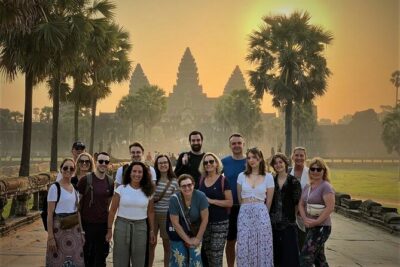 ★ 5.0Angkor Wat Highlights and Sunrise Guided Tour from Siem ReapFrom $233,213 reviews
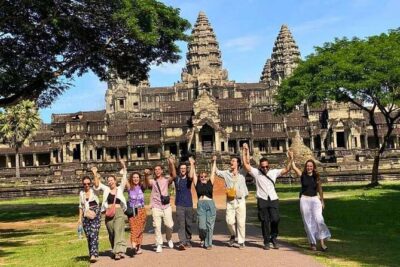 ★ 5.0Angkor Wat Sunset Small Group Tour with Lunch IncludedFrom $203,059 reviews
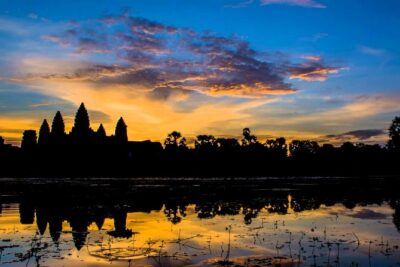 ★ 5.0Full-Day Angkor Wat Sunrise Private Tour with Guide from Siem ReapFrom $602,920 reviews
Browse the lists this tour appears in