
Reviewed · ANGKOR SUNRISE & SUNSET TOURS
Siem Reap: 2-Day Temple Highlights Sunrise and Sunset Option
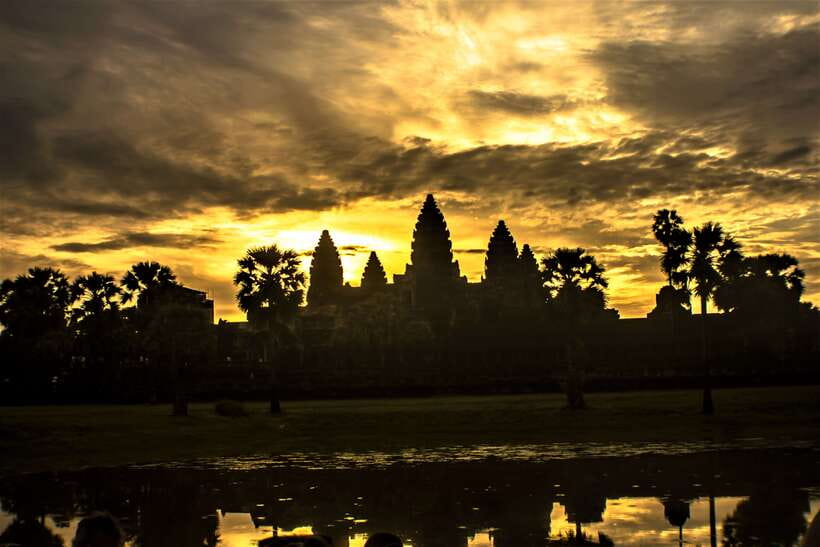
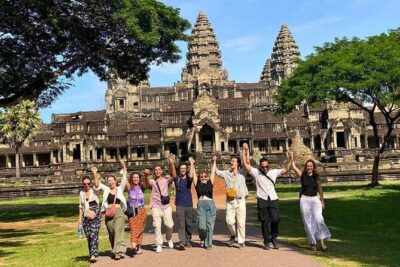
Sunrise at Angkor Wat feels unreal. This 2-day temple highlights tour pairs that early spectacle with a quieter rice-field sunset finish, then spends day one on the smaller sites people often miss.
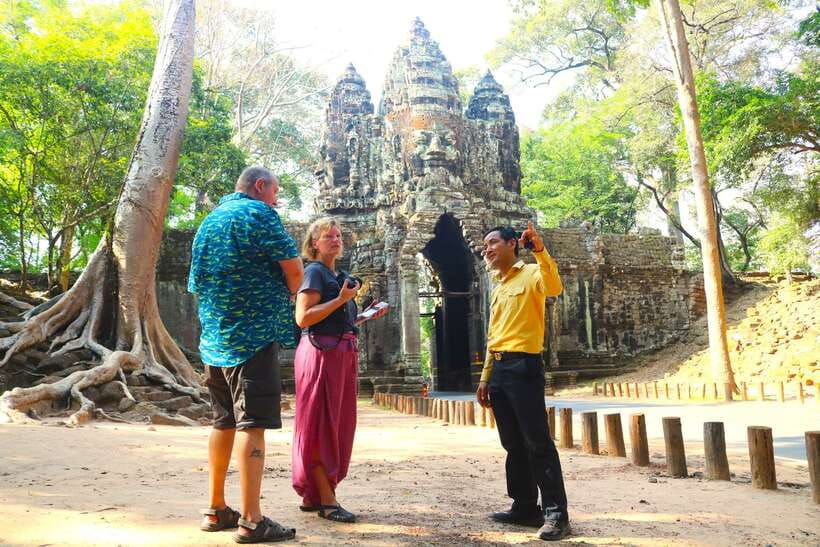
I especially liked the licensed English guide factor. You get Khmer history and religion explained in plain language, with real stops to look at the details (and time for photos), not just a rush-and-rattle schedule.
One thing to plan for: the $46 tour price does not include Angkor temple entry fees, currently $62 for a 2- or 3-day pass, and sunrise requires a torch plus respectful dress (no shorts).
Key things that make this tour a smart Angkor choice
- Angkor Wat at sunrise with a pre-dawn departure and guided entry timing
- Smaller, high-impact temples on day one, including Pre Rup and Banteay Srei
- Ta Prohm with jungle atmosphere, plus Ta Nei and the major sights of Angkor Thom
- Cool comfort in the heat, with bottled water and cold towels after stops
- Photo-friendly pacing where your guide actively helps you get the shot
- Two sunset styles, either a rice-field drink or an included Bakheng Temple sunset option
Chasing the light? More dawn and dusk runs
- Angkor Wat Sunrise or Sunset Tour with Guide from Siem Reap★ 5.0 · 12,109 reviews
- Siem Reap: Angkor Wat: Small-Group Sunrise or Sunset Tour★ 5.0 · 9,444 reviews
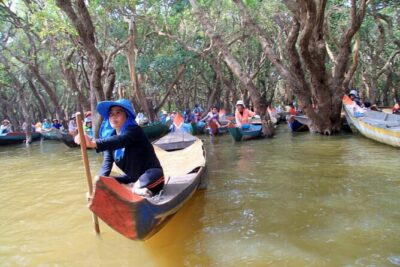
- Sunset tour of Kampong Phluk stilts home village on the Tonle Sap★ 5.0 · 4,865 reviews
- Siem Reap: Angkor Wat 2-Day Tour with Sunrise and Sunset★ 4.9 · 4,429 reviews
Why two days in Siem Reap actually pays off
Angkor is huge. If you try to squeeze it into one day, you either skip the best variety or you spend half your time bouncing between sites. Doing two days lets you see the big hits without feeling like you’re speed-walking through “greatest hits” blindness.
This tour is built around that idea: day one focuses on temples outside Angkor Thom that feel intimate and textured, while day two is designed around the big names inside the core complex. You also get a practical rhythm: early starts when they matter, quieter afternoons where you can look closer, and transport in an air-conditioned vehicle so the heat does not win.
If you care about understanding what you’re looking at, this also helps. A good temple visit is not just a photo hunt. It is learning what the carvings mean, why sites were built the way they were, and how Hindu and Buddhist traditions shaped the layout.
Day 1: Pre Rup, Banteay Srei, Neak Pean, and Preah Khan
Day one is a smart mix of “temple mountain” grandeur, fine stone carving, and sites with a more haunted, ruined feel.
Pre Rup, the Khmer temple mountain
You start at Pre Rup, a Hindu temple built as a state temple for King Rajendravarman and dedicated around 961 or early 962. It is not a flat layout. Think of it as a temple mountain made from brick, laterite, and sandstone, which means the architecture reads differently as you move up and around.
Why it’s worth your time: Pre Rup gives you Khmer temple design basics fast. You see the way terraces and perspective work, and you get the sense of how rulers used religion and scale together.
A note for planning: this is walking-heavy. Wear comfortable shoes, and expect a lot of sun exposure, especially later in the morning.
Banteay Srei, the sandstone carving masterclass
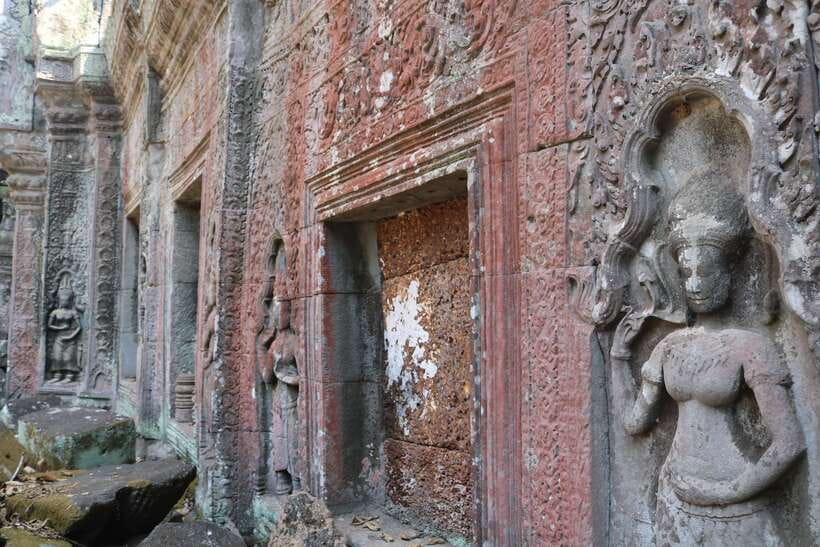
Next comes Banteay Srei, one of the most admired carving sites in Cambodia. It is smaller than many Angkor temples, but the details on the sandstone reliefs are considered some of the finest. There’s also a history hook you will hear from your guide: Banteay Srei was only reopened and accessible in the late 1990s after the Khmer Rouge period left deep disruption in the region.
Why it’s worth your time: large temples can steal the show just by being huge. Banteay Srei makes you slow down, because the story is in the surface. You’ll find yourself looking longer at faces, patterns, and symbolic scenes.
More temple circuits, set side by side
Neak Pean, the circular-island Buddhist temple
After that, you shift from carvings to atmosphere at Neak Pean. This site sits on an artificial island in the Jayatataka Baray, with a Buddhist temple placed on a circular island.
This stop works because it breaks your day into different textures. After the carved stone focus, Neak Pean brings calm and contrast, and it helps your brain separate what is religious symbolism from what is pure engineering.
Preah Khan, roots, ruins, and restoration progress
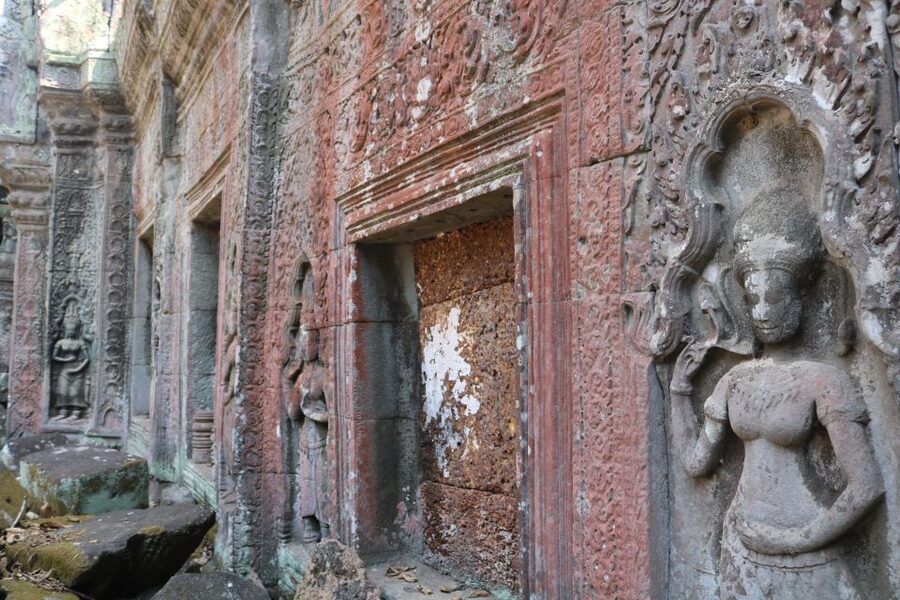
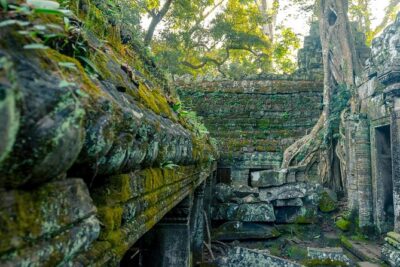
Your afternoon continues to Preah Khan, a ruined but highly atmospheric temple complex where you see crumbling stone and tree roots. It was commissioned by Jayavaraman VII, in honor of his father. Right now, the site is being restored with support from the World Monument Fund, and parts are in surprisingly good condition.
Why it matters for you: a restored temple feels different than a fully intact one. You can compare original design intent with the reality of time, damage, and careful work to stabilize what remains. That contrast makes the site easier to read.
The day’s mood shift, rice fields and sunset drink
To close day one, the tour finishes in the peaceful setting of Siem Reap’s rice fields as the sun goes down, with a sunset drink included for the private option. For the small group version, you may instead enjoy a sunset at Bakheng Temple (also included).
Why this matters: ending day one away from the most crowded Angkor zones is a relief. It gives you a breather before sunrise pressure on day two.
If you’re sensitive to early mornings, this is the part that makes the second day feel manageable.
Day 2: Angkor Wat sunrise, Ta Prohm, Ta Nei, and Angkor Thom
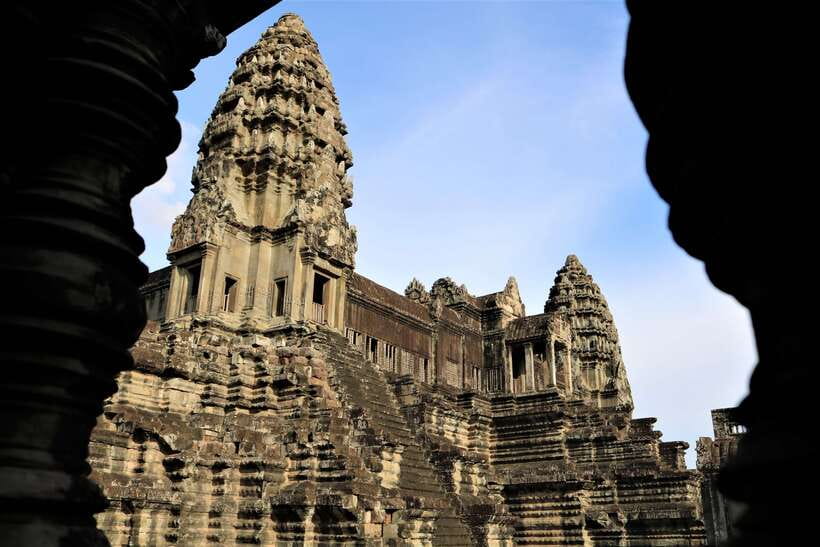
Day two is the big one. The schedule is built around the soft, magical light at Angkor Wat, then keeps moving so you see the variety while you still have energy.
Pre-dawn Angkor Wat, torch required, eastern-side entry
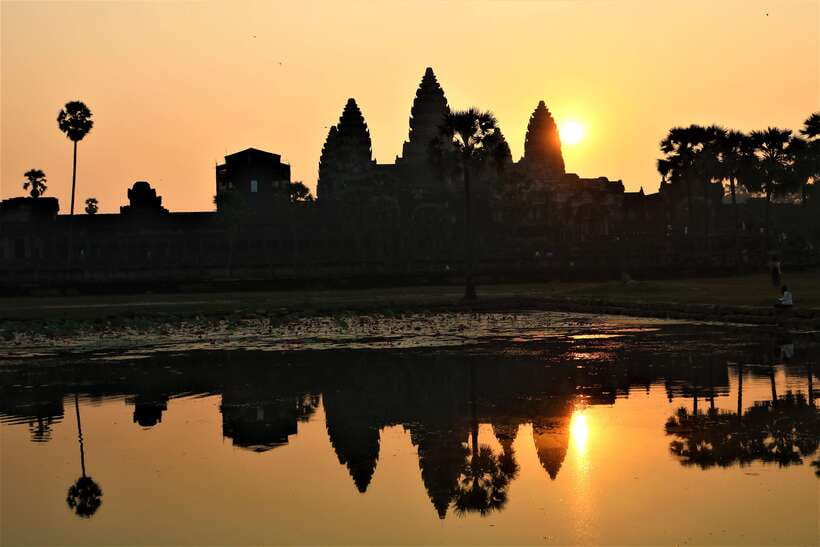
You start with a pre-dawn departure to catch sunrise at Angkor Wat. The tour enters in darkness, so you need to bring a torch. Your guide will route you so you can appreciate the carvings without the chaos of people flooding in from every direction.
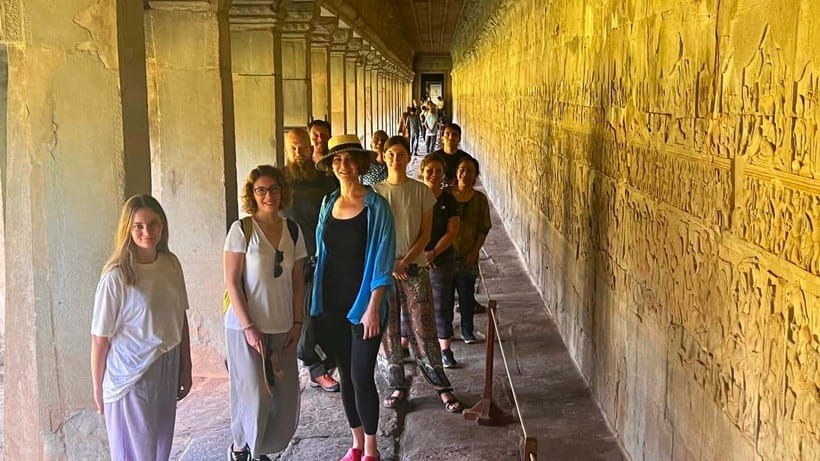
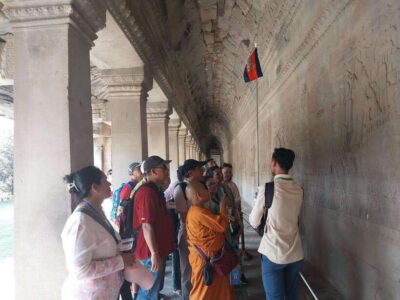
One detail worth knowing: you will access the temple from a less visited side, the eastern side, which can feel quieter as you creep along corridors. You’ll also get a long stretch of bas-reliefs to look at, described as the longest stretch of bas-relief carvings in the world.
Why it’s special for first-timers: sunrise alone is stunning. But sunrise plus interpretation makes it stick. Your guide will explain what you’re seeing in terms of belief, symbolism, and Khmer royal ambition.
Breakfast outside Angkor Wat
After sunrise and guided time inside, you’ll end at Angkor Wat with breakfast outside the temple. That small shift matters. It helps you recharge before you start another round of walking and heat.
Ta Prohm, the jungle temple with a famous past
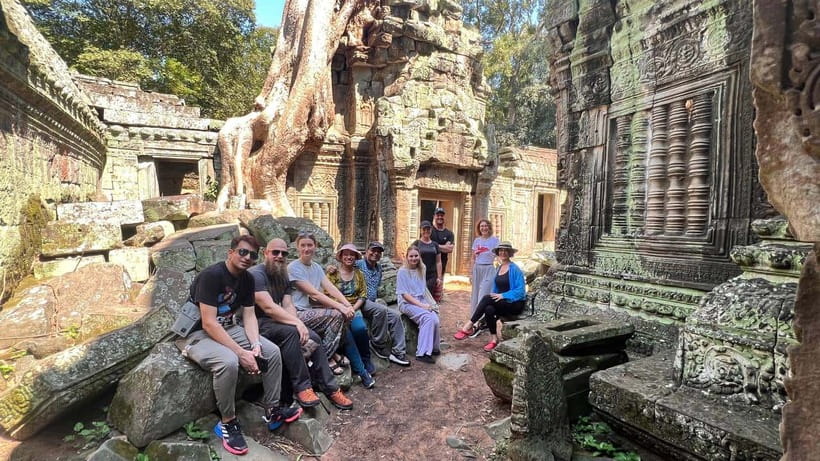
Next is Ta Prohm, one of Angkor’s most atmospheric temples. This is the one you picture when you think of Angkor with tree roots draped over stone. The site once housed 2,740 monks, and it is often linked to French explorer Henri Mouhot, who is said to have rediscovered the site in the early 1850s.
Why it’s worth your attention: Ta Prohm is not just romantic ruins. The structure and later damage show how time and nature interacted, and your guide can point out what survived versus what changed. You end up looking at the temple as a living set of layers, not just a postcard.
Ta Nei, a late 12th-century stone temple
You then head to Ta Nei, a late 12th-century stone temple. It is not as instantly famous as Ta Prohm, but it is a great palate cleanser. It gives you another example of how Khmer masons and rulers expressed power through layout and stonework.
Angkor Thom south gate, gods and demons
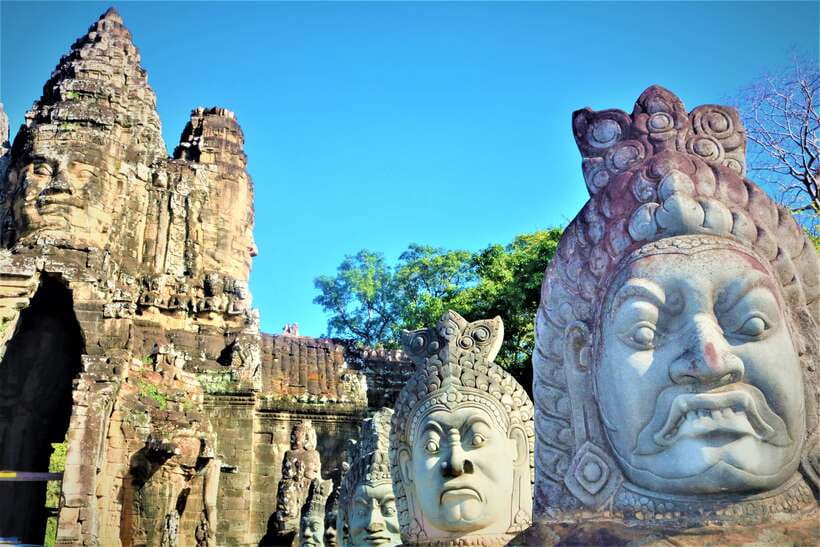
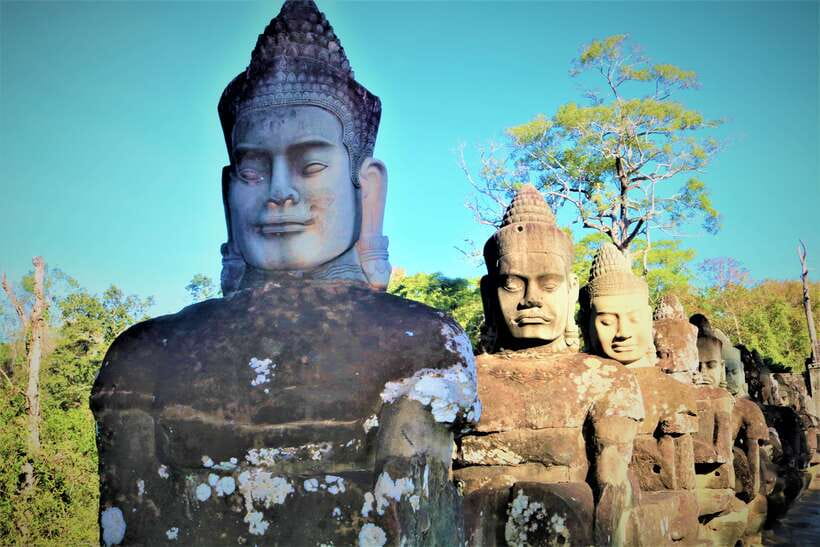
After that, the tour continues to Angkor Thom, starting with the southern gate. The gate is flanked by a row of 54 stone figures on each side: gods to the left and demons to the right.
This is one of those places where having a guide pays off. The meaning is not obvious at a glance, but once you understand the symbolism, the gate becomes more than a decorative entrance.
The Bayon, 200 giant faces
At the Bayon, you get central towers covered in more than 200 enormous faces. If you have trouble deciding where to look, your guide will help you track the most meaningful angles.
Why it’s a great stop: the faces create a psychological effect. The carvings make the temple feel like it is watching you, even when you know it is stone. Sunrise day two means you can actually focus before crowds rise.
Terraces of the Leper King and Elephants
You also explore the Terrace of the Leper King and the Terrace of Elephants. These are popular photo stops, but the value is in what your guide tells you about the symbolism and what those scenes might have represented.
You’ll leave this part with the feeling that Angkor Thom is not only a complex. It is a story told through architecture.
Heat-proofing that makes the day feel possible
Siem Reap heat can be a lot, especially when you’re walking between temples. This tour is set up to manage that reality.
You get bottled water, and you’ll also receive cold towels during the day. Drivers often help with this right after you return from each stop, which sounds small until you feel your energy drop from sun and humidity. Your guide and driver teamwork is part of the success story, and you can see it in the consistent pattern of cooling and refilling.
The vehicle is air-conditioned for the long drives between sites, which matters because it keeps you from arriving at the next temple already exhausted. In practice, that makes it easier to enjoy the details rather than just surviving the route.
How the guide turns stone into meaning (and helps with your photos)
The top-rated experience here is not just the temples. It is the guide style. In the Angkor context, that means you get both explanation and pacing.
You might meet guides such as Chhay, Sak, Bun, Pal, Pi, or Saruon Pal, depending on the day and group. The common thread is that they tell Khmer history and religion in a way that connects to what you see, and they answer questions without rushing you.
I also like how guides handle the practical side. A recurring theme is guides taking time to find good photo angles and volunteering to take pictures, so you do not spend your whole day handing your phone to strangers. That alone saves time and stress.
And then there is the human feel. Many guides work the conversation naturally, including humor and cultural context. Even the best temples can feel flat if everyone is stiff and silent. Here, the vibe is friendly while still focused on the sights.
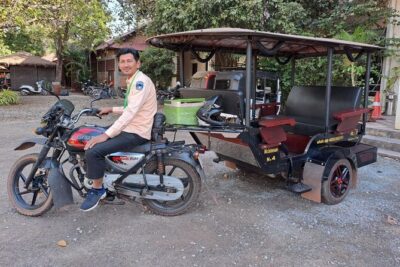
On the transport side, drivers such as Vichet, Kea, Mao, Naroo, Usa, Sal, and Manath are repeatedly praised for being on time, driving safely, and keeping you comfortable. You’ll feel that in the little things like water and towels ready at the right moments, not as an afterthought.
Price and temple pass math, what $46 really covers
The tour price is listed as $46 per person for 2 days. That covers hotel pickup and drop-off across Siem Reap City, transportation by air-conditioned vehicle, a licensed English-speaking guide, and the included refreshment element (rice-field sunset drink for private option, or sunset at Bakheng Temple for small group option). You also get bottled water and cool towels.
What you must budget separately is Angkor temple entry fees. The current temple pass cost is $62 per person for a 2- or 3-day pass. Meals are also not included.
So the realistic “tour plus entry” number you should carry in your head is $46 + $62, or $108 per person, before any meals and personal expenses. For two full days of guided temple time, plus sunrise timing and cooling breaks, that can be fair value if you plan to do more than a single day.
If you already bought an Angkor pass earlier, or you plan to eat on your own near each stop, the total can swing. But the math above is the clean way to avoid surprise.
What to bring, and how to dress in Angkor
This is one of those tours where packing matters because you are out early and out late.
Bring:
- Comfortable walking shoes
- Insect repellent
- A torch for the sunrise portion
Dress respectfully. Covered shoulders and knees are required. Shorts are not allowed, and you should also avoid anything that feels too casual for temple visits.
Also note: feeding animals is not allowed, so if you’re tempted by street-side “animal moments,” skip it.
Who this tour suits best, and who should think twice
This tour is a strong match if you:
- Want the “big temples” and the “smaller gems” without building a plan yourself
- Like to learn, not just photograph
- Travel with the expectation that you will walk a lot, especially during sunrise and daylight temple stops
- Appreciate comfort in the heat, with AC transport and cold towels
It is not a fit if you need wheelchair access or have mobility limitations. The tour also is not suitable for children under 8, based on the provided information.
If your main goal is purely to see sights with minimal walking and no early departures, you might find the schedule tiring. But if you’re okay with early mornings and purposeful temple time, you will likely feel the value quickly.
Should you book this 2-Day Temple Highlights Tour?
Yes, you should book it if you want a guided plan that balances classic Angkor favorites with less crowded, highly visual stops on day one. The sunrise timing at Angkor Wat, plus the chance to end day one in rice fields (or with the Bakheng sunset option), makes this feel like a full Angkor experience rather than a checklist.
I’d also book it if you care about learning. With guides such as Chhay, Sak, Bun, Pal, and Pi, the temple stories tend to come with context you can actually use while you’re standing in front of the stone.
Before you commit, do two quick checks:
- Are you prepared for a torch at sunrise and no shorts at temples?
- Can you handle long, hot walking days without needing mobility support?
If your answers are yes, this is one of the better ways to see Angkor in just two days, with comfort that helps you enjoy the details instead of just enduring them.
FAQ
What is included in the $46 per person price?
Hotel pickup and drop-off in Siem Reap City, air-conditioned transportation, a licensed English-speaking guide, complimentary bottled water and cool towels, and either a rice-field sunset drink (private option) or a Bakheng Temple sunset (small group option).
Are temple entry fees included?
No. Temple entry fees are not included. A 2- or 3-day Angkor pass is listed as $62 per person.
How early do I need to get ready for Angkor Wat sunrise?
The tour includes a pre-dawn departure for sunrise at Angkor Wat, and you enter the temple in darkness.
Do I need to bring anything for the sunrise?
Yes. The tour asks you to bring a torch for the Angkor Wat sunrise portion.
What should I wear?
Wear respectful clothing with covered shoulders and knees. Shorts are not allowed.
Is the tour air-conditioned?
Yes. You get transportation by air-conditioned vehicle.
Is this tour suitable for children or for wheelchair users?
It is not suitable for children under 8. It is also not wheelchair accessible and is not suitable for people with mobility impairments.
Can I cancel and get a full refund?
You can cancel up to 24 hours in advance for a full refund.
More Days at the Temples
- Siem Reap: Angkor Wat 2-Day Tour with Sunrise and Sunset
★ 4.9 · 4,429 reviews - Angkor 2-Day Sunset & Sunrise Small-Group Tour
★ 5.0 · 2,567 reviews - 2 Days Exclusive Temple Highlights with Sunset and Sunrise Tour
★ 5.0 · 1,157 reviews - Siem Reap: Angkor Sunrise 1- or 2-Day Guided Temples Tour
★ 4.9 · 1,132 reviews - 2 Days Guided Historical Tour in Angkor
★ 5.0 · 855 reviews
More Temple Circuits Around Siem Reap
- Angkor Wat Sunrise or Sunset Tour with Guide from Siem Reap
★ 5.0 · 12,109 reviews - Siem Reap: Angkor Wat: Small-Group Sunrise or Sunset Tour
★ 5.0 · 9,444 reviews - Siem Reap: Angkor Wat 2-Day Tour with Sunrise and Sunset
★ 4.9 · 4,429 reviews - Siem Reap: Full-Day Angkor Wat Guided Tour with Sunset
★ 4.9 · 3,803 reviews - Angkor Wat Sunrise tour with Small – Group and Guide tours
★ 5.0 · 3,655 reviews
Dawn and Dusk Over Angkor
- Angkor Wat Sunrise or Sunset Tour with Guide from Siem Reap
★ 5.0 · 12,109 reviews - Siem Reap: Angkor Wat: Small-Group Sunrise or Sunset Tour
★ 5.0 · 9,444 reviews - Sunset tour of Kampong Phluk stilts home village on the Tonle Sap
★ 5.0 · 4,865 reviews - Siem Reap: Angkor Wat 2-Day Tour with Sunrise and Sunset
★ 4.9 · 4,429 reviews - Siem Reap: Full-Day Angkor Wat Guided Tour with Sunset
★ 4.9 · 3,803 reviews
Just Added: Fresh Siem Reap Tour Reviews
Angkor Sunrise & Sunset Tours, compared.
 ★ 5.0Angkor Wat Sunrise or Sunset Tour with Guide from Siem ReapFrom $1812,109 reviews
 ★ 5.0Angkor Wat: Small-Group Sunrise or Sunset TourFrom $159,444 reviews
 ★ 5.0Sunset tour of Kampong Phluk stilts home village on the Tonle SapFrom $214,865 reviews
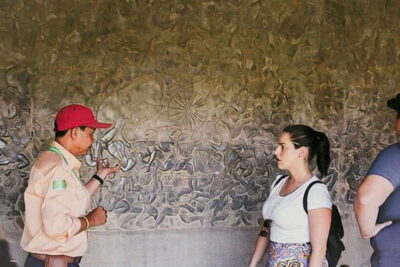 ★ 4.9Angkor Wat 2-Day Tour with Sunrise and SunsetFrom $344,429 reviews
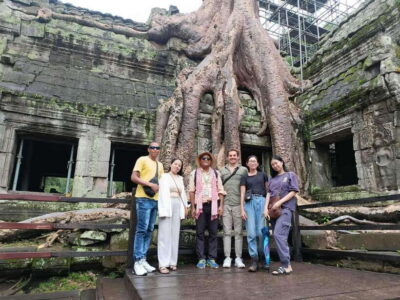 ★ 4.9Full-Day Angkor Wat Guided Tour with SunsetFrom $153,803 reviews
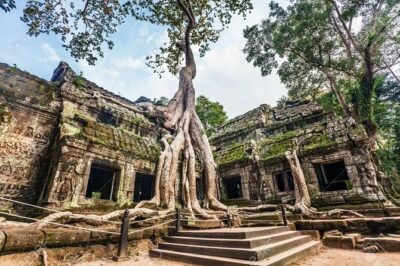 ★ 5.0Angkor Wat Sunrise tour with Small – Group and Guide toursFrom $143,655 reviews
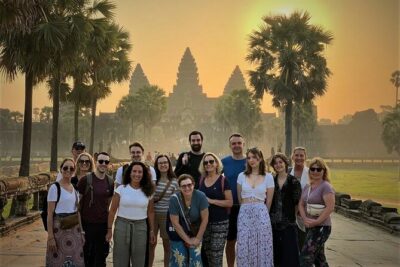 ★ 5.0Angkor Wat Highlights and Sunrise Guided Tour from Siem ReapFrom $233,213 reviews
 ★ 5.0Angkor Wat Sunset Small Group Tour with Lunch IncludedFrom $203,059 reviews
Browse the lists this tour appears in