
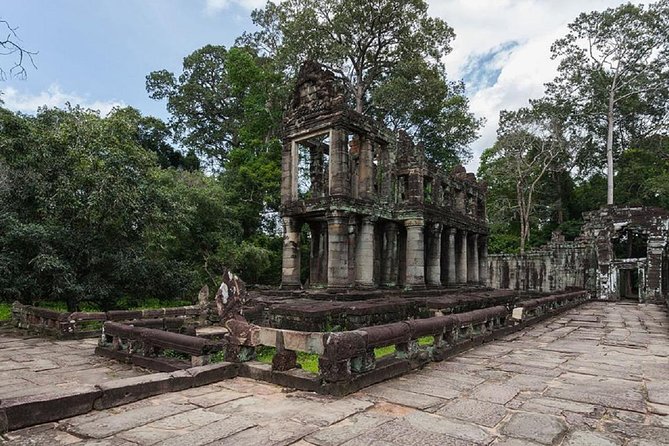
Reviewed · ANGKOR WAT TEMPLE TOURS
Angkor Wat 3-Day Temple Tours
Sunrise at Angkor Wat sets the tone fast. This 3-day loop from Siem Reap is built around a private tuk-tuk schedule that gets you from temple to temple without map stress. You also get practical perks like cold water and cold towels, which matter once the Khmer sun turns serious.
I love that the plan includes early Angkor Wat photo time, then shifts into key sights around Angkor Thom and the surrounding small circuit. I also like the day-by-day hotel pickup, since you are not wasting energy negotiating rides or guessing routes.
One thing to watch: the price does not include temple tickets or the boat entrance fees, so you should budget extra for those before you go.
Key highlights worth planning around
- Angkor Wat sunrise timing for the best morning light and photos
- Private tuk-tuk pickup from your hotel each day for an easier flow
- Kampong Phluk floating village with stilts and lakeside life on Tonle Sap
- Roluos (Rolous) Group temples tied to the early Khmer capital era
- Free cold water and cold towels to handle the heat between sites
Other ways to walk the great temple
- Angkor Wat Sunrise or Sunset Tour with Guide from Siem Reap★ 5.0 · 12,109 reviews
- Siem Reap: Angkor Wat: Small-Group Sunrise or Sunset Tour★ 5.0 · 9,444 reviews
- Siem Reap: Angkor Wat 2-Day Tour with Sunrise and Sunset★ 4.9 · 4,429 reviews
- Siem Reap: Full-Day Angkor Wat Guided Tour with Sunset★ 4.9 · 3,803 reviews
A private tuk-tuk circuit that saves your brain (and your legs)
Angkor is famous for good reason, but the logistics can be annoying. There are tons of temples, and the road time adds up if you are trying to DIY every hop. This tour is set up as a true circuit, so you spend more time looking at carvings and less time figuring out where the next turn is.
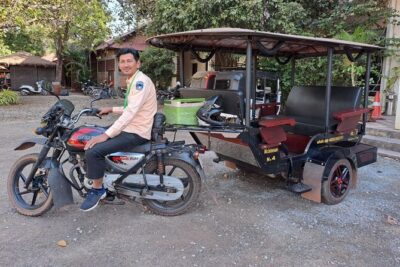
You are moving by tuk-tuk, with pickup from your hotel each day. That matters more than it sounds. In Siem Reap, it is easy to lose half a morning to waiting, re-confirming, or hunting for the right driver. Here, the plan is already stitched together, and you just show up.
The other practical win is comfort. You get cold water and cold towels included, which is exactly the kind of small detail that keeps a long day from turning into a miserable slog. And since the tour is private, you can keep your pacing more personal than in a shared van.
Day 1: Angkor Wat sunrise plus the Small Circuit temples
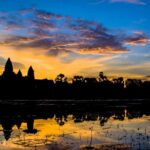
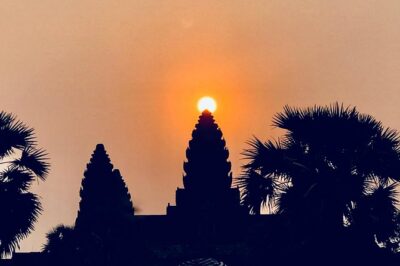
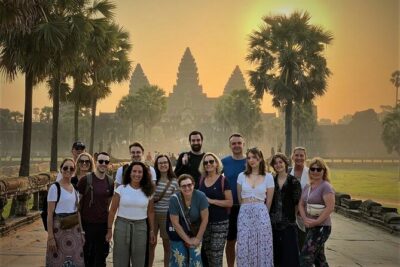
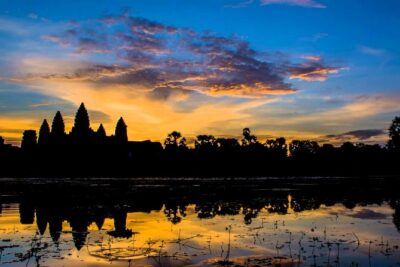
Day 1 is built around the headliner, starting with Angkor Wat at sunrise. That is the right idea. The morning is when the temple looks clean and dramatic, and the crowds are still thinning. If you care about photos, this is the day you want your camera ready and your patience set to high.
After the sunrise stop, you move through major highlights of the Angkor Archaeological Park area. The included route takes you toward Angkor Wat again in a broader visit sense, then into the smaller circuit sites that give you a sense of the wider Angkor world.
Here are the stops you can expect on Day 1, and what each one is good for:
Angkor Wat in the morning, then the built-for-views layout
Angkor Wat is described here as the biggest religious building in the world, and you can feel why. The layout gives you multiple ways to look at the temple, not just one viewpoint. Coming early also helps you see the scale more clearly, especially when the light is low.
Practical tip: wear grippy shoes. Stone steps and courtyard edges can be slick when mornings are humid. If you take your time on the steps, you will enjoy the carvings more.
South Gate of Angkor Thom and the Bayon zone
From Angkor Wat, the route continues toward Angkor Thom and the South Gate area. South Gate is a classic approach point, and it acts like a threshold. You are not just moving between buildings, you are shifting into the feel of another carved world.
Then you hit Bayon Temple and Baphuon Temple. Bayon is the face-filled centerpiece that makes you pause and look up. Baphuon works well right after because it gives your eyes a different texture and a different kind of grandeur.
More temple circuits, set side by side
Terraces of Elephant and the Leper King, then Ta Prohm
Two of the Day 1 highlights are Terrace of Elephant and Terrace of the Leper King. These terraces are not just decorative. They are storytelling spaces, with carving details that reward slow walking.
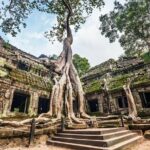
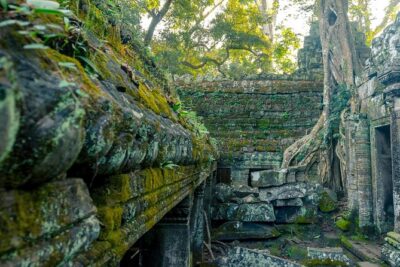
Then the route goes to Ta Prohm. This is where the jungle and stone relationship becomes obvious. It is a scene you keep seeing in photos, but seeing it in person helps you understand the scale of what is being pulled back by roots.
A small consideration: Ta Prohm can feel crowded and busy. The value of having a private tuk-tuk driver is that you are not stuck with a rigid group rhythm the way you can be with larger tours.
Banteay Kdei and Sras Srang for a calmer finish
After the big visuals, you end Day 1 at Banteay Kdei and Sras Srang. These are great for cooling down your brain after Ta Prohm and the main Angkor Thom stops. You get more room to breathe and more time to appreciate how different temple zones connect.
This mix is why Day 1 works. It starts with your biggest dream stop, then shifts you through variety, ending in places that feel less like a rush.
Day 2: Kampong Phluk on Tonle Sap plus the Rolous Group from early Khmer capitals
Day 2 flips the script. You leave the main Angkor temple rhythm and head toward two different kinds of meaning: early Khmer religious power, then lakeside everyday life.
The day starts with pickup and a drive out from Siem Reap. From there, you visit the Rolous (Roluos) Group first, then go to Kampong Phluk, a floating village on Tonle Sap Lake.
Rolous Group: Bakong, Lolei, Preah Ko, and the early Khmer foundation
The Rolous group is described as marking the beginning of the classical period of Khmer civilization, dating back to the late 9th century. You are also told about Hariharalaya and the decision to move the Khmer capital from Mount Kulen to this area, likely for food or defense.
You visit temples including Bakong, Lolei, Preah Ko, plus smaller sites in the group. This is where the craftsmanship details matter. Towers built from bricks and carved decorative elements like columns, lintels, and niches made from sandstone are specifically highlighted. When you connect those material choices to the age of the temples, the stop feels more grounded and less like just another name on a map.
Practical tip: take breaks. Day 1 can already be intense, and Day 2 has two distinct environments. If you pace your walking, you will enjoy the carvings more and feel less rushed.
Kampong Phluk floating village: stilts, flood seasons, and daily life
Next comes Kampong Phluk, located about 37 km from Angkor Wat in the overall route plan. This is another floating village on Tonle Sap, but it is not staged in the way some tourist spots feel. It is framed as a community living on stilts, stabilized on 6-meter stilts to manage floods during the rainy season.
You also get to learn about what life looks like across seasons. In the dry season between December and April, motorbikes can travel through the village. The information here also notes you can find clinics, pagodas, schools, restaurants, and churches. That mix makes the village feel like a real community, not a single photo moment.
One key thing: boat time has boat entrance fees that are not included in the tour price. So treat Kampong Phluk as a day where you budget extra, and you will not feel surprised.
If you like nature moments, the plan includes the floating forest and local wildlife too. Even if you are not a hardcore wildlife watcher, these scenes can slow your pace in a good way.
Day 3: Preah Khan, Neak Pean, Pre Rup, Banteay Srei, and Kbal Spean
Day 3 is where you get more variety and more of that later-Angkor feel. The route moves beyond Angkor Thom outward, including Preah Khan, Neak Pean, Ta Som, East Mebon, Pre Rup, Banteay Samre, Banteay Srei, and Kbal Spean.
Preah Khan: the Holy Sword temple and strong architecture
The plan highlights Preah Khan, described as the Holy Sword temple with marvelous architecture from the Khmer Empire. This is a temple that helps you understand why Angkor was not built as one isolated monument. It was a whole system of sacred spaces and power statements.
When you visit Preah Khan after the first two days, it also works as a change of tempo. You get big visuals without feeling like you are repeating the exact same courtyard type.
Neak Pean, Ta Som, and East Mebon for different moods
You also stop at Neak Pean, Ta Som, and East Mebon. The value of this cluster is variety. Each temple gives a different composition of stone, water features, and walking rhythm.
Even without a long lecture in your ear, you can feel the differences. Neak Pean tends to be memorable for its water-related setting, while Ta Som offers another kind of temple atmosphere. East Mebon rounds things out and helps keep the day from becoming one long blur.
Pre Rup and Banteay Samre: solid landmarks with lots to notice
Pre Rup is a key name for many Angkor itineraries, and here it is part of the Day 3 arc. You also visit Banteay Samre. Together, these stops give you a sense of how the temple complexes sit in the landscape around Siem Reap.
Practical tip: bring something you can sip from constantly. With heat and stone steps, you do not want to play catch-up on hydration.
Banteay Srei and Kbal Spean: detailed temple stop plus a river setting
The final stretch includes Banteay Srei and Kbal Spean. Banteay Srei is known in this route as a temple stop you should not skip. Kbal Spean adds a different element, because it is not just temple walls and doorways, it is connected to the river setting described by the stop name in the itinerary.
If you enjoy seeing how religious ideas and nature spaces connect, this is often a satisfying way to end a 3-day temple plan.
What makes the operator’s service feel good: pickup, punctual timing, and flexibility
A tour like this lives or dies on the driver and timing. Here, the plan includes pickup from your hotel lobby each day and a private tuk-tuk setup, which automatically reduces stress.
In the feedback for this operator, I keep seeing the same themes: punctual arrival, courteous driving, and guides who add context. Names like Vutha and Ly show up in the service pattern, with emphasis on being prompt and communicating smoothly. One helpful detail mentioned is using WhatsApp for fast communication.
The best part is that this style of service is not just about getting you from A to B. It is about reducing friction while you are walking long distances in hot sun.
Dress code, heat protection, and small habits that keep days enjoyable
Angkor temples have dress rules, and this tour explicitly asks you to follow the dress code. Before you go, check what that means for your exact situation, since you do not want to arrive at a gate in the wrong outfit and waste time.
Also, plan for the environment. The tour includes cold towels and cold water, which is a smart start. Still, your daypack should include simple basics like sunscreen, a hat, and a layer for shade when you need it.
Finally, pace your attention. On busy days, you can rush through carvings and then forget them. The most enjoyable strategy is to pick a few features at each temple, look at them slowly, then let the rest be a bonus.
Budget reality: what $144 covers, and what you should pay separately
The listed price is $144 for three days, with tuk-tuk transport, cold water, and cold towels included.
What is not included is where your budget can change:
- Temple tickets
- Boat entrance fees
- Lunch near temples
- An English tour guide
- Personal expenses
Here is the practical way to think about it. The tour price is mainly paying for transport, timing, and the heat-friendly perks. Once you add temple tickets and boat fees, the total rises, but you are still buying a lot of convenience: private tuk-tuk movement across multiple temple zones plus the sunrise plan.
Also, if you were hoping for an English guide as part of the package, you should plan to use your own devices or add a guide separately. The itinerary is packed with named sites, but the language support is not included in the basic package info.
Who this tour is best for, and who might want a different setup
This is a great fit if you:
- Want a structured 3-day plan across classic Angkor stops
- Prefer private tuk-tuk pickup over negotiating rides all week
- Like hitting major sights but also want variety like Kampong Phluk
- Appreciate heat support like cold water and cold towels
It might be less ideal if you:
- Want a guided English talk at every site included in the price
- Are looking for a flexible, self-paced itinerary where you pick every turn yourself
- Really dislike early mornings and long days, since this route is built as an active 3-day run
If you are traveling with a small group and want coordination without stress, this setup makes sense.
Should you book this 3-day Angkor Wat temple loop?
Yes, I would book it if you want a clean, practical way to see a lot without getting stuck in logistics. The private tuk-tuk pickup each day is the kind of service that turns Angkor from a puzzle into a trip. And the combination of Angkor Wat sunrise, Rolous Group temples, and Kampong Phluk gives you more than one kind of “wow.”
Just go in with two expectations set: you will pay extra for temple tickets and boat entrance fees, and you should plan your dress code and early timing ahead of day 1. If you can handle that, you will come away with a strong mix of architecture, storytelling terraces, and lakeside life on Tonle Sap.
FAQ
What is the start time for the tour?
The start time is listed as 8:00 am.
Is this a private tour?
Yes. It is a private tour/activity, so only your group participates.
What transport is included?
Tuk-tuk transport is included, and you get pickup from your hotel lobby each day.
Does the tour include temple tickets?
No. Temple tickets are not included.
Are boat entrance fees included for Kampong Phluk?
No. Boat entrance fees are not included.
Is lunch included?
No. Lunch near temples is not included.
Is an English tour guide included?
No. An English tour guide is not included.
What comfort items are included for the heat?
Cold water and cold towels are included.
Do I need to follow a dress code?
Yes. Guests need to follow the dress code rules when visiting temples.
Can I cancel and get a full refund?
Yes. The policy says you can cancel up to 24 hours in advance for a full refund.
More Days at the Temples
- Siem Reap: Angkor Wat 2-Day Tour with Sunrise and Sunset
★ 4.9 · 4,429 reviews - Angkor 2-Day Sunset & Sunrise Small-Group Tour
★ 5.0 · 2,567 reviews - 2 Days Exclusive Temple Highlights with Sunset and Sunrise Tour
★ 5.0 · 1,157 reviews - Siem Reap: Angkor Sunrise 1- or 2-Day Guided Temples Tour
★ 4.9 · 1,132 reviews - 2 Days Guided Historical Tour in Angkor
★ 5.0 · 855 reviews
More Temple Circuits Around Siem Reap
- Angkor Wat Sunrise or Sunset Tour with Guide from Siem Reap
★ 5.0 · 12,109 reviews - Siem Reap: Angkor Wat: Small-Group Sunrise or Sunset Tour
★ 5.0 · 9,444 reviews - Siem Reap: Angkor Wat 2-Day Tour with Sunrise and Sunset
★ 4.9 · 4,429 reviews - Siem Reap: Full-Day Angkor Wat Guided Tour with Sunset
★ 4.9 · 3,803 reviews - Angkor Wat Sunrise tour with Small – Group and Guide tours
★ 5.0 · 3,655 reviews
Angkor Wat, a Few More Ways In
- Angkor Wat Sunrise or Sunset Tour with Guide from Siem Reap
★ 5.0 · 12,109 reviews - Siem Reap: Angkor Wat: Small-Group Sunrise or Sunset Tour
★ 5.0 · 9,444 reviews - Siem Reap: Angkor Wat 2-Day Tour with Sunrise and Sunset
★ 4.9 · 4,429 reviews - Siem Reap: Full-Day Angkor Wat Guided Tour with Sunset
★ 4.9 · 3,803 reviews - Angkor Wat Sunrise tour with Small – Group and Guide tours
★ 5.0 · 3,655 reviews
Just Added: Fresh Siem Reap Tour Reviews

Angkor Wat Temple Tours, compared.
 ★ 5.0Angkor Wat Sunrise or Sunset Tour with Guide from Siem ReapFrom $1812,109 reviews
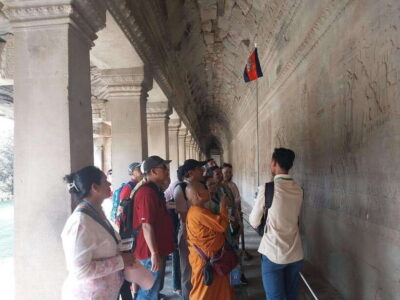 ★ 5.0Angkor Wat: Small-Group Sunrise or Sunset TourFrom $159,444 reviews
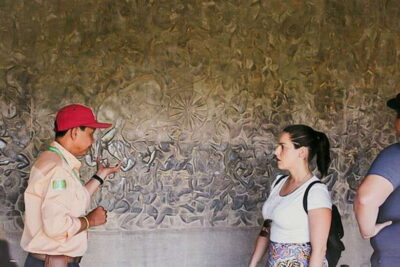 ★ 4.9Angkor Wat 2-Day Tour with Sunrise and SunsetFrom $344,429 reviews
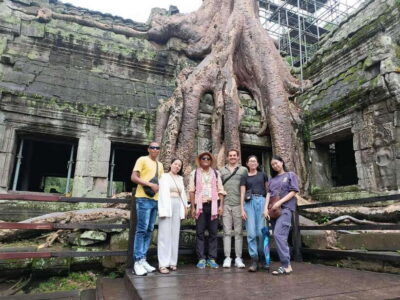 ★ 4.9Full-Day Angkor Wat Guided Tour with SunsetFrom $153,803 reviews
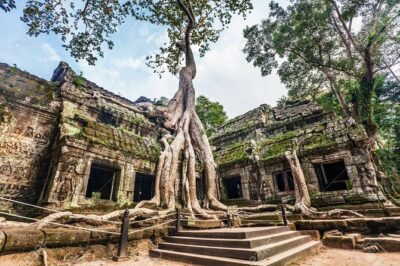 ★ 5.0Angkor Wat Sunrise tour with Small – Group and Guide toursFrom $143,655 reviews
 ★ 5.0Angkor Wat Highlights and Sunrise Guided Tour from Siem ReapFrom $233,213 reviews
 ★ 5.0Angkor Wat Sunset Small Group Tour with Lunch IncludedFrom $203,059 reviews
 ★ 5.0Full-Day Angkor Wat Sunrise Private Tour with Guide from Siem ReapFrom $602,920 reviews
Browse the lists this tour appears in