
Reviewed · ANGKOR WAT TEMPLE TOURS
2 Days Angkor Wat Tranquility Tour
Early mornings in Angkor feel like a secret. This two-day plan strings together lesser-visited temples around Siem Reap, then delivers a sunrise visit at Angkor Wat when the crowds are still asleep. You also get private, door-to-door style logistics, so you spend less time figuring out transport and more time actually looking.
I love the peace-first route on Day 1, with small temples where you can linger, breathe, and take photos without shoulder-to-shoulder pressure. I also like that the guide makes the history usable, not just recited, and names like Mr Pal Chen show up in the feedback for a reason: he’s good at explaining what you’re seeing while keeping the day moving.
One consideration: the price does not include the Angkor entrance pass. You’ll still need to budget the 3-day Angkor pass fee of $62 per person, and you should be ready for an early start on the sunrise day and strict temple dress rules.
Key things to know before you go
- Private transfers included: You get round-trip hotel transport with no public-transport juggling.
- A quiet Day 1 route: Prasat Kravan, Bat Chum, Pre Rup, Banteay Samre, Eastern Mebon, Preah Khan, and Banteay Prei in a calmer order.
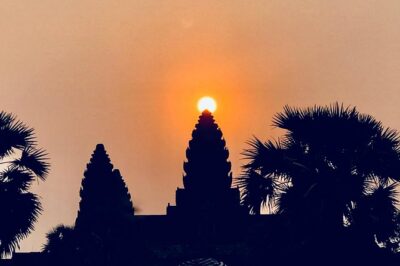
- Sunrise built in: You’re timed to reach Angkor Wat before dawn for the big moment.
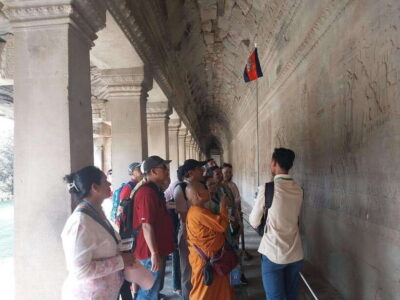
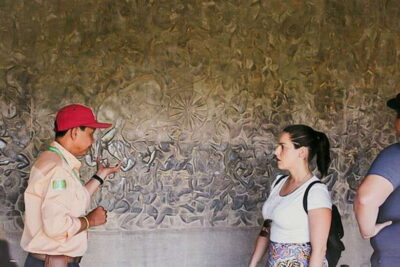
- Instructive guidance: An English-speaking guide helps you interpret carvings and layouts on the spot.
- Entrance fees not included: Plan for the $62 Angkor pass, plus food and drinks on your own.
Other ways to walk the great temple
- Angkor Wat Sunrise or Sunset Tour with Guide from Siem Reap★ 5.0 · 12,109 reviews
- Siem Reap: Angkor Wat: Small-Group Sunrise or Sunset Tour★ 5.0 · 9,444 reviews
- Siem Reap: Angkor Wat 2-Day Tour with Sunrise and Sunset★ 4.9 · 4,429 reviews
- Siem Reap: Full-Day Angkor Wat Guided Tour with Sunset★ 4.9 · 3,803 reviews
Why this tranquility route works (and how to use it)
Angkor can be overwhelming fast. Even if you love temples, the big sites tend to pull in everyone at the same hour, and then your day turns into a timing game. This tour’s whole idea is to trade some of that peak-time crush for a route that starts with quieter stops and then saves the headline moments for when it counts most.
The smart part is that it’s not just “go to less popular temples.” It’s also designed so you can still understand Angkor’s story. Your guide is there to point out why a temple looks the way it does, what figures and carvings to notice, and how each stop connects to the broader Khmer world. That’s the difference between taking photos and actually getting something out of the visit.
You’ll also appreciate the comfort and simplicity. You’re traveling by air-conditioned car, minivan, or minibus, with bottled water included. That matters in Siem Reap, where heat and humidity can drain your energy before you’ve even hit the ruins.
The best way to get value from this style of tour is simple: slow down when the stop allows it. Many of the Day 1 temples are scheduled for around 30 minutes to 1.5 hours. That’s enough time to walk the main areas, catch the key details your guide highlights, and still enjoy the calm atmosphere.
Day 1: Prasat Kravan to Banteay Prei, a quieter temple sweep
Day 1 reads like a “temple sampler,” but the pacing is the point. Instead of sprinting through only the most famous names, you build the day around smaller sites where it’s more realistic to linger.
Prasat Kravan, a focused start
You begin at Prasat Kravan, a 10th-century Hindu temple dedicated to Lord Vishnu. It’s a great opener because it gives you an entry point into Khmer temple design before you move on to Buddhist sites and the more layered Angkor story. You have about 30 minutes here, so it’s enough time to get oriented and absorb the basics without feeling rushed.
Practical tip: when you arrive, take a moment to look at how the structure sits in relation to the surrounding grounds. Your guide will usually connect those choices to function and symbolism, and that makes your next stops easier to read.
Prasat Bat Chum, when crowds are gone
Next is Prasat Bat Chum, a smaller temple that tends to feel calm most of the time. This is one of the best “tranquility” examples on the route. The temple was built by Kavindrarimathana, a learned Buddhist minister of Khmer King Rajendravarman, in the middle of the 10th century.
You get about 30 minutes here, and that short window is ideal for watching how the site feels at human scale. If you enjoy ruins where you can hear birds instead of only voices, this is the stop that often delivers the wow factor for the right reasons, not just because it’s famous.
More temple circuits, set side by side
Pre Rup, brickwork and big views
Then you’ll hit Pre Rup, a brick structure with a view from the top. This is scheduled for about 1 hour, and it’s a moment where your understanding upgrades from “pretty buildings” to “how they were meant to dominate the landscape around them.” Even if you’re not a temple architecture expert, your guide can point out what to notice so it feels less random.
The main payoff is the perspective. Angkor feels like a civilization that grew up in the jungle, and Pre Rup helps you feel that idea from above.
Banteay Samre, architecture plus calm
After that, Banteay Samre gives you a slower feel. The tour time is about 1 hour, and the appeal here is a mix of architecture style and peace. This is the kind of stop where you might end up staying a few minutes longer if the light is good and you’re enjoying the details.
If you like photos, this is also a decent place to take your time framing shots, because you’re not constantly competing with tour-group foot traffic.
Eastern Mebon, elephant statues in one massive stone
Next comes Eastern Mebon, described as the only temple with eight elephant statues carved from one huge stone. You’ll have about 1 hour here.
That detail alone makes it worth the stop, because it gives you a concrete thing to look for instead of just walking and hoping something catches your eye. Your guide can help you track the positions and what each figure contributes to the visual story of the temple.
Preah Khan, stone piles, carvings, and nature
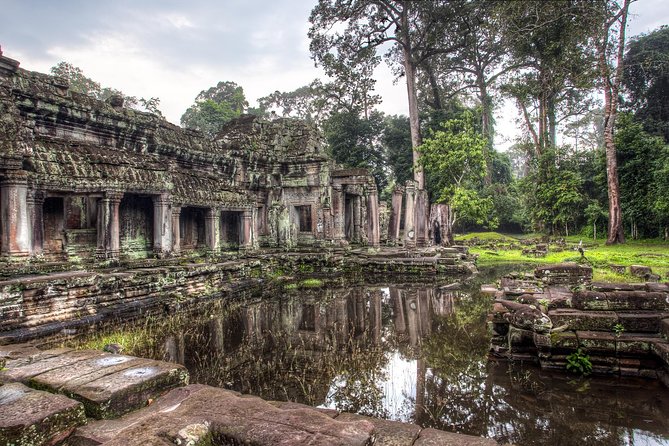
You then move to Preah Khan, scheduled for around 1 hour 30 minutes. The attraction here is the combination of stone structures with carvings, plus the way nature surrounds and interacts with the ruins.
This is where a guide helps most. Without context, Preah Khan can feel like a lot of stone and angles. With explanations, you start noticing the logic of the layout and how the carvings connect to the site’s purpose.
Banteay Prei, the quiet closer
You end Day 1 at Banteay Prei. You’ll have about 30 minutes, and the key point is that it’s often visited less than the famous names. When it’s quiet, you get to walk freely, look longer at textures and openings, and enjoy that post-temple calm without immediately turning into a crowd-navigation exercise.
Day 1 works best if you go into it with the mindset that you’re collecting impressions, not ticking boxes.
Day 2: Angkor Wat at dawn, then Ta Prohm and the big compounds
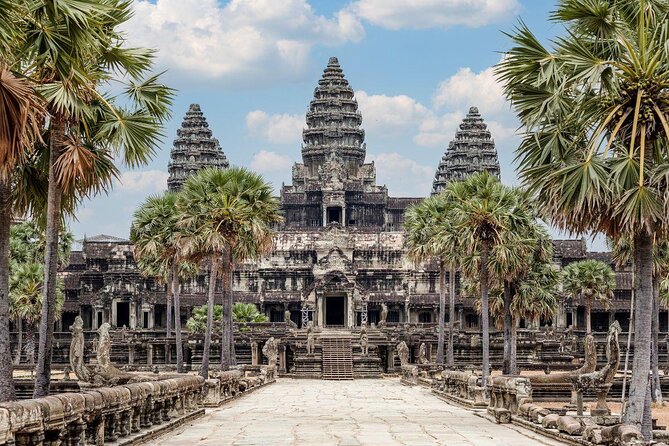
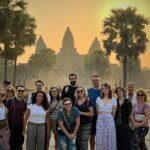
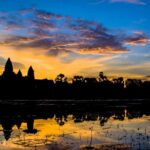
Day 2 is the “headline day.” It starts early to get you to Angkor Wat before dawn. That sunrise visit is scheduled for about 4 hours, which is a good block of time for waiting, watching light change, and exploring at a more human pace before the biggest rush.
Angkor Wat, before the crowds wake up
Arriving before dawn is where you win at Angkor. You’re there when the scene feels more solemn and less chaotic. The tour has you staying long enough to do more than just snap a photo and run.
Even if you’ve seen Angkor Wat in photos for years, being there in early light gives you a different sense of scale. The guide can help you focus on the key views and what to notice along the way, so you don’t just wander.
Dress code matters here too. You have to cover your thighs and shoulders to enter temple complexes. If you forget, you can be refused entrance.
Ta Prohm, the Tomb Raider temple feeling
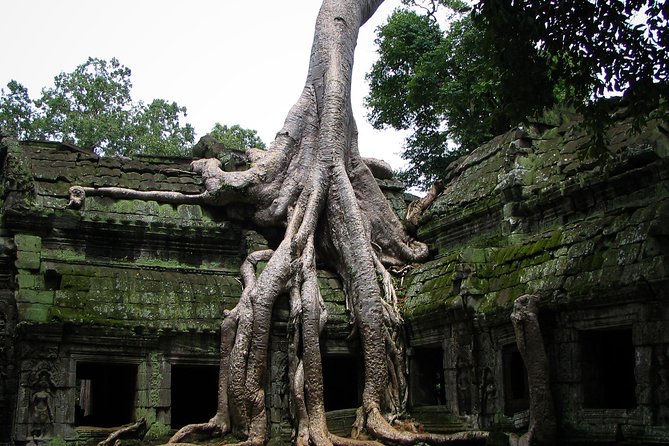
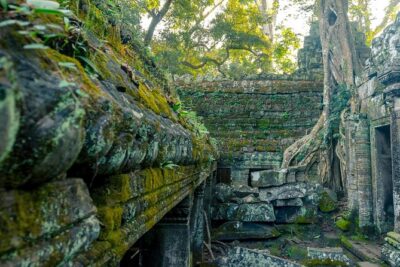
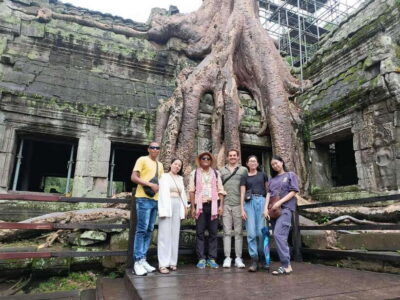
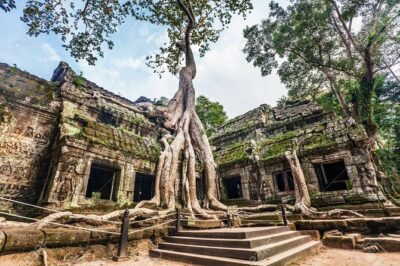
Next is Ta Prohm, famous from Tomb Raider. You’ll have about 1 hour here. This is one of the classic “Hollywood ruin” experiences, but it can still be satisfying if you pay attention to what’s actually happening on the ground, like how tree roots interact with stone and structures.
Try to use your guide to point out the parts you can’t really see well from a distance. That’s where the hour becomes useful.
Banteay Kdei, Buddha statues and archaeological finds
Then you go to Banteay Kdei, with about 1 hour on the schedule. This stop is tied to archaeology, where Japanese archeology students found 274 pieces of Buddha statues during digging.
That kind of detail helps you see the temple as more than a photo spot. You’re not just watching stone, you’re learning how discoveries changed our understanding of what this place contained. If you like when a tour turns ruins into a story, this is one of the stronger points on Day 2.
Angkor Thom, an afternoon walk with South Gate sunset
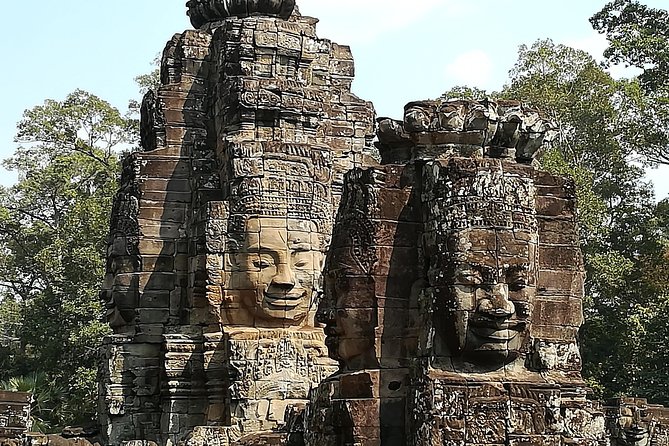
Finally you’ll spend time at Angkor Thom, about 3 hours total. This includes exploring the ancient city compound and then catching sunset at the South Gate.
This is a good “wrap-up” because you get a broader view of how Angkor worked as an actual urban space, not only a collection of isolated temples. The tour’s structure helps you move from specific temples into a bigger sense of city planning and movement.
Sunset at South Gate is also one of the ways to end the trip without feeling like you’ve rushed through the last hours. You get time to settle into the atmosphere.
Price and value: what $110 covers, and what it does not
The tour costs $110 per person for approximately two days. For that, you’re getting a lot of the hard-to-schedule parts handled for you: an English-speaking guide, round-trip hotel transfers, air-conditioned vehicle transport, bottled water, and sunrise and sunset coverage.
That’s not a small thing. Angkor days can get expensive and stressful fast once you start paying for multiple tuk-tuks, taxis, or trying to coordinate timing on your own. Here, you’re paying for efficiency and planning, plus a guide who can make the time feel more meaningful.
The big thing to budget is the entrance fee. Entrance is not included. You’ll need the 3-day Angkor pass for $62 per person. If you’re comparing options, remember that many “cheap” tours still require the pass, and they may not include the same transfers or guided time.
Also note what’s not included: food and drinks and accommodation. Bottled water is provided, but meals are on you. So plan on carrying a bit of cash or arranging snacks between stops.
If you want a solid value check, ask yourself this: would you pay for private transport and a guide on top of the pass anyway? If the answer is yes, this price starts looking reasonable, especially because you’re covering a full two-day set of sites.
Transfers, timing, and the temple dress code that can stop you
The tour starts at 8:00 am. Day 2 includes the early timing needed to reach Angkor Wat before dawn, but the schedule keeps the overall day long enough for real temple time, not only a quick drive-by.
Round-trip transfers are included, which is a huge quality-of-life factor. You’re not stuck haggling for rides between far-flung ruins, and you’re not trying to manage public transport with limited time.
One rule you should take seriously: temple dress code. You must cover your thighs and shoulders when entering temple complexes. If your outfit doesn’t match, you may be refused entrance. It’s a small detail, but it can ruin your day if you don’t prepare.
My practical advice: treat this as a “start of trip” checklist, not a “maybe it’s fine” guess.
What the guide adds, beyond names on a map
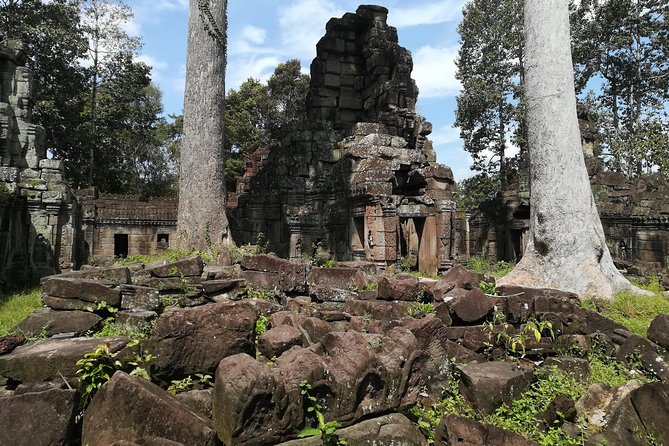
A strong guide can turn Angkor from a list of monuments into a sequence you understand. The tour is built around that idea, with hints and tips for exploring each stop.
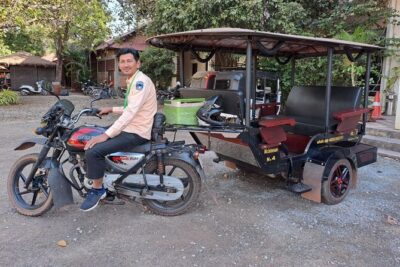
The feedback that stands out is the guide quality. Mr Pal Chen comes up as an excellent guide who combined detailed history with a friendly, helpful approach. He also helped keep the experience calmer, focusing on the important sights while avoiding crowds when possible.
You should expect your guide to:
- explain what you’re looking at and why it matters
- help you choose where to spend your time on each site
- keep the route structured so you don’t waste daylight
The best way to get value from a private guide is to ask simple, direct questions. Not a quiz. Just ask what to notice in the next 10 minutes, or what detail you might miss if you only take photos.
Who this tour fits best (and who might want something else)
This private tour is designed for visitors who want a calmer Angkor experience, with quieter temples and a well-timed sunrise. It also helps that most travelers can participate.
You’ll likely love it if:
- you want to see major Angkor sites but not feel trapped in crowds all day
- you like learning in context, while you’re standing at the ruins
- you value the convenience of hotel pickup, air-conditioned transport, and planned routes
You might want to compare options first if:
- you already have a pass and you enjoy DIY exploring with tuk-tuks more than guided stops
- you prefer ultra-flexible itineraries where you can linger indefinitely or skip stops on a whim
Should you book this 2 day Angkor Wat Tranquility Tour?
I’d book it if your top priority is a calmer route with private transport and a real sunrise at Angkor Wat. The mix of quieter temples on Day 1 and the well-known landmarks on Day 2 is a smart balance, and the schedule gives you enough time to actually see things.
Just go in with two clear expectations: the Angkor entrance pass is extra at $62 for the 3-day pass, and the dress code is strict. If you handle those up front, this tour looks like a strong value for a guided, less-crowded Angkor experience.
FAQ
How much does the 2 Days Angkor Wat Tranquility Tour cost?
It costs $110.00 per person.
What is included in the tour price?
The tour includes an English speaking guide, transportation in an AC car or minivan or minibus, bottled water, and sunrise and sunset.
Are temple entrance fees included?
No. Entrance fee is not included. You need the 3 Day Angkor pass for $62.00 per person.
Do I get hotel pickup and drop-off?
Yes, pickup is offered, and round-trip transfers are included so you can get to and from your hotel without public transport.
What time does the tour start?
The start time is 8:00 am.
What is the dress code for the temples?
You must cover your thighs and shoulders when entering the temple complex. If you are not wearing the correct clothing, you may be refused entrance.
Can I cancel for a full refund?
Yes. You can cancel up to 24 hours in advance for a full refund.
Is this tour private or shared?
It is a private tour/activity, so only your group participates.
More Days at the Temples
- Siem Reap: Angkor Wat 2-Day Tour with Sunrise and Sunset
★ 4.9 · 4,429 reviews - Angkor 2-Day Sunset & Sunrise Small-Group Tour
★ 5.0 · 2,567 reviews - 2 Days Exclusive Temple Highlights with Sunset and Sunrise Tour
★ 5.0 · 1,157 reviews - Siem Reap: Angkor Sunrise 1- or 2-Day Guided Temples Tour
★ 4.9 · 1,132 reviews - 2 Days Guided Historical Tour in Angkor
★ 5.0 · 855 reviews
More Temple Circuits Around Siem Reap
- Angkor Wat Sunrise or Sunset Tour with Guide from Siem Reap
★ 5.0 · 12,109 reviews - Siem Reap: Angkor Wat: Small-Group Sunrise or Sunset Tour
★ 5.0 · 9,444 reviews - Siem Reap: Angkor Wat 2-Day Tour with Sunrise and Sunset
★ 4.9 · 4,429 reviews - Siem Reap: Full-Day Angkor Wat Guided Tour with Sunset
★ 4.9 · 3,803 reviews - Angkor Wat Sunrise tour with Small – Group and Guide tours
★ 5.0 · 3,655 reviews
Angkor Wat, a Few More Ways In
- Angkor Wat Sunrise or Sunset Tour with Guide from Siem Reap
★ 5.0 · 12,109 reviews - Siem Reap: Angkor Wat: Small-Group Sunrise or Sunset Tour
★ 5.0 · 9,444 reviews - Siem Reap: Angkor Wat 2-Day Tour with Sunrise and Sunset
★ 4.9 · 4,429 reviews - Siem Reap: Full-Day Angkor Wat Guided Tour with Sunset
★ 4.9 · 3,803 reviews - Angkor Wat Sunrise tour with Small – Group and Guide tours
★ 5.0 · 3,655 reviews
Just Added: Fresh Siem Reap Tour Reviews

Angkor Wat Temple Tours, compared.
 ★ 5.0Angkor Wat Sunrise or Sunset Tour with Guide from Siem ReapFrom $1812,109 reviews
 ★ 5.0Angkor Wat: Small-Group Sunrise or Sunset TourFrom $159,444 reviews
 ★ 4.9Angkor Wat 2-Day Tour with Sunrise and SunsetFrom $344,429 reviews
 ★ 4.9Full-Day Angkor Wat Guided Tour with SunsetFrom $153,803 reviews
 ★ 5.0Angkor Wat Sunrise tour with Small – Group and Guide toursFrom $143,655 reviews
 ★ 5.0Angkor Wat Highlights and Sunrise Guided Tour from Siem ReapFrom $233,213 reviews
 ★ 5.0Angkor Wat Sunset Small Group Tour with Lunch IncludedFrom $203,059 reviews
 ★ 5.0Full-Day Angkor Wat Sunrise Private Tour with Guide from Siem ReapFrom $602,920 reviews
Browse the lists this tour appears in