
Reviewed · ANGKOR SUNRISE & SUNSET TOURS
2 Days Angkor temples with Sunrise & Sunset
A timed sunrise at Angkor Wat changes everything about how the temples feel. This 2-day Angkor temples tour packs the big classics and several quieter Khmer sites, with an early start for morning light and a sunset plan at the South Gate of Angkor Thom or Phnom Bakheng. You also get an English-speaking guide, AC transport, and cold drinking water.
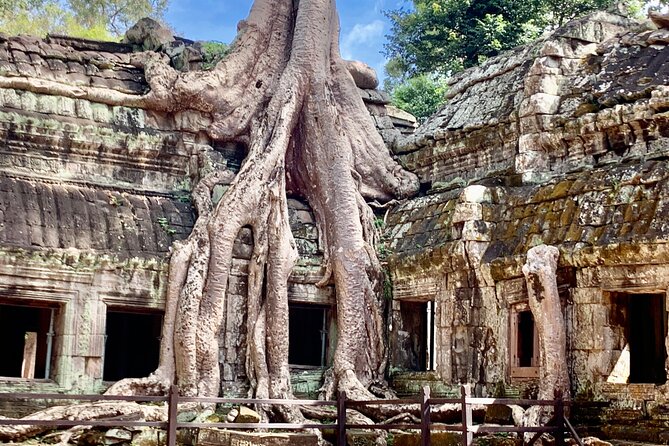
I especially like the way the route mixes “must-see” places with smaller stops. You’ll hit Ta Prohm for its famous tree roots vibe, and then you move on to temple mountains and outlying ruins that feel less crowded. The guide support matters too, since you’re not just walking around, you’re hearing what to look for at each site.
The main drawback is simple: this is a heavy schedule. You’ll be out early for sunrise (around 4:30am or 5am depending on season), you’ll need the full 3-day Angkor Pass for entry, and temple dress code (shoulders and thighs covered) can block you if you show up unprepared.
Key highlights
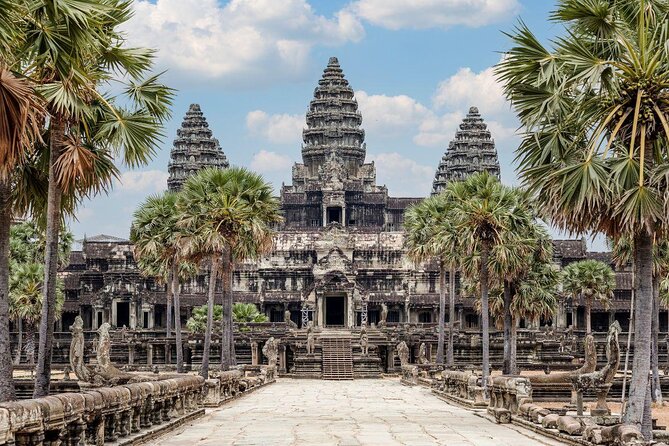
- Angkor Wat sunrise with a very early departure, timed for 4:30am or 5am seasonal start
- South Gate of Angkor Thom or Phnom Bakheng for sunset, so you can pick your preferred vibe
- A route that blends iconic temples with lesser-known names like Prasat Kravan, Ta Keo, and Ta Som
- Banteay Srei is included with free admission on this plan, plus you’ll focus on its fine carvings
- English-speaking guidance and AC vehicle with cold water, which you’ll appreciate on long hot days
- Guides such as Bunpheng are often described as punctual and professional, including help with first-time Cambodia visits
Chasing the light? More dawn and dusk runs
- Angkor Wat Sunrise or Sunset Tour with Guide from Siem Reap★ 5.0 · 12,109 reviews
- Siem Reap: Angkor Wat: Small-Group Sunrise or Sunset Tour★ 5.0 · 9,444 reviews
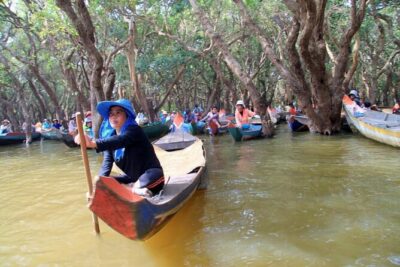
- Sunset tour of Kampong Phluk stilts home village on the Tonle Sap★ 5.0 · 4,865 reviews
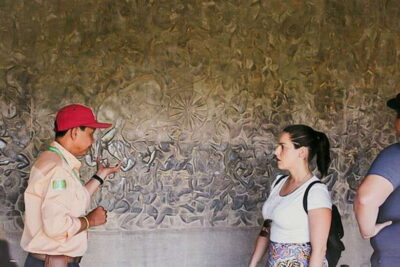
- Siem Reap: Angkor Wat 2-Day Tour with Sunrise and Sunset★ 4.9 · 4,429 reviews
Why this 2-day Angkor plan works for first-timers
Angkor feels endless when you just look at a map. What I like about a tight two-day structure is that it forces the big priorities into a logical flow: sunrise at Angkor Wat, a full day of key temple zones, then a second day that continues through more compact sites and finishes with another photo-friendly moment at sunset.
This tour also avoids the common mistake of making you choose between “classic” and “interesting.” You get both. On day one you move through Angkor Thom’s major sights, then you end with a temple mountain option in Phnom Bakheng. On day two you switch to smaller, highly detailed temples like Banteay Srei, plus water-linked architecture such as Neak Pean.
The schedule is ambitious, but the payoff is that you’ll spend your limited time seeing temples across multiple zones, instead of repeating the same area twice.
Getting from Siem Reap, and why pickup + AC matter
You start in Siem Reap with a meeting time listed at 9:00am, but sunrise days require a much earlier departure. In practice, that means you’ll likely get an early pickup timing for the sunrise portion, then a normal daytime rhythm for the rest.
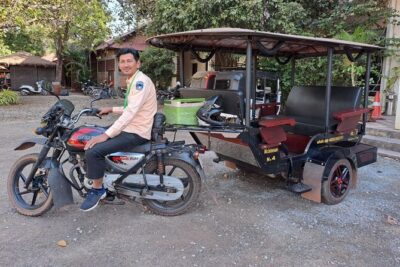
Transportation is included and uses an AC car or minivan or minibus, depending on group size. That matters more than people think, because Angkor days involve long road stretches and you’ll be carrying water, hats, and layers. This tour includes cold drinking water bottles, which helps you stay functional during the heat and dust.
If you’re trying to fit Angkor into a short Siem Reap visit, the flexibility shown by guides in this operator’s service style can also help. Some bookings involve customizing the itinerary when time is tight, including support for transfers around your schedule.
Sunrise at Angkor Wat: more than a photo, it’s a different temple
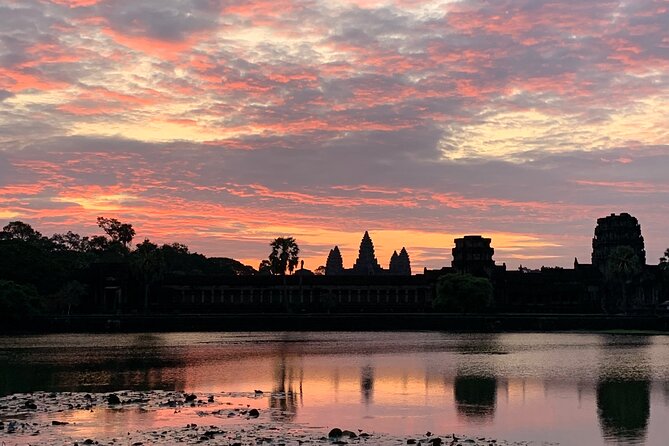
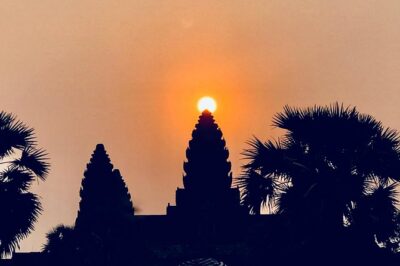
Angkor Wat sunrise is built around a clear timing: the tour starts very early, roughly 4:30am or 5am, depending on the season. After sunrise, you head to the main temple, so you get both the dramatic morning light and then time to actually explore.
Why this matters for your experience: early hours change the mood. The temple looks different in morning light, and the air feels calmer before the biggest crowds build. Even if your goal is just to get one iconic shot, this timing tends to give you a better window to move around and see details you might miss later.
Also, sunrise is when you’ll notice how big Angkor Wat is as a complex, because you’re approaching it when the whole area feels less chaotic. It’s not just early, it’s strategic.
Day 1: Prasat Kravan to Phnom Bakheng, with Angkor Thom in the middle
Day one is your “big circuit” day. You start at smaller, more specific Khmer structures, then you step into the main Angkor Thom zone, then you finish with a hilltop temple option.
More temple circuits, set side by side
Prasat Kravan: five brick towers on an elevated terrace
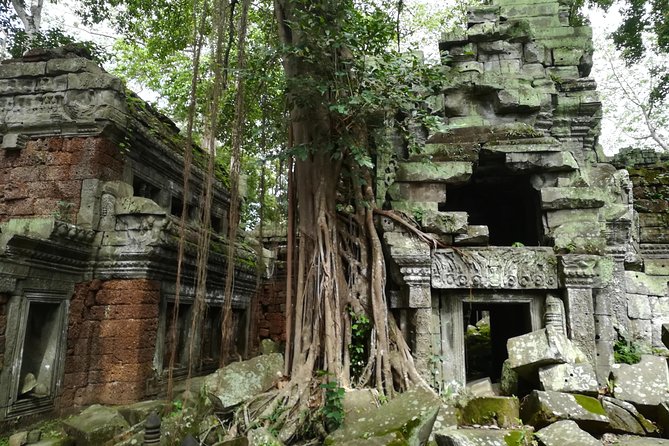
Your first stop is Prasat Kravan, a small 10th-century temple with five reddish brick towers on an elevated terrace. Even though it’s not the biggest name on many lists, it’s a great warm-up because you can focus on shape and craftsmanship without feeling rushed.
Tip: early in the day, spend a moment looking at the layout of the towers and terrace before you move on. It’s the kind of detail that’s easy to miss if you treat every stop like a checklist.
Banteay Kdei: “A Citadel of Chambers”
Next comes Banteay Kdei, described as meaning A Citadel of Chambers. It’s a Buddhist temple built in the late 12th and early 13th century by King Jayavarman VII. This is a solid stop for people who enjoy temples that feel like they’re made for walking in and around enclosed spaces.
It also gives you variety from the more famous faces of the site, without pulling you too far off the main route.
Ta Prohm: Bayon style and the monastery-university story
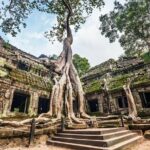
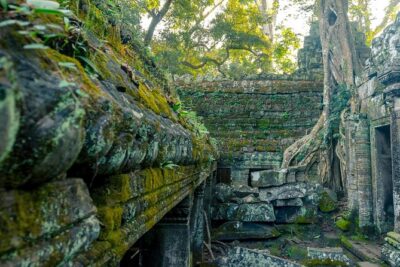
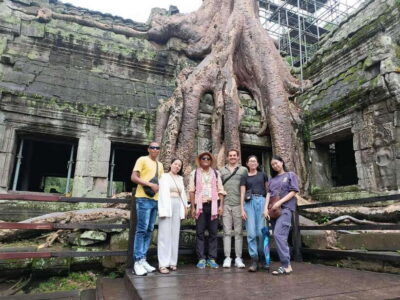
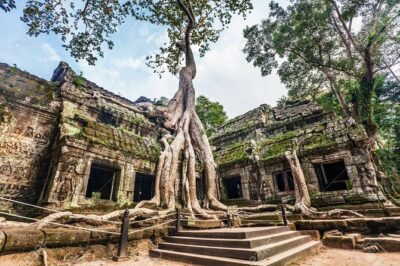
Then you reach Ta Prohm, a late 12th to early 13th-century temple connected to the Bayon style. The tour notes it was originally built as a Buddhist monastery and university. The signature thing people expect here is the way the structure interacts with nature, and it’s often the kind of stop where you slow down without realizing it.
Time on this stop is longer (about 1 hour), which is helpful because it’s one of those temples where you’ll want to frame photos, then look again with fresh eyes.
Ta Keo: the state temple that never finished
After that is Ta Keo, the state temple for Jayavarman V, started in 975 AD. The tour highlights an unusual point: construction was never finished, and there are stories about why it remained incomplete.
This is an interesting stop because unfinished temples feel different. You’ll likely notice contrasts in the work and how the structure reads. It’s not just romantic ruins, it’s a clue about the temple’s history.
Angkor Thom: Royal Palace, terraces, and the South Gate area
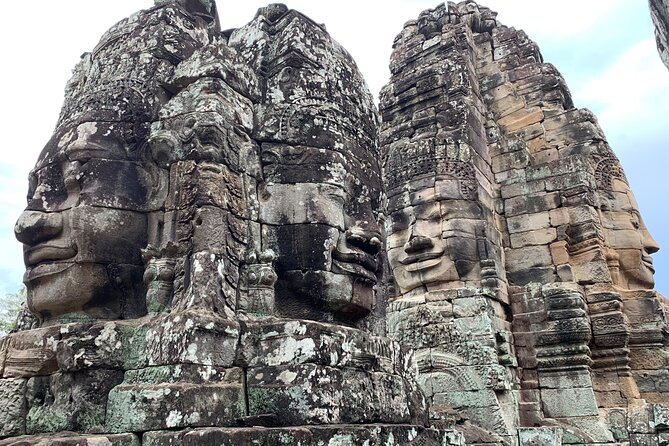
Next, you enter Angkor Thom, described as the ancient capital city of the Khmer Empire. This is where the tour packs multiple highlights into one zone, including the Royal Palace, the Terrace of the Elephants, the Terrace of the Leper King, the Bayon temple, and the South Gate, plus mention of a bridge.
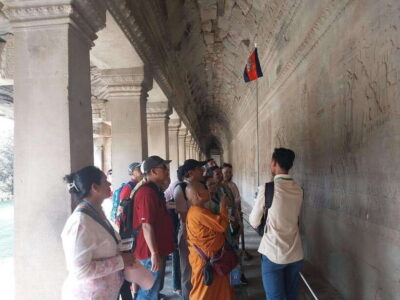
This portion is longer, about 2 hours, which is necessary. Angkor Thom is not one temple, it’s a whole complex experience. The benefit of a guide here is that you can quickly understand where you are in the city layout and what each terrace was for.
Consideration: if you arrive already tired from an earlier day, Angkor Thom can feel like information overload. I’d treat it like this, pick two or three signature features to really focus on, then enjoy the rest at a slower pace.
Phnom Bakheng: temple mountain dedicated to Shiva
Day one ends at Phnom Bakheng, a temple mountain dedicated to Shiva, built by King Yasovarman at the end of the 9th century. The tour describes “Phnom” as hill or mountain, and emphasizes that the temple was built at the top.
Even without staying forever, a hilltop temple stop gives you a “final view” feeling before the day wraps. It also sets up your sunset choice for day two, since the same general area is on the menu as a sunset option.
Day 2: Angkor Wat again, then Banteay Srei and the smaller water temples
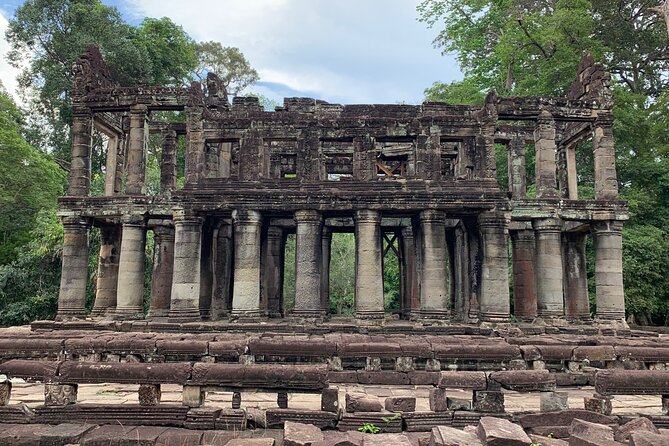
Day two starts with the big morning again at Angkor Wat for sunrise, then you move through a sequence of early Khmer sites and Jayavarman VII linked temples. It’s a mix that helps you see different temple personalities without repeating every major zone twice.
Angkor Wat sunrise repeat, then the main temple
The plan is to start early in the morning to watch sunrise at Angkor Wat, then head to the main temple after sunrise. This means you’re not just there for the sky. You’re getting actual temple time too.
If you prefer a slower pace, you’ll still be busy here, but the schedule gives you a chance to see more than one “layer” of the complex.
Pre Rup and Eastern Mebon: early architecture stops
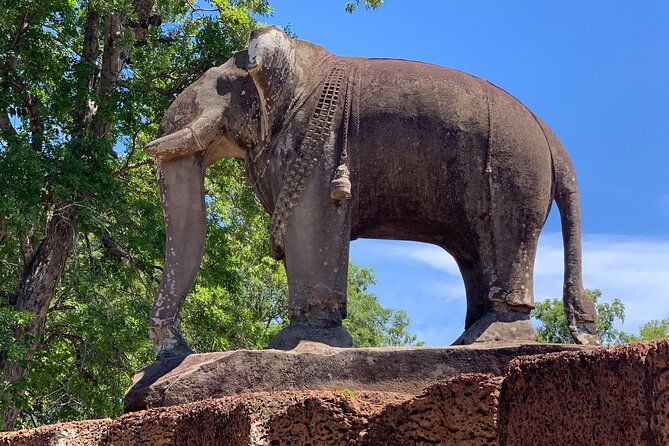
The tour includes Pre Rup (listed for about 30 minutes) and also references East Mebon as an example of early Khmer architecture built in the 10th century. If you like learning architecture eras by name and period, this is the part of the day that helps connect the temples to time.
Just manage expectations. These are shorter stops compared to the longer sites, so use the guide’s points to focus your attention.
Banteay Srei: Citadel of the Women, fine carvings focus
Next is Banteay Srei, known as the Citadel of the Women. The tour notes it has fine carvings and that they are said to be carved by a woman, because they’re delicate. You’re also told admission is free on this stop (based on the tour details).
For many visitors, this is the emotional highlight of the trip. It’s smaller than Angkor Wat but it rewards slow looking. I’d plan to spend your energy on the details the guide points out, because that’s where Banteay Srei is most powerful.
Banteay Samre: a smaller replica of Angkor Wat
Then comes Banteay Samre, described as a smaller replica of Angkor Wat. It’s a Hindu temple built in the early 12th century by kings Suryavarman II and Yasovarman II, dedicated to Vishnu. This is a fun stop if you enjoy comparing temple layouts across different sites.
It’s also a good “breather” temple between the more intense named highlights.
Eastern Mebon and Ta Som: early Khmer and Jayavarman VII Buddhism
The tour lists Eastern Mebon as another 10th-century early Khmer architecture example, followed by Ta Som. Ta Som is a Buddhist temple built by King Jayavarman VII in the end of the 12th century, dedicated to Lokesvara Buddha.
If you’re trying to understand Khmer religious variety, these stops help. You’re moving between Hindu and Buddhist dedications across different rulers and time periods.
Neak Pean: Entwined Serpents on a man-made island
Next is Neak Pean, a 12th-century temple built by Jayavarman VII. The tour explains its meaning as Entwined Serpents. You’ll also see it described as Buddhist architecture built on a man-made island in the middle of a man-made lake.
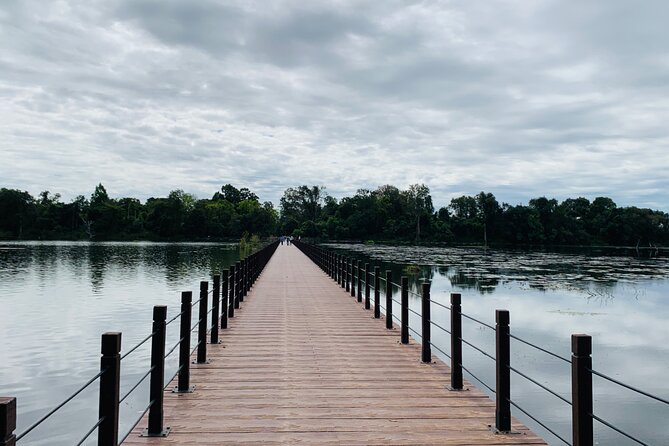
This is where you’ll appreciate how Angkor wasn’t only temples in stone. It was also water planning, and this stop is specifically tied to that water design.
Preah Khan: Royal Sword, dedicated to Jayavarman VII’s late father
Finally on day two is Preah Khan, translated as Royal Sword. It was built by King Jayavarman VII, dedicated to his late father, and it’s located about 1km north of ancient city of Angkor Thom. The description also notes it’s a large temple, though the text cuts off.
This last stop tends to land well if you’re still feeling curious. If you’re running low on energy, let the guide do the interpretation so you get the meaning even when your legs want to rest.
Sunset at Angkor: South Gate of Angkor Thom versus Phnom Bakheng
The tour’s sunset plan is flexible. You’ll watch sunset at either the South Gate of Angkor Thom or at Phnom Bakheng.
South Gate gives you a cinematic urban-temple feel, because it’s part of the Angkor Thom structure area. Phnom Bakheng, by contrast, is a temple mountain. That means sunset at Phnom Bakheng leans into height and the “temple on the hill” mood.
Practical advice: pick the one that matches your energy. If you still have more photos in you, South Gate is easier as a conceptual finale. If you want a dramatic ending and don’t mind the climb and time up top, Phnom Bakheng fits perfectly.
Price and what you really pay: the Angkor Pass math
The tour price is $115.00 per person for two days. What’s included is the guide (English speaking), transportation in an AC vehicle, and bottled cold drinking water.
Not included is the entrance fee: you need a 3-Day Angkor Pass at $62.00 per person. So your likely baseline before food and drinks is about $177 per person, plus meals and any snacks you choose.
Value check: for many first-timers, the hard part of Angkor is not just the ticket. It’s the logistics of moving between zones on time, especially sunrise. When the transport, guide, and water are handled, that $115 starts to look less like “just a transfer fee” and more like protection against wasted time.
Also, the tour includes mobile ticket and mentions group discounts. If you’re traveling with more than one person, ask how the discounts apply so you do not overpay.
Temple dress code rules, and how to avoid getting turned away
Angkor is strict about clothing. The tour states you must respect the dress code, covering thighs and shoulders when entering temple complexes. If you show up without the right clothing, you may be refused entrance to the temples.
This is one of those rules that can ruin a day if you ignore it. Pack something light that covers both shoulders and thighs. If your plan is to wear shorts, fix it before you arrive.
A small practical tip: even if you feel hot, correct clothing is part of getting the full experience. You don’t want your day to become a waiting game outside the gates.
Who this tour is best for, and who should consider another option
This tour suits you if:
- you want sunrise at Angkor Wat and a sunset plan during a short stay
- you like a structured route that hits many major temple names in two days
- you want an English-speaking guide and AC transport rather than figuring out everything yourself
It might be less ideal if:
- you’re traveling with very limited energy for early mornings
- you hate the idea of a long day with many stops, even if each stop isn’t extremely long
- you don’t want to budget for the separate 3-day Angkor Pass
The private group format can also be a plus. The tour is listed as private, meaning only your group participates, which usually makes it easier to move at a pace that works for you.
Should you book this 2-day Angkor sunrise and sunset tour?
If you’re visiting Siem Reap for a short window and you want the Angkor highlights without the stress, I think booking makes sense. You get exactly what people come for: Angkor Wat sunrise, a full day of major temple zones including Ta Prohm and Angkor Thom, then day two’s more detailed stops like Banteay Srei and water-linked Neak Pean.
My only caution is timing and preparation. Go to sleep early for the sunrise, and pack for the temple dress code so you do not lose access. If you can handle an early wake-up, this is a strong value way to do Angkor in two days.
FAQ
What’s included in the tour price?
The tour includes an English-speaking tour guide, transportation in an AC car or minivan or minibus, and bottled cold drinking water.
Is the Angkor Pass included?
No. Entrance fees are not included. You need a 3-Day Angkor Pass priced at $62.00 per person.
What’s the starting time for the sunrise?
Sunrise starts around 4:30am or 5am depending on the season.
What time does the tour meet in Siem Reap?
The meeting point lists a start time of 9:00am, but sunrise requires a much earlier departure.
Is pickup available?
Yes, pickup is offered.
Is admission included for all temples?
No. Entrance fees are generally not included, but Banteay Srei is listed as free in the tour details.
What temples are visited over the two days?
The tour includes Prasat Kravan, Banteay Kdei, Ta Prohm, Ta Keo, Angkor Thom, Phnom Bakheng, Angkor Wat, Pre Rup, Banteay Srei, Banteay Samre, Eastern Mebon, Ta Som, Neak Pean, and Preah Khan.
Where is the sunset watched?
Sunset is watched at the South Gate of Angkor Thom or at Phnom Bakheng.
What dress code do I need to follow?
You must cover your thighs and shoulders when entering temple complexes. If you don’t wear the correct clothing, you may be refused entrance.
What is the cancellation policy?
Free cancellation is available if you cancel up to 24 hours in advance for a full refund. If you cancel less than 24 hours before the start time, you will not get a refund.
More Days at the Temples
- Siem Reap: Angkor Wat 2-Day Tour with Sunrise and Sunset
★ 4.9 · 4,429 reviews - Angkor 2-Day Sunset & Sunrise Small-Group Tour
★ 5.0 · 2,567 reviews - 2 Days Exclusive Temple Highlights with Sunset and Sunrise Tour
★ 5.0 · 1,157 reviews - Siem Reap: Angkor Sunrise 1- or 2-Day Guided Temples Tour
★ 4.9 · 1,132 reviews - 2 Days Guided Historical Tour in Angkor
★ 5.0 · 855 reviews
More Temple Circuits Around Siem Reap
- Angkor Wat Sunrise or Sunset Tour with Guide from Siem Reap
★ 5.0 · 12,109 reviews - Siem Reap: Angkor Wat: Small-Group Sunrise or Sunset Tour
★ 5.0 · 9,444 reviews - Siem Reap: Angkor Wat 2-Day Tour with Sunrise and Sunset
★ 4.9 · 4,429 reviews - Siem Reap: Full-Day Angkor Wat Guided Tour with Sunset
★ 4.9 · 3,803 reviews - Angkor Wat Sunrise tour with Small – Group and Guide tours
★ 5.0 · 3,655 reviews
Dawn and Dusk Over Angkor
- Angkor Wat Sunrise or Sunset Tour with Guide from Siem Reap
★ 5.0 · 12,109 reviews - Siem Reap: Angkor Wat: Small-Group Sunrise or Sunset Tour
★ 5.0 · 9,444 reviews - Sunset tour of Kampong Phluk stilts home village on the Tonle Sap
★ 5.0 · 4,865 reviews - Siem Reap: Angkor Wat 2-Day Tour with Sunrise and Sunset
★ 4.9 · 4,429 reviews - Siem Reap: Full-Day Angkor Wat Guided Tour with Sunset
★ 4.9 · 3,803 reviews
Just Added: Fresh Siem Reap Tour Reviews

Angkor Sunrise & Sunset Tours, compared.
 ★ 5.0Angkor Wat Sunrise or Sunset Tour with Guide from Siem ReapFrom $1812,109 reviews
 ★ 5.0Angkor Wat: Small-Group Sunrise or Sunset TourFrom $159,444 reviews
 ★ 5.0Sunset tour of Kampong Phluk stilts home village on the Tonle SapFrom $214,865 reviews
 ★ 4.9Angkor Wat 2-Day Tour with Sunrise and SunsetFrom $344,429 reviews
 ★ 4.9Full-Day Angkor Wat Guided Tour with SunsetFrom $153,803 reviews
 ★ 5.0Angkor Wat Sunrise tour with Small – Group and Guide toursFrom $143,655 reviews
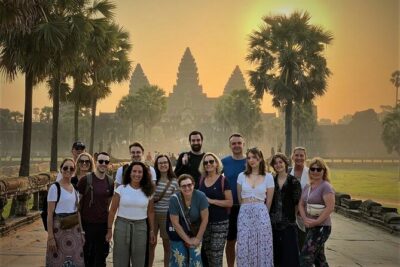 ★ 5.0Angkor Wat Highlights and Sunrise Guided Tour from Siem ReapFrom $233,213 reviews
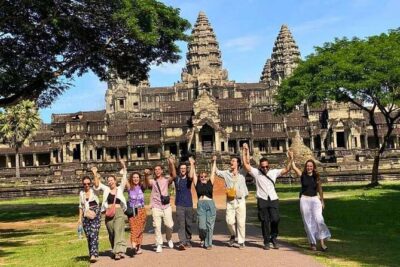 ★ 5.0Angkor Wat Sunset Small Group Tour with Lunch IncludedFrom $203,059 reviews
Browse the lists this tour appears in