
Reviewed · ANGKOR TEMPLE TOURS
2-Day ‘Angkor & Village’ Tour
Angkor can feel like sensory overload, so this tour is built around keeping you moving with comfort and clear guidance. The two full days cover the big hitters plus smaller stops, and you get door-to-door pickup and drop-off from your hotel.
What I love most is the simple, practical pacing: an English-speaking guide helps you decode what you are looking at, so the ruins make sense instead of just looking old and impressive. I also like that the tour includes the stuff people forget to budget for, like bottled water and cold towels, plus the fee for the motorised boat.
The main drawback is physical. There is walking and climbing around steep temple steps, and the tour is not suitable if you cannot walk normally or if your fitness is below average.
Key things I’d pay attention to
Two Angkor Wat moments: you see it on Day 1 and again at sunrise on Day 2.
Air-conditioned transport with hotel pickup: fewer stress moments on hot roads.
An English-speaking guide who connects the dots: history, layout, and what each temple is for.
Tonle Sap village by boat: Kompong Phluk is part of the plan (boat fee included).
Temple passes are separate: plan for the Angkor pass cost before you go.
Fitness matters: steps and uneven surfaces are part of the deal.
More temple circuits, set side by side
- Angkor Wat Sunrise or Sunset Tour with Guide from Siem Reap★ 5.0 · 12,109 reviews
- Siem Reap: Angkor Wat: Small-Group Sunrise or Sunset Tour★ 5.0 · 9,444 reviews
- Siem Reap: Angkor Wat 2-Day Tour with Sunrise and Sunset★ 4.9 · 4,429 reviews
- Siem Reap: Full-Day Angkor Wat Guided Tour with Sunset★ 4.9 · 3,803 reviews
How this 2-day Angkor and Village tour feels in real life
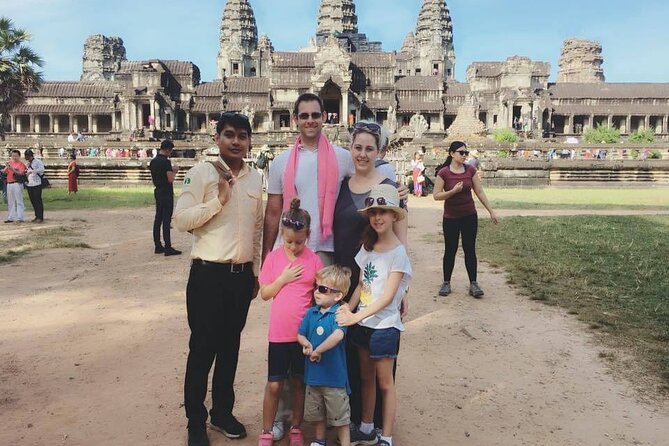
This is one of those Siem Reap tours that tries to do a lot without wasting your time. You start at 8:30 am, and you do not have to organize transfers, tickets, or meeting points on your own, because pickup from your accommodation is included. The vehicle is air-conditioned, which matters a lot when you are hopping between temple areas in the heat.
What makes it especially workable is that the tour is a private setup for your group. That usually means you can keep a steadier rhythm than on a big group bus tour, and your guide can explain at a pace that fits your questions. Your guide is English speaking, and you stay focused on what is in front of you, not on logistics.
At a price of $130 for about two days, the baseline value is the guide plus transport plus selected fees (like the boat). Just keep in mind the temple passes are not included. Once you price that in, you will understand whether this tour matches your comfort level and how much guidance you want.
Price and what you should budget before you go
The headline price is $130. For most people, that sounds good because you are getting more than a simple driver. The tour includes hotel pickup and drop-off, an air-conditioned vehicle during the itinerary, a professional English-speaking guide, bottled water, and cold towels.
But temple entry is separate. You will need Angkor passes from the Angkor Enterprise ticket office, and one pass per person. The tour information lists these options:
- USD 62 for 3 days
- USD 72 for 7 days
- And it also notes a 2-day pass at USD 67 per person
Meals are also not included. So I suggest planning for lunch and any snacks on both days, plus soft drinks or alcohol if you want them.
If you add up the passes plus meals, you will see the trade. You are paying for convenience and an organized route, not just for access to temples. If you like having someone else handle the order of sites, this feels like a fair deal. If you prefer total freedom and self-guided exploring, you might spend less on tours, but you will likely spend more time solving logistics yourself.
Entering Angkor Park with an order that makes the ruins click
Day 1 is built like a circuit through Angkor’s major temple zones. The big win is that the day mixes landmark temples with temples that help you understand the bigger picture. With a good guide, you start to notice patterns in style, layout, and religious purpose.
You begin at Angkor Archaeological Park, where you buy your pass. The cost depends on how many days you need, and you only need to buy one pass per person. Once your pass is sorted, the rest of the day becomes smooth.
Bayon Temple: faces, symbolism, and why it matters
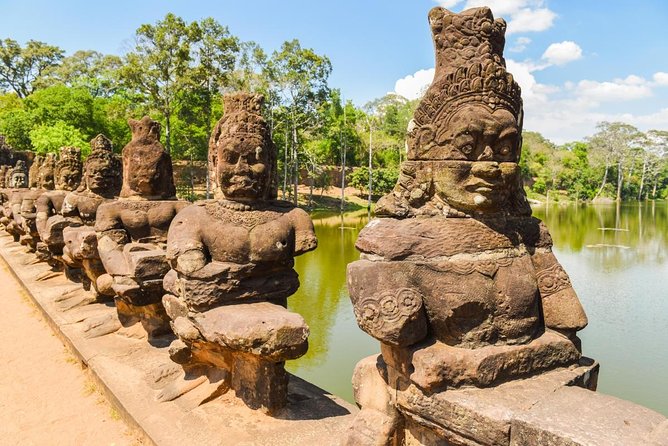
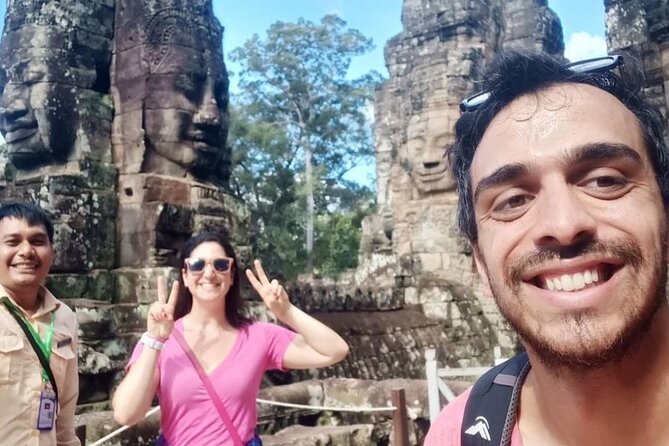
Next up is Bayon Temple. It is described as a richly decorated Khmer temple built in the late 12th or early 13th century as the state temple of the Mahayana Buddhist king Jayavarman VII. It also sits at the center of Jayavarman’s capital, Angkor.
This stop is one of those where a guide really helps. Without explanation, you might just see faces carved into stone. With explanation, you start to connect why Bayon sits where it does and how it fits the broader city.
More time at the temples, spread over days

Baphuon and Ta Prohm: shifting styles across centuries
Then you move to Baphuon Temple, located in Angkor Thom northwest of Bayon. It is a three-tiered temple mountain built as the state temple of Udayadityavarman, dedicated to Shiva.
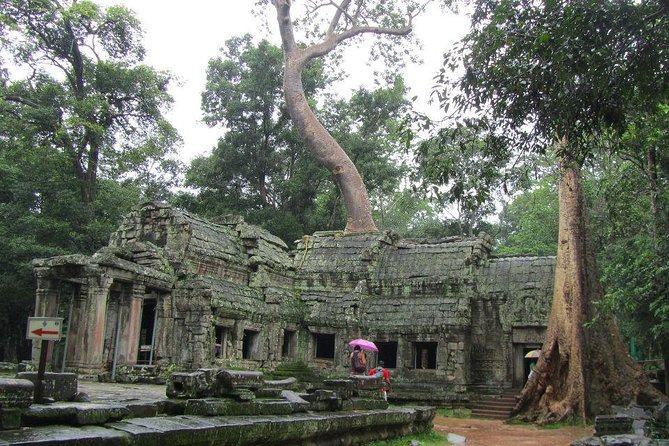
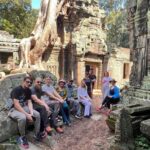
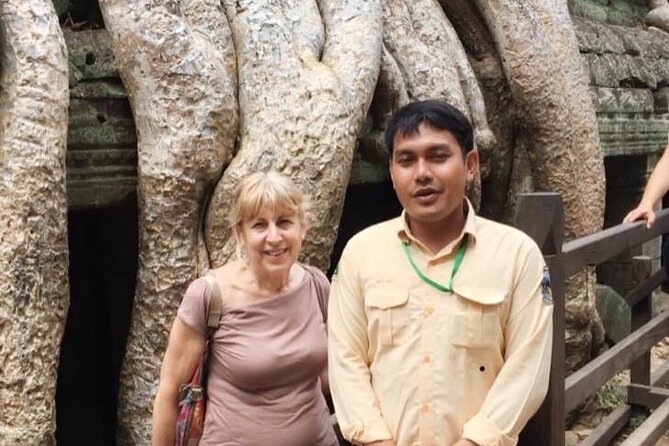
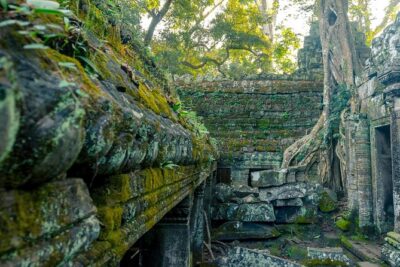
After that comes Ta Prohm, known today by that name. It was originally called Rajavihara and is said to have been built in the Bayon style, largely in the late 12th and early 13th centuries. You also get a clear sense of its position, about a kilometer east of Angkor Thom.
The nice thing about placing Ta Prohm after Baphuon is contrast. You can physically see how styles and influences shift through time. It is not just a photo stop, it becomes a timeline you walk through.
Terrace of the Elephants: the royal stage
Your route also includes the Terrace of the Elephants, part of the royal terraces facing the parade grounds. This is the sort of temple stop that can feel small compared to Angkor Wat, but with the right explanation, it becomes a way to picture ceremonial life around the royal palace grounds.
Lunch break, then Angkor Wat: the main event
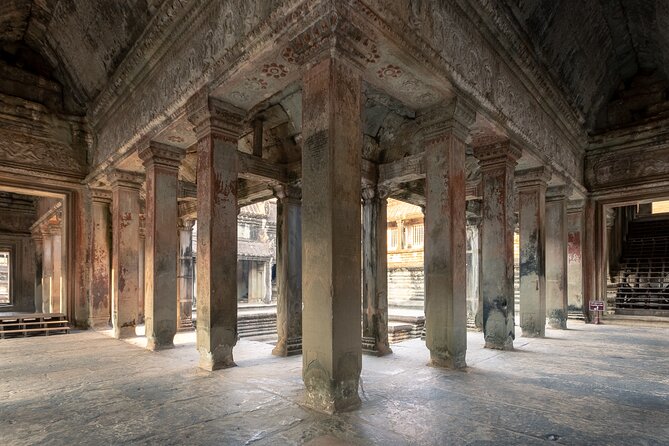
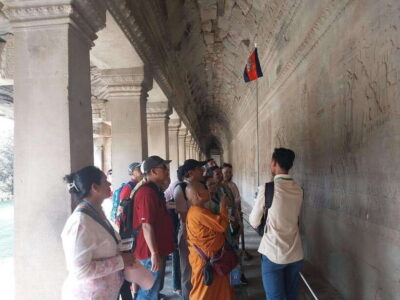
After lunch, the itinerary calls for Angkor Wat. The site is described as the largest religious monument in the world on a site of 162.6 hectares. It was originally constructed as a Hindu temple dedicated to a deity (the description cuts off, but the important takeaway is that Angkor Wat’s original religious purpose is part of what your guide will explain).
Expect a long, immersive-feeling visit here. The time listed is about 3 hours at Angkor Wat on Day 1, so you are not just doing a quick walk-through.
Phnom Bakheng: a hilltop close to the end of the day
To round out Day 1, you visit Phnom Bakheng, a Hindu and Buddhist temple mountain dedicated to Shiva, built at the end of the 9th century during the reign of King Yasovarman (889-910). It sits atop a hill, and the itinerary lists about 3 hours for the stop.
This stop is where the physical side becomes obvious. You will be climbing in a place built for steps and stairs, not for comfort shoes and casual wandering. If you plan to do Phnom Bakheng, wear footwear you can trust on uneven stone.
Day 2 sunrise at Angkor Wat, then a quieter temple run
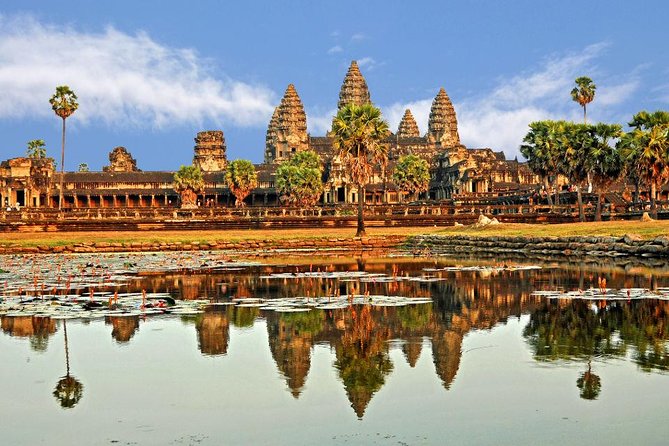
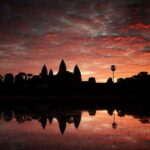
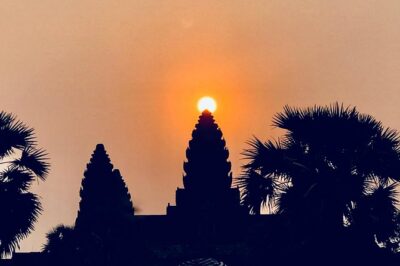
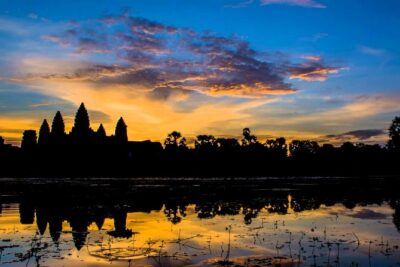
Day 2 starts with another visit to Angkor Wat, this time for sunrise. The itinerary says you revisit to see the famous sunrise, then return to your hotel so you can have breakfast. The ride back and breakfast are not an afterthought. They help you recover, which matters because the day continues with several more temples.
That rhythm, sunrise and then a proper break, is a smart way to avoid the most common mistake people make in Angkor, which is treating the early start as if it does not cost energy.
Banteay Srei: the ladies temple, built for detail
Next you go to Banteay Srei, often called the ladies temple. It is a 10th-century Cambodian temple dedicated to Shiva, near the hill of Phnom Dei, about 25 km northeast of the main group of temples.
This is a stop where you can slow down. Even though the itinerary lists about 2 hours, the temple’s reputation comes from how much there is to look at closely. A guide’s explanations about dedication and era help you appreciate why the art and layout are the way they are.
Banteay Samre and Pre Rup: brick and laterite texture
After Banteay Srei, you visit Banteay Samré, described as located 400 metres east of the East Baray. It was built in the early 12th century during the reign of Suryavarman II and Yasovarman II. It is a Hindu temple in the Angkor Wat style.
Then comes Pre Rup, a temple mountain built as the state temple of Khmer king Rajendravarman, dedicated in 961 or early 962. The description specifically notes construction materials: brick, laterite, and sandstone. That kind of detail is helpful because it gives your guide a hook to explain why temples look and feel the way they do, not just that they are old.
The time listed for each is shorter than Angkor Wat, around 1 hour apiece. It is enough time to see what is important without dragging the day into something exhausting.
Kompong Phluk by boat, or the Preah Khan alternative route
Day 2 includes a choice point, depending on how the day is paced.
Kompong Phluk: stilted villages on Tonle Sap
Kompong Phluk is described as a collection of villages largely built on stilts on the Tonle Sap. The name means harbor of the tusks. The community depends largely on fishing, especially during Cambodia’s wet season from May to October.
This stop is one of the most memorable because it changes the scenery. You are not in temple country anymore. Instead, you are seeing how people live around the lake and how the water shapes the economy. The itinerary lists about 3 hours for this segment, and importantly, the fee for the motorised boat is included.
If you are someone who wants at least one non-temple highlight, this is the portion that brings balance.
If you skip the water route: Preah Khan and nearby temples
The alternative to Kompong Phluk is Preah Khan, plus Neak Poan, Ta Som, and East Mebon. The itinerary notes you return to town about 5:00 pm.
This alternative matters if you do not want to do a boat ride or if your comfort level with wet, slippery surfaces is low. You still get temple variety, just without the lake component.
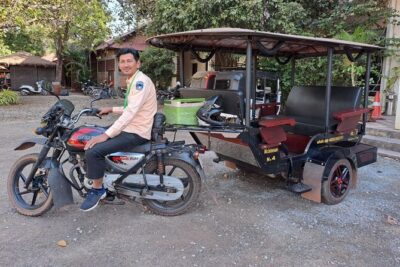
Your guide and driver make or break the experience
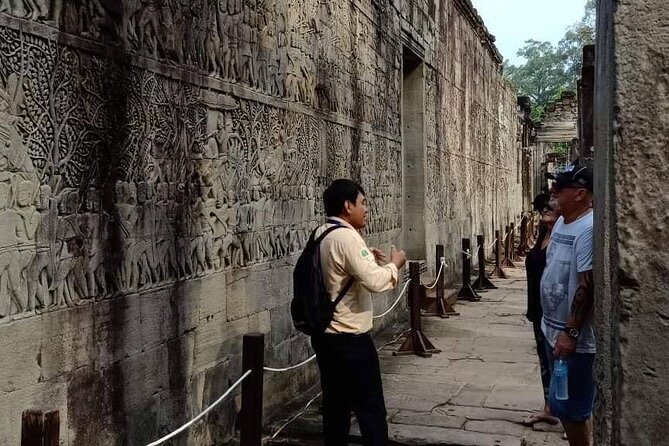
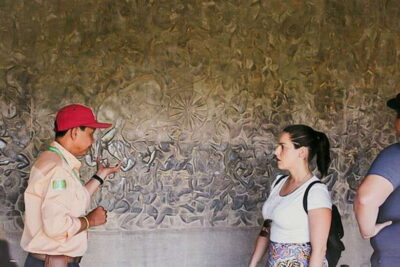
This tour is strongly guided. In the feedback you are drawing from, the English guide quality comes up again and again, with specific names like Mr. Choup and Seng. That is a good sign because Angkor is not just a set of buildings. It is a city of symbolism, and a guide helps you read it.
What you should look for from a guide, in practical terms:
- Clear explanations of why temples were built and who they were dedicated to
- Time-saving insight about what to prioritize in each stop
- Comfort handling when you need slower steps or shorter breaks
Also, you are riding in an air-conditioned vehicle between stops, plus you get bottled water and cold towels. Those small details reduce the fatigue that can otherwise make Day 1 feel too long.
Logistics that are easy to get right
Start time is 8:30 am, and the vehicle departs your hotel at the tour start time. That means you should plan for an early morning routine and avoid late breakfasts the day before.
The tour is described as near public transportation, but you do not need it since pickup is included. It is also listed as not available for children under 3 years old.
The tour includes mobile ticket as a feature. That can make entry smoother if your operator handles the ticket correctly. Still, do your part: confirm how your temple pass is delivered or how you will receive it, because the included items do not cover temple passes.
What to wear and bring so the steps do not spoil the day
The itinerary involves climbing and walking around temple ruins, including hilltop areas like Phnom Bakheng. Since the tour is not suitable for people who cannot walk normally, you should treat it like a walking tour, not a casual sightseeing day.
I recommend:
- Good grip shoes for stone stairs and uneven surfaces
- Water for outside-the-tour moments, even though bottled water is included
- Sunscreen and a hat, because you will be outside a lot
- A small day bag you can keep close, since you will be moving temples to temples
If you are on the fence, think about your tolerance for steep stairs and long hours. This tour gives you a lot of temples in two days, so your body has to keep up.
Who this Angkor tour is best for
This is a smart fit if you:
- Want a guided way to experience Angkor, not just photos
- Like the idea of seeing Angkor Wat twice, including sunrise
- Want one non-temple highlight with the Tonle Sap boat ride
- Prefer the ease of hotel pickup and drop-off in an air-conditioned vehicle
It may not be the best fit if you have limited mobility or if you struggle with stairs and uneven stone. The tour explicitly notes that it is not suitable for those who have less than average fitness or cannot walk normally.
Should you book this tour?
Book it if you want structure, comfort, and an English guide to help you understand what you are seeing. At $130, plus included guide, transport comfort, and the boat fee, it is good value for a two-day Angkor plan, as long as you budget temple passes separately.
Skip it or reconsider if you dread steep climbing and long walking days. In Angkor, the temples are not level. They are designed for steps, and this itinerary includes some of the tougher terrain.
If you want, tell me your travel dates and whether you prefer Kompong Phluk or the Preah Khan alternative. I can help you plan the days so you feel fresh for sunrise and not wiped out by the mid-day heat.
FAQ
Are temple passes included in the tour price?
No. Temple passes are not included. You buy Angkor passes at the Angkor Enterprise ticket office, with options listed including a 2-day pass at USD 67 per person.
What time does the tour start?
The tour start time is 8:30 am, and the vehicle departs your accommodation at that time.
Is pickup and drop-off included?
Yes. Hotel pickup and drop-off are included, and you travel in an air-conditioned vehicle.
Do I get an English-speaking guide?
Yes. A professional English-speaking guide is included.
Is the boat ride included for Kompong Phluk?
The tour includes the fee for the motorised boat, and Kompong Phluk is part of the route.
Are meals included?
No. Meals, soft drinks, and alcohol are not included.
What fitness level do I need?
The tour is not suitable for people with less than average fitness or those who cannot walk normally, because there is walking and climbing around the ruins.
Is this tour private?
Yes. It is described as a private tour/activity, meaning only your group participates.
Can I cancel for a refund?
Yes. You can cancel up to 24 hours in advance for a full refund. If you cancel less than 24 hours before the start time, the amount paid is not refunded.
More Tour Reviews in Siem Reap
- Angkor Wat Sunrise or Sunset Tour with Guide from Siem Reap
★ 5.0 · 12,109 reviews - Siem Reap: Angkor Wat: Small-Group Sunrise or Sunset Tour
★ 5.0 · 9,444 reviews - From Siem Reap: Kampong Phluk Floating Village Tour by Boat
★ 4.9 · 6,979 reviews - Sunset tour of Kampong Phluk stilts home village on the Tonle Sap
★ 5.0 · 4,865 reviews - Siem Reap: Angkor Wat 2-Day Tour with Sunrise and Sunset
★ 4.9 · 4,429 reviews
More Days at the Temples
- Siem Reap: Angkor Wat 2-Day Tour with Sunrise and Sunset
★ 4.9 · 4,429 reviews - Angkor 2-Day Sunset & Sunrise Small-Group Tour
★ 5.0 · 2,567 reviews - 2 Days Exclusive Temple Highlights with Sunset and Sunrise Tour
★ 5.0 · 1,157 reviews - Siem Reap: Angkor Sunrise 1- or 2-Day Guided Temples Tour
★ 4.9 · 1,132 reviews - 2 Days Guided Historical Tour in Angkor
★ 5.0 · 855 reviews
More Temple Circuits Around Siem Reap
- Angkor Wat Sunrise or Sunset Tour with Guide from Siem Reap
★ 5.0 · 12,109 reviews - Siem Reap: Angkor Wat: Small-Group Sunrise or Sunset Tour
★ 5.0 · 9,444 reviews - Siem Reap: Angkor Wat 2-Day Tour with Sunrise and Sunset
★ 4.9 · 4,429 reviews - Siem Reap: Full-Day Angkor Wat Guided Tour with Sunset
★ 4.9 · 3,803 reviews - Angkor Wat Sunrise tour with Small – Group and Guide tours
★ 5.0 · 3,655 reviews
Just Added: Fresh Siem Reap Tour Reviews

Angkor Temple Tours, compared.
 ★ 5.0Angkor Wat Sunrise or Sunset Tour with Guide from Siem ReapFrom $1812,109 reviews
 ★ 5.0Angkor Wat: Small-Group Sunrise or Sunset TourFrom $159,444 reviews
 ★ 4.9Angkor Wat 2-Day Tour with Sunrise and SunsetFrom $344,429 reviews
 ★ 4.9Full-Day Angkor Wat Guided Tour with SunsetFrom $153,803 reviews
 ★ 5.0Angkor Wat Sunrise tour with Small – Group and Guide toursFrom $143,655 reviews
 ★ 5.0Angkor Wat Highlights and Sunrise Guided Tour from Siem ReapFrom $233,213 reviews
 ★ 5.0Angkor Wat Sunset Small Group Tour with Lunch IncludedFrom $203,059 reviews
 ★ 5.0Full-Day Angkor Wat Sunrise Private Tour with Guide from Siem ReapFrom $602,920 reviews
Browse the lists this tour appears in