
Reviewed · SIEM REAP TUK-TUK TOURS
Siem Reap City Bike Tour / E-Bike or Tuk Tuk
That first pedal out of Siem Reap wakes the day up fast. This half-day ride mixes countryside cycling with hands-on Cambodian crafts, then slows down for meaningful cultural stops like Wat Thmey. I love the practical flow, with hotel pickup and plenty of water and snacks, and I also love the variety of stops, from ceramics tools to market life around Phsar Chaa. One consideration is the focus on physical movement, so you’ll want to be comfortable riding for much of the morning, with e-bike or tuk tuk options if you need them.
You’ll get a real sense of life outside the main temple circuit, with village trades you can actually see in action. The tour is built for small groups, up to 12 people, and it keeps things simple, not rushed. If you’re the type who likes texture, conversations, and places that feel local, this is a strong fit.
Key highlights worth planning around
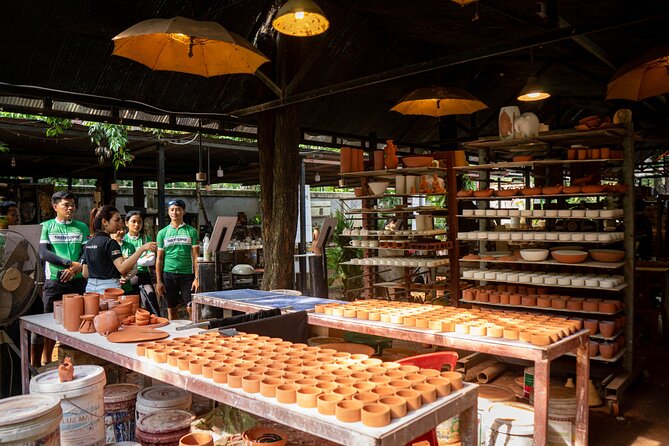
- Hands-on ceramics time using pottery wheel and Khmer carving tools during a craft-focused stop
- Wat Thmey Killing Field Memorial with guided context on the 1975 to 1979 atrocities
- Village distillery moments where you can sample rice wine infusions
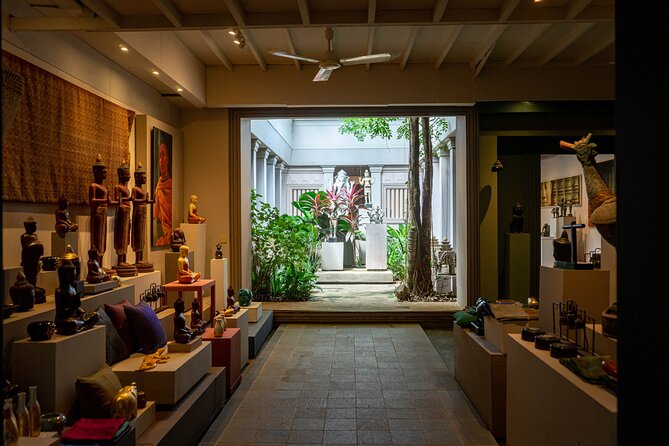
- Quick art break at Theam’s Gallery after coffee or coconut
- Phsar Chaa Old Market for a look at daily market life, not just tourist streets
- Up to 12 people with bottled water, local snacks, and a provided bike and helmet
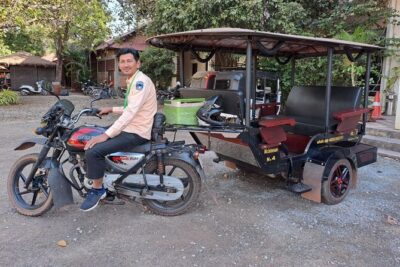
The temples by tuk-tuk, other routes
- Siem Reap: Angkor Wat Private Tuk-Tuk Tour★ 4.9 · 2,222 reviews
- Siem Reap Countryside Bike Tour / E-Bike or Tuk Tuk★ 5.0 · 935 reviews
- Angkor Sunrise Bike Tour / E-Bike or Tuk Tuk★ 5.0 · 615 reviews
- Angkor Wat Private Tuk-Tuk Tour (sunrise Option) & more★ 5.0 · 439 reviews
Why this Siem Reap cycling loop feels more real than a temple-only morning
Siem Reap has a way of pulling you toward the big-ticket temples, and that’s fun. But the best travel days also mix in the everyday places that make a destination feel lived-in. This tour takes you out of the busy city and onto roads that feel more rural, with views that change as you move from neighborhoods into village areas.
You’re not just “passing by” sights. The day is paced so you can stop, watch, and interact. That craft element matters. When you see Khmer ceramics made with tools used by local artisans, it sticks in your brain far better than a signboard ever will. And when you sample rice wine infusions at a rural distillery, it’s one of those small sensory moments that turns a tour into a memory.
This also helps with value. At $35 per person for about 5 hours, you’re paying for a guided route, transport included through pickup and drop-off, and admissions for key cultural stops, plus the basic gear like a helmet and a mountain bike. It’s not a luxury day, but it is structured, efficient, and thoughtful.
The biggest “real life” payoff is that the route keeps going beyond temples and into places tied to daily skills and local routines.
Getting around: bikes, e-bike or tuk tuk, and how fit you need to be
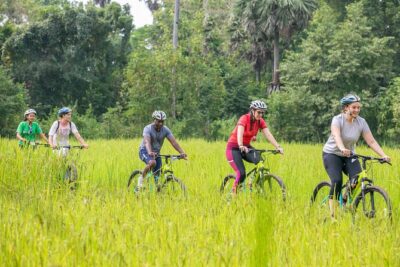
The tour is built around cycling, with a TREK mountain bike and a helmet provided. That’s a big practical win because you don’t need to hunt for a bike on your own or worry about getting the right size and safety basics.
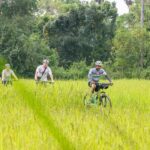
The day is described as heading through rural village areas, including stretches that sound more like countryside roads and jungle-adjacent paths. The operator also states you should have a strong physical fitness level. Translation: if you’re used to walking a lot and you can handle sustained riding, you’ll be fine. If you’re not, consider an e-bike or tuk tuk option if it’s available when you book, since the tour name includes those choices.
Also, watch the pacing. You’ll spend time stopped at multiple sites, and you’ll do some riding between them. That mix is actually a good balance, because you aren’t stuck in one long grind without breaks. Plus, you get bottled water and local snacks, so you’re less likely to hit that mid-tour energy crash.
My practical advice: if you choose the bike, wear comfortable footwear and plan for the sun. Even with breaks, mornings in Cambodia can feel hot, and you’ll appreciate hydration throughout.
Stop 1 in Siem Reap: from hotel pickup to bike shop intro rides
Your day starts with hotel pickup and drop-off, then a trip to the bike shop where you get set up with your bicycle and helmet. There’s a brief introduction from your guide before you head out through Siem Reap backstreets to get your bearings quickly.
That intro matters more than you might think. It helps you understand the rhythm of the roads, the group spacing, and what kind of riding you’ll be doing. It also gets you warmed up without wasting time later.
This is a good first setup if you’re new to riding in a place with lots of motorcycles and changing traffic patterns. You’re not left figuring it out alone. You start with guidance, then move into the rest of the morning.
Khmer craft and ceramics: learning to use the pottery wheel and carving tools
The tour’s first longer activity is a craft stop focused on Khmer ceramics and fine art, where you can learn how to use a pottery wheel and Khmer carving tools. This is one of the most memorable parts of the day because you’re not only looking, you’re doing.
Why this matters: ceramics is a window into technique, patience, and materials that many visitors never see. A museum can show you finished work. A workshop can show you process, and that difference is huge.
You’ll also get a local context for how artisans work, because the stop is presented as genuine and hands-on, not a staged photo moment. Even if you only take away a few basics about how carving tools are used, it’s still worth it. You’ll be able to look at ceramic pieces later and understand what’s behind the shape.
Potential drawback: craft workshops can be time-sensitive. If you’re the type who hates hands-on activities, you might find this part a little busier than expected. But if you enjoy learning, it’s a highlight.
Siem Reap by pedal, a couple more rides
Wat Thmei Killing Field Memorial: respectful context, heavy subject matter
Next comes Wat Thmei, which is the Wat Thmey Killing Field Memorial. The tour is clear that the memorial serves as a reminder of atrocities committed in Cambodia from 1975 to 1979. During the visit, your guide provides information.
This is not a “quick photo stop.” The scheduled time is about an hour, and the subject matter is emotionally heavy. If you’re sensitive to this kind of history, plan for slower pacing and take breaks if you need them.
Still, it’s an important stop for anyone who wants more than postcard Cambodia. It adds weight to everything else you’ll see in the country. And a guided explanation makes a difference here, because you’re not just reading vague notes. You’re getting context in a way that helps the memorial make sense.
Practical note: wear comfortable clothing, and be ready for a quieter tone in the group.
Coffee or coconut break, then Theam’s Gallery house museum
After Wat Thmei, you get a short pause for coffee or coconut, then you head to Theam’s Gallery. This stop is described as an unexpected, art-focused place in Siem Reap, set in an elegant house museum.
This is where the tour balances the day. After a solemn memorial, you shift into art and personal expression. You can explore the house museum and see works by Cambodian artists, guided by the structure of the visit and included entry.
Why it works: it changes the pace without feeling like you’re skipping substance. If you’ve spent most of your time on temples and stone ruins, an art house museum gives your brain a different kind of input.
One minor consideration: art stops can be hit or miss depending on your tastes. But the schedule includes guided time, so even if you’re not an art expert, you’ll likely leave with a clearer sense of what you saw and why it’s meaningful.
Royal Independence Gardens and the Preah Ang Chek Preah Ang Chorm Shrines
The route then continues to the Royal Independence Gardens, near the Preah Ang Chek Preah Ang Chorm Shrines. The shrines are described as a small, enclosed temple space located next to the gardens.
This part is a calmer, slower feel compared to the earlier rhythm of workshop, memorial, and museum. It’s also a nice change because it’s not just one big iconic temple you’ve likely seen on other schedules. You get a more intimate temple moment tied to the gardens setting.
The guide’s explanation is part of the value here, since shrines like this can be easy to overlook if you don’t know what to pay attention to. Take this time to just watch the details, because that small scale can be beautiful when you slow down a bit.
Phsar Chaa Old Market: cycling back through daily Khmer life
Later, you’ll bike through lanes near Pub Street area and to Phsar Chaa, also called Psar Chaa Old Market, described as the oldest Khmer market in Siem Reap. You spend about an hour there and get to experience local way of life.
This is a smart end-of-tour choice. After crafts and cultural sites, the market gives you ordinary life: movement, small shops, everyday goods, and the feeling that this is a place people actually use, not only a set for visitors.
What I like about this timing: it gives you a chance to shop or snack at your own pace before the day wraps. Just remember that lunch is part of the plan, and the market stop gives you a second chance to look for local items afterward.
One practical tip: markets can be busy and uneven underfoot. Keep an eye on your footing and go slow if you’re sensitive to crowds.
Lunch, snacks, and what to budget for food
The tour includes snacks and water during your ride, so you’re less likely to get stuck feeling hungry halfway through. Lunch is described as a sit-down meal at a local restaurant for Cambodian cuisine, but the price list also says lunch is not included.
So plan for lunch as an additional cost while still expecting to be covered for smaller bites and hydration during the cycling portion. If you want a vegetarian meal, the operator says a vegetarian option is available, as long as you request it at booking.
If you’re trying to control costs, this is the only clear “maybe extra” item besides personal spending. It’s also why the $35 price feels fair: the core tour costs are already doing the heavy lifting.
The value question: is $35 a good deal for this 5-hour day?
Let’s look at what you’re actually buying with $35. You get:
- Hotel pickup and drop-off
- An English speaking guide
- A provided TREK mountain bike and helmet
- Bottled water and local snacks
- Admission fees to Wat Thmey and Theam’s Gallery
- Time at multiple stops, including craft activity and market time
At the scale of Siem Reap tours, this is a practical price for a half-day that mixes several distinct experiences. What makes it good value is not just the number of stops. It’s that the tour includes admissions for two key cultural visits, gives you the gear so you don’t rent separately, and handles the route so you’re not spending half your day working out transport.
Also, the group size cap of 12 travelers is a quiet but important advantage. Smaller groups usually mean better pacing and more guide attention, especially on stops that require context.
If you’re deciding between a bike-only outing and a “culture day” with stops, this one is trying to be the culture version of cycling, without pretending it’s a full-day immersion.
Who this tour suits best, and who should choose differently
This tour is a strong match for you if you:
- Want to ride outside the main temple circuit and see village life
- Like hands-on activities like the ceramics workshop
- Appreciate a guided, contextual visit to Wat Thmei
- Prefer a small-group day with a clear plan and included snacks
You might want to think twice if you:
- Have limited comfort with sustained riding, since the tour calls for strong physical fitness
- Dislike emotionally heavy sites. Wat Thmei is part of the schedule and lasts about an hour.
If you fall into the middle ground, the name of the experience suggests you can book alternatives like an e-bike or tuk tuk. That can be a smart move if you want the cultural stops but you want less physical strain.
Should you book this Siem Reap bike day?
If your ideal Siem Reap day is part cycling, part real Cambodian skills, and part meaningful cultural context, I’d book it. The balance is the selling point: crafts and artisan processes in the morning, a sober memorial with guidance, then art and a market to bring you back to daily life.
I’d only skip it if you want a purely casual ride with minimal structure, or if you know you can’t handle the emotional weight of Wat Thmei. Otherwise, this is a well-paced way to see more than temples and still feel energized with water and snacks along the route.
FAQ
How long is the Siem Reap bike tour?
The tour lasts about 5 hours.
What does the tour cost?
It costs $35.00 per person.
Is hotel pickup and drop-off included?
Yes. Hotel pickup and drop-off are included.
Are bikes and helmets provided?
Yes. A TREK mountain bike and a helmet are included.
Does the tour include lunch?
Lunch is listed as not included, but the experience includes a lunch stop at a local restaurant.
Are there options for vegetarians?
Yes. A vegetarian option is available if you request it at booking, and you should advise any dietary requirements when you book.
Is there free cancellation?
Yes. You can cancel for a full refund with free cancellation up to 24 hours in advance.
More Tour Reviews in Siem Reap
- Angkor Wat Sunrise or Sunset Tour with Guide from Siem Reap
★ 5.0 · 12,109 reviews - Siem Reap: Angkor Wat: Small-Group Sunrise or Sunset Tour
★ 5.0 · 9,444 reviews - From Siem Reap: Kampong Phluk Floating Village Tour by Boat
★ 4.9 · 6,979 reviews - Sunset tour of Kampong Phluk stilts home village on the Tonle Sap
★ 5.0 · 4,865 reviews - Siem Reap: Angkor Wat 2-Day Tour with Sunrise and Sunset
★ 4.9 · 4,429 reviews
Siem Reap on Two Wheels
- Siem Reap Countryside Bike Tour / E-Bike or Tuk Tuk
★ 5.0 · 935 reviews - Angkor Sunrise Bike Tour / E-Bike or Tuk Tuk
★ 5.0 · 615 reviews - Siem Reap: Bike the Angkor Temples – Full-Day 30km Tour
★ 5.0 · 463 reviews - Siem Reap: Angkor Wat Sunrise Bike Tour & Jungle Breakfast
★ 5.0 · 415 reviews - Siem Reap: Guided Countryside Bike Tour
★ 4.9 · 294 reviews
The Temples by Tuk-Tuk
- Siem Reap: Angkor Wat Private Tuk-Tuk Tour
★ 4.9 · 2,222 reviews - Siem Reap Countryside Bike Tour / E-Bike or Tuk Tuk
★ 5.0 · 935 reviews - Angkor Sunrise Bike Tour / E-Bike or Tuk Tuk
★ 5.0 · 615 reviews - Angkor Wat Private Tuk-Tuk Tour (sunrise Option) & more
★ 5.0 · 439 reviews - Old Siem Reap Sunset Food Tour by Tuk-tuk
★ 5.0 · 311 reviews
Just Added: Fresh Siem Reap Tour Reviews
Siem Reap Tuk-Tuk Tours, compared.
 ★ 4.9Angkor Wat Private Tuk-Tuk TourFrom $202,222 reviews
 ★ 5.0Siem Reap Countryside Bike Tour / E-Bike or Tuk TukFrom $35935 reviews
 ★ 5.0Angkor Sunrise Bike Tour / E-Bike or Tuk TukFrom $60615 reviews
 ★ 5.0Angkor Wat Private Tuk-Tuk Tour (sunrise Option) & moreFrom $25439 reviews
 ★ 5.0Old Siem Reap Sunset Food Tour by Tuk-tukFrom $75311 reviews
 ★ 4.9Street Food Experience by Tuk-TukFrom $35310 reviews
 ★ 4.4Apsara Dance Show & Dinner with Tuk-Tuk TransfersFrom $29254 reviews
 ★ 5.0Siem Reap Countryside Vespa Tour / Tuk Tuk AvailableFrom $30180 reviews
Browse the lists this tour appears in