
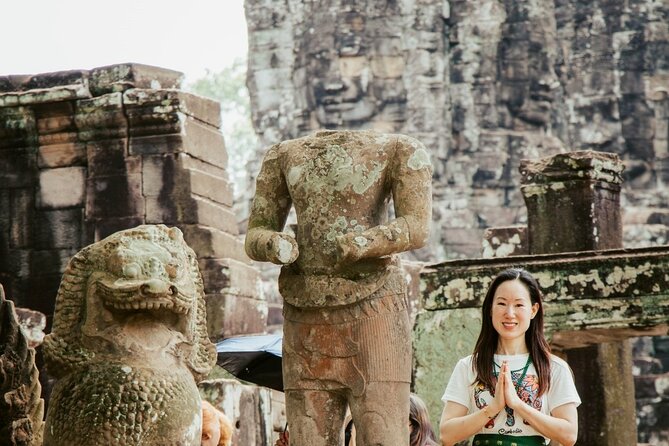
Reviewed · ANGKOR WAT TEMPLE TOURS
Siem Reap: Angkor Wat Sunrise & Explore Angkor Temples With Guide
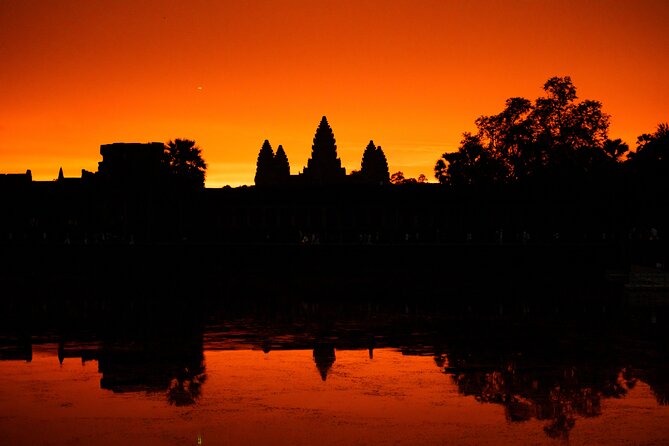
There’s nothing like seeing Angkor Wat wake up before the crowds. This tour is built around a sunrise viewing location and then a full half-day style circuit through the big names in Angkor, with an English guide filling in the what, how, and why as you walk.
Two things I really like are the early start with guide help to secure a good spot, and the fact that you also get the calmer stops like Banteay Kdei and the reservoir break at Srah Srang, not just the highest-profile temples. One thing to consider is that the $60 rate does not include Angkor Archaeological Park entrance fees, so you’ll need to budget extra for admission once you arrive.
Key points before you go
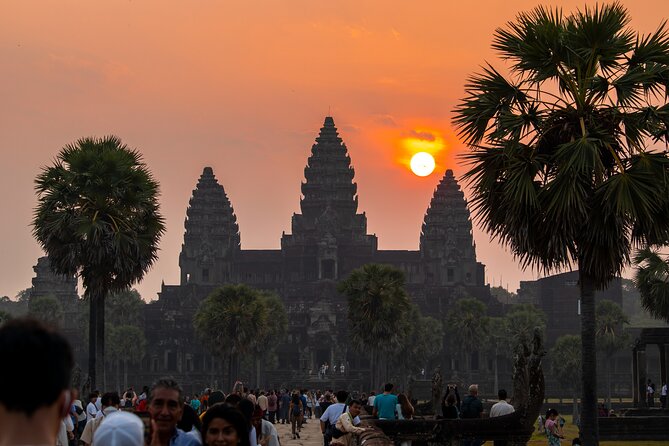
- Prime sunrise positioning: your guide helps you land at a top viewing spot before the sun rises
- Tuk tuk round trip: comfortable, simple transportation from your hotel area
- More than Angkor Wat: Ta Prohm, Angkor Thom, Bayon, plus quieter stops like Banteay Kdei
- A guided walk with context: history and sculpted details explained as you move through the temples
- Breakfast included: you get a local meal after Angkor Wat, before the next temples
- Mobile ticket plus waters: easier day-of planning and bottled drinking water throughout
Other ways to walk the great temple
- Angkor Wat Sunrise or Sunset Tour with Guide from Siem Reap★ 5.0 · 12,109 reviews
- Siem Reap: Angkor Wat: Small-Group Sunrise or Sunset Tour★ 5.0 · 9,444 reviews
- Siem Reap: Angkor Wat 2-Day Tour with Sunrise and Sunset★ 4.9 · 4,429 reviews
- Siem Reap: Full-Day Angkor Wat Guided Tour with Sunset★ 4.9 · 3,803 reviews
Why the 4:50 am start makes a difference at Angkor
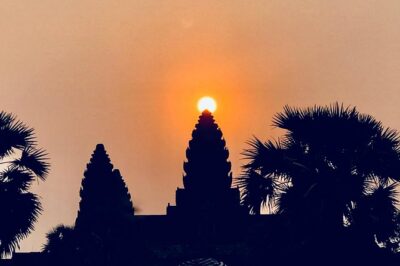
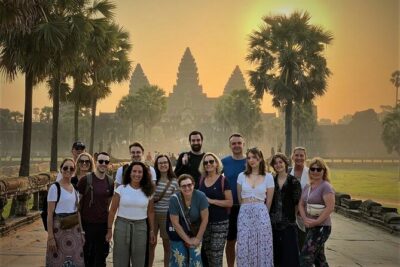
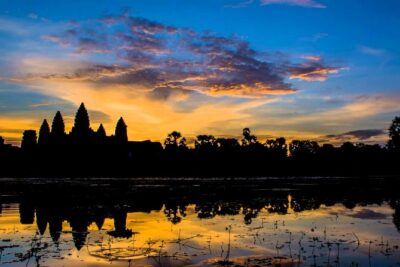
You’re starting at 4:50 am, which sounds brutal until you realize why it matters. Angkor Wat sunrise is one of those experiences where timing changes everything. Show up late and you end up watching the sun rise from the back of the crowd. Go early with a guide whose job is to get your group into a prime viewing location, and the whole morning feels more intentional.
Another practical win of the early start is that you can cover a lot in one day without feeling like you’re racing. This is a 7 to 8 hour experience, and it’s paced so you’re not only standing around for sunrise. After you see Angkor Wat, you still get meaningful walking time inside and around the temple, then breakfast, then additional major sites.
It’s also worth noting the tour is described as private, meaning only your group participates. That’s a big deal at Angkor, where even small differences in group timing and movement can make the visit feel calmer.
Tuk tuk pickup, English guide, and the “day-of” setup
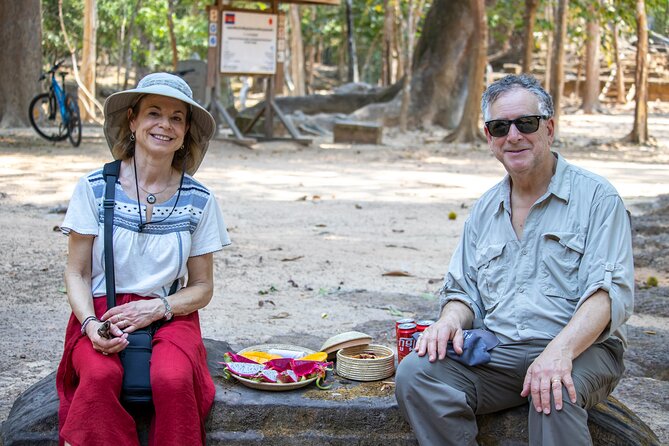
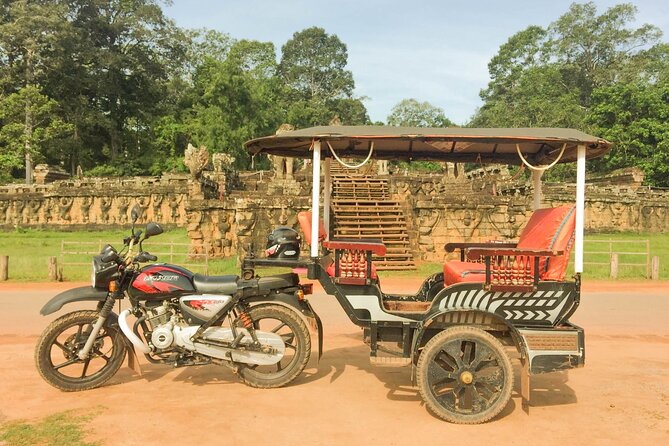
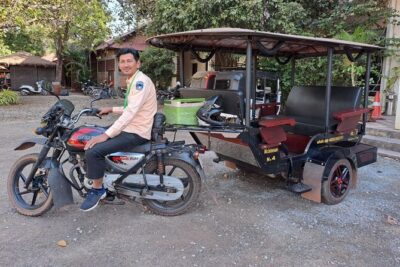
The tour includes round trip by tuk tuk and pickup from your hotel in the early morning. Tuk tuk is a classic Siem Reap way to do Angkor, and in this case it helps keep logistics simple. You don’t have to figure out drivers, route timing, or how to coordinate tickets before dawn.
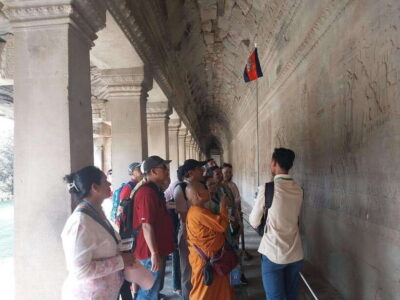
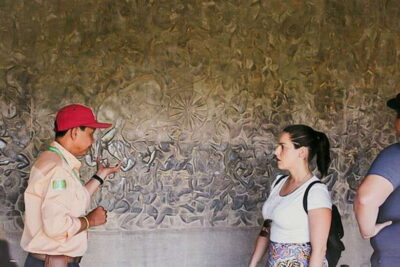
The included English speaking guide is what turns a collection of stone structures into a story you can actually follow. The tour is explicitly set up so your guide explains temple history, sculpting details, and Cambodia’s culture while you wait for sunrise and as you move between stops. When you know what you’re looking at, Bayon faces stop being just pretty carvings and start meaning something.
You’ll also get drinking water throughout the day, which matters in the morning heat that often shows up even before you finish sunrise photos.
Finally, you’ll receive a mobile ticket. That’s not glamorous, but it’s useful. It usually means less hassle in the moment and less risk of missing paper tickets.
Angkor Wat sunrise: the world’s largest, best-preserved monument
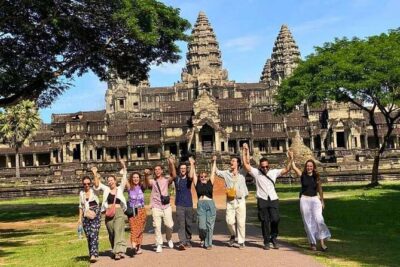
Angkor Wat is the anchor of the whole day, and the plan is straightforward. First comes the sunrise at Angkor Wat, then about 3 hours allocated for temple time (with the note that Angkor Archaeological Park admission is not included).
Why this stop is so important is baked into the temple’s reputation in the tour description: Angkor Wat is described as the world’s largest and best-preserved monument, plus an architectural masterpiece. When a site is that well-preserved, the sculpted details are often clearer, and the overall symmetry is easier to appreciate when the light is soft.
Sunrise also changes the way the temple photographs. Even if you’re not chasing perfect images, early light can make faces, columns, and carvings easier to see. It also tends to feel less chaotic, because you’re arriving on the temple’s schedule, not the tour bus schedule.
What to consider: admission is not included. So you’re paying for the experience and guide time, but you still need to arrange entrance into the Angkor Archaeological Park for Angkor Wat and the other main temples.
Breakfast right after Angkor Wat, not after a long day
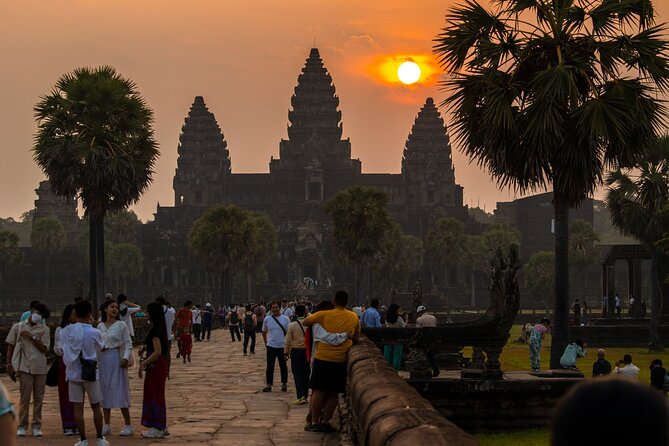
After Angkor Wat, you get breakfast at a local restaurant. This is a smart placement, because it avoids the usual trap where you burn energy watching the temples and then end up grabbing something quick later when you’re tired and hungry.
You’ll also have a transition buffer before the next stops. That matters because the next portion of the day includes multiple temples with different vibes, including one that is often calmer and less crowded than the headline sites.
The breakfast timing also helps you refuel for the walking. This is not a “sit in the car all day” itinerary. Even when you’re not doing long hikes, you’ll be moving between temple zones, and you’ll want your energy steady for the rest of the day.
Chasing the light? More dawn and dusk runs
Banteay Kdei: a quieter Buddhist temple contrast
The itinerary includes Banteay Kdei for about 35 minutes. The tour frames this stop as a contrast to the often overwhelming crowd level at some of the more popular Angkor ruins. It also notes that Banteay Kdei is a Buddhist temple, and that it has hosted an active monastery at multiple periods since its construction.
I like this kind of contrast day plan because it keeps you from feeling like you’re repeating the same scene over and over. Angkor has lots of stone, lots of carvings, and lots of imposing structures. When you get a stop that feels more peaceful and quiet, you get room to actually look.
In practical terms, a 35-minute stop is enough time to take in the layout and the carving style, without turning it into a rushed checklist. You’ll also get guide context, which can help you see differences in how religious function and architectural style show up in the details.
Srah Srang: a reservoir view break that resets your eyes
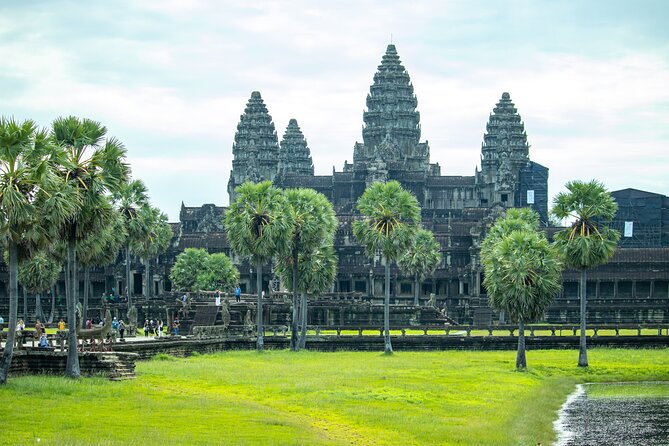
Next up is Srah Srang, with about 1 hour here. The tour describes it as giving you the best view of the reservoir, and it’s also paired with a break that includes breakfast in this part of the day.
Srah Srang is not just a scenic rest point. In a temple day packed with walls and carvings, a reservoir view gives your eyes something different. It also gives you a moment to slow down and watch how light and shadow move across open space.
If you want one practical takeaway for your own comfort, it’s this: build breaks into your day at Angkor. A morning circuit can feel nonstop, and Srah Srang is one of the planned pauses that keeps you from getting temple fatigue.
Ta Prohm: the jungle temple linked to Tomb Raider
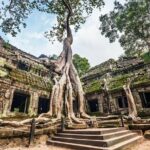
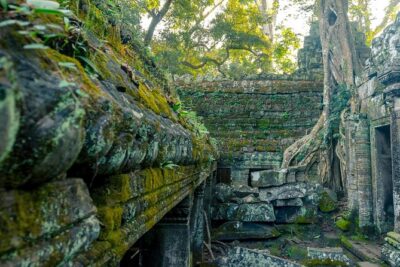
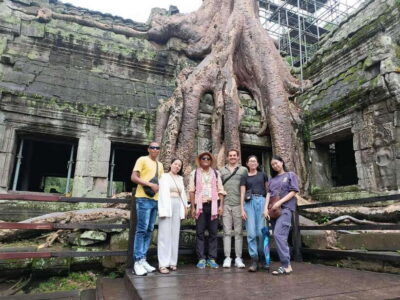
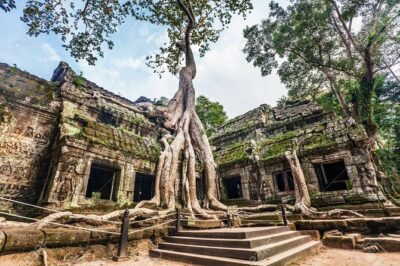
Then comes Ta Prohm for about 1 hour. The tour describes it as the world’s most gorgeous temple, known for its ruined look inside the jungle. It also notes the international nickname Tomb Raider Temple, because it was featured in a film starring Angelina Jolie.
Even if you have seen it in photos, you’ll likely notice that Ta Prohm works differently in person. The mix of stone and large roots makes it feel like the architecture and nature are sharing the frame. That visual tension is the main reason Ta Prohm is so memorable, and the jungle setting helps the site feel less rigid than the more formally composed temples.
Potential drawback: Ta Prohm can be a magnet stop. This itinerary already balances it with Banteay Kdei and a reservoir break, which is exactly why Ta Prohm fits here. You get the dramatic moment, then you move on rather than getting stuck in one scene for too long.
Also, remember: admission still applies, and it’s not included in the $60 price.
Angkor Thom: the Khmer Empire’s final capital city core
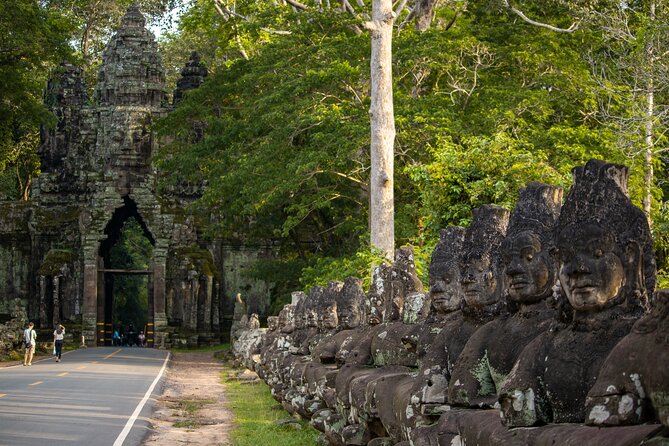
After Ta Prohm, the tour moves to Angkor Thom for about 1 hour. Here the tour gives clear historical positioning. It describes Angkor Thom as the Khmer Empire’s final and most enduring capital city, founded in the late 12th century, covering a 9-square-kilometer area, with structures from earlier eras.
This stop can feel big, and the guide explanation helps you make sense of that scale. In a place like Angkor Thom, it’s easy to wander without knowing what matters most. The tour’s structure helps by moving you into the core sites rather than leaving you to interpret the whole area on your own.
One practical consideration is time. You only have about an hour, so you should go in with the mindset of seeing the highlights rather than trying to cover every corner. If you’re the type who loves reading every inscription and examining every carving, you might wish you had more time, but the benefit is that the itinerary still hits Bayon afterward and keeps the morning story coherent.
Bayon Temple: 54 towers and the faces that anchor the story
The final major temple stop is Bayon Temple, also about 1 hour. The tour describes Bayon Temple as a 12th-century state temple built under King Jayavarman VII, located right in the heart of Angkor Thom. It also highlights the 54 towers and frames the temple as a sample of the artistic brilliance tied to Jayavarman VII.
If you’re wondering what you should look for, start with the towers and the repeated face forms. The tour’s guided approach matters here because the temple is famous for a reason, but the meaning often clicks faster when someone explains the visual logic and where the artwork fits within the larger capital-city setting.
This is also the stop where you can feel the day’s pacing. After sunrise and several temples, you might be tempted to rush your way through the final hour. Bayon is worth slowing down for, because it’s the kind of site where the details reward your attention.
Price and value: what $60 really gets you, and what to budget
The tour price is listed as $60, and it includes a lot of the “hard parts” of a sunrise temple day:
- English speaking guide
- Round trip tuk tuk
- Drinking waters throughout the day
- Pickup offered
- Breakfast included
That combination is usually the difference between a smooth morning and a chaotic one. You’re not just paying for entry to temples, you’re paying for a schedule that starts early, transportation that gets you moving, and a guide who helps you understand what you’re seeing.
What’s not included is important: the tour explicitly says the entrance fee to Angkor Archaeological Park is not included, and admission tickets are listed as not included for the stops. So you need to budget for park entry on top of the tour cost.
If you want the best value for money, think of this as paying for guidance and timing, not just sightseeing. The guide’s sunrise positioning help can also be a value factor, because getting a prime viewing spot is the difference between an iconic moment and a photo that feels rushed.
Who this tour fits best (and who might prefer something else)
This experience is a strong match if you want an organized Angkor day that hits the major temples without requiring you to plan sunrise logistics. If you care about understanding what you’re looking at and you like a guide-led pace, this works well.
It also suits you if you’re traveling in a group and want the day to feel private, with your own morning rhythm. The private nature, plus pickup and tuk tuk, can reduce friction if you don’t want to coordinate with multiple people.
You might consider another option if:
- you hate early mornings and feel wiped by sunrise starts
- you’re trying to minimize walking time, since the day includes multiple temple areas and walking around
Should you book this Angkor Wat Sunrise & Explore Angkor Temples tour?
I’d book it if you want a structured Angkor morning where sunrise timing is handled, you get an English guide for context, and you still have time to visit big-name temples like Ta Prohm, Angkor Thom, and Bayon without making the day feel like a blur. The mix of a dramatic sunrise moment plus quieter stops like Banteay Kdei and a reservoir break at Srah Srang is exactly the kind of pacing that keeps the experience enjoyable.
Book it with one planning mindset: budget separately for Angkor Archaeological Park entrance fees, since they are not included in the tour price. If you handle that, you’re set up for a memorable day that feels like you understood the temples, not just photographed them.
FAQ
What time does the tour start?
The start time is 4:50 am.
How long is the tour?
The duration is about 7 to 8 hours.
Is pickup from my hotel included?
Yes. The tour includes pickup offered (and starts with early pickup by the guide and driver).
Is the tour private?
Yes. It’s described as a private tour/activity, meaning only your group participates.
What transport is included?
The tour includes round trip by tuk tuk.
Is an English speaking guide included?
Yes. An English speaking guide is included.
Are temple entrance fees included?
No. The entrance fee to Angkor Archaeological Park is not included.
Is breakfast included?
Yes. You have breakfast at a local restaurant after Angkor Wat.
Is there mobile ticketing?
Yes. The tour includes a mobile ticket.
Is free cancellation available?
Yes, you can cancel for a full refund up to 24 hours in advance of the experience start time.
More Temple Circuits Around Siem Reap
- Angkor Wat Sunrise or Sunset Tour with Guide from Siem Reap
★ 5.0 · 12,109 reviews - Siem Reap: Angkor Wat: Small-Group Sunrise or Sunset Tour
★ 5.0 · 9,444 reviews - Siem Reap: Angkor Wat 2-Day Tour with Sunrise and Sunset
★ 4.9 · 4,429 reviews - Siem Reap: Full-Day Angkor Wat Guided Tour with Sunset
★ 4.9 · 3,803 reviews - Angkor Wat Sunrise tour with Small – Group and Guide tours
★ 5.0 · 3,655 reviews
Dawn and Dusk Over Angkor
- Angkor Wat Sunrise or Sunset Tour with Guide from Siem Reap
★ 5.0 · 12,109 reviews - Siem Reap: Angkor Wat: Small-Group Sunrise or Sunset Tour
★ 5.0 · 9,444 reviews - Sunset tour of Kampong Phluk stilts home village on the Tonle Sap
★ 5.0 · 4,865 reviews - Siem Reap: Angkor Wat 2-Day Tour with Sunrise and Sunset
★ 4.9 · 4,429 reviews - Siem Reap: Full-Day Angkor Wat Guided Tour with Sunset
★ 4.9 · 3,803 reviews
Angkor Wat, a Few More Ways In
- Angkor Wat Sunrise or Sunset Tour with Guide from Siem Reap
★ 5.0 · 12,109 reviews - Siem Reap: Angkor Wat: Small-Group Sunrise or Sunset Tour
★ 5.0 · 9,444 reviews - Siem Reap: Angkor Wat 2-Day Tour with Sunrise and Sunset
★ 4.9 · 4,429 reviews - Siem Reap: Full-Day Angkor Wat Guided Tour with Sunset
★ 4.9 · 3,803 reviews - Angkor Wat Sunrise tour with Small – Group and Guide tours
★ 5.0 · 3,655 reviews
Just Added: Fresh Siem Reap Tour Reviews

Angkor Wat Temple Tours, compared.
 ★ 5.0Angkor Wat Sunrise or Sunset Tour with Guide from Siem ReapFrom $1812,109 reviews
 ★ 5.0Angkor Wat: Small-Group Sunrise or Sunset TourFrom $159,444 reviews
 ★ 4.9Angkor Wat 2-Day Tour with Sunrise and SunsetFrom $344,429 reviews
 ★ 4.9Full-Day Angkor Wat Guided Tour with SunsetFrom $153,803 reviews
 ★ 5.0Angkor Wat Sunrise tour with Small – Group and Guide toursFrom $143,655 reviews
 ★ 5.0Angkor Wat Highlights and Sunrise Guided Tour from Siem ReapFrom $233,213 reviews
 ★ 5.0Angkor Wat Sunset Small Group Tour with Lunch IncludedFrom $203,059 reviews
 ★ 5.0Full-Day Angkor Wat Sunrise Private Tour with Guide from Siem ReapFrom $602,920 reviews