
Reviewed · ANGKOR TEMPLE TOURS
Siem Reap: Angkor Temples Off-Track Bicycle Tour
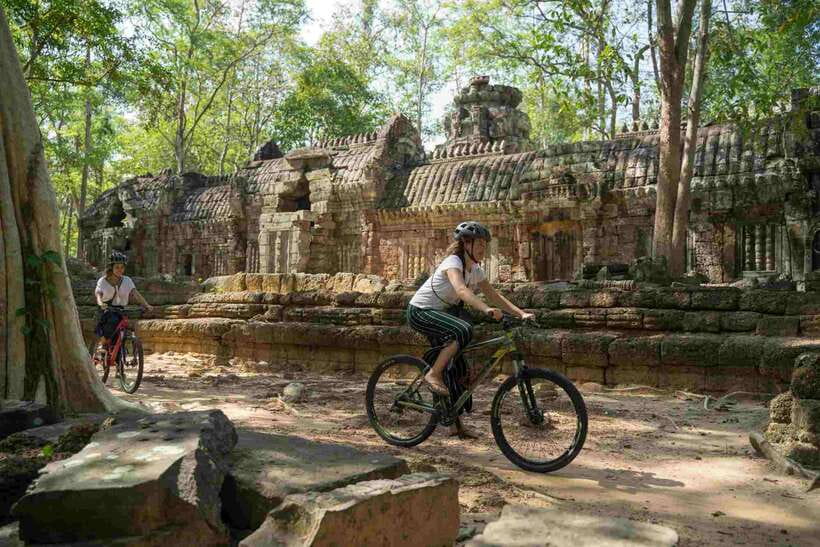
Angkor is better from a bicycle. This off-track route gets you into the jungle and onto smaller paths, so temple time feels calmer and more human, even when Angkor is busy.
I love how the day mixes major sights like South Gate of Angkor Thom and Bayon with lesser-seen stops when time allows, such as Preah Palilay. You get variety without spending the whole day stuck in crowds or tour buses.
I also like the mission behind the ride. It is run as a non-profit, with profits going to KKO, Khmer for Khmer Organisation, which provides free education and vocational training for children in Siem Reap, while the tour also supports local restaurants, farms, and street vendors. The main drawback is simple: this tour is not suitable for people who can’t ride a bike, and temple dress rules mean no shorts, short skirts, or sleeveless shirts.
Key things to know before you go
- Small group energy: limited to 7 participants, which helps the pace stay flexible.
- Jungle-first routing: you pedal through off-road paths away from the heaviest foot traffic.
- A temple mix that goes beyond the headline stops: South Gate, Bayon, plus quieter add-ons like Preah Palilay when timing works.
- Ta Nei Temple’s quiet mood: it is also known as the Ghost Temple because it is hidden and calm in the jungle.
- Lunch built into the rhythm: you eat at a local restaurant in the jungle, not as an afterthought.
- A mission with real local impact: profits support KKO education and vocational training.
More temple circuits, set side by side
- Angkor Wat Sunrise or Sunset Tour with Guide from Siem Reap★ 5.0 · 12,109 reviews
- Siem Reap: Angkor Wat: Small-Group Sunrise or Sunset Tour★ 5.0 · 9,444 reviews
- Siem Reap: Angkor Wat 2-Day Tour with Sunrise and Sunset★ 4.9 · 4,429 reviews
- Siem Reap: Full-Day Angkor Wat Guided Tour with Sunset★ 4.9 · 3,803 reviews
Why This Angkor Bicycle Tour Feels More Local Than Usual

Angkor can feel like a place where everyone moves in the same direction, at the same time. This tour fights that. You start in Siem Reap at Bayon Pastry School, then you ride into Angkor Park using smaller paths and jungle stretches that keep you away from the busiest areas for long moments at a time.
What really makes this work is that it is not only about temples, it is about movement and context. A local guide connects what you see to Khmer culture and the Angkorian Empire, so stone faces and carved lintels turn into something you can actually explain to a friend. The route also makes practical sense: you cover a lot of ground in 8 hours, but you still get pauses built in for photos and breaks.
The other big factor is who runs it. This is a non-profit tour operator, and the profits go to KKO, Khmer for Khmer Organisation, which supports free education and vocational training for kids in Siem Reap. You are not just paying for a day out, you are also helping fund education and supporting local livelihoods tied to tourism.
Start at Bayon Pastry School, Then Get Rolling in Angkor Park
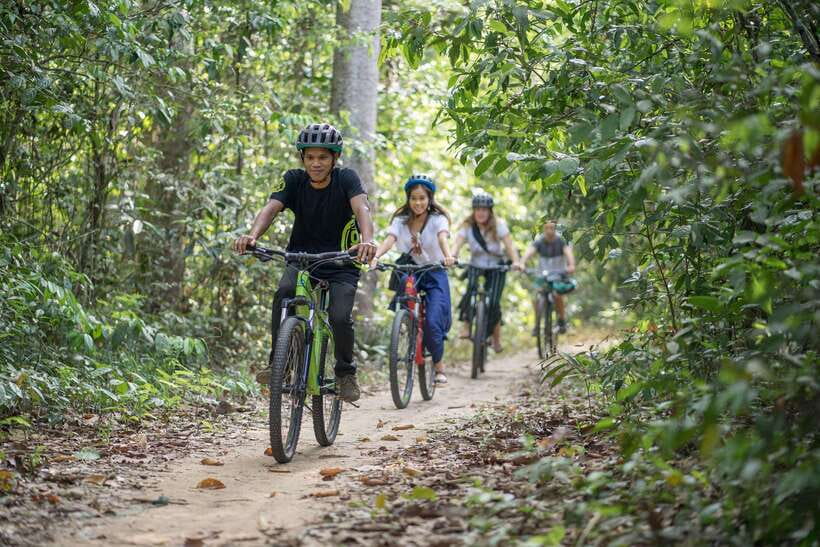
You meet at Bayon Pastry School, Siem Reap, with a start time of 8:30 am. After a short introduction and a quick overview, you get on quality bicycles and begin moving toward the Angkor area.
One small detail that matters more than it sounds: a local guide is there from the beginning, so you are not left figuring things out once you hit the temple zone. You also get a safety setup, including a first aid kit and an emergency plan, plus the bicycles are described as quality. That adds confidence if you are not a daily cyclist.
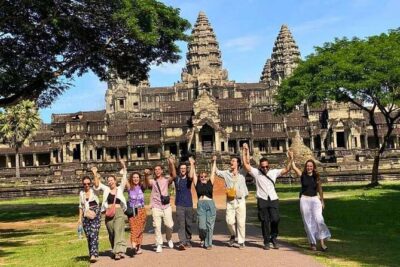
In the first phase, you get a sense of how the day will flow. There is a photo stop at the wall of Angkor Wat, then you cycle onward toward Angkor Thom. Even if you have been to Angkor before, this early routing helps you arrive with the right mindset: you are not only chasing famous names, you are learning how the sites connect across the park.
Dress matters right away. The tour notes that shorts, short skirts, and sleeveless shirts are not allowed, which is easy to forget until you are standing in front of temple spaces with rules. Plan for light, breathable coverage, and treat it like part of the experience, not a hassle.
Angkor Thom and the South Gate, Plus Bayon Temple Without the Full Crowd
A big anchor of the morning is Angkor Thom, starting with a focus on the South Gate. This area sets the tone. The gate and inner spaces feel structured and ceremonial, and you get the payoff of being in Angkor by bike, not by bus. You can stop when you want, take in details, and then keep moving.
From there, you visit Bayon Temple, one of the popular highlights inside Angkor Thom. Bayon is famous for its stone faces, and with a good guide you understand more than just the photo angles. You get historical and cultural context about Khmer art and the Angkorian world, which helps you notice patterns you might otherwise miss.
Here is a key scheduling idea that affects your experience: the tour aims to avoid the crowd peaks. That is why you may also visit a smaller temple within Angkor Thom if you have time, such as Preah Palilay Temple. If you arrive already feeling “templed out,” that smaller stop can be a relief because it is more about quiet observation than checkpoint-style touring.
The tour experience also includes the village of Angkor Thom. That is valuable because Angkor is not only monuments. You get a quick look at how people live in the same general area where the temples rise.
Realistically, there can be a tradeoff with anything designed to avoid crowds: you need a bit of patience. If you are hoping for maximum sprinting between stops, this style might feel slower. If you want the kind of day where you can breathe between sights, it is a plus.
Preah Khan and Ta Nei: Where the Jungle Changes the Mood
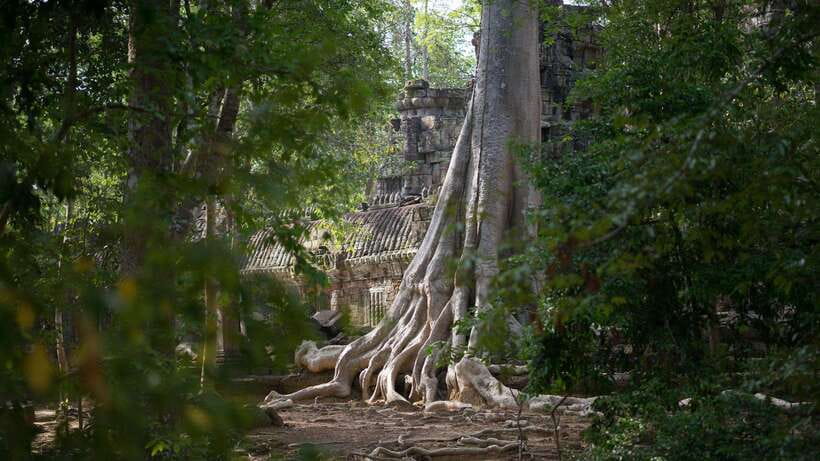
After lunch, the tour keeps leaning into the calmer side of Angkor Park. You continue through jungle paths toward Preah Khan. This is described as a stop where there are some other tourists, but it is not as crowded as the more famous Bayon area. That matters because temple fatigue is real. When you get a quieter site, you notice craftsmanship instead of just “getting through.”
Preah Khan can feel like a place you spend time walking through rather than just viewing from one angle. With a guide pointing out Khmer cultural cues and temple layout, the space makes more sense. You are not just looking at carvings, you are learning how they relate to the broader Angkorian setting.
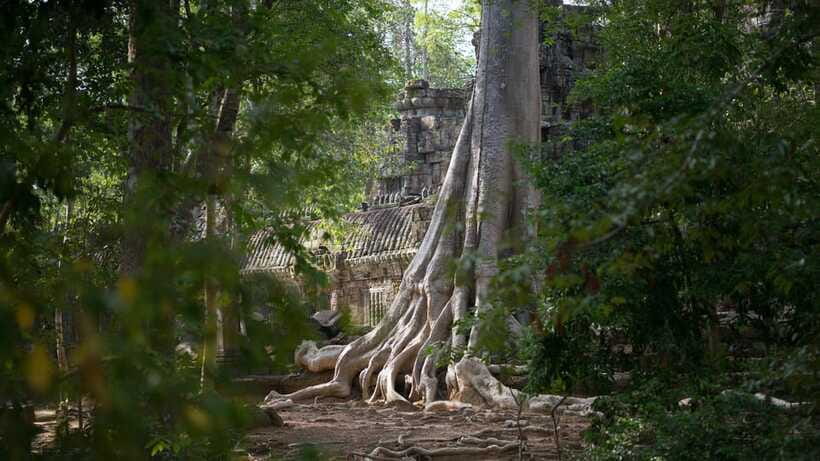
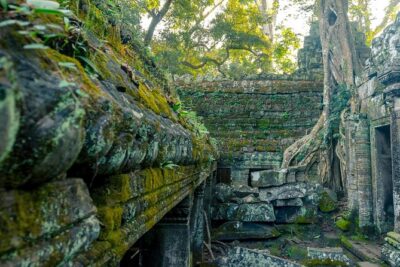
Next comes Ta Nei Temple, also known as the Ghost Temple. The nickname fits because it is described as very hidden and quiet in the middle of the jungle. That is exactly the kind of stop that turns a standard Angkor day into a personal memory. You arrive, you slow down, and the surrounding trees shape the whole feel of the site.
If you like off-the-beaten-path travel, this is the moment that most likely sells you on the tour style. It is not about ticking the last famous box, it is about finding a temple that feels like it belongs to the jungle, not just to the itinerary.


Ta Keo and the Second Look at Angkor Wat
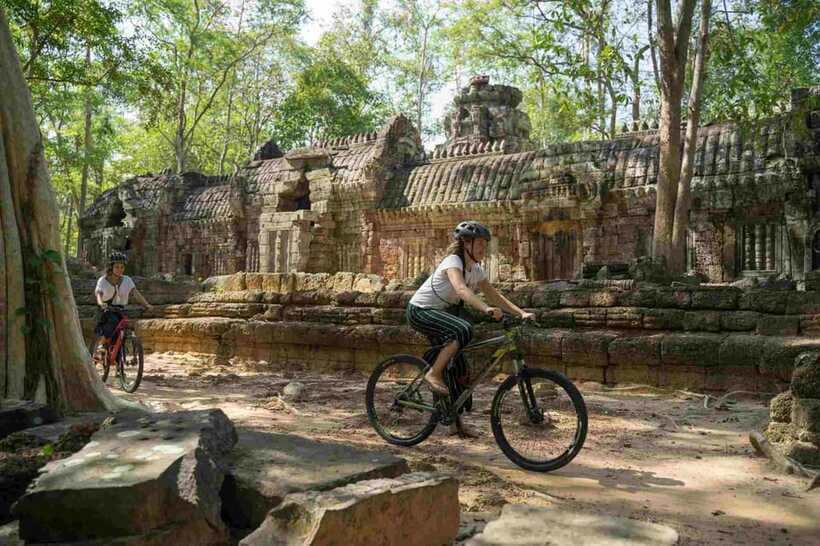
The later part of the day includes Ta Keo Temple, then a return to Angkor Wat for another photo stop and visit. Ta Keo is a strong closing temple because it has a monumental, structured presence. It is the kind of site where details become more noticeable as you move, especially when you are not rushing with a crowd.
The tour then heads toward Angkor Wat again before returning you to town. This second look helps if you like comparison. You can notice how your attention changes across the day, from the first famous landmarks you see early on to the other temple shapes and carvings you understand better after you have already learned some context.
Why this sequence is smart: your brain does better with a day that alternates between big, iconic spaces and quieter, more interpretive stops. The jungle temples teach you how to watch, then the major monuments give you the payoff.
Lunch in the Jungle, and How the Tour Handles Real Needs
Lunch is included and served at a local restaurant in the jungle. That detail is not just “food included.” It usually means you are eating away from the most tourist-heavy zones, with a calmer rhythm between temple blocks.
The tour also flags that dietary needs can be handled. If you want vegan food, you can ask, and they will take care of your needs. That is a big deal in Cambodia, where options can be limited in some areas unless the plan is set in advance.
There is also a break time in the schedule. For many people, this is the make-or-break moment. Temples are best enjoyed when you are not running on fumes. If you ride with sunscreen and insect repellent on and you still end up a little tired, the built-in pause helps you keep the day enjoyable rather than “survive mode.”
Getting Cultural Context From a Local Guide, Not a Script
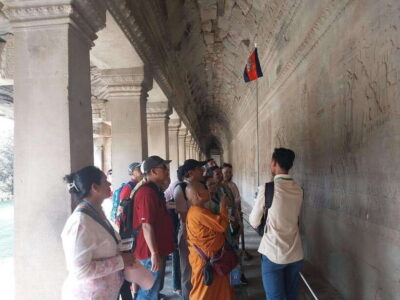
A lot of temple tours give you a voiceover. This tour aims to give you a guide who can answer questions about Cambodian culture and history, with an emphasis on the Angkorian Empire. You learn why certain things look the way they do, and you get help making sense of the temple layouts and symbolism.
What I like about that approach is practical. When you understand what you are seeing, you take better photos. You also walk away with stories you can share later, instead of a memory made only of impressions.
The guide also adapts to the group. One review highlights that the guide was patient and attentive, and adjusted to different needs. That matches the tour format of small-group riding with stops that are spaced enough to slow down if you need it.
Language is also covered. The tour offers English and Cambodian guidance. If you are comfortable in English and want explanations, you should be fine. If you prefer one-on-one clarity, small group size helps.
Price and Value: What $65 Really Buys You Here
At $65 per person, this tour is priced as an affordable day of cycling and temple access style sightseeing. The bigger question is what you get for that money, and whether it adds up compared to other Angkor tours.
Here’s the value math based on what is included:
- Local guide and cultural interpretation
- Bicycle tour with off-road jungle paths
- Lunch at a local restaurant in the jungle
- Visits to multiple temples, including quieter stops when timing allows
- Support for children’s education and vocational training through KKO
- Support for local restaurants, farms, and street vendors
What is not included is important:
- Angkor Pass is not included
- Travel insurance is not included
So if you are comparing prices, factor the Angkor Pass separately. Once you do that, the $65 looks like a reasonable cost for an 8-hour small-group day that focuses on riding, not just entry tickets.
Also remember the small-group limit, up to 7 participants. That keeps the pacing more comfortable and makes it easier to ask questions. It is the kind of comfort you feel most at temple stops where you normally get boxed in.
Practical Tips That Will Save Your Day
Bring the basics listed by the tour:
- Camera
- Sunscreen
- Insect repellent
Then add the practical thinking that comes from riding and temple rules:
- Wear clothing you can move in for cycling, with coverage that respects the no-shorts and no-sleeveless rules.
- Expect off-road paths, so shoes with grip and comfort matter more than fashion.
- Start hydrated. You are cycling through hot conditions, then walking around temples.
If you are not a strong cyclist, pay attention to the tour’s fit. It is not suitable for people who can’t ride a bike. If you are an occasional rider who is okay at steady speed and balance, you will likely be fine. If you cannot ride confidently, choose a different kind of Angkor day.
The tour also offers flexibility for some preferences. You can ask to shorten or extend the tour, and they can handle needs like vegan food. Waking up early is called out as a concern they can manage, so if mornings are hard for you, ask what adjustments are possible when you book.
Should You Book This Off-Track Temples Bicycle Tour?

Book it if you want Angkor to feel less like a queue and more like a journey. This style works best when you care about getting away from the loudest crowds, cycling through jungle paths, and mixing major sites like Bayon with quieter temples such as Ta Nei and Ta Keo. The non-profit mission supporting KKO also gives the day an extra layer of meaning.
Skip it if you cannot ride a bike confidently, or if you strongly dislike temple dress rules and want to wear shorts and sleeveless tops. This tour is built for movement, and it has a clear structure. If you like that, you will enjoy the pacing.
If you are still on the fence, I would make your decision based on one thing: do you want to spend Angkor time watching stones with context, or do you want to power through with minimal thinking? This tour is for the former.
More Siem Reap Tours to Compare
- Angkor Wat Sunrise or Sunset Tour with Guide from Siem Reap
★ 5.0 · 12,109 reviews - Siem Reap: Angkor Wat: Small-Group Sunrise or Sunset Tour
★ 5.0 · 9,444 reviews - From Siem Reap: Kampong Phluk Floating Village Tour by Boat
★ 4.9 · 6,979 reviews - Sunset tour of Kampong Phluk stilts home village on the Tonle Sap
★ 5.0 · 4,865 reviews - Siem Reap: Angkor Wat 2-Day Tour with Sunrise and Sunset
★ 4.9 · 4,429 reviews
More Tour Reviews in Siem Reap
- Angkor Wat Sunrise or Sunset Tour with Guide from Siem Reap
★ 5.0 · 12,109 reviews - Siem Reap: Angkor Wat: Small-Group Sunrise or Sunset Tour
★ 5.0 · 9,444 reviews - From Siem Reap: Kampong Phluk Floating Village Tour by Boat
★ 4.9 · 6,979 reviews - Sunset tour of Kampong Phluk stilts home village on the Tonle Sap
★ 5.0 · 4,865 reviews - Siem Reap: Angkor Wat 2-Day Tour with Sunrise and Sunset
★ 4.9 · 4,429 reviews
More Temple Circuits Around Siem Reap
- Angkor Wat Sunrise or Sunset Tour with Guide from Siem Reap
★ 5.0 · 12,109 reviews - Siem Reap: Angkor Wat: Small-Group Sunrise or Sunset Tour
★ 5.0 · 9,444 reviews - Siem Reap: Angkor Wat 2-Day Tour with Sunrise and Sunset
★ 4.9 · 4,429 reviews - Siem Reap: Full-Day Angkor Wat Guided Tour with Sunset
★ 4.9 · 3,803 reviews - Angkor Wat Sunrise tour with Small – Group and Guide tours
★ 5.0 · 3,655 reviews
Just Added: Fresh Siem Reap Tour Reviews
Angkor Temple Tours, compared.
 ★ 5.0Angkor Wat Sunrise or Sunset Tour with Guide from Siem ReapFrom $1812,109 reviews
 ★ 5.0Angkor Wat: Small-Group Sunrise or Sunset TourFrom $159,444 reviews
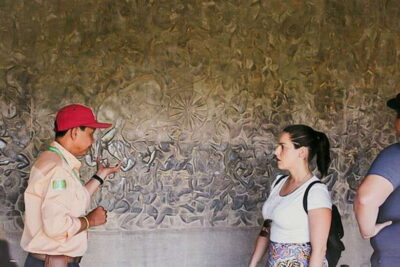 ★ 4.9Angkor Wat 2-Day Tour with Sunrise and SunsetFrom $344,429 reviews
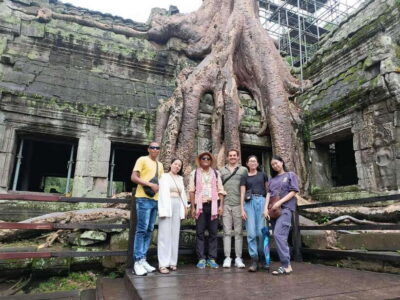 ★ 4.9Full-Day Angkor Wat Guided Tour with SunsetFrom $153,803 reviews
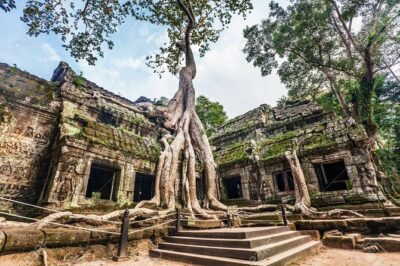 ★ 5.0Angkor Wat Sunrise tour with Small – Group and Guide toursFrom $143,655 reviews
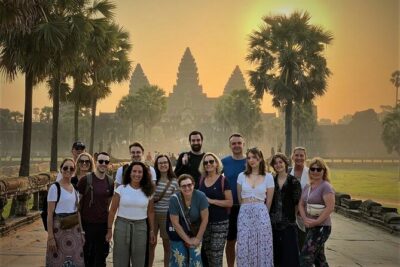 ★ 5.0Angkor Wat Highlights and Sunrise Guided Tour from Siem ReapFrom $233,213 reviews
 ★ 5.0Angkor Wat Sunset Small Group Tour with Lunch IncludedFrom $203,059 reviews
 ★ 5.0Full-Day Angkor Wat Sunrise Private Tour with Guide from Siem ReapFrom $602,920 reviews