
Reviewed · ANGKOR TEMPLE TOURS
Siem Reap: Angkor Full-Day Group Tour with Japanese Guide
Angkor feels bigger than photos. With a Japanese-speaking guide, you get the why behind the stones, plus a route that keeps the day from turning into a map-reading contest. I especially like the tight focus on the real must-sees, Angkor Wat plus Bayon and Ta Prohm, without wasting hours bouncing around.
The one thing to think about is time and heat. The day can be long, and Angkor is dusty and sun-heavy, so you will want solid shoes and the right clothing, even if you choose the shorter sunrise finish.
Key highlights worth planning around
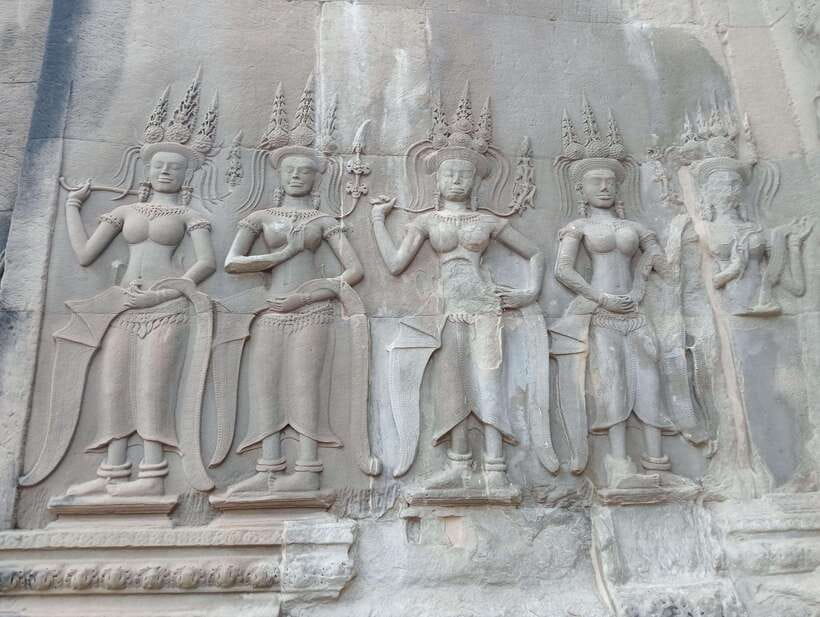
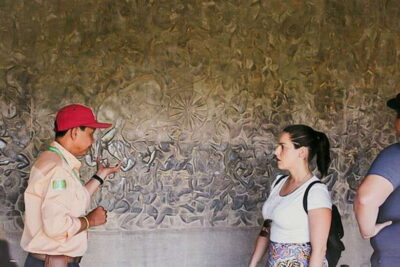
- Japanese guide support that makes symbols, bas-reliefs, and layout easier to understand
- Route balance that pairs the jungle mood of Ta Prohm with the big spectacle of Angkor Wat
- Sunrise option with an early pickup window and a finish around midday
- 2-day upgrade for Banteay Srei and Beng Mealea, where you swap crowd energy for countryside atmosphere
- Practical extras like cold water and cold towels during temple visits
- Photo help with good angles and stop timing guided by people like Chun-san and Bun-san
More temple circuits, set side by side
- Angkor Wat Sunrise or Sunset Tour with Guide from Siem Reap★ 5.0 · 12,109 reviews
- Siem Reap: Angkor Wat: Small-Group Sunrise or Sunset Tour★ 5.0 · 9,444 reviews
- Siem Reap: Angkor Wat 2-Day Tour with Sunrise and Sunset★ 4.9 · 4,429 reviews
- Siem Reap: Full-Day Angkor Wat Guided Tour with Sunset★ 4.9 · 3,803 reviews
Why this Angkor tour works so well for first-timers
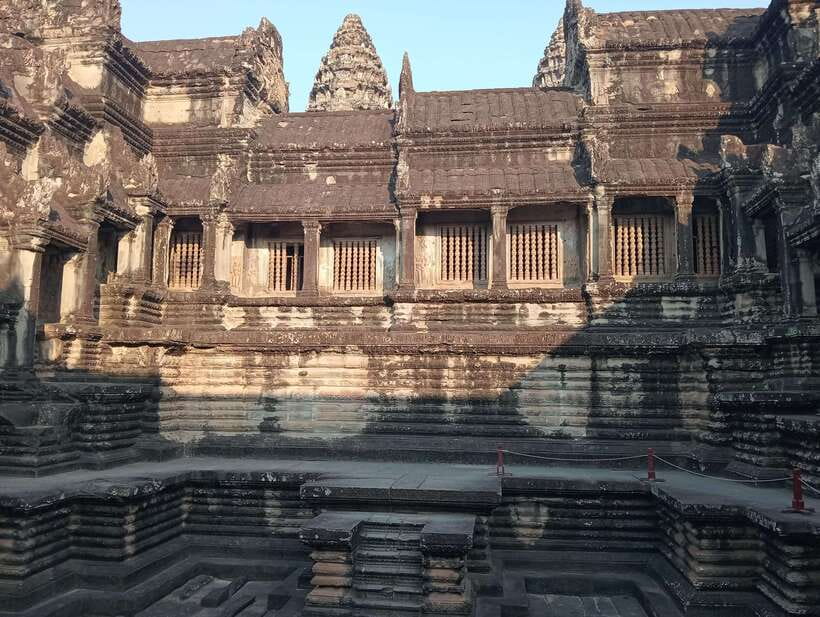
Angkor can overwhelm you fast. The site is huge, and it is easy to walk from one impressive wall to the next without understanding what you are actually seeing. This tour structure helps you connect the dots. You start with key parts of Angkor Thom, you get the cinematic jungle ruins at Ta Prohm, and then you close with Angkor Wat, which is the logical “finish line” for most people.
The second reason I like it is simple: the day is organized around energy, not just geography. You get planned guided stops, a real photo opportunity at Victory Gate, and a break built into the flow at Srah Srang. That means less rushing, less standing around, and more time looking at details you might miss on your own.
Meeting your Japanese guide and setting expectations
Your day starts with hotel pickup in Krong Siem Reap, typically between 8:30 and 9:00 AM in a comfortable vehicle. If you choose the sunrise option, pickup shifts dramatically to 4:30 to 5:00 AM, and the tour wraps around 12:00 PM.
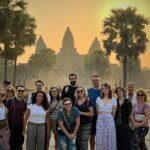
The guiding is in Japanese, and the tone matters here. In the Japanese guide feedback tied to this experience, people frequently praise very clear explanations, good photo angles, and even some light humor or wordplay. I take that as a practical sign: you are not just hearing facts, you are being taught how to see. That is a big deal at Angkor, where many carvings and architectural choices are meant to be read.
The 1-day route: Angkor Thom, Ta Prohm, and Angkor Wat
This is the classic Angkor “core” day. You visit major zones without trying to cram every distant temple into one breath. The pacing is guided, and the stop lengths you are given help you feel in control.
Ta Prohm Temple, about 1 hour
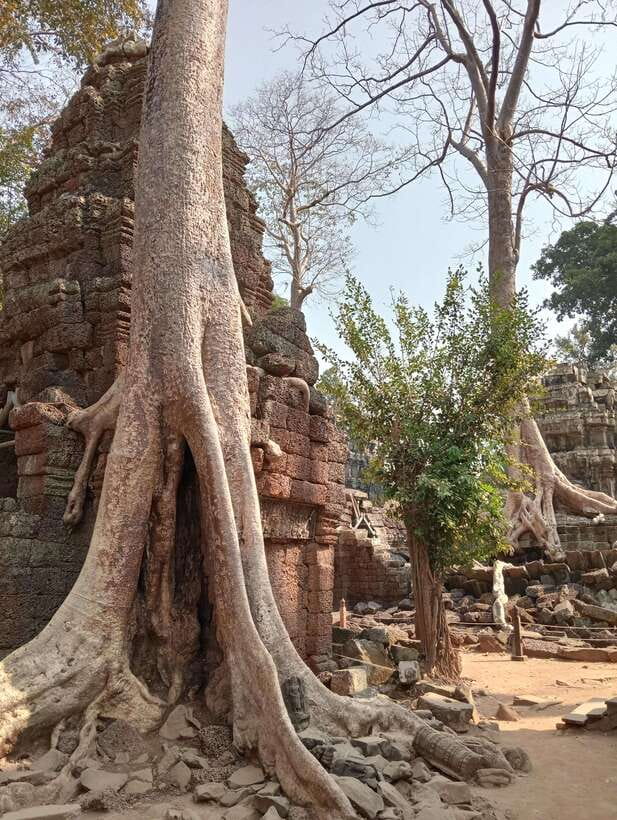
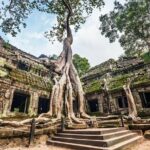
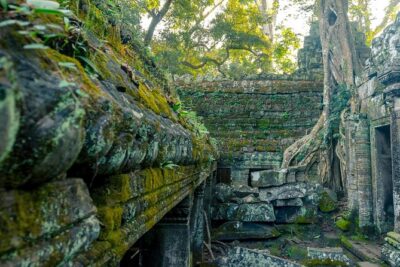
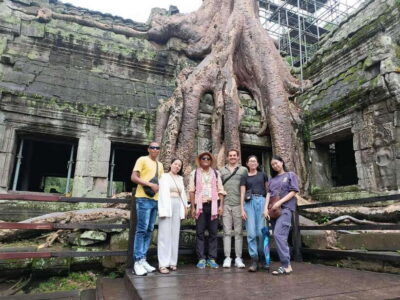
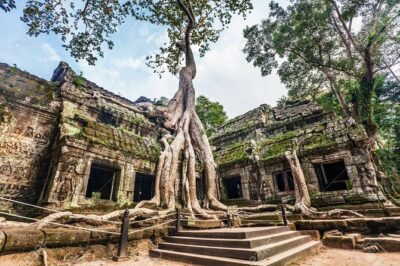
Ta Prohm is the jungle temple that looks like a movie set because it was allowed to stay that way. You will walk through corridors where giant tree roots have taken over stone, and you will get chances to frame ruins with living trunks and hanging greenery. What makes it special is the contrast, brutal stone with slow nature pressure.
Practical note: this is also where your pace matters. If you move fast, you will just get snapshots. Move at a normal walking speed and you can actually notice the way different root sections interact with carvings and walls.
More days made easy with a guide
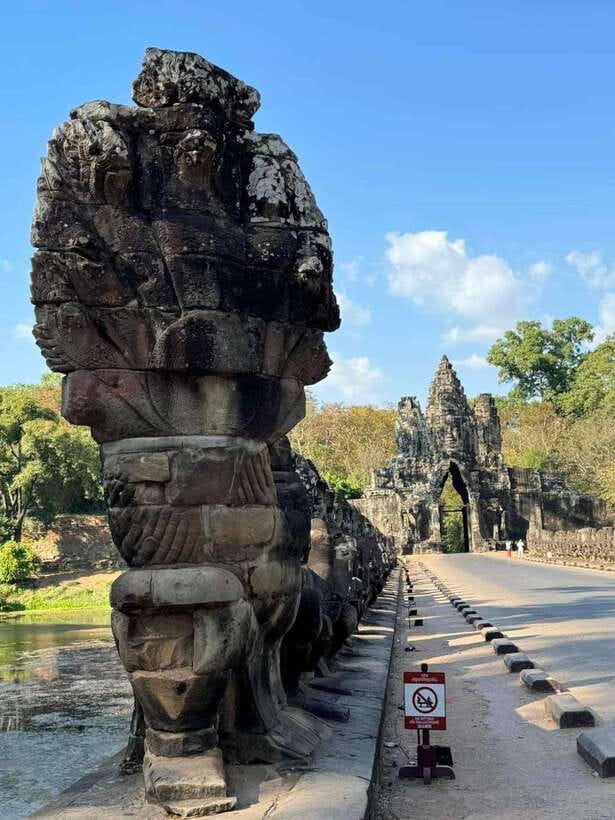
Victory Gate photo stop, about 10 minutes
Victory Gate is short but sweet. You get a brief pause for photos, which is useful because this spot tends to look best when you are framed symmetrically with the gate structure behind you.
If you care about photos, take a moment to try a few angles. Even a small shift in position can change how the gate lines up with a temple silhouette in the distance.
Terrace of the Elephants, about 30 minutes
This terrace is tied to royal processions and ceremonies. The carved forms help you picture how the Khmer Empire used this space. You are not just looking at decoration, you are looking at a stage.
I like that you get half an hour here. It is enough time to notice carving patterns and still have energy left for Bayon, which can be visually demanding if you rush.
Baphuon, about 30 minutes
Baphuon is recently restored, and that restoration is part of what makes the stop worthwhile. You get to see a major temple that looks more readable than some other partially broken areas.
If you enjoy architecture, this is a good “breather” temple. It helps reset your eyes before the face-filled mania of Bayon.
Bayon Temple, about 45 minutes
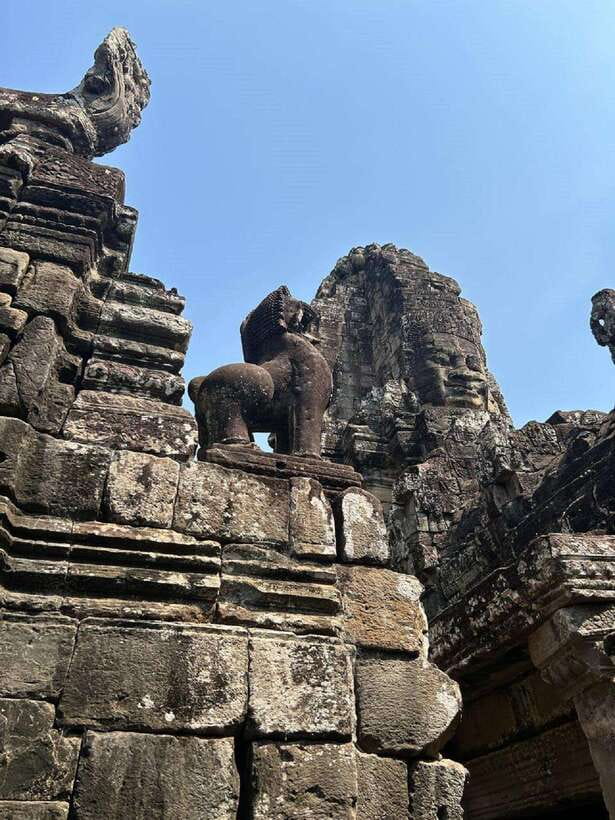
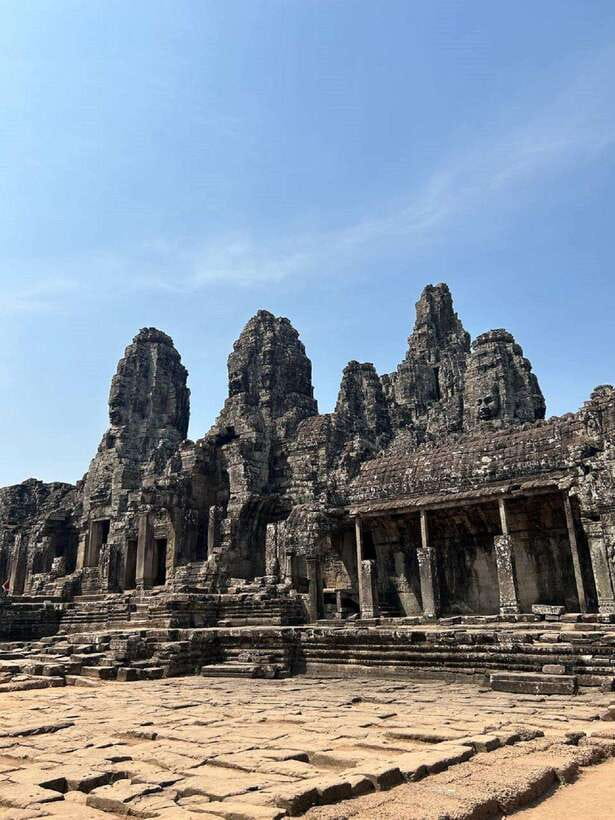
Bayon is the star within Angkor Thom. You see many towers, and each one is covered with serene smiling faces of Avalokitesvara. The faces make the place feel personal, almost like the temple is watching you back.
This is also where a Japanese guide adds value fast. When you understand the symbolism, you spend less time trying to figure out what you are staring at and more time enjoying the pattern and placement.
Srah Srang break time and lunch, about 1 hour
Srah Srang is a pause in the schedule, not just a pond area. It gives you a structured break, and lunch is available nearby, but lunch is not included in the tour price.
I recommend this mindset: treat the break as a chance to refuel, hydrate, and regroup your camera batteries, then step back into the heavy hitters.
Angkor Wat, about 2 hours
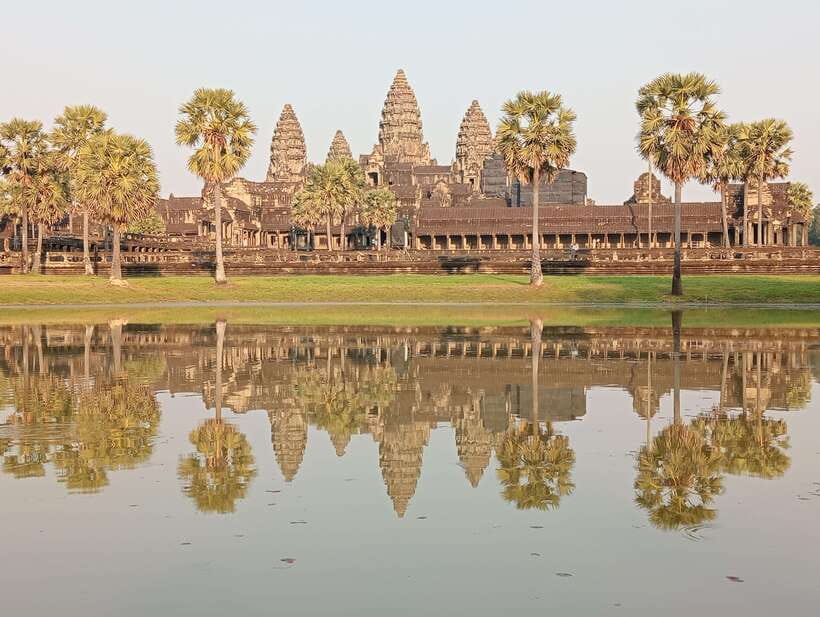
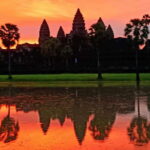
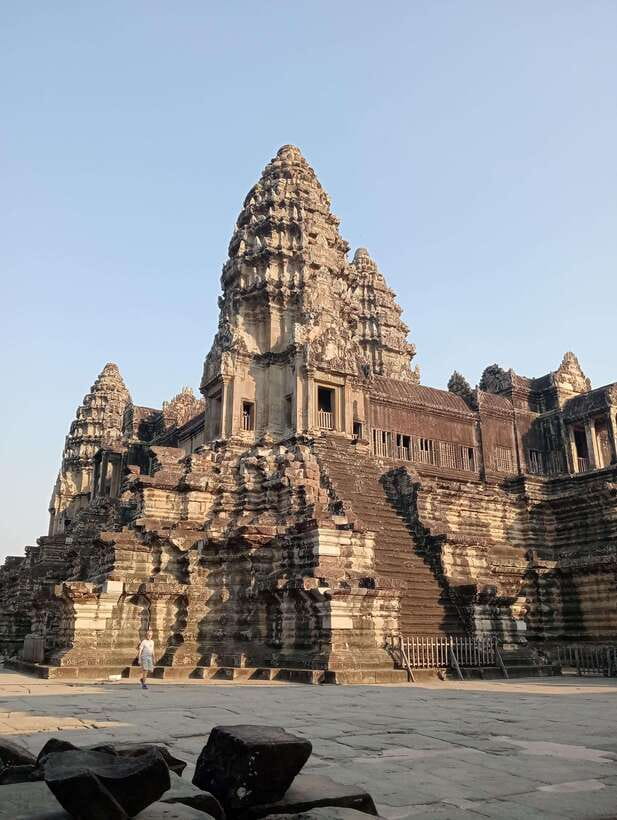
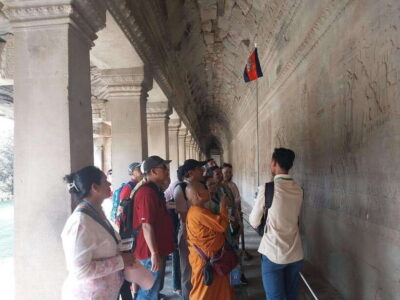
Angkor Wat is the final big temple of the day, and it lands like a payoff. You get guided time focused on art, history, and symbolism. That guidance is key because the temple’s layout and meaning are not random. They are part of a plan.
Two hours sounds like a lot, and it is, if you let it be. If you try to sprint across the whole complex, two hours disappears. If you slow down, you can get time for viewpoints and for reading key sections of the stone surfaces.
The day ends with return to your hotel around 4:30 to 5:00 PM.
Sunrise option: early pickup, lighter crowds, and softer light
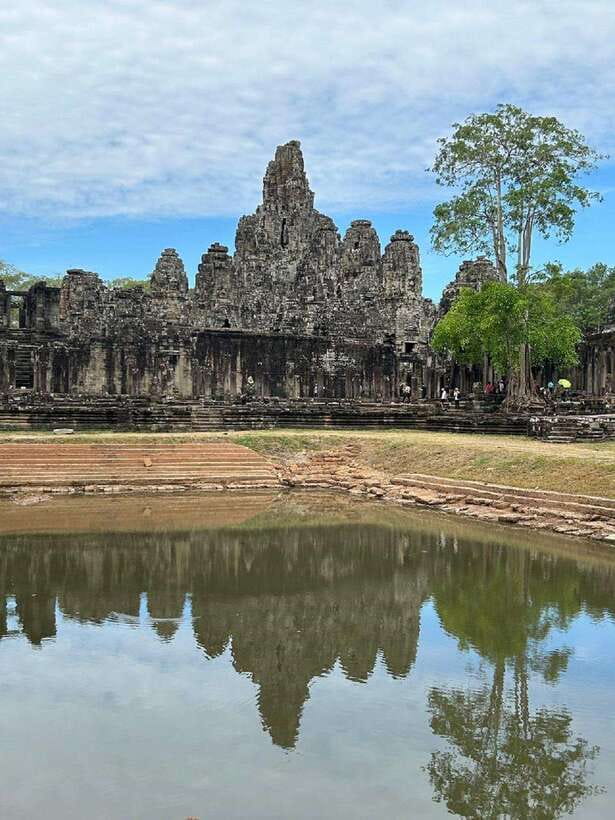
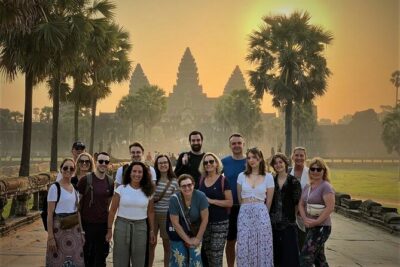
If you want the “first light” feel at Angkor, choose the sunrise setup. Pickup is between 4:30 and 5:00 AM, and the tour finishes around 12:00 PM. You are asked to bring breakfast from your hotel so you can eat after sunrise.
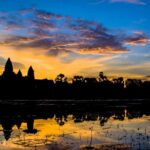
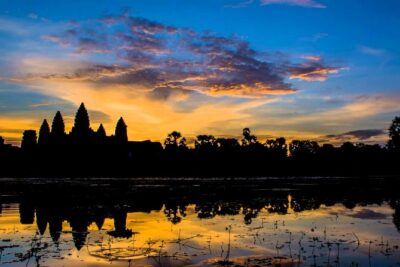
Why sunrise is worth it for real, not just romance. The light is gentler, shadows are longer, and the stone details look more dimensional. Also, the early hours can make the overall day easier on you because you have less midday intensity.
A simple tip: bring layers. Early morning can feel cool, and temple walking starts before you naturally warm up.
The 2-day upgrade: Pre Rup, Banteay Srei, and Beng Mealea at a calmer pace
The 2-day option is for you if you want fewer temples squeezed into the same tight day. You still get a sunrise angle at Angkor Wat on day two, but you spread the rest across more time and add two very different locations: Banteay Srei and Beng Mealea.
Day 1 overview: main Angkor highlights
Day 1 in the 2-day plan covers the core Angkor circuit. You still see the main temples, guided and transported, then you end with a return to your hotel after the classic Angkor Wat visit.
The value here is mental. After day one, you understand the big story. Day two is easier because you start recognizing architectural ideas and visual patterns.
Day 2 sunrise at Angkor Wat, pickup around 5:00 AM
On day two, pickup is about 5:00 AM for sunrise at Angkor Wat. Then breakfast follows, with the same instruction to bring it from your hotel.
After the sunrise, you head out to temples that feel more rural and personal.
Pre Rup, a warm-brick pyramid with strong views
Pre Rup is described as a striking 10th-century pyramid built with warm brick and laterite. High terraces give views that help you place what you saw yesterday in a wider context.
This is one of the best transitions in the plan. You move from monumental complexes to a viewpoint temple, then into very detailed carving work at Banteay Srei.
Banteay Srei, pink sandstone and intense carving detail
Banteay Srei is famous for its pink sandstone and extremely fine carvings. It is often called the Citadel of Women, and it is known as a high point of Khmer craftsmanship.
This stop is not about huge space, it is about precision. If you like reading stonework, you will enjoy how much you can notice when you are not rushing.
Lunch not included, then deeper countryside
Lunch is not included on day two, and you will stop for a local Cambodian meal before heading toward Beng Mealea.
Beng Mealea, nearly swallowed by nature
Beng Mealea is a large temple where nature has taken over much of the structure. Expect collapsed galleries, giant stone blocks, and tree roots that weave through ruins.
It is adventurous and photogenic because the scene looks less “restored” and more “in progress.” If you prefer a temple that feels raw and exploratory, Beng Mealea is where you will feel it.
Bakong, ending around 2:30 to 3:00 PM
Bakong is the final temple stop. It is the first grand stone pyramid temple associated with the Khmer Empire. The day ends in the mid-afternoon, then you return to your hotel.
I like that timing. You get to do the extra day without arriving home too late feeling wrecked.
Transport and group size: what changes for you on the road
For small parties, transportation often uses a tuk-tuk. For larger groups, you move in an air-conditioned van or bus. Private options can shift details too, including when a tuk-tuk is used and when car transport is available.
What this means for you in real life is comfort and flexibility. Tuk-tuks can feel more old-school and easy for short hops, but you still want to wear breathable clothes and plan for dust. Vans and cars help with comfort, especially on a hot day when you just want to cool down between temples.
Also, you get cold drinking water and cold towels during visits. That small detail matters at Angkor because fatigue builds from sun and walking, not only from the distance.
Tickets and dress code: the two things that can spoil your day
Angkor’s biggest extra cost is the entrance ticket, and it is not included. The Angkor Archaeological Park pass is listed as:
- USD 37 per person for 1 day
- USD 62 per person for 2 to 3 days
So your total is really the tour price plus the ticket. For many people, that still works out well because the ticket is what gives you access, and the tour is what gives you structure.
The dress rules are strict enough to remember:
- Shorts and short skirts are not allowed
- Sleeveless shirts are not allowed
- Temple entry guidance says you can cover with a scarf that covers knees and shoulders
- Except for Angkor Wat, you must wear trousers and skirts that cover knees, and shirts that cover shoulders
I strongly suggest bringing a light scarf or wrap even if you think you are dressed correctly. It is the easiest way to avoid last-minute stress at a temple gate.
Other practical items to pack:
- Comfortable shoes (non-negotiable)
- Hat
- Insect repellent
- Camera
- Cash
Is the price good value at $50 per person?
At $50 per person, the tour price itself is reasonable, especially because it includes a Japanese-speaking guide and guided visits, plus transport based on group size. But the real value comes from how those inclusions save you effort.
Here is the math in plain terms:
- If you do the 1-day tour, you are likely paying roughly $50 + $37 for the ticket, plus any lunch you choose.
- If you do the 2-day tour, you are likely paying roughly $50 + $62 for the ticket, plus lunch.
Now, compare that to trying to figure out your own route, hire transport, and decide where to spend time. You might be able to DIY cheaper on paper, but you will spend more time deciding and less time seeing. And Angkor is exactly the kind of place where direction helps, because the site can feel repetitive if you do not understand what you are looking at.
Add the fact that the tour includes cold water and cold towels, hotel pickup, and a plan with guided time blocks. That is why this often feels like a fair deal, not a bargain, but a smart purchase.
Who should book this Japanese-guided Angkor tour
This tour is a strong match if you:
- Want a first Angkor trip with clear explanations in Japanese
- Prefer organized pacing over chasing temples on your own
- Care about understanding symbolism at Angkor Wat and Bayon, not just collecting photos
- Want the option to add a second day for Banteay Srei and Beng Mealea
It is also a good choice if you are traveling with mixed ages. Some Japanese guide feedback highlights careful pacing for older parents, plus flexibility if rain disrupts timing and you need a restaurant detour.
Should you book this tour or plan it on your own?
If you want Angkor to feel coherent, book this. The biggest strength is not that it hits famous names. It is that it turns the visit into a guided story with time for photos and a sensible order.
You might consider a DIY plan only if you are already confident navigating timings, tickets, and the dress rules, and you do not need Japanese interpretation to appreciate what you see. If that is you, great. But for most people, the guided flow makes the whole day easier and more satisfying.
FAQ
FAQ
Do I need to buy the Angkor entrance ticket separately?
Yes. The Angkor Archaeological Park pass is not included. It is listed as USD 37 per person for 1 day and USD 62 per person for 2 to 3 days.
What time is hotel pickup for the regular day tour?
Hotel pickup is included, and it is scheduled between 08:30 and 09:00 AM.
What time is pickup for the sunrise option?
Pickup for sunrise is between 04:30 and 05:00 AM, and the tour finishes around 12:00 PM.
Is lunch included?
Lunch is not included. You will have a break time and then eat at a nearby restaurant or local place.
What does the tour include during visits?
You get guided visits as listed in the schedule, plus hotel pickup, transport, and cold drinking water and cold towels during temple visits.
Do I need to follow a dress code?
Yes. Shorts, short skirts, and sleeveless shirts are not allowed. You may use a scarf to cover knees and shoulders, and temple rules also require shoulders covered, with extra strictness described for temples other than Angkor Wat.
What language is the guide?
The live tour guide is Japanese.
Is this tour wheelchair accessible?
No. It is not suitable for wheelchair users.
More Siem Reap Tours to Compare
- Angkor Wat Sunrise or Sunset Tour with Guide from Siem Reap
★ 5.0 · 12,109 reviews - Siem Reap: Angkor Wat: Small-Group Sunrise or Sunset Tour
★ 5.0 · 9,444 reviews - From Siem Reap: Kampong Phluk Floating Village Tour by Boat
★ 4.9 · 6,979 reviews - Sunset tour of Kampong Phluk stilts home village on the Tonle Sap
★ 5.0 · 4,865 reviews - Siem Reap: Angkor Wat 2-Day Tour with Sunrise and Sunset
★ 4.9 · 4,429 reviews
More Tour Reviews in Siem Reap
- Angkor Wat Sunrise or Sunset Tour with Guide from Siem Reap
★ 5.0 · 12,109 reviews - Siem Reap: Angkor Wat: Small-Group Sunrise or Sunset Tour
★ 5.0 · 9,444 reviews - From Siem Reap: Kampong Phluk Floating Village Tour by Boat
★ 4.9 · 6,979 reviews - Sunset tour of Kampong Phluk stilts home village on the Tonle Sap
★ 5.0 · 4,865 reviews - Siem Reap: Angkor Wat 2-Day Tour with Sunrise and Sunset
★ 4.9 · 4,429 reviews
More Temple Circuits Around Siem Reap
- Angkor Wat Sunrise or Sunset Tour with Guide from Siem Reap
★ 5.0 · 12,109 reviews - Siem Reap: Angkor Wat: Small-Group Sunrise or Sunset Tour
★ 5.0 · 9,444 reviews - Siem Reap: Angkor Wat 2-Day Tour with Sunrise and Sunset
★ 4.9 · 4,429 reviews - Siem Reap: Full-Day Angkor Wat Guided Tour with Sunset
★ 4.9 · 3,803 reviews - Angkor Wat Sunrise tour with Small – Group and Guide tours
★ 5.0 · 3,655 reviews
Just Added: Fresh Siem Reap Tour Reviews
Angkor Temple Tours, compared.
 ★ 5.0Angkor Wat Sunrise or Sunset Tour with Guide from Siem ReapFrom $1812,109 reviews
 ★ 5.0Angkor Wat: Small-Group Sunrise or Sunset TourFrom $159,444 reviews
 ★ 4.9Angkor Wat 2-Day Tour with Sunrise and SunsetFrom $344,429 reviews
 ★ 4.9Full-Day Angkor Wat Guided Tour with SunsetFrom $153,803 reviews
 ★ 5.0Angkor Wat Sunrise tour with Small – Group and Guide toursFrom $143,655 reviews
 ★ 5.0Angkor Wat Highlights and Sunrise Guided Tour from Siem ReapFrom $233,213 reviews
 ★ 5.0Angkor Wat Sunset Small Group Tour with Lunch IncludedFrom $203,059 reviews
 ★ 5.0Full-Day Angkor Wat Sunrise Private Tour with Guide from Siem ReapFrom $602,920 reviews