
Reviewed · ANGKOR WAT TEMPLE TOURS
Siem Reap 2 Days Private Tour Angkor Wat and Floating Village
Two days, two worlds of Cambodia.
This private tour strings together Angkor’s most famous sights with real insight from a licensed English-speaking guide, plus comfort on an air-conditioned ride. I especially like the tight planning that gets you to major temples, and the built-in photography stops so you can actually see what you came for. One thing to consider: Angkor Pass and meals are not included, so you’ll want to budget for them up front.
On Day 1, you’ll move through Angkor Thom’s monuments, then end with a classic sunset viewpoint at Phnom Bakheng. Day 2 shifts to water country, with a cruise on Tonle Sap and a floating village visit near Siem Reap.
Key highlights worth planning for
- Licensed English guide with in-depth commentary to connect the temples to Cambodia’s past
- Private, air-conditioned transportation between sites, so the day stays comfortable
- Day 1 Angkor circuit covering Angkor Thom, Bayon, Ta Prohm, and Angkor Wat
- Phnom Bakheng sunset viewpoint for that big Angkor-Wat-at-dusk moment
- Private cruise on Tonle Sap and Kampong Phluk for daily life on the water
- Water and cool fresh tower provided throughout the trip for long, sun-heavy hours
Other ways to walk the great temple
- Angkor Wat Sunrise or Sunset Tour with Guide from Siem Reap★ 5.0 · 12,109 reviews
- Siem Reap: Angkor Wat: Small-Group Sunrise or Sunset Tour★ 5.0 · 9,444 reviews
- Siem Reap: Angkor Wat 2-Day Tour with Sunrise and Sunset★ 4.9 · 4,429 reviews
- Siem Reap: Full-Day Angkor Wat Guided Tour with Sunset★ 4.9 · 3,803 reviews
What you get in a 2-day private Siem Reap plan
This is a true private format, meaning it’s built around your pace, your photos, and your questions. You’ll be picked up and dropped off at your hotel, and you’ll travel in a private, comfortable, air-conditioned vehicle rather than hopping around with strangers and random schedules. That matters in Siem Reap, because the distances add up fast, and temple days can feel like a marathon.
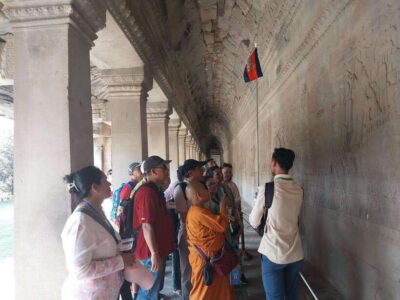
The biggest value here is how the guide ties stops together. You aren’t just collecting temple names. You get in-depth commentary that helps you read what you’re seeing, especially in Angkor Thom and the Royal City areas, where symbolism and layout play a huge role.
You also get an efficient split: Day 1 is “temples and stone storytelling,” Day 2 is “lake and living villages.” If you only do Angkor Wat plus a quick boat ride, you can miss the bigger picture of how the region works. This itinerary tries to give you both.
Price and logistics: what the $170.05 per person really covers
At $170.05 per person for 2 days, the price can look high when you compare it to bargain tours. But you’re paying for a package that includes several expensive pieces that add up if you book them separately: a licensed guide, private air-conditioned transport, hotel pickup and drop-off, and a private cruise on Tonle Sap.
Also, this price model is set up for you to avoid decision fatigue. Your guide handles a lot of the “how do we do this smoothly” parts, including helping you with the Angkor Pass purchase at the entrance of Angkor Park before you start the temple visits.
The main consideration is what’s not included: tips for the guide and driver, the Angkor Pass, and meals. Lunch is available at local restaurants with vegetarian and non-vegetarian options, but you pay out of pocket. Menu prices range from $3 to $10 per dish, so your food budget can be kept reasonable if you plan for it.
Simple budget checklist
- Angkor Pass: required for the temple sites on your schedule
- Meals: at your expense (lunch options $3 to $10 per dish)
- Tips: customary since not included
If you’re the type who wants a plan that runs on rails, this is the sort of tour that pays for itself in stress saved.
Entering Angkor: Angkor Pass, dress code, and temple etiquette
Angkor days live and die on timing and tickets. Entrance fees aren’t listed as included per stop, but the good news is the Angkor Pass covers all temples in your itinerary, and your guide will assist you buying it at the entrance of Angkor Park before you begin.
Bring the right clothes. You’ll want a shirt that can cover your shoulders, and trousers or knee-length pants or skirts are permitted. Cambodian temples are working religious spaces, so dressing correctly helps you move in confidently and respectfully.
Also, note the practical detail: the tour includes drink water and a cool fresh tower for the whole trip. You’ll still want to use water early and often, because Angkor and the Tonle Sap area can be long days with a lot of time outside.
More temple circuits, set side by side
Day 1, Angkor Thom plus Ta Prohm and Angkor Wat
Day 1 is the heavier storyline day. You’ll spend hours among some of the most recognizable faces of Angkor, starting with Angkor Thom and moving toward Angkor Wat by the afternoon. The route is built to show you how the city layout works, so it feels less random and more like you’re reading a map.
Angkor Thom: the Royal City in stone
Angkor Thom is a huge, visually overwhelming start, and that’s the point. You’re stepping into an enormous complex tied to Buddhist cosmology and the grandeur of the former capital. The scale is what hits first, then the details take over.
Why it’s worth your time: Angkor Thom makes it easier to understand why so many other temples feel like chapters inside a larger story.
Watch-outs: The walking can feel continuous, so plan to pause for photos and take a few slow moments rather than sprinting from gate to gate.
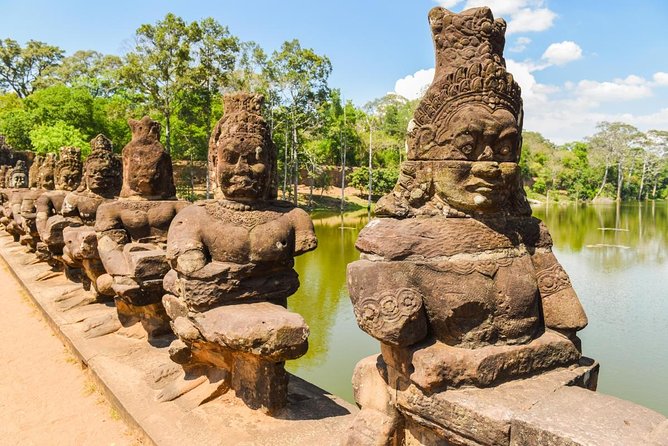
South Gate of Angkor Thom: the restored entry
The South Gate is a popular choice because it’s fully restored, and many of the heads remain in place. It’s also positioned as the main road into Angkor Thom from Angkor Wat, so it fits the flow of your day nicely.
This stop is short, but it works well as a breather. Look closely at the faces and carvings, then move on while the impression is still fresh.
Bayon Temple: faces, symmetry, and meaning
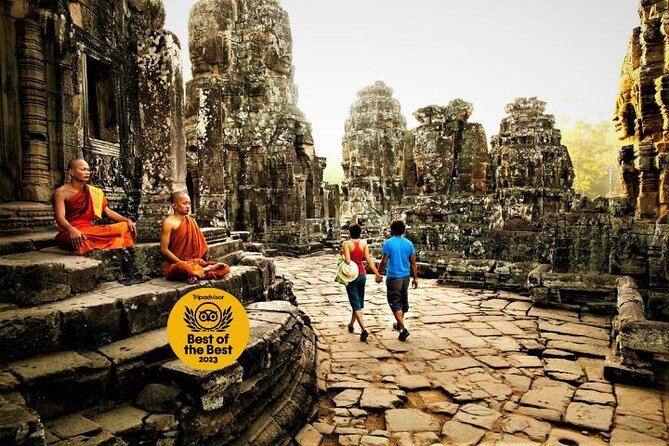
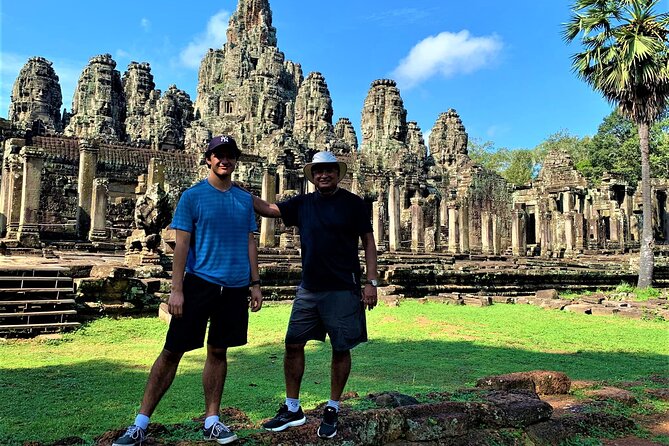
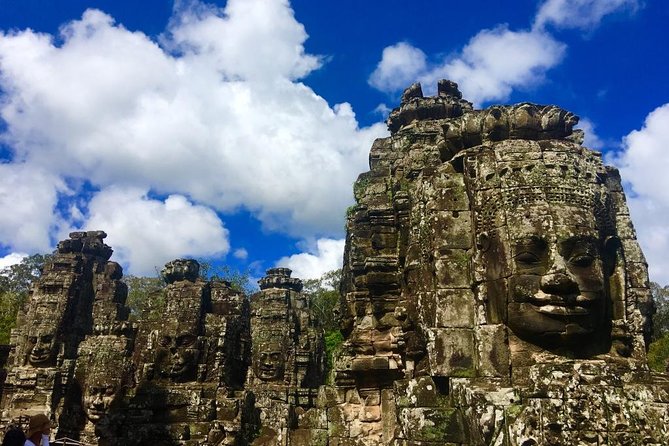
Bayon is where Angkor Thom really clicks for most people. Built nearly a century after Angkor Wat, it sits in the center of the royal city. The temple’s structure and its location make it central to understanding the royal core.
My practical advice: Spend a bit of time at the main areas where you can see the face towers from different angles. Even if you’ve seen photos, this is one of those places where moving your viewpoint changes what you notice.
Baphuon Temple: a layered, different kind of monument
Baphuon sits on a rectangular sandstone base with several levels around the same size, rather than constantly shrinking levels. That makes it feel distinct in the Angkor skyline.
This stop doesn’t always get as much attention as Bayon or Ta Prohm, but it’s a useful contrast. It helps you see that Angkor isn’t one style or one “look,” it’s a system that changed and adapted.
Phimeanakas Temple: royal palace core
Phimeanakas is near the center of the area enclosed by the walls of the Royal Palace. It’s the kind of temple that you often understand best once you know it’s tied to power and court life.
The structure originally would have had a golden pinnacle. Even if you don’t see that today, the guide’s commentary helps you picture what the palace center was meant to communicate.
Terrace of the Elephants: grand scale and court theater
The Terrace of the Elephants is dramatic, and it’s described in a way that makes it clear this was built for ceremony and presence. It’s tied to the idea of servants and princes moving through the space, almost like an official promenade.
Why you should not rush: It’s a place where perspective matters. Step back for a wider view, then come forward to notice carvings and the way the terrace frames the scene.
Ta Prohm: the kingdom of trees
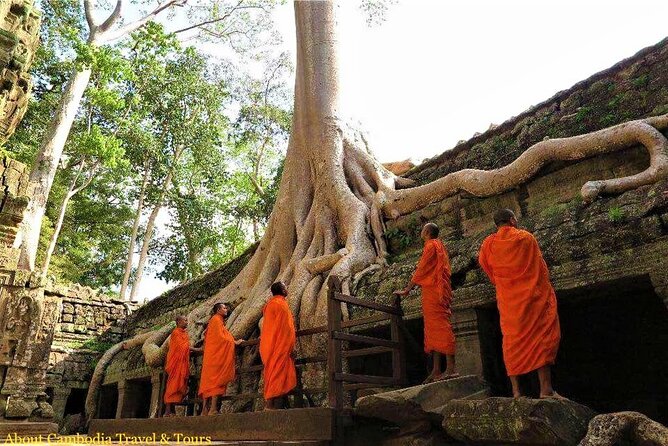
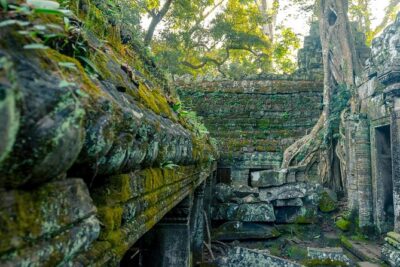
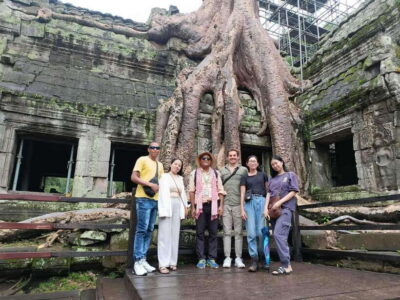
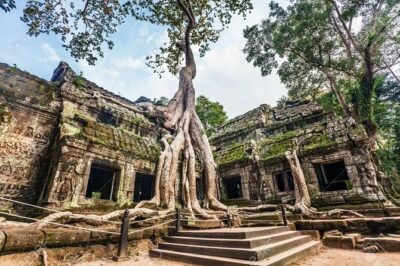
Ta Prohm is the “trees meet temple” stop everyone talks about, and it’s easy to see why. It’s often left largely untouched by archaeologists, except for clearing paths for visitors and strengthening structures to prevent further damage.
This is a great photo moment, especially if you like texture and atmosphere. It also slows the pace in a good way, because you stop feeling like you’re reading a stone checklist and start noticing how nature interacts with ruins.
Angkor Wat: the masterpiece moment
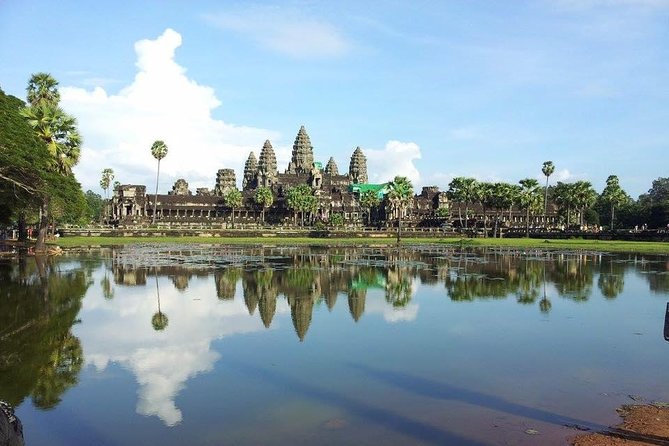
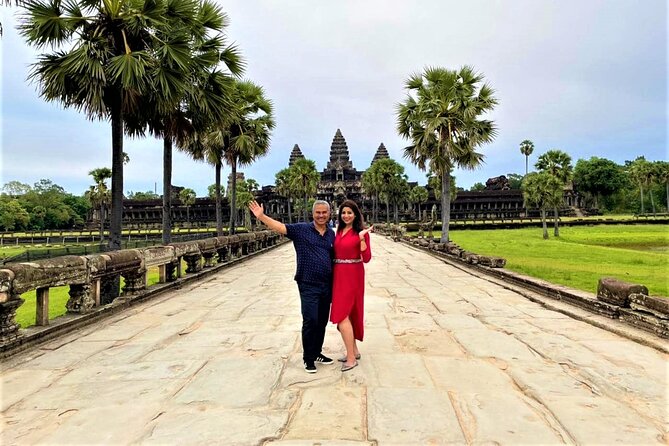
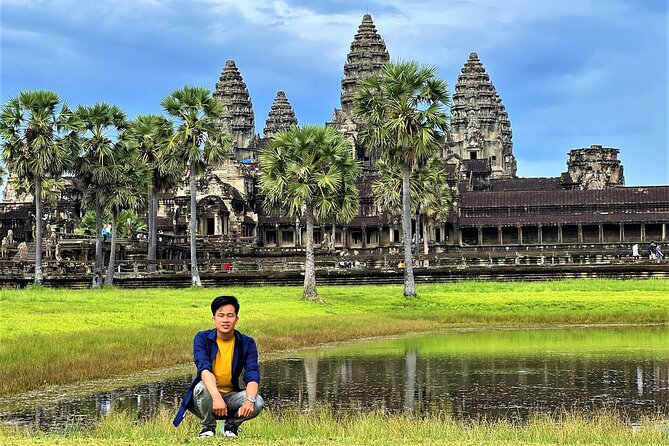
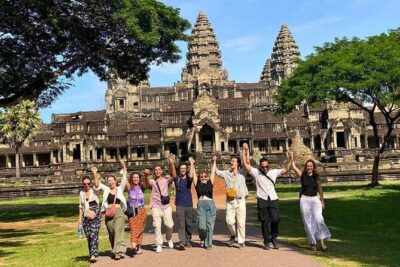
Then comes Angkor Wat, the largest monument in the Angkor group and the best preserved. The tour’s plan makes this feel like the payoff: you’re not arriving cold, you’re arriving with context from the earlier stops.
Angkor Wat is described as an architectural masterpiece, with attention to composition, balance, proportions, and sculpture. Even if your background is minimal, the layout is what speaks first.
Take time to step away from the crowds if you can. Stand where you can see the overall design, then switch to detailed carvings and the sculptural rhythm.
Phnom Bakheng: sunset views over Angkor Wat
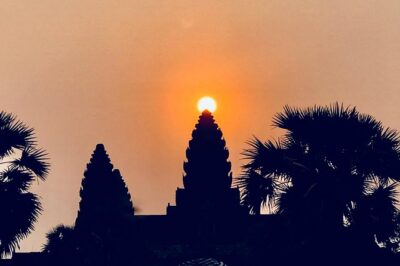
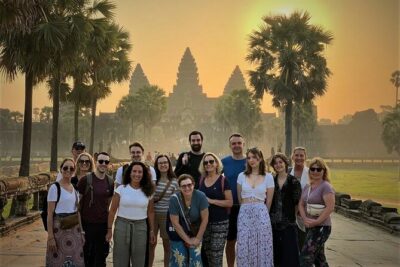
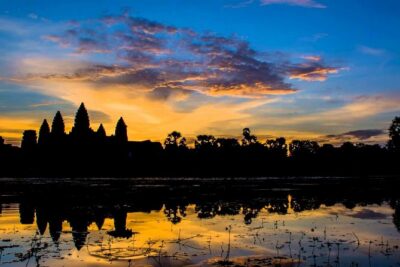
Phnom Bakheng is especially famous as a sunset spot with views over Angkor Wat. This is the stop where the day turns from “look at monuments” to “watch the light change.”
Timing tip: Plan to arrive with enough buffer to get your bearings. Sunset viewpoints can be chaotic, and it’s much nicer to enjoy the scene rather than scrambling for a spot.
Day 2, Tonle Sap Lake to Kampong Phluk and back to Siem Reap
Day 2 is where the tour gets more human. Instead of fighting your way through stone corridors, you’re dealing with water and daily life. Tonle Sap Lake is the largest fresh water in Southeast Asia, and its size changes dramatically depending on the monsoon and dry season.
The itinerary uses this reality by building a cruise into the day. That gives you scale, not just a view from shore.
Tonle Sap Lake: the scale-shifter of Cambodia
You’ll spend time on the lake, which is the key. Since the dimensions shift between seasons, the water level affects everything around it, including how people live and where communities sit.
Why this matters: it stops Tonle Sap from being a single photo spot and makes it a living system that changes.
Kampong Phluk Floating Village: houses on stilts, real Khmer households
Kampong Phluk is about 30 km southeast of Siem Reap town. The floating village area has more than 3,000 inhabitants described as real Khmers, with households made of wood and bamboo built on stilts.
What to expect: This is not a theme park version of village life. You’re seeing homes and daily routines tied to water levels. A private cruise also keeps the focus more on your group and your guide’s explanation.
Possible drawback: Since your time is limited, it’s easy to rush. Stay curious, ask questions, and give yourself moments to look slowly rather than treating it like a checkmark.
Wat Preah Prom Rath: older pagoda, wall paintings
Back on land, you’ll visit Wat Preah Prom Rath, described as one of the oldest pagodas in Siem Reap with well-preserved wall paintings from the 17th century. The site has Buddhist context, and the paintings help you see how religion was expressed through art.
This is a good contrast to the floating village. It gives you a different kind of visual storytelling: painted walls instead of waterline living.
Artisans Angkor: Khmer craft and rural job opportunities
Artisans Angkor is a Cambodian social business focused on creating job opportunities for young people in rural areas while reviving Khmer craftsmanship. It’s located in Stung Treng.
Why I like adding this stop: It shifts the day from “ancient ruins and famous temples” to “how culture continues today.” It’s also a more grounded way to spend about an hour rather than adding another single temple you might feel over-templed-out from.
West Baray: a vast man-made lake
West Baray is a vast man-made lake, surrounded by an earthen levee that forms a dyke. It also has a legend attached, including a crocodile story involving a ruler’s daughter.
Even if you don’t care about legends, the scale helps you understand Angkor’s engineering and water management mindset. Angkor wasn’t just art and temples. It was infrastructure.
Svay Romiet Pagoda: quick stop by the West Baray
Svay Romiet Pagoda sits directly on the banks of the West Baray. It’s shorter, about 30 minutes, but it makes the water connection feel less abstract.
Comfort, food, and what to do with your free time
This tour includes water and a cool fresh tower for the whole trip, which is a genuinely useful inclusion on long days. It’s one less thing you have to carry or search for while you’re busy looking at monuments.
Meals are not included, but local lunches are available with vegetarian and non-vegetarian options. Prices range from $3 to $10 per dish. In practice, this gives you flexibility: you can eat simply, eat vegetarian, or go slightly nicer if the day feels long.
What I’d do with breaks: use them to recharge your eyes. Temple days can make everything blur together. A small pause before moving on often helps you remember more of what you saw.
Who this tour suits best
This is a strong choice if you:
- want a private plan with a professional licensed guide, not a rushed group shuffle
- are focused on the big Angkor names, but also want explanation that helps you understand them
- like combining temples with a real water experience like Tonle Sap and Kampong Phluk
- value comfort, especially with an air-conditioned vehicle and included drinks
It’s also a good match if you’re traveling with someone who wants structure. Two days feels like a sweet spot here, since you get major temples, then you get a lake day without feeling like you’re sprinting between unrelated activities.
If you’re the type who only wants Angkor Wat and nothing else, you might not need all of Day 1. But if you want the broader picture of Angkor Thom, Ta Prohm, and the royal city core, this route makes sense.
Should you book this Siem Reap Angkor Wat and floating village private tour?
I’d book it if you want a smooth, guide-led two-day itinerary that hits Angkor’s best-known monuments and then adds a meaningful lake day on Tonle Sap. The value is strongest when you count the private cruise, the licensed guide, and the air-conditioned transport, because those are exactly the parts that are annoying to piece together on your own.
You should think twice if you dislike paying extra at the gate and at lunch. The Angkor Pass is required and not included, and meals are at your expense. If that upfront budgeting feels like a hassle, look for a more all-in pricing option.
The strongest indicator is how well the plan flows: you’re not just being dropped at monuments. You have commentary, transport between distant areas, and built-in moments like sunset at Phnom Bakheng. If that’s your style, this is a practical way to do Siem Reap without turning the trip into a logistics project.
FAQ
How long is the Siem Reap 2 Days private tour?
It runs for about 2 days.
Is hotel pickup and drop-off included?
Yes. Pickup and drop-off at your hotel are included, and you provide your hotel name.
Is there an English-speaking guide?
Yes. You’ll have a professional English-speaking licensed tour guide.
Is the tour private or shared?
It’s private. Only your group participates.
What transport is included during the tour?
You travel in a private, comfortable, air-conditioned vehicle.
Are entrance fees included for Angkor temples?
The Angkor Pass is not included, but it covers all temples in the itinerary. Your guide will assist you in purchasing it at the entrance of Angkor Park before starting.
Are meals included?
Meals are not included. Lunches are available at local restaurants with vegetarian and non-vegetarian options, and meals are at your own expense (about $3 to $10 per dish).
Is the Tonle Sap and floating village experience included?
Yes. A private cruise to Tonle Sap Lake and the floating village is included.
What’s included for drinks and comfort?
Drink water and cool fresh tower are provided for the whole trip.
What is the cancellation policy?
You can cancel for a full refund up to 24 hours in advance of the experience’s start time, based on local time. If you cancel less than 24 hours before, it is not refunded.
Out on Tonle Sap
- From Siem Reap: Kampong Phluk Floating Village Tour by Boat
★ 4.9 · 6,979 reviews - Sunset tour of Kampong Phluk stilts home village on the Tonle Sap
★ 5.0 · 4,865 reviews - Kompong Phluk Floating Village Half-Day Tour ( Morning / Sunset )
★ 5.0 · 1,494 reviews - Siem Reap: Kulen Mountain, Beng Mealea and Tonle Sap Tour
★ 5.0 · 1,483 reviews - Tonle Sap Lake & Kampong Phluk Village Half-Day Tour
★ 5.0 · 1,045 reviews
More Temple Circuits Around Siem Reap
- Angkor Wat Sunrise or Sunset Tour with Guide from Siem Reap
★ 5.0 · 12,109 reviews - Siem Reap: Angkor Wat: Small-Group Sunrise or Sunset Tour
★ 5.0 · 9,444 reviews - Siem Reap: Angkor Wat 2-Day Tour with Sunrise and Sunset
★ 4.9 · 4,429 reviews - Siem Reap: Full-Day Angkor Wat Guided Tour with Sunset
★ 4.9 · 3,803 reviews - Angkor Wat Sunrise tour with Small – Group and Guide tours
★ 5.0 · 3,655 reviews
Angkor Wat, a Few More Ways In
- Angkor Wat Sunrise or Sunset Tour with Guide from Siem Reap
★ 5.0 · 12,109 reviews - Siem Reap: Angkor Wat: Small-Group Sunrise or Sunset Tour
★ 5.0 · 9,444 reviews - Siem Reap: Angkor Wat 2-Day Tour with Sunrise and Sunset
★ 4.9 · 4,429 reviews - Siem Reap: Full-Day Angkor Wat Guided Tour with Sunset
★ 4.9 · 3,803 reviews - Angkor Wat Sunrise tour with Small – Group and Guide tours
★ 5.0 · 3,655 reviews
Just Added: Fresh Siem Reap Tour Reviews

Angkor Wat Temple Tours, compared.
 ★ 5.0Angkor Wat Sunrise or Sunset Tour with Guide from Siem ReapFrom $1812,109 reviews
 ★ 5.0Angkor Wat: Small-Group Sunrise or Sunset TourFrom $159,444 reviews
 ★ 4.9Angkor Wat 2-Day Tour with Sunrise and SunsetFrom $344,429 reviews
 ★ 4.9Full-Day Angkor Wat Guided Tour with SunsetFrom $153,803 reviews
 ★ 5.0Angkor Wat Sunrise tour with Small – Group and Guide toursFrom $143,655 reviews
 ★ 5.0Angkor Wat Highlights and Sunrise Guided Tour from Siem ReapFrom $233,213 reviews
 ★ 5.0Angkor Wat Sunset Small Group Tour with Lunch IncludedFrom $203,059 reviews
 ★ 5.0Full-Day Angkor Wat Sunrise Private Tour with Guide from Siem ReapFrom $602,920 reviews
Browse the lists this tour appears in