
Reviewed · ANGKOR WAT TEMPLE TOURS
Private Day Angkor Wat Temple and Banteay Srei Temple Tour
One day, ten temples, and a guide who adjusts. I like the English tour guide because you get clear context as you move through Ta Prohm and the royal center of Angkor.
You also get real planning flexibility, like Chanra checking in on WhatsApp and tailoring the pace, and even arranging vehicle access and shortcuts when someone was on crutches. The only real downside is the temples pass is extra at $37 per person, and this is still a walking-heavy day even with help.
Key highlights that make this tour work
- Private format with your own English guide, so questions stay easy and pacing stays under control.
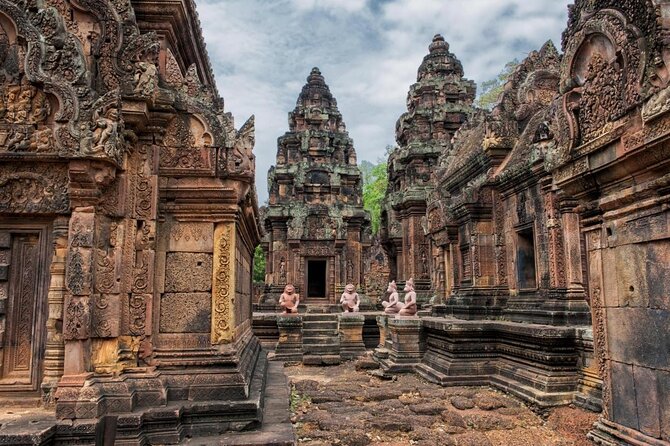
- Big contrast in temples, from Ta Prohm’s vines to Banteay Srei’s intricate pink-stone carving.
- Smart time allocation, including about 3 hours at Angkor Wat, not a rushed peek.
- Comfort between stops, with an air-conditioned vehicle plus cool water and towels.
- Guide flexibility you can actually feel, including WhatsApp coordination and mobility-friendly adjustments.
Other ways to walk the great temple
- Angkor Wat Sunrise or Sunset Tour with Guide from Siem Reap★ 5.0 · 12,109 reviews
- Siem Reap: Angkor Wat: Small-Group Sunrise or Sunset Tour★ 5.0 · 9,444 reviews
- Siem Reap: Angkor Wat 2-Day Tour with Sunrise and Sunset★ 4.9 · 4,429 reviews
- Siem Reap: Full-Day Angkor Wat Guided Tour with Sunset★ 4.9 · 3,803 reviews
A private day connecting Ta Prohm, Banteay Srei, and Angkor Wat
This is the kind of Angkor day that makes sense when you want to see the major hits without turning your vacation into a sweaty scavenger hunt. You’re moving through the Angkor area with an English guide, in an air-conditioned vehicle, and you get cool water and towels along the way.
What makes it especially appealing is the mix. You’re not only chasing the iconic Angkor Wat. You also visit Ta Prohm, the pink-stone artistry of Banteay Srei, and the face towers and royal terraces of Angkor Thom.
The timing is a full-day commitment at about 8 hours 30 minutes, and it fits within the general opening window of 8:00 AM to 4:00 PM (Monday through Sunday). That matters because Angkor is a lot to process in one day, and you’ll want enough daylight and energy to really look.
Ta Prohm: Rajavihara vines and the 1186AD monastery vibe
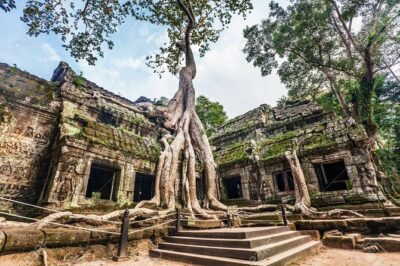
Ta Prohm is famous for a reason: the ruins look like nature moved in and never left. The temple’s original name was Rajavihara, meaning monastery of the King, and it was built as a Mahayana Buddhist monastery and university.
Construction is dated to 1186 AD, and the visual impact comes from the way the temple is surrounded and patterned by vines and roots. You’ll see a labyrinth-like feel, with vines resting across the ruins and giant roots sprawled along the ground.
Here’s how to make Ta Prohm worth your time. Don’t just look straight at the main structures. Angle your attention downward and to the sides, because the “jungle meets stone” effect shows up in the details too. Plan on about 1 hour here, which is enough to slow down.
Pre Rup: a shorter stop with a clear historical anchor
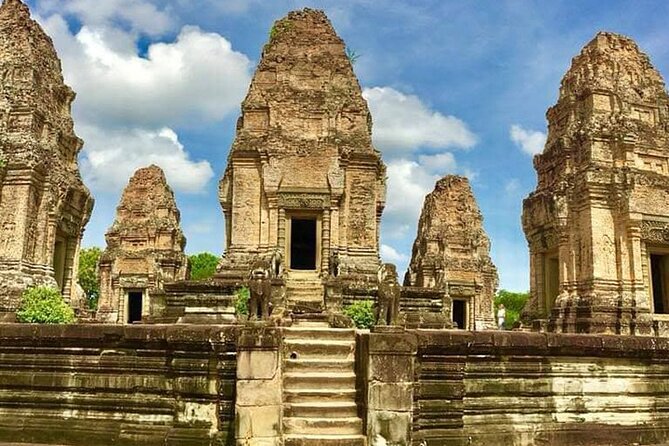
Pre Rup is much less about vines and more about a specific temple purpose and timeline. It was built as the state temple for King Rajendravarman in the late 10th century, around 961 or 962 AD, and it was built about 9 years after East Mebon, which sits about 1.3 km north.
You only get around 20 minutes at this stop, so treat it as a quick reset and a factual anchor. It helps you place the Angkor story in time while you’re still fresh enough to enjoy the next shift in scenery.
If you’re the type who likes to understand what you’re looking at, Pre Rup is a nice breather. If you’re only chasing photos, you’ll still get your angle, just don’t expect a long wander.
Banteay Srei: why the Temple of Women feels different
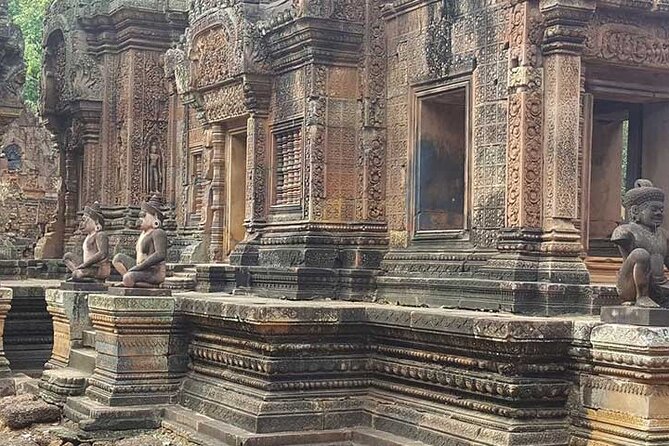
Banteay Srei, often called the Temple of Women and known for its pink stone, is a strong change of pace in the middle of the day. It’s a 10th-century Cambodian Hindu temple dedicated to Shiva.
The key difference here is scale and detail. Banteay Srei is smaller than many major Angkor sites, and that makes the craftsmanship easier to notice. You’ll want to look for the motifs, the figures of gods, and the kind of detailed carving that rewards being close.
Time is about 1 hour. That’s a good match for this temple because you can step around slowly, study surfaces, and still stay on schedule for Angkor Thom and Angkor Wat.
Also, Banteay Srei is located near Phnom Dei, about 25 km northeast of the main Angkor area. If you ever wondered why some days feel calmer than others, a bit of distance from the core can help.
The pink sandstone carvings, a few more runs


Angkor Thom South Gate to Bayon: entering the face towers
Next you approach Angkor Thom through the South Gate, and the entry experience is built around scale and drama. You cross a grand causeway over a 100 m wide moat, and the edges feature a naga balustrade.
You’ll also notice the massive stone carving of a seven-headed naga. It’s not just decoration, it’s part of how the space communicates power and mythology before you even reach the main temple areas.
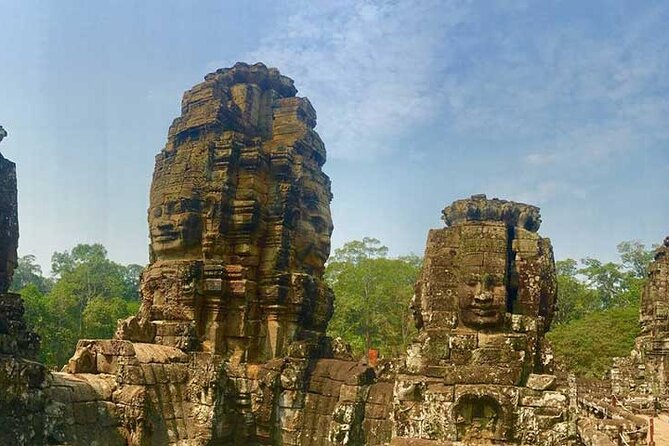
From there, Bayon is the big face moment. Bayon’s towers have 173 gigantic faces, and people still debate who they represent. Local Khmer belief holds that they represent the Four Faces of Prohm.
You’ll spend about 50 minutes at Bayon. That’s long enough to understand the structure, then come back for a second look at the faces from different angles.
If you want the best results, don’t try to memorize everything at once. Pick one tower, then move your attention slowly across the faces as you walk, so the expression and placement become clearer.
The royal heart: Baphuon, Phimeanakas, and the terraces
After Bayon, the route continues deeper into the Angkor Thom royal grounds. You visit the Baphuon, the state temple of King Udayadityavarman II, located between the Royal Palace and Prasat Bayon. This stop is about 40 minutes, which is about right for a sandstone monument that you’ll want to observe from several sides.
Then comes Phimeanakas, which is described as having a story and being part of the royal enclosure. You’ll likely pass through the area at some point during your visit, and the time here is about 30 minutes.
Now you shift to the terraces, which are long, intentional spaces made for processions and show. First is the Terrace of the Elephants, built by King Jayavarman VII at the end of the 12th century. It stretches over more than 300 meters, running from the Baphuon in the south to the Leper King terrace in the north.
The Terrace of the Leper King is the northern stretch of the royal terraces, forming the eastern boundary of the Royal Palace grounds. It faces the parade grounds, and the time is shorter at about 15 minutes.
Here’s the practical way to enjoy the terraces. Look at the length first, then walk a few steps and notice how the space frames views toward the parade grounds. Even in a packed day, the terraces reward a slower pace for a short stretch.
Angkor Wat: concentric walls, the Meru idea, and your big finale
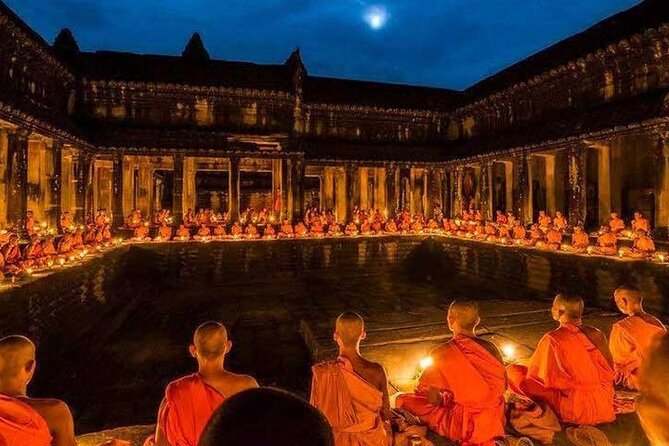
Angkor Wat is the finale and it gets about 3 hours, which is the right amount of time if you actually want to absorb the design. Representing the abode of Hinduism’s ancient gods, it’s described as the jewel in the Khmer archaeological crown, and it’s the largest of all Angkor’s temples.
The design theme is cosmic. Angkor Wat has five concentric rectangular walls and moats, symbolizing a chain of mountains and ocean. The central tower represents Mount Meru, described as the center of the Hindu and Buddhist universe.
Because the symbolism is part of the physical layout, I recommend you let the architecture lead your eyes. Instead of jumping to the biggest postcard angle only, spend a bit of time tracking the walls and the moats as layers, because that’s where the “cosmic” concept becomes practical and visible.
If you only have time for one temple in this whole Angkor day, make it Angkor Wat. The extra time on this stop is the difference between collecting images and actually understanding what you’re looking at.
Price and value: $43 plus the $37 temples pass
The tour cost is $43 per person, and it lasts about 8 hours 30 minutes. That price includes an air-conditioned vehicle, an English tour guide, parking fees and roads tolls, cool water and towels, and pickup and drop-off at the airport.
What is not included is the temples pass, listed as 1 day for $37 per person. So your realistic cash planning is: tour cost plus the pass.
That pass matters because without it, you can’t fully use the time you paid for. The silver lining is that once you have the pass, you can connect many of the stops in one smooth arc.
Value is strongest when you care about two things: good explanations and not wasting energy figuring out logistics. If you’re traveling independently and you already know the temples well, you might be able to DIY. But if you want a guided day where the stops actually connect, the price-to-time ratio is pretty fair.
Also, this tour is frequently booked about 81 days in advance on average, which hints at steady demand. If you’re traveling in a busy season, don’t treat it like a last-minute plan.
Transportation and pacing: comfort between stops, plus a lot of walking
The vehicle component is real value here. You get air-conditioned transport between sites, and that’s a big deal in Siem Reap heat. You’ll also have cool water and towels, plus parking fees and road tolls handled for you.
The walking part is unavoidable. Ta Prohm, Angkor Thom, the terraces, and Angkor Wat all involve moving around on uneven stone and across large areas. That said, one review highlight is how the guide handled mobility needs.
In one case, the guide was extremely helpful for a companion who was on crutches. The guide arranged options to drive closer, and used a moped and tuk tuk approach so she could still access the spectacular sites. That’s the kind of practical flexibility you want from a private guide, not just a standard checklist tour.
If you have mobility limitations, bring it up early so the guide can adjust. For most people, good shoes and a hat will be your best friends.
Guide you can message: Chanra’s WhatsApp approach
Two guide-related details pop in a way that matters. First, Chanra was praised for communication via WhatsApp, including good responsiveness before the tour. Second, he helped customize the route based on what you want to see, and added suggestions.
This is valuable because Angkor can feel overwhelming, even with a plan. When the guide can adjust the order or emphasis, you spend time on what you care about instead of racing through what you don’t.
The private format means you aren’t stuck with a rigid group pace. If you want more time at Angkor Wat to process the symbolism, or you want to slow down for Banteay Srei’s carving, that’s the kind of thing a good guide can accommodate.
Who this tour suits best
This private day works well if you want a guided Angkor route that hits the major emotional beats of the region: vines at Ta Prohm, artistry at Banteay Srei, and the dramatic face-and-royal-court feel of Angkor Thom, ending with Angkor Wat’s cosmic design.
It’s also a strong choice if you value comfort between stops. The air-conditioned vehicle, water, and towels add up over 8.5 hours.
If you are the kind of traveler who likes to understand what you’re looking at, the temple descriptions do you favors. If you only want the biggest views and the fastest photos, you might find the packed schedule a bit intense, since every stop still has a walking component.
Should you book this private Angkor Wat and Banteay Srei day?
I’d book it if your priority is a guided, full-day Angkor circuit with an English-speaking expert and practical comfort. The strongest reasons are the schedule that gives Angkor Wat enough time, the mix of temples that keeps the day from feeling repetitive, and the guide flexibility shown in real situations, including mobility support.
I’d think twice if you’re trying to keep costs ultra-low, because the temples pass is a separate expense. Also, if you hate walking, you’ll need to plan for that reality, even with help like closer access and small-vehicle options.
If you want one day that does Angkor in a smart order, with explanations and less hassle, this is a solid pick.
FAQ
What is the price per person for this tour?
The tour price is $43.00 per person.
How long is the tour?
The duration is about 8 hours 30 minutes.
Is pickup included?
Yes. Pickup is offered, and the tour includes pick up and drop off at the airport.
What does the tour include?
It includes an air-conditioned vehicle, an English tour guide, parking fees and roads tolls, cool water and towels, and airport pickup and drop-off.
Do I need to buy a temples pass?
Yes. A 1-day temples pass is not included and is listed as $37.00 per person.
Is this a private tour?
Yes. It is private, and only your group will participate.
What are the operating hours?
The operating hours are 8:00 AM to 4:00 PM, Monday through Sunday.
What if I need to cancel?
You can cancel for free. You must cancel at least 24 hours before the experience starts for a full refund.
More Temple Circuits Around Siem Reap
- Angkor Wat Sunrise or Sunset Tour with Guide from Siem Reap
★ 5.0 · 12,109 reviews - Siem Reap: Angkor Wat: Small-Group Sunrise or Sunset Tour
★ 5.0 · 9,444 reviews - Siem Reap: Angkor Wat 2-Day Tour with Sunrise and Sunset
★ 4.9 · 4,429 reviews - Siem Reap: Full-Day Angkor Wat Guided Tour with Sunset
★ 4.9 · 3,803 reviews - Angkor Wat Sunrise tour with Small – Group and Guide tours
★ 5.0 · 3,655 reviews
The Carvings of Banteay Srei
- Full-Day Banteay Srei & 4 Temples – Grand Tours Join-in Tour
★ 5.0 · 1,155 reviews - Siem Reap Tour: Angkor Wat Sunrise, Bayon, Ta Prohm, Banteay Srei
★ 5.0 · 931 reviews - 2-Day Angkor Wat With Small, Big Circuit and Banteay Srei Tour
★ 5.0 · 545 reviews - From Siem Reap: Banteay Srei Temple & Grand 5 Temple Tour
★ 4.8 · 262 reviews - 3-Days Discovery Of Angkor: Waterfalls,Floating Village and Banteay Srei temple
★ 5.0 · 214 reviews
Angkor Wat, a Few More Ways In
- Angkor Wat Sunrise or Sunset Tour with Guide from Siem Reap
★ 5.0 · 12,109 reviews - Siem Reap: Angkor Wat: Small-Group Sunrise or Sunset Tour
★ 5.0 · 9,444 reviews - Siem Reap: Angkor Wat 2-Day Tour with Sunrise and Sunset
★ 4.9 · 4,429 reviews - Siem Reap: Full-Day Angkor Wat Guided Tour with Sunset
★ 4.9 · 3,803 reviews - Angkor Wat Sunrise tour with Small – Group and Guide tours
★ 5.0 · 3,655 reviews
Just Added: Fresh Siem Reap Tour Reviews

Angkor Wat Temple Tours, compared.
 ★ 5.0Angkor Wat Sunrise or Sunset Tour with Guide from Siem ReapFrom $1812,109 reviews
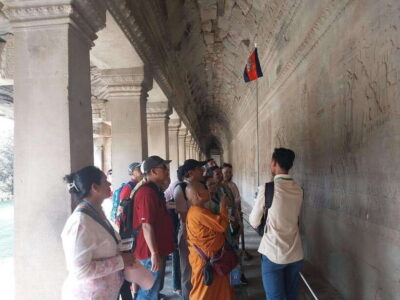 ★ 5.0Angkor Wat: Small-Group Sunrise or Sunset TourFrom $159,444 reviews
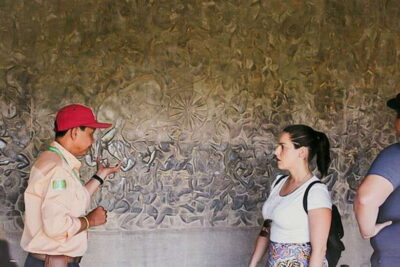 ★ 4.9Angkor Wat 2-Day Tour with Sunrise and SunsetFrom $344,429 reviews
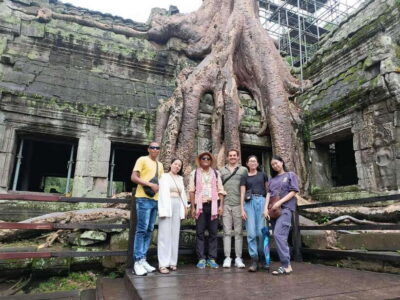 ★ 4.9Full-Day Angkor Wat Guided Tour with SunsetFrom $153,803 reviews
 ★ 5.0Angkor Wat Sunrise tour with Small – Group and Guide toursFrom $143,655 reviews
 ★ 5.0Angkor Wat Highlights and Sunrise Guided Tour from Siem ReapFrom $233,213 reviews
 ★ 5.0Angkor Wat Sunset Small Group Tour with Lunch IncludedFrom $203,059 reviews
 ★ 5.0Full-Day Angkor Wat Sunrise Private Tour with Guide from Siem ReapFrom $602,920 reviews
Browse the lists this tour appears in