
Reviewed · ANGKOR WAT TEMPLE TOURS
Private 2 Days Angkor Wat Sunrise and Discover all Major Temples
Waking up early in Angkor is the whole point. This private 2-day tour lines up Angkor Wat sunrise with the big, must-see temples, then keeps going through the wider Angkor circuit with a local guide who makes the Khmer Empire easier to understand. I especially like how the plan balances the headline sites with other well-chosen stops.
I also like the day-to-day comfort: private AC transport, bottled water, and cool towels, plus pickup and drop-off from your hotel in Siem Reap. The guide is licensed and speaks excellent English, and the tour is designed so you spend less time figuring out logistics.
One consideration: admission is not included. You will need the Angkor Pass, and since this is two full temple days, expect walking in heat and early mornings even with private transportation.
Key highlights in plain terms
- Angkor Wat at sunrise, timed for the best viewing moment and the temple’s iconic silhouette
- Big Angkor Thom monuments in one efficient day, including Bayon’s face towers and the royal terraces
- Day 2 temple variety, from the red sandstone glow of Banteay Srei to the mountain-temple feel of Eastern Mebon
- Comfort between sites, with private AC, bottled water, and cool towels
- English-first guidance, with guide names like Leap and Sara showing up in high praise, plus smooth communication throughout
Other ways to walk the great temple
- Angkor Wat Sunrise or Sunset Tour with Guide from Siem Reap★ 5.0 · 12,109 reviews
- Siem Reap: Angkor Wat: Small-Group Sunrise or Sunset Tour★ 5.0 · 9,444 reviews
- Siem Reap: Angkor Wat 2-Day Tour with Sunrise and Sunset★ 4.9 · 4,429 reviews
- Siem Reap: Full-Day Angkor Wat Guided Tour with Sunset★ 4.9 · 3,803 reviews
The 4:30 Angkor Wat sunrise schedule: why it is the best deal
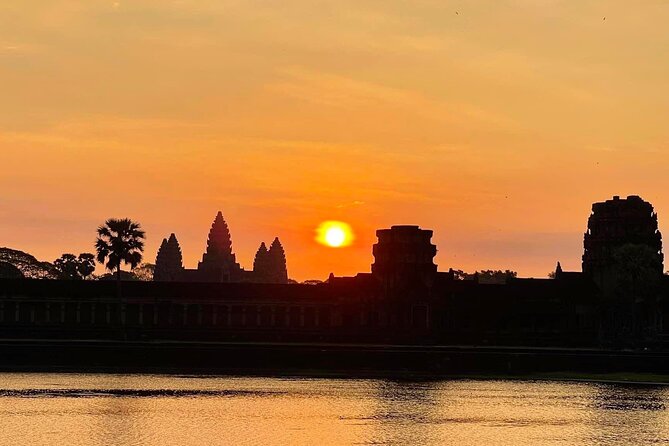
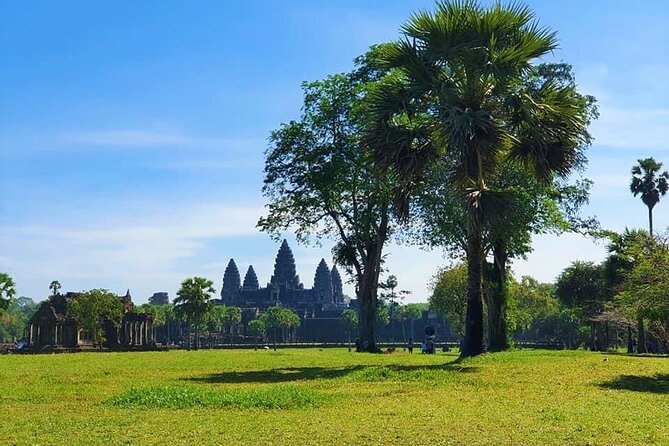
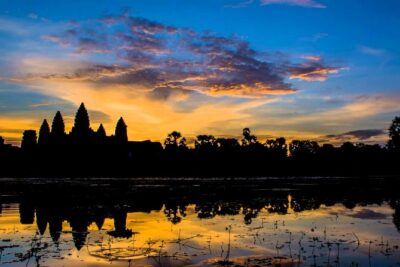
The tour’s whole rhythm starts early, with a morning wake-up at 4:30 for sunrise at Angkor Wat. That timing matters because Angkor Wat is not just a temple, it is the national emblem of Cambodia and the pride of the Khmer people. When the light hits the stone, the geometry becomes dramatic, with five towers visible in general view, and only three apparent from a frontal perspective.
What you’ll like is that the tour does not treat sunrise as a quick photo stop. You get about 2 hours at Angkor Wat, which gives you time to see it as both a grand monument and a place with detail. If you are the type who likes to slow down for stonework, reflections, and the feel of the sacred grounds, this extra time helps.
The one trade-off is also the obvious one: you will need to be ready before you want to be. Wear something light for the morning chill, bring sun protection for later, and plan to be tired in the afternoon. The good news is that the rest of day 1 stays efficient, so you are not wasting energy traveling between far-flung ruins.
Private pickup from Siem Reap, with AC comfort and cool towels
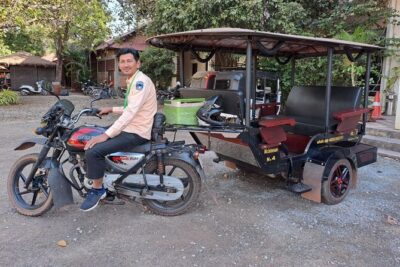
Starting and ending at your hotel is a big quality-of-life win in Siem Reap. This tour includes pickup and drop-off, and you ride in a private vehicle with air conditioning. That sounds like a luxury, but it matters in practice because Angkor days can get hot fast.
You also get practical extras that keep the day from feeling miserable: bottled water and cool towels during the tour. Small touches like that help when you are combining early sunrise walking with a full day of temple steps.
The other comfort factor is the “private” format itself. Only your group participates, which means the driver and guide can keep a steady pace and help with timing. In places like Angkor Wat and Bayon, crowds can still happen, but you are not stuck behind a large bus group rhythm.
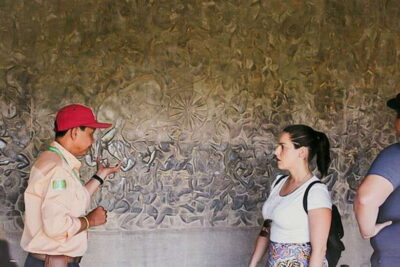
If you care about not losing your bearings, having an official, licensed guide also helps. You are not translating temple meaning from signs, you are getting the story as you walk.
Day 1 Angkor Thom power classics, plus Banteay Kdei and Ta Nei
Day 1 is about Angkor Thom and the core monuments around it. It is also where you see the Khmer visual language most clearly, from causeways with giant sculptures to stacked terraces and face towers.
Angkor Wat at sunrise (about 2 hours)
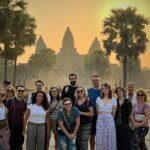
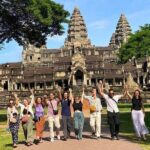
You start with Angkor Wat at sunrise. The tour frames it as more than a postcard temple: it is the national emblem and a source of pride. You’ll have time to look around before the crowds fully settle in, and then you can move on without feeling rushed.
Admission is not included per stop, but the tour notes that the Angkor Pass covers the temples in the itinerary, and your guide will assist you in buying it at the entrance before starting.
Chasing the light? More dawn and dusk runs
Angkor Thom South Gate and the causeway crossing (about 40 minutes)
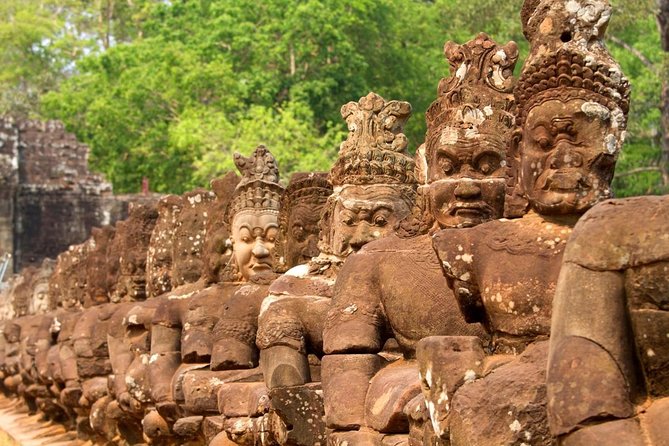
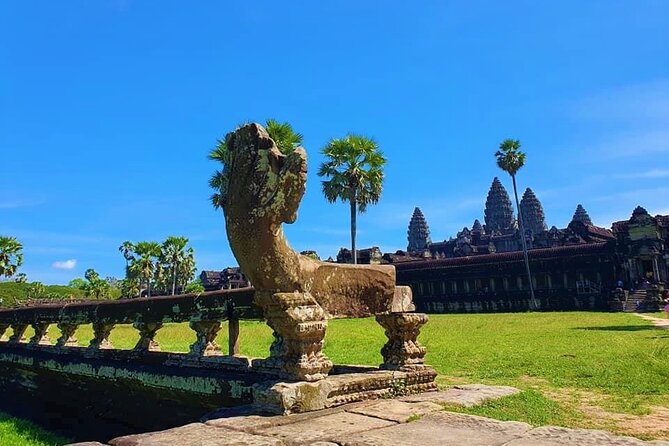
Next comes the Angkor Thom South Gate, with the best-preserved and restored causeway across the moat. The moat is about 100 meters broad, and the railings are formed by rows of giant sculptures. Even if you are not a stone-carving superfan, you’ll feel the scale here.
Practical tip: this stop is great for orientation. Once you see the gate and the moat context, the rest of Angkor Thom makes more sense as a planned city space rather than a random cluster of towers.
Angkor Thom (about 40 minutes)
The tour then spends time in Angkor Thom itself, about 40 minutes. The name means Angkor Big or Capital Great, and the timing is useful: it’s after Angkor was no longer the Khmer capital. That little detail changes how you think about what you are seeing, because it reminds you these were not just monuments for one king’s lifetime.
Bayon Temple (about 1 hour 30 minutes)
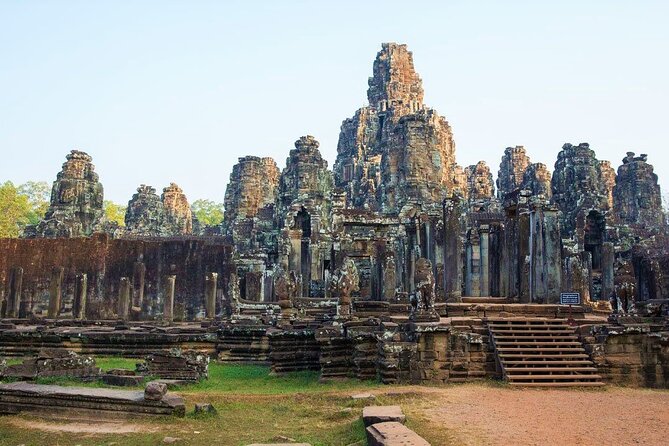
Bayon is built around 1200 A.D. and is second only to Angkor Wat in popularity. The signature feature is the “stone faces,” the enigmatic expressions carved into the temple towers.
This is one of those places where a guide makes a difference. Without context, you can stare at the faces and feel like you are only doing a photo exercise. With context, you start seeing the temple as part of the political and spiritual messaging of the Khmer Empire.
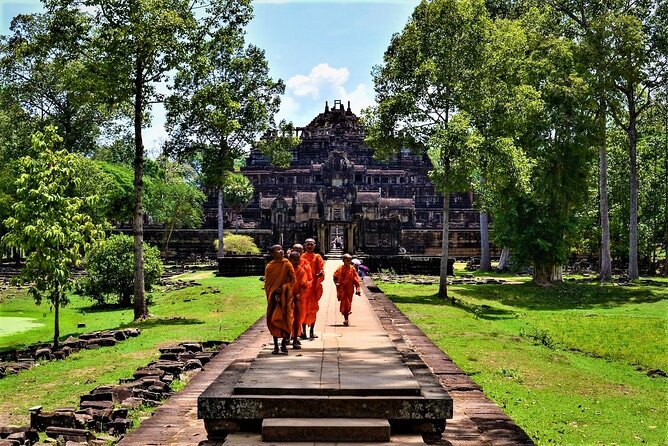
Baphuon (about 1 hour)
The Baphuon sits near Bayon, around 300 meters northwest. It is about 150 years younger than the Bayon complex. The tour positions it as the huge Khmer temple before Angkor Wat, which helps you understand why people still treat it as a landmark.
A consideration here: stone is stone, but steps add up. Pace yourself, and take short breaks instead of pushing through. Your morning energy will be spent by midday if you ignore fatigue.
Phimeanakas (about 20 minutes)
Phimeanakas, sometimes transcribed as Pimeanakas or Vimeanakas, is known as the Aerial Palace or Celestial temple. Even if you only have about 20 minutes, the stop works well because it feels like you are entering a different layer of the royal story.
If you like naming meanings, this one is worth it. The word comes from Sanskrit roots connected to Vimana and Akasha, so the language points to how Khmer rulers borrowed from broader Indian traditions.
Terrace of the Elephants and Terrace of the Leper King (about 30 minutes each)
These two terrace stops give you a break from tower staring and shift you into “read the carvings” mode.
- The Elephant Terrace forms most of the western edge of the Royal Square of Angkor Thom.
- The Leper King Terrace is in the north-west corner of the Royal Square area and is worth seeing and studying for its best-preserved carvings.
Drawback to watch: terraces can be hot and exposed. If the day is bright, bring sun protection and consider resting in shaded moments instead of hopping between carvings for the sake of speed.
Ta Nei (about 50 minutes)
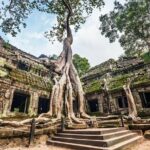
Ta Nei is a late 12th century stone temple, built during the reign of King Jayavarman VII. It is near the northwest corner of the East Baray reservoir, and it was dedicated to the Buddha.
This stop is a nice reminder that Angkor was not only about Hindu temples. Even within a “major temples” itinerary, Ta Nei brings a slightly different religious tone.
Banteay Kdei (about 50 minutes)
Banteay Kdei is easy to find near the junction where the Small Circuit and the Grand Circuit meet, and it sits by the Srah Srang reservoir. The tour includes it as part of the bigger classics day, but it still feels less like a rushed checkbox.
One reason this works for value: you are ticking off a major temple tour route, but adding variety so you are not only repeating the same architectural pattern all day.
Day 2 Banteay Srei, Preah Khan, and Pre Rup: where the vibe shifts
Day 2 feels different because it mixes famous beauty with a broader spread of temple types. You also get more time for stops that people often skip when they only do the absolute highlights.
Banteay Srei (about 2 hours)
Banteay Srei gets a lot of love for good reason. The tour frames it as the most beautiful temple in Cambodia in many people’s minds, especially when compared to even Angkor Wat.
The name Banteay Srei is often discussed with respect, because the temple’s look invites slower attention. You get about 2 hours, which is excellent if you like to stand close and notice craftsmanship instead of just capturing a wide shot.
Banteay Samre (about 50 minutes)
Banteay Samré is about 400 meters east of the East Baray and was built in the early 12th century under Suryavarman II and Yasovarman II. It is a Hindu temple in the Angkorian style.
This stop is useful for comparison. If you saw more Buddhist-feeling temples or different symbols on day 1, Banteay Samre helps you see how the Angkor complex included multiple religious expressions.
Preah Dak Village for souvenirs and arts
You then pause at Preah Dak Village, a popular spot for souvenirs and arts. This is a straightforward add-on, and it can be handy if you want something Cambodian as a keepsake without going out of your way later.
If shopping is not your thing, treat this as a short break and use it to refill water and reset your legs.
Preah Khan (about 1 hour)
Preah Khan was dedicated in 1191 to Jayavarman VII’s father. The central statue was called Jayavarmeshvara, meaning Jayavarman, Lord of the world.
This is a strong “story stop.” It helps you connect the stone to political family lines and the way kings used temple dedication to shape belief and authority.
Neak Pean (about 1 hour)
Neak Pean is described as exceptional because its layout differs from the rest of Khmer architecture. It was a temple on an artificial island in the huge Baray, with a diameter of about 350 meters.
That setting is part of why it works. Even if you already saw big monuments, Neak Pean gives you a different architectural idea, more about composition and water than raw monument mass.
Ta Som and Eastern Mebon (40 minutes and 30 minutes)
- Ta Som is late 12th century, built by King Javayarman VII, and the purpose is unclear. The tour notes it may have been dedicated to the king’s father or a teacher.
- Eastern Mebon is a mountain temple from the 10th century dedicated to Shiva, built by Rajendravarman II.
What I like about this pairing is pacing. Ta Som is a bit shorter, Eastern Mebon is another focused stop. Together they keep day 2 from feeling like one long grind.
Pre Rup (about 1 hour)
Finally, you reach Pre Rup, founded in 961 and tied to Rajendravarman II. The tour presents it as one of the most significant legacies after the early founders.
If you like seeing kings in sequence, Pre Rup helps you feel the arc from early Angkor to later expansions. It is also a good end point because the temple experience shifts from running across many sites to taking in one larger idea.
What you get from the guide and driver, and how to use it
This tour’s standout theme in the feedback is clear communication and careful handling. Names that show up in high praise include Leap and Sara as guides, and Ry, La, Mr Paul, Mr Pheap, and Sophal as drivers.
Here is what that usually means for you, even if your guide is different. First, excellent English skills make the temple meanings stick. Second, drivers who know the pace keep you from wasting time, especially when routes and timing matter.
One more practical detail: some feedback notes the tour felt customisable to preferences. That matters because not every temple lover wants the same tempo. If you want more photo time at Banteay Srei or fewer long stops at terraces, a good guide can adjust.
My advice: ask for one or two things you care about most at the start, like architecture style, religious symbolism, or royal history. Then you can guide your own attention while walking.
Price and logistics: what $149.46 covers, and what to budget for
The tour price is $149.46 per person for roughly 2 days. For that money, you get a lot of the stuff that makes Angkor smoother: hotel pickup and drop-off, a professional licensed guide with excellent English, private AC transfers, bottled water, and cool towels. Service charges and current government VAT are also included.
What is not included is the Angkor Pass entrance fee, which covers the temples on your itinerary. Your guide will help you purchase it at the entrance before you start the day.
Meals are also your own expense. Lunches can be found at local restaurants with both vegetarian and non-vegetarian options, and the menu prices are listed around $3–$10 per dish.
Finally, tipping for the tour guide and driver is not included. Plan for it so you do not feel awkward at the end.
Is it good value? For a private, two-day temple schedule that includes AC comfort and a guide who manages the story, it usually is, as long as you budget for the Angkor Pass and daily meals. If you hate paying extra at attractions and you prefer totally guided everything without buying a pass yourself, then the entrance fee requirement is the one friction point.
Timing, walking, and heat: surviving two action-packed days

Two days in Angkor means two mornings of “early equals better.” Day 1 starts at 4:30 for sunrise. After that, you are in a sequence of temples with stop times that add up, from 20-minute nodes to longer stretches like Angkor Wat and Bayon.
Your comfort strategy matters more than your ambition. Use the AC time between stops to cool down, drink water, and take quick breaks inside shaded areas whenever you can. The terraces and open stone courtyards can be exposed.
Good footwear is not a cute idea here. You will be walking on ancient stone surfaces and taking steps. If you bring sandals, you might regret it by day 2.
Also, bring a small bag you can keep close. In markets like Preah Dak Village, you’ll likely want your essentials without digging.
The good news is that the tour is private, so your guide can control pacing and avoid wasting time.
Who should book this private Angkor Wat sunrise and major temples tour?
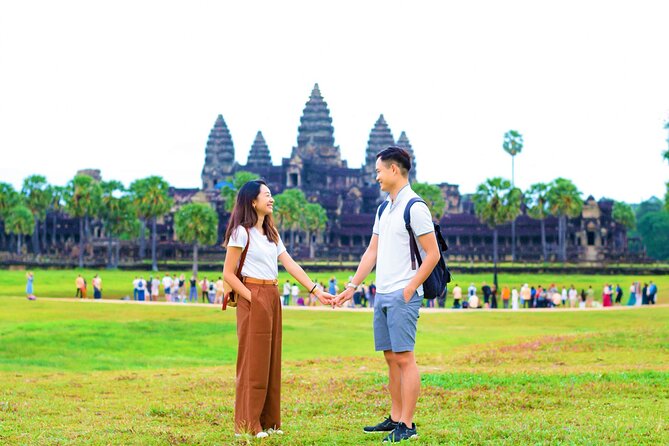
This is a strong fit if:
- you are visiting Siem Reap for the first time and want the biggest monuments without needing to plan every route
- you prefer private, comfortable transport rather than hopping between multiple groups
- you want a mix of headline temples and less visited stops like Ta Nei and Banteay Kdei
- you care about explanation, not just sightseeing
It can also work well for families. Some feedback specifically mentions traveling with young kids and feeling safe, helped by a kind driver and smooth logistics.
If you only want one temple day and you hate early starts, you might feel this is too much. But if you want two days of structure, story, and efficient coverage, this itinerary makes sense.
Should you book it?
I’d book this private 2-day tour if you want Angkor Wat sunrise, a strong guided sequence through Angkor Thom and major monuments, and a second day that broadens the experience beyond the same three photos. The value is in the combination of private AC comfort, hotel pickup, and consistently praised English-speaking guides like Leap and Sara.
If you are on a tight budget and trying to avoid any extra payments beyond the advertised price, factor in the Angkor Pass and daily meals, plus tipping. Once you budget those, the schedule and guide-led storytelling make it a smart way to see a lot of Angkor without the stress.
FAQ
Is hotel pickup and drop-off included?
Yes. The tour includes pickup and drop-off at your hotel. You provide your hotel name for pick up.
Do I ride in a private vehicle?
Yes. Transfers are private and the vehicle has air conditioning.
What about entrance fees for temples?
Entrance fees are not included per stop. You will need the Angkor Pass to cover the temples in the itinerary, and your guide will assist you in purchasing it at the entrance of the Angkor Park.
Is Angkor Wat sunrise included?
Yes. Day 1 includes Angkor Wat at sunrise, with a morning start at 4:30.
Are meals included in the price?
No. Meals are not included. Lunches are available at local restaurants with both vegetarian and non-vegetarian options, and prices are listed around $3–$10 per dish.
Do I need to tip?
Tipping for the guide and driver is not included, so you should plan for that separately.
Can I cancel and get a refund?
Yes. You can cancel up to 24 hours in advance for a full refund, as long as you cancel at least 24 hours before the experience start time.
More Temple Circuits Around Siem Reap
- Angkor Wat Sunrise or Sunset Tour with Guide from Siem Reap
★ 5.0 · 12,109 reviews - Siem Reap: Angkor Wat: Small-Group Sunrise or Sunset Tour
★ 5.0 · 9,444 reviews - Siem Reap: Angkor Wat 2-Day Tour with Sunrise and Sunset
★ 4.9 · 4,429 reviews - Siem Reap: Full-Day Angkor Wat Guided Tour with Sunset
★ 4.9 · 3,803 reviews - Angkor Wat Sunrise tour with Small – Group and Guide tours
★ 5.0 · 3,655 reviews
Dawn and Dusk Over Angkor
- Angkor Wat Sunrise or Sunset Tour with Guide from Siem Reap
★ 5.0 · 12,109 reviews - Siem Reap: Angkor Wat: Small-Group Sunrise or Sunset Tour
★ 5.0 · 9,444 reviews - Sunset tour of Kampong Phluk stilts home village on the Tonle Sap
★ 5.0 · 4,865 reviews - Siem Reap: Angkor Wat 2-Day Tour with Sunrise and Sunset
★ 4.9 · 4,429 reviews - Siem Reap: Full-Day Angkor Wat Guided Tour with Sunset
★ 4.9 · 3,803 reviews
Angkor Wat, a Few More Ways In
- Angkor Wat Sunrise or Sunset Tour with Guide from Siem Reap
★ 5.0 · 12,109 reviews - Siem Reap: Angkor Wat: Small-Group Sunrise or Sunset Tour
★ 5.0 · 9,444 reviews - Siem Reap: Angkor Wat 2-Day Tour with Sunrise and Sunset
★ 4.9 · 4,429 reviews - Siem Reap: Full-Day Angkor Wat Guided Tour with Sunset
★ 4.9 · 3,803 reviews - Angkor Wat Sunrise tour with Small – Group and Guide tours
★ 5.0 · 3,655 reviews
Just Added: Fresh Siem Reap Tour Reviews

Angkor Wat Temple Tours, compared.
 ★ 5.0Angkor Wat Sunrise or Sunset Tour with Guide from Siem ReapFrom $1812,109 reviews
 ★ 5.0Angkor Wat: Small-Group Sunrise or Sunset TourFrom $159,444 reviews
 ★ 4.9Angkor Wat 2-Day Tour with Sunrise and SunsetFrom $344,429 reviews
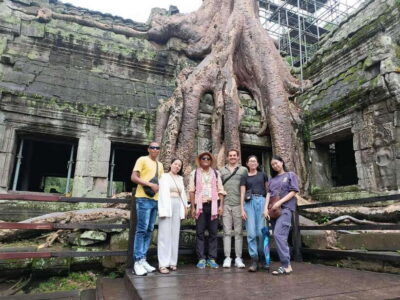 ★ 4.9Full-Day Angkor Wat Guided Tour with SunsetFrom $153,803 reviews
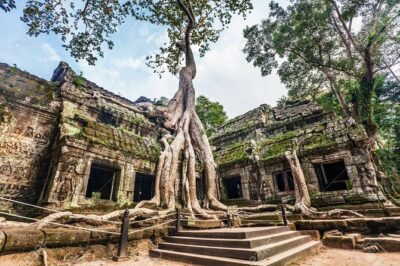 ★ 5.0Angkor Wat Sunrise tour with Small – Group and Guide toursFrom $143,655 reviews
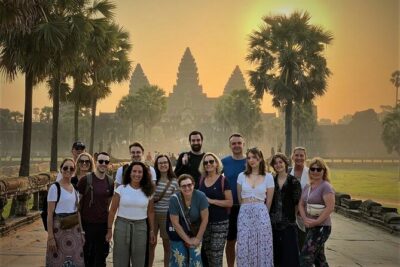 ★ 5.0Angkor Wat Highlights and Sunrise Guided Tour from Siem ReapFrom $233,213 reviews
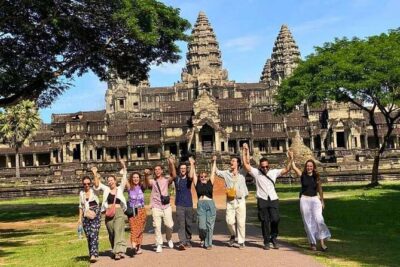 ★ 5.0Angkor Wat Sunset Small Group Tour with Lunch IncludedFrom $203,059 reviews
 ★ 5.0Full-Day Angkor Wat Sunrise Private Tour with Guide from Siem ReapFrom $602,920 reviews
Browse the lists this tour appears in