
Reviewed · ANGKOR THOM & BAYON TOURS
Preah Khan, Ta Prohm, Bayon Off Beaten Track
Three temples, one quieter Angkor day.
This off-beaten track temple trio focuses on sites tied to King Jayavarman VII, pairing big-name atmosphere with a calmer route than the usual circuit.
What I like most is how the day stays simple and smooth. You get bottled water plus a mobile ticket, and you spend your energy on temples, not paperwork. The other big win is the pacing, with specific time blocks at each stop.
One thing to plan for: entrance fees are not included, and you will be walking around for a few hours, so moderate fitness helps.
Key things to know before you go
- Preah Khan first: A 12th-century Royal Sword temple tied to Jayavarman VII and his father, set northeast of Angkor Thom near Jayatataka baray.
- Ta Prohm in full detail mode: Two hours at the Bayon-style complex known today as Ta Prohm, originally called Rajavihar.
- Bayon as your finishing hit: A one-hour stop at Bayon, Jayavarman VII’s state temple, built in the late 12th or early 13th century.
- Private means flexible: It’s just your group, up to 3 people, with a driver and licensed tour guide.
- Practical logistics built in: Pickup is offered, you start at 9:00 am, and you get a mobile ticket.
Back through the south gate to Bayon
- Siem Reap Tour: Angkor Wat Sunrise, Bayon, Ta Prohm, Banteay Srei★ 5.0 · 931 reviews
- Angkor Wat Private Driver Tours to Angkor Wat Sunrise, Angkor Thom & Ta Prohm★ 5.0 · 98 reviews
- Angkor Wat Sunrise and Angkor Thom Sunset Tour★ 5.0 · 89 reviews
- Private Temples Guided Tour (Angkor Wat, Ta Prom & Angkor Thom)★ 5.0 · 75 reviews
A full 8 hours in Siem Reap, without a bus vibe
This is a private half-to-most-of-the-day temple run, clocking in at about 8 hours starting at 9:00 am. You are not tied to a crowded group bus. Your group size is capped at up to 3, which usually means you can move at a pace that feels natural, pause when you want photos, and ask questions without getting squeezed.
You’ll be picked up and routed through three major Angkor-area temples, with time carved out at each site. The temple time is clearly planned: 2 hours at Preah Khan, 2 hours at Ta Prohm, and 1 hour at Bayon. The rest is travel time and the moments in between, like getting oriented, finding shade, and using rest breaks without rushing the spiritual parts.
I also like that it is built for real-world comfort. Water is included, and you should expect a vehicle and guide setup that keeps the day from feeling chaotic. Even if you have never been to Angkor before, the flow is straightforward.
Price and value for a private group of up to 3
The price is $159 per group (up to 3). That is the key number to run in your head. If you fill the group limit, your effective cost drops fast compared to per-person sightseeing deals. Even if it is just two of you, private temple time in Siem Reap can still feel like good value once you factor in transport plus a licensed guide.
Also, look at what is included versus not included so there are no surprises:
- Included: private tour, licensed tour guide, driver, and bottle of water
- Not included: entrance fees and lunch
So yes, the headline price is attractive, but you still need a temple budget for entry. The good news is that the guide and driver handle the temple sequencing, so you’re paying for a plan, not just a ride.
If you hate standing in ticket lines or you want someone to steer you away from the most frustrating crowd patterns, this format makes sense. It is a smarter use of a limited day than trying to assemble temple hops on your own.
Stop 1: Preah Khan, the Royal Sword temple near Jayatataka baray
You start with Preah Khan, which literally ties to the idea of the Royal Sword. The temple was built in the 12th century for King Jayavarman VII, honoring his father. That royal backstory matters, because it changes how you read the place. You are not just looking at stones. You are looking at a statement of power, devotion, and family memory.
This stop is scheduled for 2 hours, and it is located in a specific, helpful part of the Angkor area: northeast of Angkor Thom, and just west of the Jayatataka baray. If you like temples that feel set into a wider historical landscape, this positioning is a plus. You’re also starting the day with one of the “serious” sites before you move into the more widely photographed complexes.
What to do with your time here:
- Focus on the temple’s Jayavarman VII connection. Your guide can frame what to notice based on that context.
- Take your time moving around instead of sprinting for the highlights. Preah Khan’s meaning is in the bigger picture, not only the postcard angles.
- Use the early timing. Starting at 9:00 am usually gives you a steadier morning rhythm than rushing later when you’re tired.
Potential drawback: because Preah Khan is your first stop, you’ll want to be mentally ready for a bit of walking early in the day. If you arrive underpacked, you will feel it by hour two.
Stop 2: Ta Prohm’s Rajavihar roots and Bayon-style atmosphere
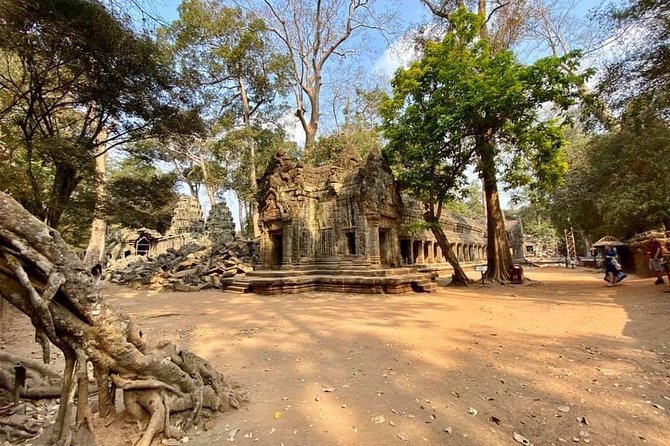
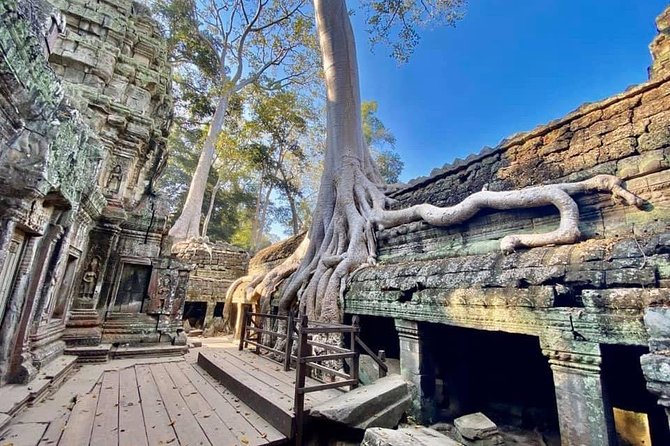
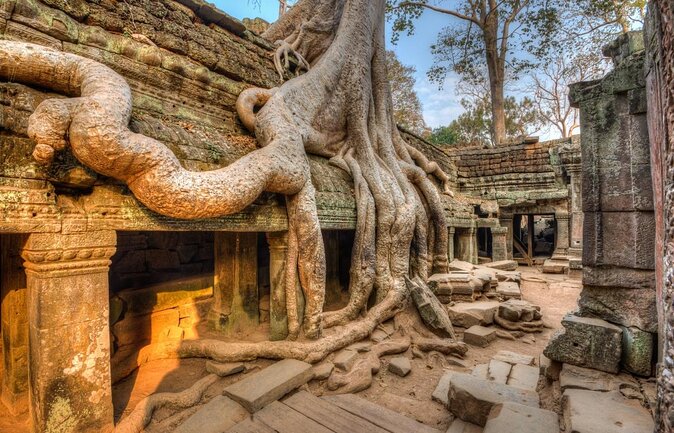
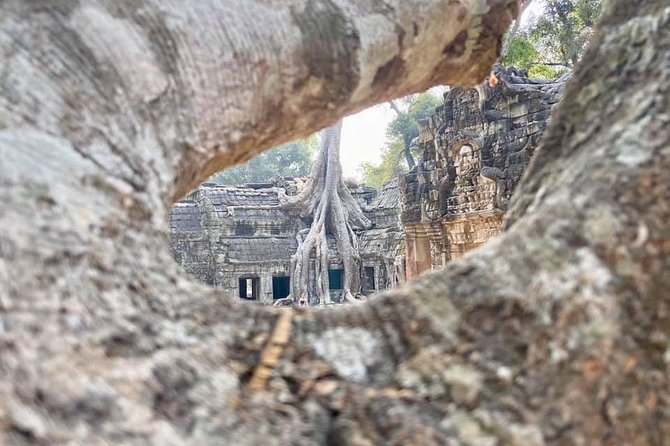
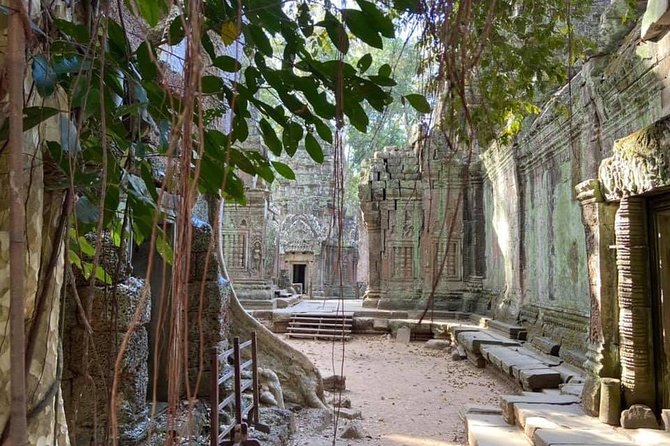
Next up is Ta Prohm, a temple with a name you hear constantly, and a story you should not skim. Ta Prohm is the modern name, and it’s tied to the meaning ancestor of Brahma. Originally, it was called Rajavihar. This stop is set for 2 hours, so you have time to slow down.
Ta Prohm is also described as being built in the Bayon style, with construction largely in the late 12th and early 13th centuries. That matters because it connects this temple to the broader Jayavarman VII period. Even if you do not have temple terminology memorized, your guide can translate what that style and timing mean while you’re on site.
Why this stop works well in this specific trio:
- You get contrast. Preah Khan leads with the Royal Sword and its geographic setting. Ta Prohm brings the Bayon style identity into focus.
- Two hours is a practical amount. If you rush, you only see shapes. If you pace it, you see how the temple’s age and design choices shape the experience.
How I suggest you approach Ta Prohm:
- Plan on taking a few structured photo stops, then put the camera away for a while and just look.
- Ask your guide for the meaning behind the Rajavihar name and the ancestor of Brahma reference. Those details give your time there a stronger narrative.
- Stay mindful of heat and shade. Two hours sounds fine until you are standing still too long. Keep moving in small bursts, rest when you can.
The only real consideration here is simple: Ta Prohm can be a magnet for visitors, even on “off-beaten” routes. Your best defense is staying patient and letting your guide time your slower moments.
More of the tree-choked ruins

Stop 3: Bayon temple, a state temple that ends the day cleanly
You finish with Bayon Temple (listed as Prasad Bayon in the description). It is a richly decorated Khmer temple built in the late 12th or early 13th century. Most importantly for context, it served as the state temple of the Mahayana Buddhist King Jayavarman VII.
Bayon is scheduled for 1 hour. That shorter time block can feel perfect if you’ve already spent the morning and early afternoon soaking in temples. It works like a closing chapter, so you do not burn out before the end of the day.
What makes Bayon a good ending point in this route:
- It caps the day with Jayavarman VII’s state-temple role, giving a clear thematic payoff after Preah Khan and Ta Prohm.
- You have less time pressure than if it were your first stop. If your legs are tired, you can still enjoy the temple without feeling like you missed everything.
Practical tip for the last hour: keep it focused. Decide what you want from Bayon before you walk in. If your goal is atmosphere and details, you can slow down. If your goal is understanding and orientation, ask your guide to point out the big ideas quickly so you leave with meaning, not just photos.
Your guide and driver, what actually makes this feel smooth
This tour includes a licensed tour guide and a driver, and that pairing is exactly what makes temple days easier than self-guided hopping. A licensed guide can connect the dots between what you see and the temple’s timeframe and purpose. A driver removes the friction of navigating between scattered sites.
One name stands out in the feedback tied to this provider: Panha. When a guide like Panha is involved, people describe the experience as feeling secure, and they highlight practical things like punctual pickup and helpful local guidance. They also mention a flexible, friendly approach, which matters when your day is outdoors and the plan has to adapt to your pace.
Even if you do not get the same person, the pattern is what you’re paying for: a guide who can handle history in a way you can use on your walk, and a driver who keeps you on schedule.
Also worth noting: you get bottled water included. It sounds small, but on a warm Angkor day it keeps you from having to scramble for a drink between temples. That little bit of planning makes a surprising difference.
How to pace 5 hours of temple time without burning out
You’re looking at about 5 hours of scheduled time inside the three temple stops (2 + 2 + 1). Add travel time and breaks and you get the full 8-hour day. That is enough for a meaningful visit, but it is not so long that you lose the ability to enjoy what you’re seeing.
The tour notes a moderate physical fitness level is recommended. I treat that as permission to plan smart:
- Wear supportive shoes. You’ll be on uneven ground at Khmer temple sites.
- Bring sun protection. Even if you get shade, you also need protection for the unshaded stretches.
- Use the water early, not only when you feel thirsty.
Food is not included. You also should plan a lunch strategy even if the day feels structured. If lunch is part of your comfort plan, check what you can do near your route, but build the budget since lunch is listed as not included.
Mobile ticket is included via mobile ticket delivery. That usually means less waiting, but it also means you should keep your phone charged and easy to access. If you rely on low battery mode, fix that before you leave.
When to go, and why a 9:00 am start can help
The tour is designed around daytime temple visits starting at 9:00 am. I like this timing for a simple reason: it gives you the morning momentum to make the day feel efficient, without needing an ultra-early start.
That said, “best time to visit temples” depends on what you care about most: heat, crowd levels, and the light for photos. Since the tour markets an approach meant to avoid the worst tourist crowds, you’re choosing a route strategy as much as you’re choosing a clock time.
Here is how I’d play it:
- If your priority is comfort, arrive ready with sun gear and take the breaks your body asks for.
- If your priority is photos, you’ll still want to be flexible. Some spots are best at certain angles, but the best shots usually happen when you are not rushing.
- If your priority is meaning, treat the guide like a translator. Ask questions at the first temple, then you’ll “get” the second and third faster.
The route is built around three top Angkor-area temples. Even with an off-beaten track angle, you are still in one of the world’s most visited heritage zones. Your goal is not emptiness. Your goal is a visit that feels organized and not stressful.
Should you book this Preah Khan, Ta Prohm, Bayon off-beaten track tour?
Book this if you want a private, structured temple day without getting stuck on entrance logistics. The combination of licensed guide, driver, bottled water, and a mobile ticket keeps the day feeling doable. The specific temple trio also gives you a cohesive Jayavarman VII theme, so the temples connect instead of feeling like random stops.
I’d pass or at least think twice if you want a fully self-paced day with zero walking. This is still a temple walk day, and the tour signals that moderate fitness is helpful. Also budget for entrance fees and plan for lunch since neither is included.
If you are traveling as a couple or small group and you want your time to feel efficient, this is a strong choice. You get the famous names, but the route approach aims to make the day feel calmer and more intentional.
FAQ
How long is the tour?
The tour is listed as approximately 8 hours.
Which temples are included?
You visit Preah Khan, Ta Prohm, and Bayon.
What time does the tour start?
The start time is 9:00 am.
Is pickup included?
Pickup is offered, and the meeting point is at Prince Angkor Hotel & Spa.
Are entrance fees included?
No. Entrance fee is not included, and tickets are not included for each stop.
Is lunch included?
No. Lunch is not included.
What does the price cover?
The price includes a private tour, licensed tour guide, driver, and bottle water for the group (up to 3). Entrance fees and lunch are extra.
What is the meeting point?
The tour starts at Prince Angkor Hotel & Spa, Sivutha Bulvard B05, Sivatha Blvd, Sivatha Rd, Krong Siem Reap 93136, Cambodia, and ends back at the meeting point.
Can I cancel and get a refund?
Yes. You can cancel for a full refund if you cancel at least 24 hours before the experience starts.
Is the tour suitable for everyone?
The tour notes that travelers should have a moderate physical fitness level.
Along the Grand Circuit
- Siem Reap: Banteay Srei and Grand Circuit Heritage Tour
★ 4.9 · 163 reviews - Banteay Srei and Grand Circuit Heritage Tour from Siem Reap
★ 5.0 · 142 reviews - 2-Day Private Tour in Angkor Wat Grand Circuit
★ 5.0 · 23 reviews - Angkor Grand Circuit Temples Tour
★ 5.0 · 8 reviews - Preah Khan, Neak Pean and Pre-Rup Private Tour
★ 5.0 · 7 reviews
Ta Prohm and the Roots
- Siem Reap Tour: Angkor Wat Sunrise, Bayon, Ta Prohm, Banteay Srei
★ 5.0 · 931 reviews - Angkor Wat Private Driver Tours to Angkor Wat Sunrise, Angkor Thom & Ta Prohm
★ 5.0 · 98 reviews - Private Temples Guided Tour (Angkor Wat, Ta Prom & Angkor Thom)
★ 5.0 · 75 reviews - One Full Day Private tour of Angkor Wat, Ta Prohm, Angkor Thom & Banteay Srie
★ 5.0 · 64 reviews - Siem Reap Private Day Tour: Angkor Wat Sunrise, Bayon & Ta Prohm
★ 5.0 · 48 reviews
Through Angkor Thom to Bayon
- Siem Reap Tour: Angkor Wat Sunrise, Bayon, Ta Prohm, Banteay Srei
★ 5.0 · 931 reviews - Angkor Wat Private Driver Tours to Angkor Wat Sunrise, Angkor Thom & Ta Prohm
★ 5.0 · 98 reviews - Angkor Wat Sunrise and Angkor Thom Sunset Tour
★ 5.0 · 89 reviews - Private Temples Guided Tour (Angkor Wat, Ta Prom & Angkor Thom)
★ 5.0 · 75 reviews - One Full Day Private tour of Angkor Wat, Ta Prohm, Angkor Thom & Banteay Srie
★ 5.0 · 64 reviews
Just Added: Fresh Siem Reap Tour Reviews
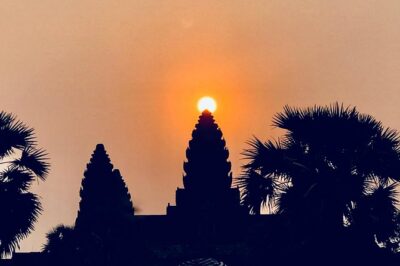
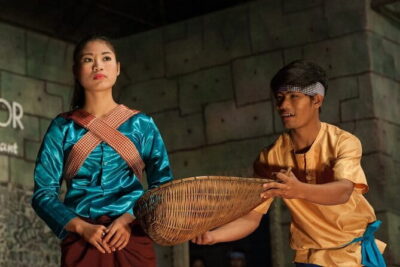
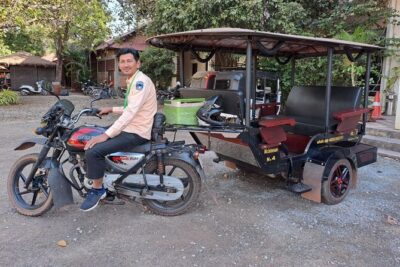
Angkor Thom & Bayon Tours, compared.
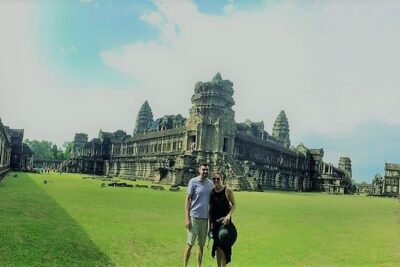 ★ 5.0Siem Reap Tour: Angkor Wat Sunrise, Bayon, Ta Prohm, Banteay SreiFrom $130931 reviews
 ★ 5.0Angkor Wat Private Driver Tours to Angkor Wat Sunrise, Angkor Thom & Ta ProhmFrom $5998 reviews
 ★ 5.0Angkor Wat Sunrise and Angkor Thom Sunset TourFrom $5989 reviews
 ★ 5.0Private Temples Guided Tour (Angkor Wat, Ta Prom & Angkor Thom)From $7575 reviews
 ★ 5.0One Full Day Private tour of Angkor Wat, Ta Prohm, Angkor Thom & Banteay SrieFrom $7564 reviews
 ★ 5.0Siem Reap Private Day Tour: Angkor Wat Sunrise, Bayon & Ta ProhmFrom $10048 reviews
 ★ 5.0Angkor Wat & Bayon: the Smiling TempleFrom $5047 reviews
 ★ 5.0Unveiling Angkor Wat Sunrise, Bayon, Ta Prohm In Small Group TourFrom $1828 reviews
Browse the lists this tour appears in