
Reviewed · ANGKOR WAT TEMPLE TOURS
Guided Private Tuk Tuk Tour Angkor Wat and Small Circle and Five Extras
Early starts change Angkor for the better.
This private 11-13 hour tuk tuk day packs two Angkor Wat visits into the best light and adds a stack of smaller temples that most people skip. I love the two different Angkor Wat experiences plus the way an English-speaking guide keeps you moving temple to temple. One thing to plan for: the Angkor Ticket is not included and you need it for each temple stop.
You also get a driver who stays parked while you explore with the guide, so you are not splitting your attention between navigation and site reading. Still, this is an intense schedule, including a 3.5 km hike and some steep temple stairways, so you will want comfortable shoes and a steady pace.
Key highlights that make this tour work
- 6:30 am start for calmer temple time and better photos at Angkor Wat
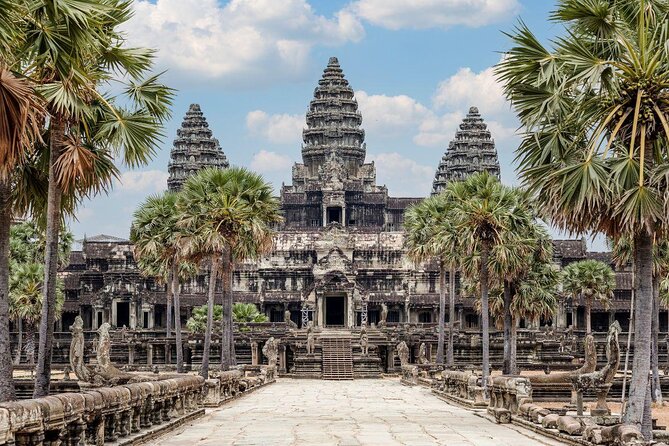
- Two Angkor Wat visits, morning from the East Gate and late-day reflection views
- Guide-led stops with the driver waiting, so you do not feel rushed or lost
- Five added temple-style extras, including a jungle-feeling, lesser-known Ta Nei
- Angkor Thom on foot, with a 3.5 km stretch and major gates built into the route
Other ways to walk the great temple
- Angkor Wat Sunrise or Sunset Tour with Guide from Siem Reap★ 5.0 · 12,109 reviews
- Siem Reap: Angkor Wat: Small-Group Sunrise or Sunset Tour★ 5.0 · 9,444 reviews
- Siem Reap: Angkor Wat 2-Day Tour with Sunrise and Sunset★ 4.9 · 4,429 reviews
- Siem Reap: Full-Day Angkor Wat Guided Tour with Sunset★ 4.9 · 3,803 reviews
Why this 6:30 am private tuk tuk day feels different
Most Angkor days feel either too crowded early or too rushed later. This one flips the script by starting at 6:30 am. You get into Angkor Wat in the morning when the air is usually cooler, the light is softer, and the first wave of visitors has not fully taken over yet.
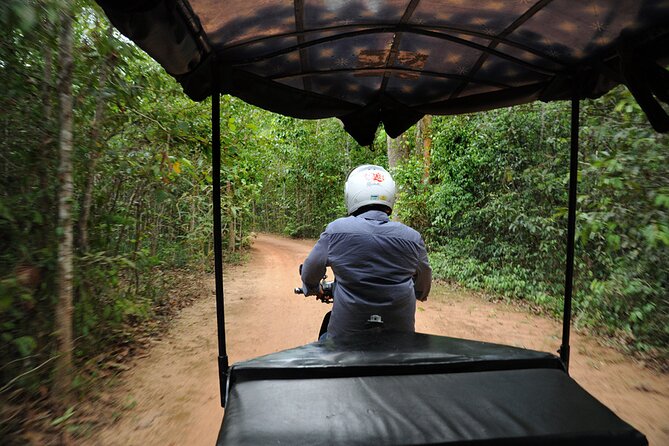
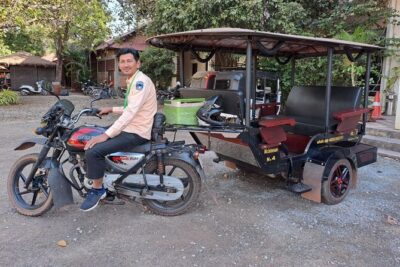
The private setup also matters. You are not sharing a bus schedule or hoping somebody else’s pace matches your interests. With a driver and a licensed English-speaking Angkor guide, you get both mobility and context. The driver stays with the tuk tuk at each site car park, while the guide brings the meaning, the symbolism, and the quick wayfinding so you spend your energy looking, not figuring out where to go next.
This tour is not a lazy sightseeing loop. It is a full temple day, with jungle paths, a hike, and some stair climbing. If you like your days structured and your notes full, this format fits well.
Price and value: what $59 covers, and what you must budget
The tour price is $59.00 per person, and it includes private transportation, an English-speaking driver, and a licensed English-speaking Angkor guide. You also get a mobile ticket for the tour activity, which is handy on a day you will be ticket-spotting at multiple checkpoints.
What is not included is the big one: your Angkor Ticket. This ticket is required for the temples along the route, and the listed option is 1 day for 37 US dollars per person. You will also want to plan for lunch, since lunch is not included in the tour price. The good news is that the itinerary builds your lunch-break around Srah Srang, where multiple restaurant choices are available.
How I think about the value: paying for a guide for 11 to 13 hours plus private transport can be cost-effective when you compare it to paying for separate tickets, short visits, and multiple stops without interpretation. The “extra” temples are not just there to add time. They help you see Angkor as a system, not a single photo op.
The big idea: Angkor Wat twice, on purpose
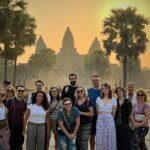
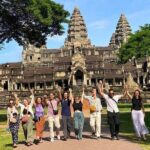
You visit Angkor Wat two times, and that is the smartest part of this whole plan. The morning stop is about atmosphere and access, while the late-day stop is about light and reflections.
First, you enter from the East Gate, which is less frequented than the famous West Gate. You still get to see Angkor Wat from the West Gate later in the morning, but starting from the East means you get that calm, open feeling right when the site is waking up. The guide also helps you pace it so you do not just walk the route, you understand what you are looking at.
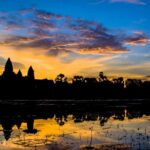
Then you return later for a second chance. The itinerary highlights the late afternoon for photos of the towers mirrored in the temple ponds and moats. That second visit is not just repeat sightseeing. It is your chance to compare the same monuments under different light, without rushing and without missing the best angles.
If you only have one day in Angkor, this double-visit approach is a practical win. It gives you flexibility when the morning clouds cooperate and when the late sun turns on.
East Gate morning: what to expect when Angkor Wat first opens
On the morning entry, you are taken to a quieter starting point and brought into the complex in the best early light. Even if you have seen Angkor Wat photos a hundred times, arriving in person can still surprise you. The scale hits first, then the details come through with time.
This is a tour where timing is doing work for you. Because you start at 6:30 am, you get to experience Angkor Wat before the hardest crowd crush. That helps you take in the layout at a human pace and stop where you want, instead of getting pulled along by the slowest-moving group in front of you.
Practical note: wear something you can move in. Angkor Wat is not a quick stop, even when the guide keeps things efficient. If you want good photos, you need a bit of standing, walking, and waiting for light.
More temple circuits, set side by side
Prasat Kravan and Bat Chum: brick carvings and inscriptions you can actually read
After Angkor Wat, the tour shifts to smaller temples that feel like you are traveling back in time without the heavy visitor pressure.
At Prasat Kravan, you will see five towers arranged in a line. The key feature here is the brickwork carvings, described as unusually large. The point is not just aesthetics. These carvings help you understand how different materials and techniques express different artistic ideas across Angkor.
Then comes Prasat Bat Chum, a smaller spot with three towers on a shared platform. The big draw is the large inscriptions. The guide’s interpretation matters because inscriptions can look like random text if nobody explains what you are seeing. In this case, the inscriptions point to a period where Buddhism had taken route in Angkor.
These two stops are short, but they are smart. You get a break from the massive, iconic sites and you see the “supporting cast” that makes Angkor feel whole.
Srah Srang lunch-break: animal terraces and a real reset
Next you hit Srah Srang, with a terrace decorated by animal sculptures. The itinerary also calls out that Srah Srang is not a Baray. It is a smaller artificial basin, deepened artificially, which helps you understand how Khmer water features varied, depending on their function and design.
This is also where lunch-break fits. You are given the chance to eat at nearby restaurants, so you can choose what feels easiest rather than being locked into one meal plan. If you would rather break from the default, the driver can drop you at another location, but it would involve agreeing to pay him for extra kilometers.
How to make this work for you: use the break to reset your feet and hydrate. After the morning temples, you will be ready for the jungle-and-walk part of the day.
Banteay Kdei, Ta Prohm, and Ta Nei: jungle textures in three different moods
Now the tour turns into the “Cambodia in the green” side of Angkor.
Banteay Kdei is described as the smaller sister of Ta Prohm, but it is still a big complex. The layout is labyrinth-like, so the guide becomes more than a history channel. He helps you move through the structure without getting stuck. This is one of those temples where you can wander for an hour and still feel like you only saw part of it. With the guide, you get orientation fast.
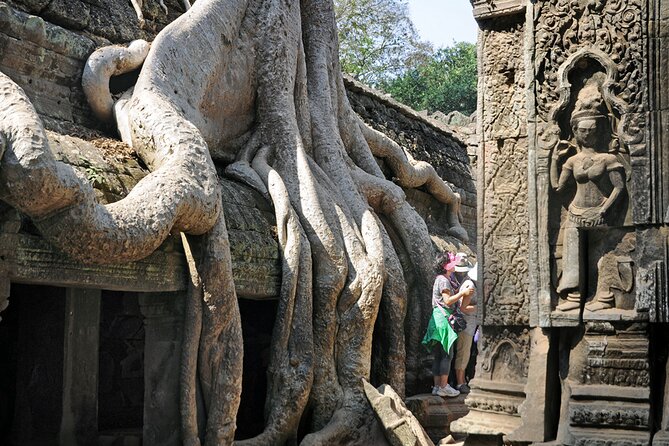
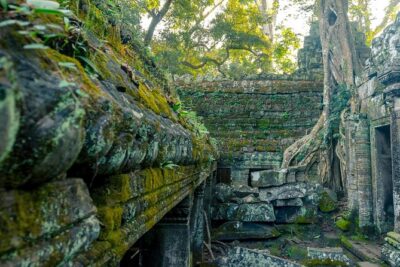
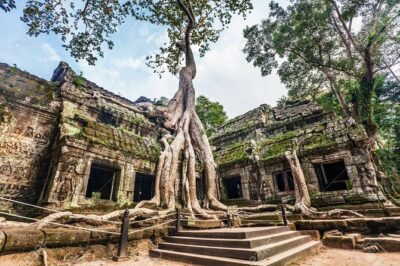
Then you reach Ta Prohm, the world-famous jungle temple. It is all about the huge strangler figs swallowing the stone. Take your time here. The itinerary gives you more time than most stops, and that is because rushing ruins the whole point. You want to pause and look at how the roots and branches have shaped the spaces around you.
Finally, Ta Nei is the contrast. It is still hidden, reached on gravel roads, which is exactly why many people do not find it. The ruins can give you that Indiana Jones feeling, because the path feels less like a paved attraction and more like a discovery. This stop is shorter, but it is the one that makes the day feel like more than a checklist.
If you get tired, this is where you should slow down and let the guide’s pacing do the heavy lifting. Jungle sites can sap energy fast.
Ta Keo and Spean Thma: steep stairs and a late-Angkor stone bridge stop
Ta Keo is a former state temple and an artificial mountain in stepped pyramid form. The important detail is practical: the stairs to the upper platform are extraordinarily steep. That steepness is not just a minor challenge. It affects how long you can comfortably spend up at the top, and it can make you feel rushed if you do not plan your pace.
Then you get Spean Thma, a photo stop for a stone bridge from the late Angkor period. The description includes a useful context lesson: the construction used carved stones taken from earlier temples. The riverbed also shifted east over time, so the bridge sits in a landscape that is not the one its builders knew.
This is a good moment to take a few photos and regroup before the next cluster of temples. It also breaks up the more intense walking with a lighter stop.
Chau Say Tevoda, Thommanon, and Mangalartha: the quieter temples that reward attention
After Spean Thma, the tour moves through three medium-to-small sites that make the day feel curated, not just crowded.
Chau Say Tevoda is charming and medium-sized, with an impressive processional route from the east. You also get pediment carvings with mythological themes. This is where a guide really helps. Carvings are hard to interpret at a glance, but with quick explanations you start noticing repeated patterns and themes.
Thommanon is the sister temple to Chau Say Tevoda. It is from the Angkor Wat period, and its towers share the style you recognize from Angkor Wat. If Angkor Wat is the big anchor, this stop is how you see echoes of it in a smaller setting.
Then Mangalartha is one of the later stone temples in Angkor. It sits on a steep, tiered platform and is described as one of the very last temples built of stone in the region. It is also rarely visited, which is exactly why it works as an “end-of-the-circuit” breather before Angkor Thom’s walk.
These three stops are shorter, but they reward attention. You get symbolism, style comparisons, and a feeling that you are seeing the full Angkor system, not just the poster monuments.
Angkor Thom on foot: Victory Gate, East Gate solitude, and the 3.5 km hike
The Angkor Thom portion is a highlight because it blends gates, walls, and on-the-ground walking. You are not just looking from the outside. You are moving through the city’s geometry.
You start with the Victory Gate, the second eastern gate of Angkor Thom. The itinerary includes climbing the wall for a view toward the southern giant face of the gate. This is one of those moments where you get a “diagram view,” then a “street-level view,” if the guide times it right.
Next is Angkor Thom with a focus on the lonesome East Gate. The itinerary notes that there is no road leading to it, which is why it feels like a surprise highlight rather than a standard crowd stop. You are looking for that moment where Angkor still feels remote.
Then the tour includes a 3.5 km hike through Angkor Thom to lonesome sites, including Prasat Chrung on the city walls. There are four temples called Prasat Chrung, and the route focuses on the southeastern one as the best preserved. That preservation detail matters. It helps you see the carvings and structure more clearly, which you feel in person as you walk the wall line.
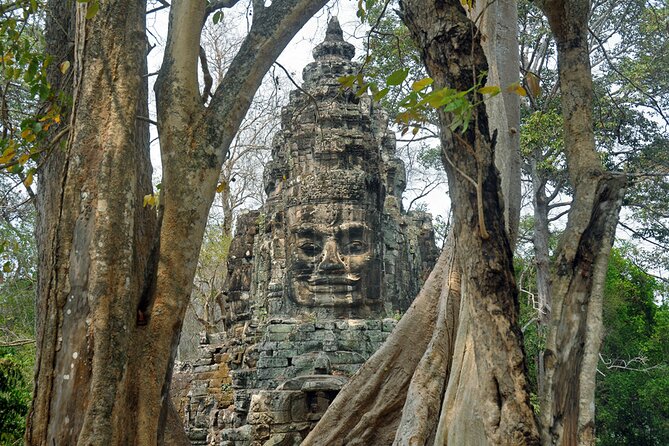
Finish this city circuit at the South Gate of Angkor Thom. The face tower and the railings with rows of giant statues depicting demons and gods are a must-see. This is one of the clearest “wow” moments in the whole day, and it is paired with walking so you are warmed up for the big visuals.
Practical tip: save energy for the hike. If you push too hard early, Ta Keo steep stairs and jungle paths can stack fatigue. Drink water at Srah Srang and keep a steady tempo on the wall walk.
Late-afternoon Angkor Wat, Wat Thmey, and your return to Siem Reap
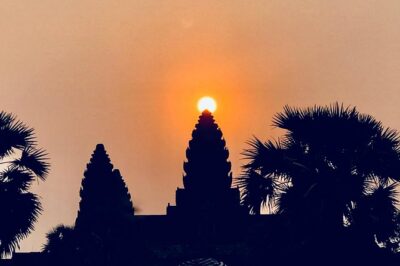
After the Angkor Thom walk and gates, the itinerary brings you back to Angkor Wat for a late-afternoon photo window. This is when the guide helps you focus on the angles that catch the towers with pond and moat reflections. It is the kind of light that makes you understand why everyone keeps photographing Angkor, even after seeing it once.
Then the day adds Wat Thmey (Killing Fields). This stop is shorter but meaningful. You will see a small memorial stupa for victims of the Khmer Rouge, plus photo boards showing images of some of those killed here. There is also a large prayer hall in the open grounds.
Finally, you end in Siem Reap, with drop-off described as either back at the meeting point or at your hotel or another point in town centre. If you care about where you end your day, decide early and tell the driver where you want to land.
Should you book this private Angkor tuk tuk tour?
Book it if you want an Angkor day that is efficient without feeling frantic. The two Angkor Wat visits alone give this tour a structure that many half-day or single-visit plans lack. Add the guide-led pacing, the driver waiting at each car park, and the mix of major gates plus smaller temple stops, and it becomes a good choice for first-timers and return visitors who still want variety.
Skip or reconsider if you dislike long days or if steep stairways and a 3.5 km walk sound like a struggle. This is also not the best fit if you are hoping the Angkor Ticket and lunch are baked into the price, because those are separate costs.
If you like your temples with context, your photos with better light, and your itinerary built around fewer crowds, this is a solid way to spend your Angkor time.
FAQ
What time does the tour start?
The tour starts at 6:30 am.
How long is the tour?
It runs for approximately 11 to 13 hours.
Is pickup included?
Pickup is offered. There is also a listed meeting point near Little Pub St in Siem Reap.
Are entrance tickets included?
No. You need an Angkor Ticket for the temple visits, and it is not included in the tour cost. The listed price is 37 US dollars per person for a 1-day ticket.
Is the tour private?
Yes. This is a private tour, so only your group participates.
What languages do the driver and guide speak?
Both the driver and the guide are English-speaking, with the guide listed as a licensed English-speaking Angkor guide.
Is lunch included?
Lunch is not included. You will have a lunch-break at Srah Srang, where there are restaurants available.
Can the driver drop you somewhere else instead of the default lunch area?
The driver can drop you to another location if you agree to pay for the extra kilometre.
Is Wat Thmey included, and is it free?
Yes. Wat Thmey (Killing Fields) is included and listed as free.
The Temples by Tuk-Tuk
- Siem Reap: Angkor Wat Private Tuk-Tuk Tour
★ 4.9 · 2,222 reviews - Siem Reap Countryside Bike Tour / E-Bike or Tuk Tuk
★ 5.0 · 935 reviews - Angkor Sunrise Bike Tour / E-Bike or Tuk Tuk
★ 5.0 · 615 reviews - Angkor Wat Private Tuk-Tuk Tour (sunrise Option) & more
★ 5.0 · 439 reviews - Old Siem Reap Sunset Food Tour by Tuk-tuk
★ 5.0 · 311 reviews
More Temple Circuits Around Siem Reap
- Angkor Wat Sunrise or Sunset Tour with Guide from Siem Reap
★ 5.0 · 12,109 reviews - Siem Reap: Angkor Wat: Small-Group Sunrise or Sunset Tour
★ 5.0 · 9,444 reviews - Siem Reap: Angkor Wat 2-Day Tour with Sunrise and Sunset
★ 4.9 · 4,429 reviews - Siem Reap: Full-Day Angkor Wat Guided Tour with Sunset
★ 4.9 · 3,803 reviews - Angkor Wat Sunrise tour with Small – Group and Guide tours
★ 5.0 · 3,655 reviews
Angkor Wat, a Few More Ways In
- Angkor Wat Sunrise or Sunset Tour with Guide from Siem Reap
★ 5.0 · 12,109 reviews - Siem Reap: Angkor Wat: Small-Group Sunrise or Sunset Tour
★ 5.0 · 9,444 reviews - Siem Reap: Angkor Wat 2-Day Tour with Sunrise and Sunset
★ 4.9 · 4,429 reviews - Siem Reap: Full-Day Angkor Wat Guided Tour with Sunset
★ 4.9 · 3,803 reviews - Angkor Wat Sunrise tour with Small – Group and Guide tours
★ 5.0 · 3,655 reviews
Just Added: Fresh Siem Reap Tour Reviews

Angkor Wat Temple Tours, compared.
 ★ 5.0Angkor Wat Sunrise or Sunset Tour with Guide from Siem ReapFrom $1812,109 reviews
 ★ 5.0Angkor Wat: Small-Group Sunrise or Sunset TourFrom $159,444 reviews
 ★ 4.9Angkor Wat 2-Day Tour with Sunrise and SunsetFrom $344,429 reviews
 ★ 4.9Full-Day Angkor Wat Guided Tour with SunsetFrom $153,803 reviews
 ★ 5.0Angkor Wat Sunrise tour with Small – Group and Guide toursFrom $143,655 reviews
 ★ 5.0Angkor Wat Highlights and Sunrise Guided Tour from Siem ReapFrom $233,213 reviews
 ★ 5.0Angkor Wat Sunset Small Group Tour with Lunch IncludedFrom $203,059 reviews
 ★ 5.0Full-Day Angkor Wat Sunrise Private Tour with Guide from Siem ReapFrom $602,920 reviews
Browse the lists this tour appears in