
Reviewed · ANGKOR WAT TEMPLE TOURS
Full-Day private Tour in Lost City & Angkor Wat from Siem Reap
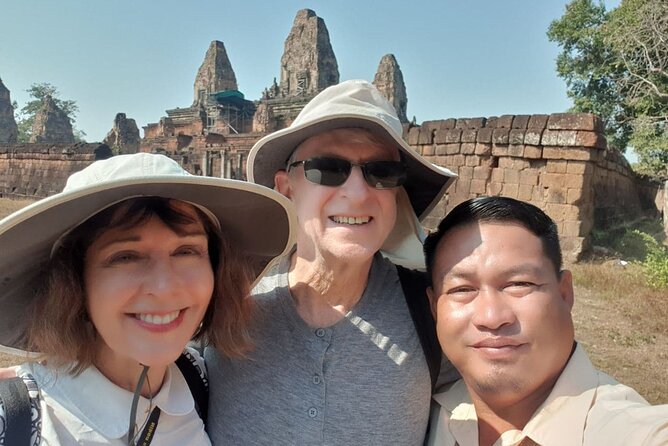
Angkor Wat has a way of resetting your brain. This private full-day plan keeps things moving with hotel pickup and an expert guide, plus smart route choices like entering Angkor Wat from the eastern side and threading through temple paths that feel less packed.
I especially like that the day is built around story, not just sightseeing, with bas-reliefs and temple layout explained as you walk. I also like the flexibility I’ve heard described from guides like Sim, who will adjust the order or timing when you need a breather. My one caution: the Angkor Wat admission fee is not included, so you’ll still pay that extra when you get your e-ticket link.
Key things to know before you go
- Eastern-side entry at Angkor Wat: Less tourist traffic, and a more atmospheric start.
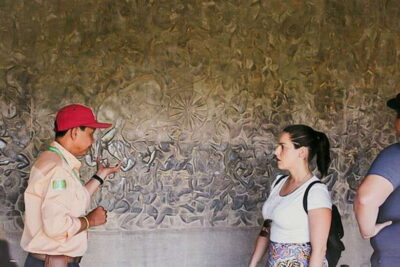
- A guide who ties stone to meaning: Bas-reliefs and myths get explained as you’re standing there.
- Angkor Thom in a tight route: South Gate, Bayon faces, and major terraces in one day.
- Photo stops built into the flow: You’re not rushed through every temple corner.
- Ta Prohm as the emotional peak: Jungle-framed ruins that feel different from the rest of Angkor.
Other ways to walk the great temple
- Angkor Wat Sunrise or Sunset Tour with Guide from Siem Reap★ 5.0 · 12,109 reviews
- Siem Reap: Angkor Wat: Small-Group Sunrise or Sunset Tour★ 5.0 · 9,444 reviews
- Siem Reap: Angkor Wat 2-Day Tour with Sunrise and Sunset★ 4.9 · 4,429 reviews
- Siem Reap: Full-Day Angkor Wat Guided Tour with Sunset★ 4.9 · 3,803 reviews
A practical private route that helps you beat the chaos
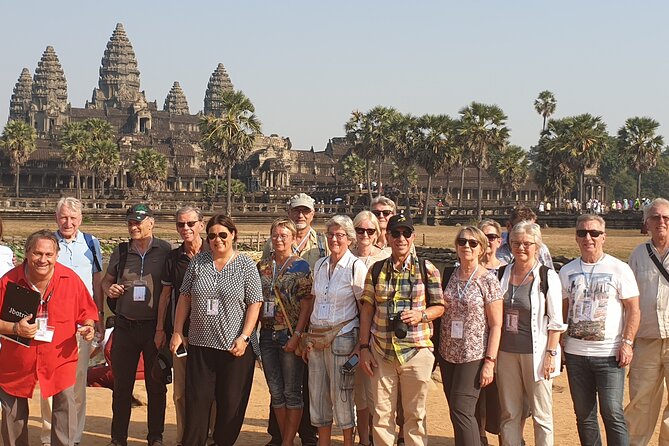
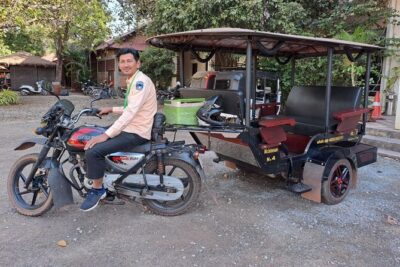
This is a private tour, so you’re not sharing your day with a random mix of strangers. You’ll ride in a comfortable vehicle with hotel pickup and drop-off, plus bottled water to make the long hot stretches easier. The total time is about 8 hours, which matters because Angkor is big, and fatigue can creep in fast.
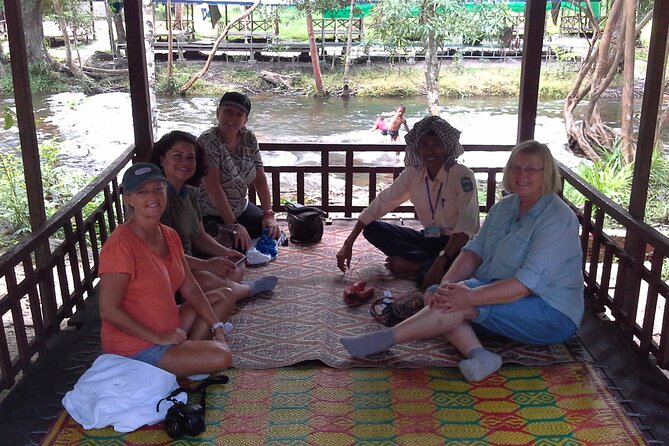
One thing I’d copy from how guides handle this route is the rhythm: walk, pause, listen, then look again. When the guide points out why a temple was built the way it was, the “same old ruin” suddenly feels specific. And based on real-world feedback, guides like Sim can also be flexible if humidity hits hard or if you simply need to slow down.
There’s also a clear attempt to reduce the worst crowd moments. You’ll start at Angkor Wat from a side that’s described as less visited, and the itinerary spends time away from the most obvious paths. That doesn’t erase heat, but it can make the day feel more human.
Angkor Wat from the eastern side: bas-reliefs and upper terraces
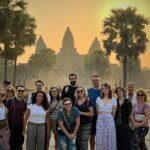
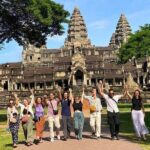
Angkor Wat is the anchor of the whole day, and your plan gives it a strong start. You’ll enter through the less-visited eastern side, which is a big deal for your experience because you get a quieter approach before the temple opens up.
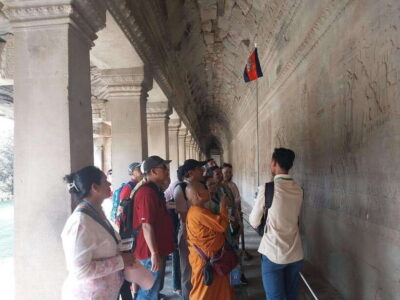
From there, expect a mix of walking and “hold up, look at this” moments. You’ll creep through a jungle path toward the North ancient library pool, and the guide uses that movement to set context before you hit the main structures. This is also where you start getting the bas-relief story line. The carvings are described as the longest stretch of bas-relief carvings in the world, so you’ll want to pace yourself rather than try to read everything like a textbook.
A good guide makes the central chambers more than architecture. You’ll spend time venturing into the central areas where the guide connects history, myths, and stone imagery. Then you’ll move up toward the upper terraces, which is the part where you stop thinking of Angkor Wat as a single building and start thinking of it as a layered worldview, designed for movement from one sacred level to another.
Two practical notes for this section:
- Wear clothing that meets the knee and shoulder rule for sacred areas. Casual is fine, but plan ahead.
- Bring the right mindset for humidity. If you get tired, slow down. The tour is designed to be guided, not just marched.
Angkor Thom South Gate: the countdown of faces begins
After Angkor Wat, you head to the South Gate of Angkor Thom, where the scale suddenly feels civic. This gate is one of five entrances to Angkor Thom, the ancient Khmer capital city, and it’s flanked by rows of 54 stone figures on each side.
Your time here is short, about 20 minutes, but that can be perfect. This is where you quickly get oriented. The gate is described as a very popular spot in the Angkor area, so treat this stop as a focused “look, understand, move” moment rather than an extended wandering session.
Then the day naturally funnels you toward Bayon, and the faces start. If you’re the kind of person who likes patterns, this is your payoff: from stone guardians at the gate to the tower faces that cluster around Bayon’s central peak.
Bayon and the 200 faces: myth, history, and daily life
Bayon is where Angkor Thom feels most personal. It’s the 13th-century state temple of King Jayavarman VII, and its signature feature is the multitude of serene smiling stone faces on towers across the upper terrace.
The plan gives you about an hour, which is the right amount of time. You’ll see the central towers with more than 200 enormous faces, then you’ll also get the bas-reliefs on the temple walls. What I like about having both outer and inner gallery bas-reliefs explained is that it changes how you read the scene. The outer wall bas-reliefs cover historical events and everyday life of the Angkorian Khmer, while the inner gallery focuses more on mythological events. You’re not just looking at decoration, you’re learning what kind of message you’re looking at.
Also, the faces do more than look cool in photos. They anchor your attention. When you know there’s more than one layer of storytelling, the faces stop being a visual gimmick and start being a navigational tool for meaning.
More temple circuits, set side by side
Baphuon, Phimeanakas, and palace-temple logic
After Bayon, you’ll move to Baphuon, located northwest of Bayon within Angkor Thom. Baphuon is described as a three-tiered temple mountain built in the mid-11th century, and it’s tied to royal and palace space. The size details are useful because they help you understand why the structure feels so commanding even after centuries: roughly 34 meters tall without its tower, which would have made it close to 50 meters when complete.
You’ll get about an hour here, and the guide’s job is to help you connect what you see to what it represented. The material notes a fascinating perspective from a historical visitor, Chou Ta-kuan, an envoy of Temür Khan, who compared Bayon to a Tower of Gold and Baphuon to a Tower of Bronze. Even if you never quote it aloud, it’s a useful way to picture how the temples looked to outsiders at the time.
Next is Phimeanakas, described as the celestial temple, also known as Vimeanakas. This sits inside the walled enclosure of the Royal Palace of Angkor Thom. Expect a different kind of experience here: less about dramatic faces, more about pyramid structure and royal space. The temple is said to have been built at the end of the 10th century during Rajendravarman’s reign, then completed by Suryavarman I in the form of three tier pyramids with a tower at the top.
This stop is valuable because it reminds you that Angkor was not one temple, it was a whole system. You’re seeing how kings and religion and urban planning were tied together.
Terrace of the Elephants: ceremonies and a giant stand
The Terrace of the Elephants is one of the more “event-like” stops. It runs about 350 meters long and was used as a giant reviewing stand for public ceremonies and as a base for the king’s grand audience. Some local Khmer residents call it the Ancient Khmer Stadium, which is a handy mental picture even if you don’t know the original ceremony details.
You’ll spend about 40 minutes here. That’s enough time to notice the length, the purpose, and the way the terrace works as a stage. What I like about this stop in a guided context is that it shifts the day from “what does it look like” to “what was this for.” It’s easy to treat Angkor as static ruins, but terraces like this remind you they were designed for crowds and power.
Terrace of the Leper King: the story behind the name
The Terrace of the Leper King is next, also about 40 minutes. It’s a U-shaped structure, and it’s thought by some sources to have been used as a royal cremation site. The name most visitors hear today comes from a later 15th-century sculpture that was found at the site.
This is the kind of stop where the guide matters because the “name” is not the whole story. The sculpture is described as depicting the Hindu god Yama, the god of death. So even if you don’t spend a long time reading, you’ll walk away understanding why the terrace carries such a charged vibe.
One practical tip: take your time around the edges. Terraces reward slow looking because you’ll notice how the structure frames views and how visitors tend to drift toward the most obvious spot. A guided route helps you see more of it without feeling lost.
A couple of short pauses inside Angkor Thom
You’ll have a couple of brief stops inside Angkor Thom, each around 10 minutes. These are described as secret or hidden-feeling destinations, and the point is less about adding another famous building and more about changing your perspective.
I like these micro-pauses because they keep the day from turning into a checklist. When you’re doing Angkor Wat plus Bayon plus Ta Prohm all in one day, your attention can burn out. A short “stop, look, reset” moment can make the next temple feel fresh instead of exhausting.
Ta Prohm: the jungle frame that changes the mood
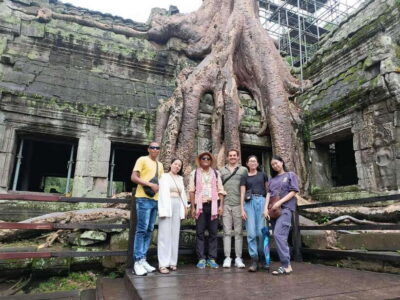
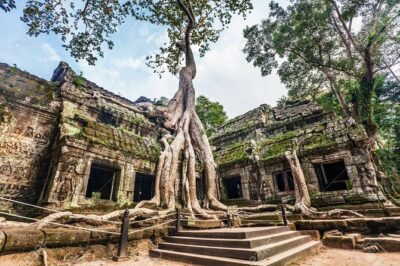
Ta Prohm is where the day shifts. This is the jungle-enveloped temple often associated with Tomb Raider, and it’s described as one of Angkor’s most atmospheric sites.
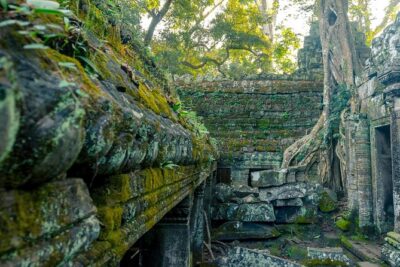
You’ll spend about an hour here, and that hour feels justified because the temple doesn’t behave like a straight-line photo stop. The ruins are tangled with large trees and roots, and the contrast between stone and jungle is what makes it so memorable. You’ll still see what you came for, but you’ll also get the right kind of wandering, the slow look that feels natural.
Ta Prohm is a 12th or 13th-century temple, described here as built in the 13th century, and it was part of a larger Khmer university setup in the 12th and 13th centuries. That academic link gives the place more than “movie ruin” energy. The plan also notes UNESCO inscribed it in 1992, and that it’s one of the most visited complexes in the Angkor region today.
For me, the key value is mood. Ta Prohm feels less like a display and more like a living scene. If you only visited Angkor Wat and Bayon, you might think the whole region is about geometry and formality. Ta Prohm reminds you that time in the jungle is also a kind of storyteller.
Price and logistics: what $30 gets you, and what it does not
At $30 per person, this tour can be strong value if you want a guided day without the hassle of coordinating everything yourself. What’s included is meaningful: an English speaking guide, a private comfortable vehicle, hotel pickup and drop-off, and bottled water.
Where the math changes is the Angkor Wat admission fee, which is explicitly not included. The good news is that your guide sends a link to purchase the entrance e-ticket days in advance, so you’re not scrambling at the gate with wet hands and bad sunglasses.
Also, the tour is private, so your group size matters. If you’re traveling with friends or family, private can feel less like a splurge and more like a smart way to protect your pace. The guide can help you slow down at the right corners, and based on feedback from guides like Sim and Rith, they can even adjust the order if the day starts to feel too long or the weather turns.
What to wear and how to set yourself up for a good pace
Angkor is about walking, sun, and sudden humidity. The tour gives you the right basics, like bottled water and a vehicle to move between sites, but your body still does the work.
Plan for:
- Knees and shoulders covered for some sacred places. Casual clothing is fine, just make sure you follow the rule where needed.
- Flat shoes that are comfortable for walking. The temples involve uneven stone and lots of steps.
- A flexible mindset. Guides in this route are known for letting you move at your own pace, which can be the difference between a great day and a temple-weary one.
If you want to copy what works from past experiences, aim for a realistic pace at Angkor Wat and Bayon. Those two areas demand attention, and if you burn all your energy there, Ta Prohm may feel like one more stop instead of the highlight.
Who this private Angkor tour suits best
This tour is ideal if you:
- Want a guided, English speaking day that explains what you’re seeing.
- Like the idea of fewer-crowd timing choices, like entering Angkor Wat from the eastern side.
- Prefer private comfort and flexibility over rigid group schedules.
- Are okay with a full day, about 8 hours, including walking between major temples.
If you’re very sensitive to heat or you want minimal walking, you might find the day demanding. In that case, consider whether you want a lighter route, or talk to your guide early about slowing down.
Should you book this Lost City and Angkor Wat private tour?
Book it if you want a well-paced Angkor day that combines major temples with real explanations, and you value private comfort from hotel pickup to drop-off. The $30 price can be fair value when you factor in the guide, vehicle, and water, but treat the Angkor Wat admission fee as an extra you’ll need to plan for.
Skip it if you dislike structured itineraries and prefer to wander without a guide. Angkor works best with context, and this route is clearly built to provide it, from bas-reliefs to royal terraces to Ta Prohm’s jungle mood.
FAQ
FAQ
Is Angkor Wat admission included in the tour price?
No. The Angkor Wat admission fee is not included. Your guide will send you a link to purchase the temple entrance e-ticket days in advance.
How long is the private tour?
It runs for about 8 hours (approx.).
Do I get hotel pickup and drop-off?
Yes. The tour includes hotel pick up and drop off.
Is the guide English speaking?
Yes. The tour includes an English speaking tour guide.
Is this tour private or shared?
It’s private. Only your group will participate.
What temples are included?
The tour covers Angkor Wat, Angkor Thom South Gate, Bayon, Baphuon, Phimeanakas, the Terrace of the Elephants, the Terrace of the Leper King, and Ta Prohm, plus brief additional stops inside Angkor Thom.
What should I wear at the temples?
For some sacred places, you need to wear clothes that cover your knees and shoulders. Casual clothes or other clothing are fine if they meet that requirement.
What shoes do you recommend?
Wear flat shoes that are comfortable for walking.
Is bottled water included?
Yes. Bottled water is included.
What is the cancellation policy?
You can cancel for free up to 24 hours in advance for a full refund.
Just Your Group: Private Days
- Full-Day Angkor Wat Sunrise Private Tour with Guide from Siem Reap
★ 5.0 · 2,920 reviews - Siem Reap: Angkor Wat Private Tuk-Tuk Tour
★ 4.9 · 2,222 reviews - Angkor Wat Private Day Tour from Siem Reap
★ 5.0 · 834 reviews - Angkor Wat Private Tuk-Tuk Tour (sunrise Option) & more
★ 5.0 · 439 reviews - Private Angkor Wat Day Tour – Best of Angkor
★ 5.0 · 269 reviews
More Temple Circuits Around Siem Reap
- Angkor Wat Sunrise or Sunset Tour with Guide from Siem Reap
★ 5.0 · 12,109 reviews - Siem Reap: Angkor Wat: Small-Group Sunrise or Sunset Tour
★ 5.0 · 9,444 reviews - Siem Reap: Angkor Wat 2-Day Tour with Sunrise and Sunset
★ 4.9 · 4,429 reviews - Siem Reap: Full-Day Angkor Wat Guided Tour with Sunset
★ 4.9 · 3,803 reviews - Angkor Wat Sunrise tour with Small – Group and Guide tours
★ 5.0 · 3,655 reviews
Angkor Wat, a Few More Ways In
- Angkor Wat Sunrise or Sunset Tour with Guide from Siem Reap
★ 5.0 · 12,109 reviews - Siem Reap: Angkor Wat: Small-Group Sunrise or Sunset Tour
★ 5.0 · 9,444 reviews - Siem Reap: Angkor Wat 2-Day Tour with Sunrise and Sunset
★ 4.9 · 4,429 reviews - Siem Reap: Full-Day Angkor Wat Guided Tour with Sunset
★ 4.9 · 3,803 reviews - Angkor Wat Sunrise tour with Small – Group and Guide tours
★ 5.0 · 3,655 reviews
Just Added: Fresh Siem Reap Tour Reviews

Angkor Wat Temple Tours, compared.
 ★ 5.0Angkor Wat Sunrise or Sunset Tour with Guide from Siem ReapFrom $1812,109 reviews
 ★ 5.0Angkor Wat: Small-Group Sunrise or Sunset TourFrom $159,444 reviews
 ★ 4.9Angkor Wat 2-Day Tour with Sunrise and SunsetFrom $344,429 reviews
 ★ 4.9Full-Day Angkor Wat Guided Tour with SunsetFrom $153,803 reviews
 ★ 5.0Angkor Wat Sunrise tour with Small – Group and Guide toursFrom $143,655 reviews
 ★ 5.0Angkor Wat Highlights and Sunrise Guided Tour from Siem ReapFrom $233,213 reviews
 ★ 5.0Angkor Wat Sunset Small Group Tour with Lunch IncludedFrom $203,059 reviews
 ★ 5.0Full-Day Angkor Wat Sunrise Private Tour with Guide from Siem ReapFrom $602,920 reviews
Browse the lists this tour appears in