
Reviewed · ANGKOR WAT TEMPLE TOURS
Four-day tour Angkor Wat, Banteay Srey, Beng Melea and Siem Reap discovery
Angkor rewards patience, and this route helps. I like how this four-day private setup uses an English guide such as Sa or Praim Hear to explain Hindu and Buddhist meaning as you walk, and I also love that the schedule aims for crowd management while you get a big-day look at Angkor Wat near the end. The main tradeoff is simple: entrance tickets and meals are not included, so your real total will be higher than the base price.
What makes it feel worth it is the mix of famous monuments and real Cambodian life. You get temple-mountain views, pink-stone carvings, a day trip toward the countryside, and a visit to Tonle Sap at Kompong Phluk, then you finish with museum time and a hands-on craft stop.
Key highlights you should care about
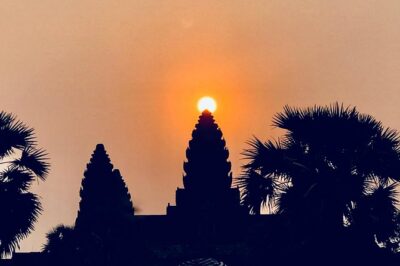
- Sunset planning around Angkor Wat: the itinerary is built to give you time for those late-day temple views
- Story-first temple touring: an English guide like Sa or Praim Hear helps the carvings make sense, not just look impressive
- Banteay Srei’s pink stone artistry: it’s treated as a prime stop, not an afterthought
- Beng Mealea’s explorer vibe: the “lost temple” feel comes from its more secluded location
- Kompong Phluk and Tonle Sap life: a look at how people live around the lake beyond the Angkor core
- Art and context off-site: Angkor National Museum plus Artisan D’Angkor rounds out the day
Other ways to walk the great temple
- Angkor Wat Sunrise or Sunset Tour with Guide from Siem Reap★ 5.0 · 12,109 reviews
- Siem Reap: Angkor Wat: Small-Group Sunrise or Sunset Tour★ 5.0 · 9,444 reviews
- Siem Reap: Angkor Wat 2-Day Tour with Sunrise and Sunset★ 4.9 · 4,429 reviews
- Siem Reap: Full-Day Angkor Wat Guided Tour with Sunset★ 4.9 · 3,803 reviews
Why this 4-day Angkor Wat and Siem Reap mix actually makes sense
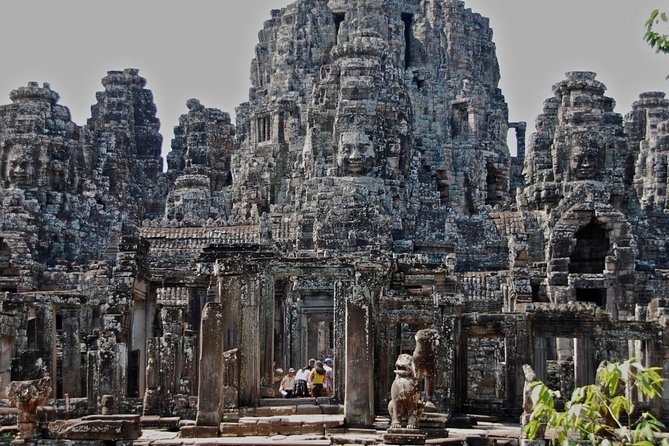
This tour works because it matches how most first-timers process Angkor. On day one you start with the big, instantly recognizable faces and silhouettes. By day two and three, the temples become more specific, more detailed, and more spread out, so you see how the Khmer world functioned across different sites.
I also appreciate the balance between walking intensity and variety. Some stops are temple compounds that let you linger. Others are longer drives or more rugged ruins, so you are not doing the exact same style of visit all four days.
Most importantly, the format is built around a guide-led flow. When your guide can explain what you are looking at, you spend less time guessing and more time noticing details like the layout, the symbolism, and the historical overlap between Hindu and Buddhist eras.
Price and value: what $202.57 covers, and what you must budget for
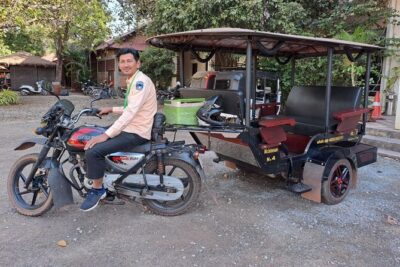
You’re paying about $202.57 per person for a four-day private experience (duration listed as approximately four days). What’s included is practical: an air-conditioned vehicle, an English tour guide, and cold water plus cold towels.
What is not included is equally important: entrance ticket fees and meals (breakfast, lunch, dinner). That means the headline price is only part of your budget. To judge value, think like this: you’re paying for someone to handle routing, guiding, and transport, while you cover on-site admissions and food.
Because this is a private tour, you can also expect the schedule to be shaped around your pace. Many people find that especially useful at Angkor, where getting lost or arriving at the wrong time can turn a great day into a hot, crowded shuffle.
How pickup, timing, and crowd control shape your day
Start time is 8:30 am, and the early start matters. You’ll be driving between sites, and the difference between arriving earlier versus later can be huge in comfort and photography.
The tour also makes crowd avoidance part of the plan. The guide tries to manage the visit schedule as best as possible to avoid peak crowds, which is exactly what you want when you are trying to enjoy stone carvings without shoulder-to-shoulder traffic.
One more practical win: the vehicle is air-conditioned and you get cold water and towels. Those small details matter on multi-stop days, especially if you are walking under strong sun.
Day 1: South Gate to Ta Prohm roots, then Angkor Wat for late-day magic
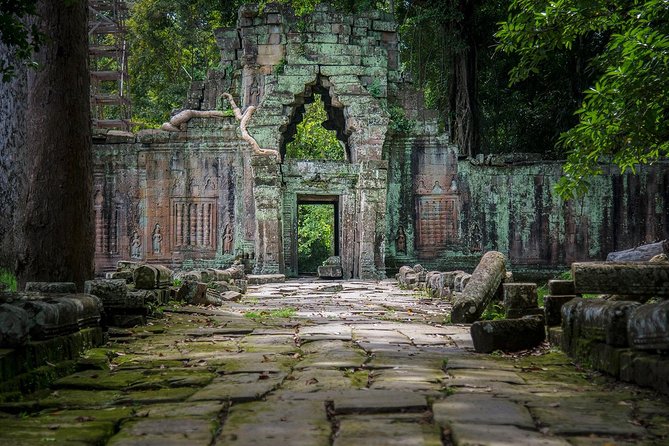
Day one is a strong launch pad into the Angkor style. You begin at the South Gate of Angkor Thom, then move through some of the most iconic ruins before finishing at Angkor Wat.
More temple circuits, set side by side
Bayon Temple and the South Gate of Angkor Thom
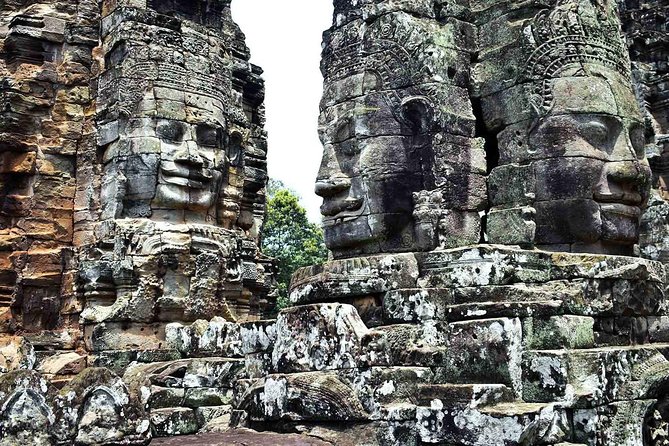
The day starts at Bayon as part of the Angkor Thom area. You’ll see the famous face towers, and the descriptions here matter: Angkor Thom was originally made up of 54 towers and 216 faces of Avalokesvara. When you understand that before you get there, it feels less random and more intentional.
Practical tip: plan on standing still for a few minutes and looking up. From ground level the faces can blur into a pattern, but with a pause you start seeing the repetition and placement.
Ta Prohm, the jungle temple feel
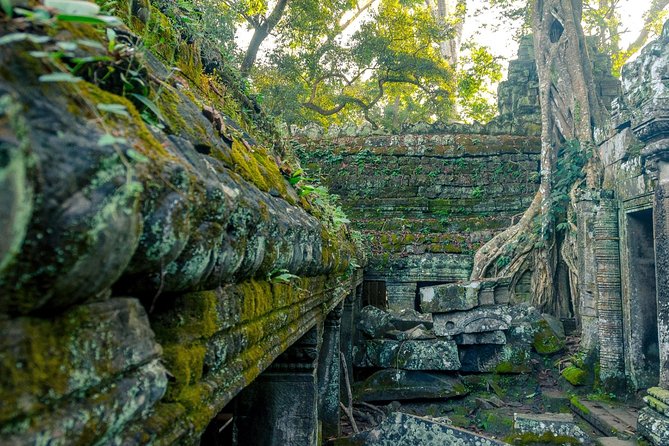
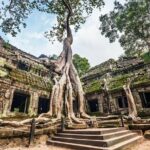
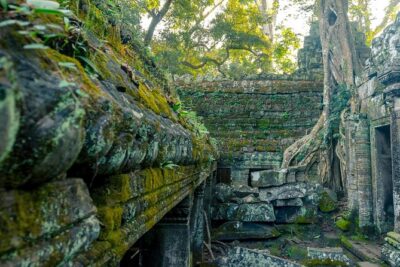
Next is Ta Prohm, known as the jungle or tree temple because of the massive roots holding parts of the ruins. This is the stop where many people realize Angkor is not only about perfect symmetry, it’s also about how nature takes over stone.
This is also where a guide’s storytelling helps most. The more your guide connects the site to broader Khmer timelines and religious shifts, the more Ta Prohm becomes more than a photo backdrop.
Banteay Kdei as a quieter contrast
You then visit Banteay Kdei, built under King Jayavarman VII in the late 12th century. It’s a nice counterbalance after Ta Prohm, because it feels more about temple structure and precinct design than survival-of-the-jungle drama.
Angkor Wat to close the day
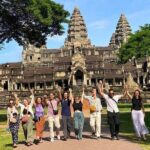
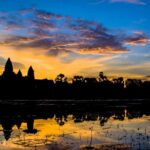
You end at Angkor Wat, with about three hours allocated. Since the tour is designed to finish with sunset over Angkor Wat and surrounding temples, this is where the day’s pacing pays off. You are not just ticking off a famous name, you’re aiming for the softer light when carvings look sharper and the atmosphere feels more dramatic.
Possible drawback: three hours at Angkor Wat is a lot if you’re tired. If you hate rushing, pace yourself and take breaks, even if it feels tempting to keep walking until sunset is done.
Day 2: Kbal Spean river carvings, Banteay Srei pink stone, and the water-temple trio
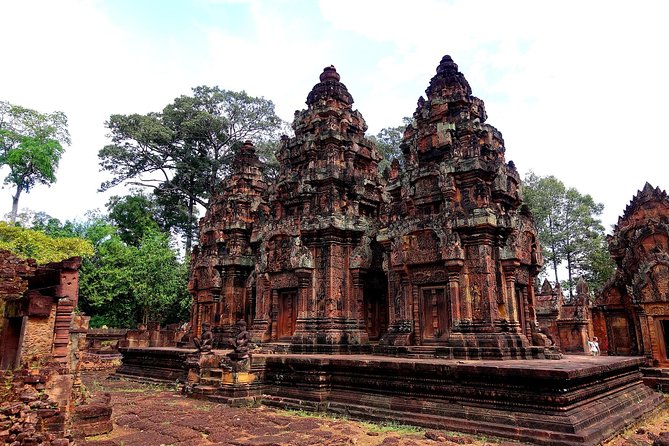
Day two is where the tour shifts from the Angkor core to a wider Khmer geography. The day includes Kbal Spean, then returns toward the main temple area for Eastern Mebon, Neak Pean, and Preah Khan.
Kbal Spean and the river of 1,000 lingas
Kbal Spean comes first, with around four hours set aside. This is the place with carvings under the water showing Vishnu and Brahma gods, tied to the river known as the 1,000 lingas.
This stop is special because it expands your idea of Angkor. It’s not only temples built from stone, it’s sacred meaning attached to a natural site and water flow.
Practical consideration: this area can require more walking and time than you expect. Wear comfortable shoes and plan to be flexible with how long you stay at specific viewpoints.
Banteay Srei: the jewel in pink stone
Then you head to Banteay Srei about one hour from Siem Reap, with around two hours here. Banteay Srei is described as the jewel in Angkorian art, cut from a pinkish stone, and known for some of the finest Angkorian carvings.
If you like detail, this is the stop you’ll remember. When a guide points out what to look for, you’ll notice how the stonework and motifs relate to the religious themes you’ve been hearing about since day one.
Eastern Mebon, the temple-mountain style
Next is Eastern Mebon, a large temple-mountain-like structure inside the wider Angkor area. With about one hour, it’s a shorter visit, but it helps round out how different temple forms were used.
Neak Pean, a temple on an artificial island
You then visit Neak Pean, rising three levels and crowned by five brick towers. It sits on an artificial island in the middle of the last Baray, described here as an ancient water reservoir.
This stop stands out because it ties temple architecture to water planning. Even if you don’t memorize every detail, the idea of water as a sacred and functional system becomes clearer.
Preah Khan as a big monastic complex finale
You finish the day at Preah Khan (named sacred sword in the description), a huge monastic complex. It’s allocated about one hour, and it’s a good way to close a day packed with carvings and religious symbolism.
Day 3: Beng Mealea’s lost-temple feel and the easier Roluos group
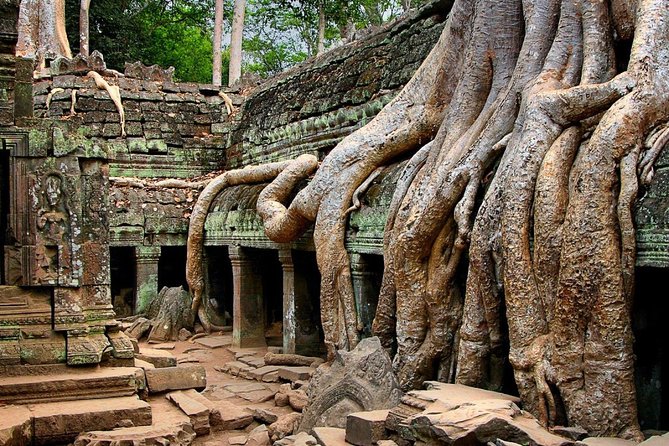
Day three brings you away from the most crowded circuits. It starts at Prasat Beng Mealea, described as the lost temple of Angkor, then shifts to the Roluos temples.
Beng Mealea, 70 kilometers and a more secluded mood
Beng Melea is about 70 kilometers northeast of Siem Reap and gets around four hours. The key idea is the secluded location, which gives you that explorer sense of discovering a temple outside the usual Angkor rhythm.
This is the day for people who enjoy ruins that feel less staged. You’ll likely walk more uneven ground than at the most maintained sites, so bring patience and expect a little chaos.
Roluos temples: Bakong, Lolei, and Preah Ko
After Beng Mealea, you go to the Roluos group near Siem Reap Market. The three temples are close together, and the route includes Bakong, Lolei, and Preah Ko.
You get about three hours here, and it’s a calmer pace compared to Beng Mealea. It’s also a strong way to see how older and related sites influenced each other across the broader Angkor era.
Day 4: Kompong Phluk on Tonle Sap, Angkor National Museum, and Artisan D’Angkor craft time
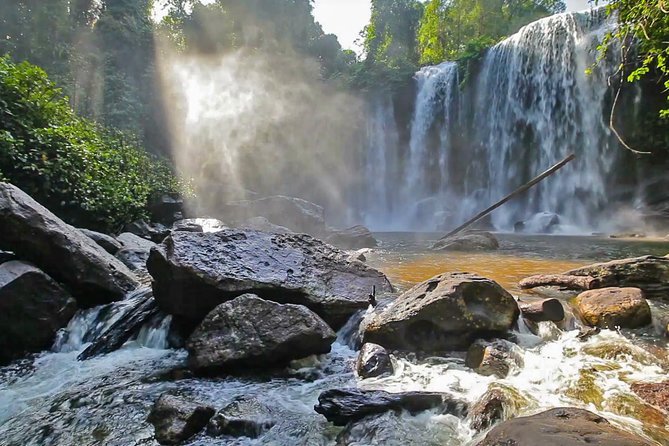
The final day expands the tour from temples into everyday life and cultural context. It includes Kompong Phluk, plus a museum stop and an artisan experience.
Kompong Phluk and Tonle Sap living patterns
You visit Kompong Phluk on Tonle Sap Lake, described as the biggest freshwater lake in Southeast Asia. Drive time from Siem Reap is around 45 minutes, and the stop is about four hours.
This is valuable because it changes your mental picture of Cambodia. Instead of seeing only monumental stone, you see how people live tied to water levels and local rhythms.
Practical consideration: this part of the day can feel more weather-dependent than stone temples. Bring a light layer for air movement, and keep an eye on sun exposure.
Angkor National Museum for artifacts and context
Then you head to the Angkor National Museum for about one hour. The museum presents an immense collection of Buddha statues and relics in one gallery.
If temples are your textbook, the museum is your index. Even with just one hour, it can help you connect temple sculptures to physical items and religious traditions.
Artisan D’Angkor and your own stone carving
You finish at Artisan D’Angkor, a local NGO that supports disadvantaged Cambodians from rural areas. You’ll visit their workshop, where you can be conveyed to craft your own stone carving.
This is the right final stop because it turns the tour’s big themes into something hands-on. And since it’s tied to an NGO, your visit supports a local mission rather than just buying souvenirs.
What your English guide should do for you, and why it matters
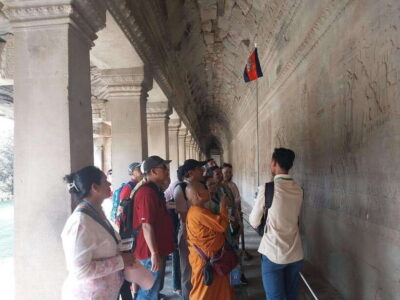
This tour leans hard on the guide. Reviews and repeat mentions point to the same pattern: guides like Sa are praised for tying together Hindu and Buddhist stories, Khmer legends, and real-life context like daily family structures.
You should want that because it changes how you experience each temple. If your guide can explain why a shrine looks a certain way, your eyes stop scanning for the “main” landmark only and start noticing how everything connects.
Also, good communication is not a luxury at Angkor. It helps with timing, clarifying what is worth your attention, and making sure you can move smoothly between sites.
Getting the most out of it: pace, comfort, and small choices
This itinerary moves through multiple zones in four days. Even though it’s private, it’s still a lot of stone and sun, so your comfort choices will affect your enjoyment.
Here’s what I’d plan for, based on the way the day is structured:
- Start time at 8:30 am, so set an alarm and avoid late-night wandering
- Wear breathable clothes and shoes you can walk in for ruins and uneven paths
- Use the provided cold water and cold towels, then bring something small like sunscreen and a hat
- Expect extra costs for entrance tickets and meals, because those are listed as not included
If you want the best value, don’t just count monuments. Focus on the ones that match your curiosity: Banteay Srei if you love carvings, Beng Mealea if you like “found in the wild” ruins, and Kompong Phluk if you want to understand Cambodian life around water.
Should you book this Angkor Wat and Siem Reap 4-day tour?
Book it if you want a plan that covers the major Angkor temples while also reaching beyond the core into Kbal Spean, Beng Mealea, and Kompong Phluk. The guide-led storytelling focus is a real advantage, especially if you care about understanding Hindu and Buddhist layers instead of only taking photos.
Skip it or adjust your expectations if you have a tight budget for the total trip, because entrance tickets and all meals are extra. Also note that this is a full four-day rhythm, so if you prefer slow and lazy sightseeing, you may feel the schedule pack a lot into each day.
If your goal is a balanced Angkor plus countryside and culture trip, this one hits the right notes and gives you enough variety to stay interested from day one through the craft table on day four.
FAQ
Does this tour include pickup?
Yes, pickup is offered, and the tour includes an air-conditioned vehicle.
What time does the tour start?
The start time is 8:30 am.
Is an English-speaking guide included?
Yes, an English tour guide is included.
Are entrance tickets included in the price?
No. Entrance ticket fees are not included.
Are meals included?
No. Breakfast, lunch, and dinner are not included.
Is this a private tour?
Yes. It’s a private tour/activity, and only your group participates.
What is the cancellation window?
Free cancellation is available up to 24 hours in advance for a full refund.
More Tour Reviews in Siem Reap
- Angkor Wat Sunrise or Sunset Tour with Guide from Siem Reap
★ 5.0 · 12,109 reviews - Siem Reap: Angkor Wat: Small-Group Sunrise or Sunset Tour
★ 5.0 · 9,444 reviews - From Siem Reap: Kampong Phluk Floating Village Tour by Boat
★ 4.9 · 6,979 reviews - Sunset tour of Kampong Phluk stilts home village on the Tonle Sap
★ 5.0 · 4,865 reviews - Siem Reap: Angkor Wat 2-Day Tour with Sunrise and Sunset
★ 4.9 · 4,429 reviews
More Temple Circuits Around Siem Reap
- Angkor Wat Sunrise or Sunset Tour with Guide from Siem Reap
★ 5.0 · 12,109 reviews - Siem Reap: Angkor Wat: Small-Group Sunrise or Sunset Tour
★ 5.0 · 9,444 reviews - Siem Reap: Angkor Wat 2-Day Tour with Sunrise and Sunset
★ 4.9 · 4,429 reviews - Siem Reap: Full-Day Angkor Wat Guided Tour with Sunset
★ 4.9 · 3,803 reviews - Angkor Wat Sunrise tour with Small – Group and Guide tours
★ 5.0 · 3,655 reviews
Angkor Wat, a Few More Ways In
- Angkor Wat Sunrise or Sunset Tour with Guide from Siem Reap
★ 5.0 · 12,109 reviews - Siem Reap: Angkor Wat: Small-Group Sunrise or Sunset Tour
★ 5.0 · 9,444 reviews - Siem Reap: Angkor Wat 2-Day Tour with Sunrise and Sunset
★ 4.9 · 4,429 reviews - Siem Reap: Full-Day Angkor Wat Guided Tour with Sunset
★ 4.9 · 3,803 reviews - Angkor Wat Sunrise tour with Small – Group and Guide tours
★ 5.0 · 3,655 reviews
Just Added: Fresh Siem Reap Tour Reviews

Angkor Wat Temple Tours, compared.
 ★ 5.0Angkor Wat Sunrise or Sunset Tour with Guide from Siem ReapFrom $1812,109 reviews
 ★ 5.0Angkor Wat: Small-Group Sunrise or Sunset TourFrom $159,444 reviews
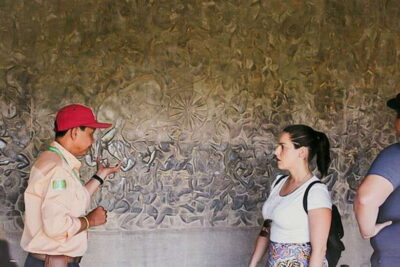 ★ 4.9Angkor Wat 2-Day Tour with Sunrise and SunsetFrom $344,429 reviews
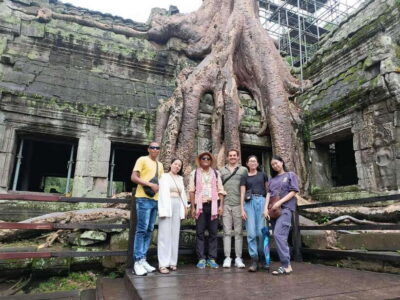 ★ 4.9Full-Day Angkor Wat Guided Tour with SunsetFrom $153,803 reviews
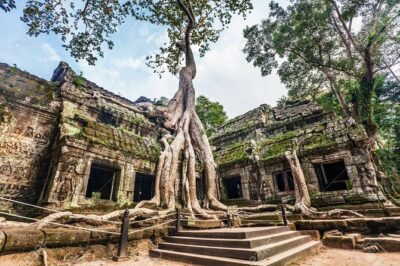 ★ 5.0Angkor Wat Sunrise tour with Small – Group and Guide toursFrom $143,655 reviews
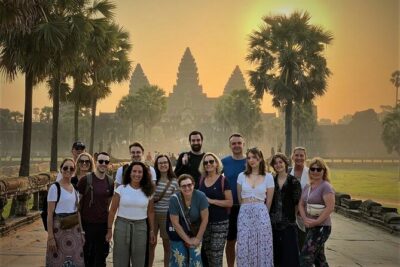 ★ 5.0Angkor Wat Highlights and Sunrise Guided Tour from Siem ReapFrom $233,213 reviews
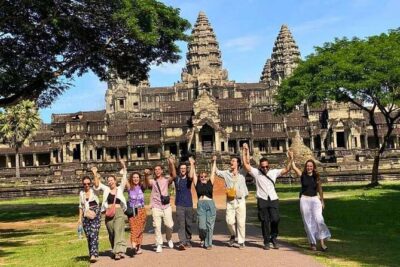 ★ 5.0Angkor Wat Sunset Small Group Tour with Lunch IncludedFrom $203,059 reviews
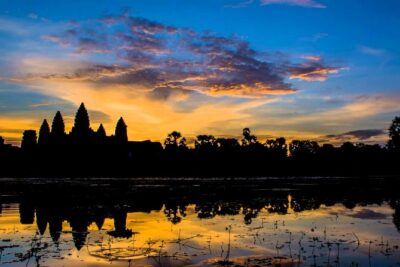 ★ 5.0Full-Day Angkor Wat Sunrise Private Tour with Guide from Siem ReapFrom $602,920 reviews