
Reviewed · ANGKOR TEMPLE TOURS
Banteay Chhmar Temple & Silk Farm Private Day Trip from Siem Reap
Jungle ruins and silk work, all in one day. This private trip takes you beyond the busiest Angkor circuit to Banteay Chhmar, then pairs it with the hands-on Angkor Silk Farm. I like that the whole day runs with a licensed English guide and hotel pickup, not guesswork. The main drawback is simple: it is a long drive, so plan for a full-day schedule.
You will spend the day walking uneven temple ground, reading stone carvings, and seeing how traditional silk is actually made. If you want quiet temples with fewer crowds and a cultural stop that is not just a photo stop, this fits well. Just know that lunch is on your own.
Key highlights you’ll feel from the start
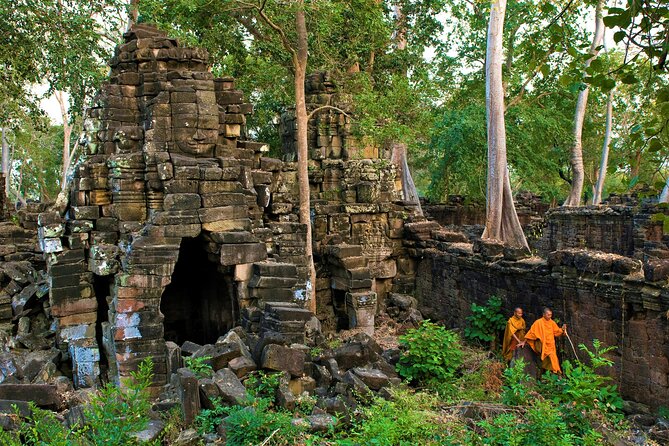
- Remote Banteay Chhmar for an Angkor-era experience that feels calmer and more off the grid
- English explanations that connect the stone carvings and temple layout to the Khmer era
- Banteay Toap, Fortress of the Army, including its scenic setting by a water reservoir
- A real working silk farm where you can follow the process from mulberry to silkworm to dyeing and weaving
- West Baray and Svay Romiet Pagoda for a break from temple walking, with a big-water, village-edge view
- Hotel pickup and drop-off with an air-conditioned private vehicle, so you lose less time to logistics
More temple circuits, set side by side
- Angkor Wat Sunrise or Sunset Tour with Guide from Siem Reap★ 5.0 · 12,109 reviews
- Siem Reap: Angkor Wat: Small-Group Sunrise or Sunset Tour★ 5.0 · 9,444 reviews
- Siem Reap: Angkor Wat 2-Day Tour with Sunrise and Sunset★ 4.9 · 4,429 reviews
- Siem Reap: Full-Day Angkor Wat Guided Tour with Sunset★ 4.9 · 3,803 reviews
Why Banteay Chhmar feels like a real change from typical Angkor days
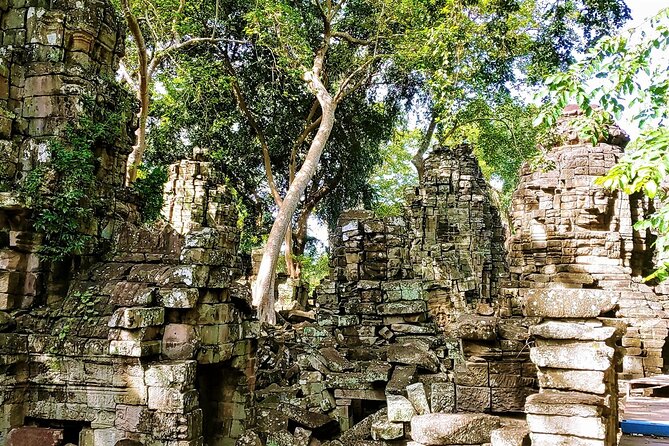
Most Angkor days start with a familiar rhythm. This one flips it. You head to Banteay Chhmar, a large Angkorian complex that most visitors never bother to reach.
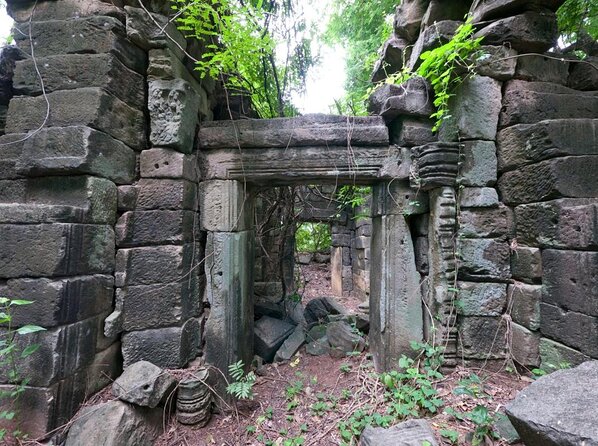
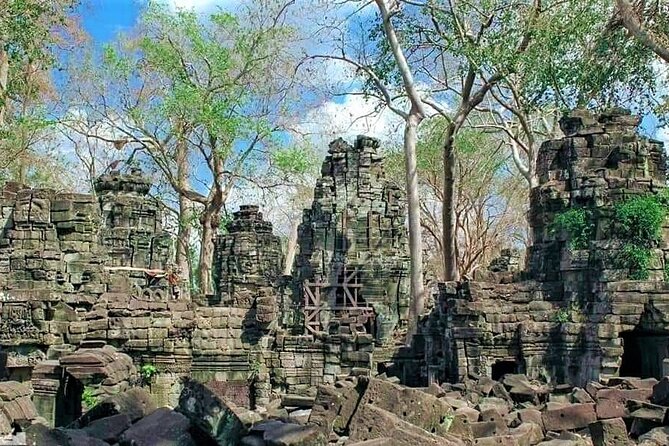
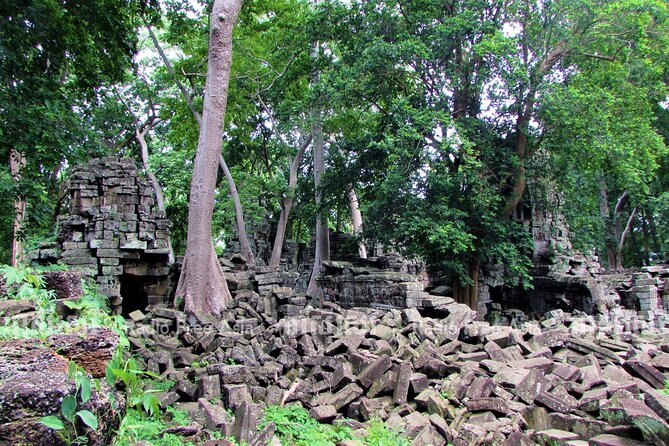
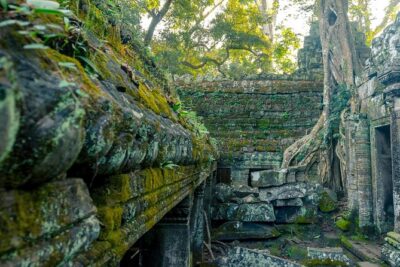
That matters, because the payoff is not just the stones. It is the feeling. Banteay Chhmar sits in a forest setting, with stone carvings and collapsed galleries that look like they have been slowly reclaimed by the jungle. If you have already seen the big headline temples around Siem Reap, this is a chance to see a different side of Angkor architecture, including styles that feel related to the Bayon area.
I also like that the visit is long enough to stop, look closely, and let your guide do the heavy lifting. The temple complex is described as an extensive architectural undertaking connected to Jayavarman VII, and even the building story hints at urgency, with signs of haste in construction in the final years of his reign. A good guide turns that into something you can actually see.
The tradeoff is that the drive is real. Expect a full day and be ready for more time in the vehicle than you might plan for.
Price and what you truly get for $137.75 per person
At $137.75 per person, this trip is not a budget stroll. But it is also not priced like an expensive private luxury-only experience.
What you are paying for, and what adds value, is the package:
- Private transfer by air-conditioned luxury SUV or van
- Pickup and drop-off at your hotel
- A professional English-speaking license tour guide
- Entrance fees included for the listed sites
- Services charge and current government VAT included in the price
- Mobile ticket for the experience
When entrance fees are included, it saves you time and avoids awkward pay-in-the-moment issues at gates. When hotel pickup is included, you avoid the stress of finding the right departure spot for a remote day.
Lunch is the one clear extra. Meals are available at local restaurants, with vegetarian and non-vegetarian options, and the typical dish price range is stated as $3 to $10. So you can budget easily, but it is still your call.
Getting to Banteay Chhmar: the road time that shapes your day
This tour runs about 8 to 9 hours total. Part of that is walking time at the sites. Part of that is travel.
You should plan for a long stretch on the road from Siem Reap to reach the remote temples. In practice, that means:
- Bring water and a light snack if you get hungry between stops.
- Wear shoes that handle dirt paths and uneven stone.
- Start the day with a calm mindset. The distance is the price you pay for getting away from the busiest areas.
The upside is that the route can feel like a countryside drive, not a single straight line of temples. You are traveling through everyday Cambodia, which often makes the arrival at Banteay Chhmar feel even more dramatic. When you finally step into that carved, forested space, it feels like you earned it.
Stop 1: Banteay Chhmar and the art of reading ruined stone
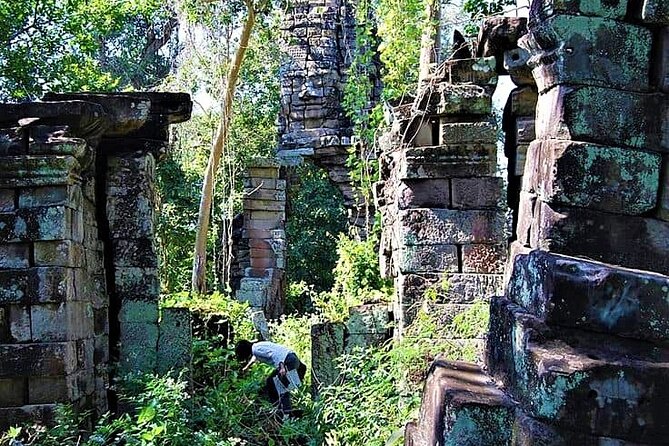
You have about 5 hours at Banteay Chhmar, and that is a generous amount. This is one of those complexes where 45 minutes would feel rushed, because there is so much to notice.
Banteay Chhmar is described as one of the most impressive yet least-visited Angkorian temples. What makes it worth your attention is the combination of scale and condition. You can see:
- Stone carvings that reward slow looking
- Collapsed galleries and structural remnants that feel raw compared with fully restored sites
- A setting where the jungle is part of the visual story
This matters for the experience you get. If you love temples as puzzle-box monuments, this place gives you something to solve. The carvings and layout are not just decorative. They are how power and belief were communicated across the Khmer world.
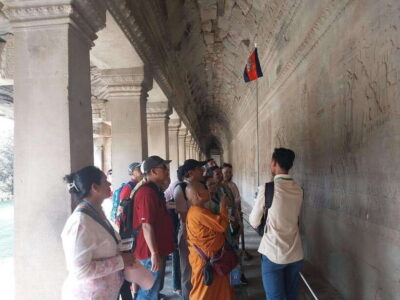
Your guide’s role is especially important here. The trip is built around historical and cultural context from a professional English-speaking guide. In real terms, that means your explanations can help you spot what the carvings depict and why the design choices matter, rather than treating the stone as a blur of faces and patterns.
There is also a political context woven into the site’s story. It was tied to Jayavarman VII’s construction efforts in a sensitive region in the final years of his reign, and the architecture reportedly shows signs of haste. That idea of urgency comes through visually, in how parts of the complex feel incomplete or rougher than what you might expect from more iconic Angkor showpieces.
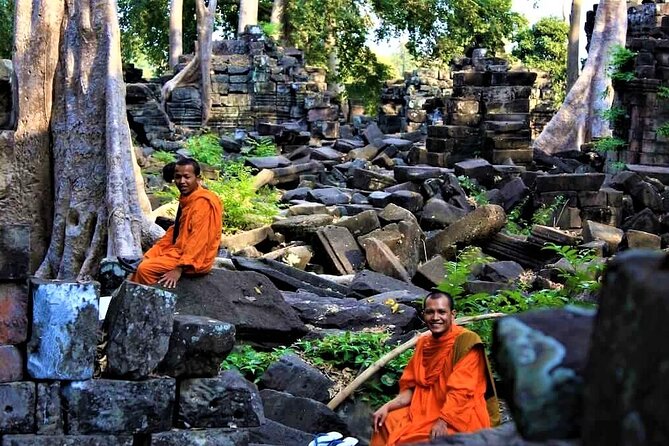
Practical note: because the galleries are collapsed in places, stick to your guide’s pace and where you are pointed. It is easy to wander into uneven ground when you get excited.
Past the rice fields, more village days

Stop 2: Banteay Toap, the Fortress of the Army
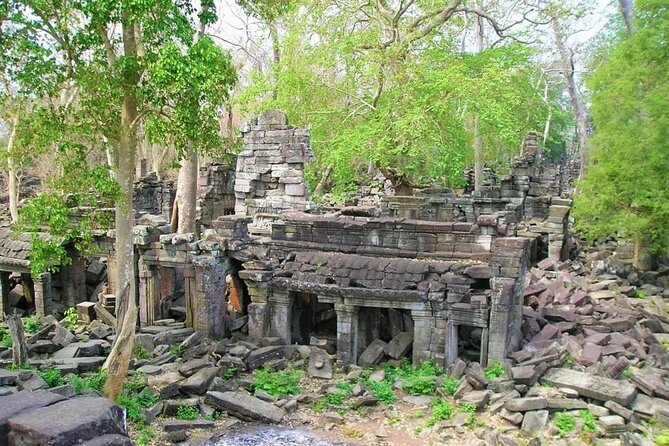
Next up is Banteay Toap, with about 2 hours here. The name is thought to mean Fortress of the Army, and it is built during the same broad period as the larger Banteay Chhmar complex.
This stop is a nice contrast. If Banteay Chhmar can feel like a deep jungle puzzle, Banteay Toap tends to feel more like a stronghold in a landscape. It is believed to honor Khmer soldiers, and it sits beside a water reservoir with lush surroundings.
The “fortress” vibe comes through best when you take a moment to observe the site from different angles. The water setting also makes it feel calmer. Even on a long travel day, Banteay Toap gives you a second kind of temple mood.
If you care about how temples connect to water management and everyday needs, this is a good moment to think about function, not just form. Reservoirs and moats show up again and again across Khmer-era planning, and even when the exact purpose of each water system is debated, the relationship between the built structures and the landscape is hard to miss.
Stop 3: Angkor Silk Farm and what traditional silk really looks like
After temples, the tour shifts gears to practical craft. You’ll spend about 1 hour at the Angkor Silk Farm.
This is not a museum stop. It is described as a working silk farm, where you can see the stages of production. You follow the process from:
- cultivation of mulberry trees
- nurturing of silkworms
- dyeing
- weaving of finished silk textiles
I like this kind of stop because it turns “Cambodia is known for silk” into actual steps you can picture. Even if you do not buy anything, watching how the process works gives context for why some fabrics look the way they do.
You should expect explanations along the way, and the time limit of an hour means it is structured. You likely will not get a full hands-on workshop in every technique, but you will see the workflow from start to finish, which is what makes it meaningful.
If you have a friend back home who thinks silk is all magic, this stop usually fixes that. It is work, timing, and care.
Also, keep an eye on shopping expectations. This kind of farm stop often leads into sales, so go in with a budget in mind if you plan to take something home.
West Baray and Svay Romiet Pagoda: a scenic reset after walking
The tour includes West Baray for about 30 minutes, then Svay Romiet Pagoda for about 30 minutes.
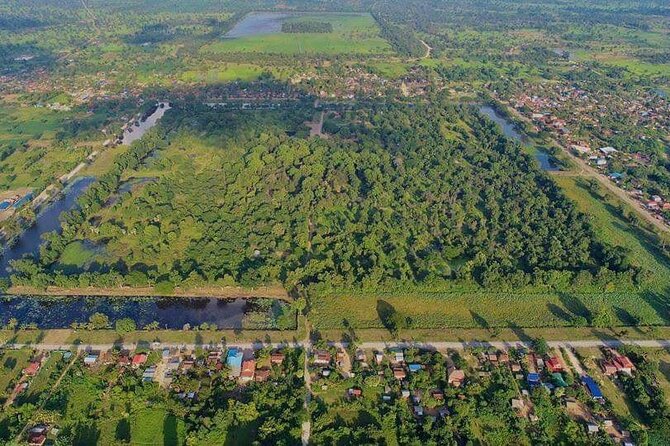
West Baray is a giant reservoir, described as measuring 8 km long by 2.1 km wide. The stated purpose at the time of construction is still not fully clear, and one original hypothesis was that it was used for irrigation. Even if you never learn the final answer, the size is the point. You see how Khmer rulers could plan large-scale water features that shaped entire regions.
The mood here is different from the temple stops. It is a chance to breathe, look out over open water, and reset your legs before the last short cultural stop.
Svay Romiet Pagoda sits right on the banks of West Baray. The site has a local tradition: it is visited on an ancestor’s anniversary or someone’s birthday as a way to show respect. That kind of living tradition can make a short stop feel more grounded than a quick viewpoint.
This two-part finale works well if you want variety in your day. You go from collapsed temple galleries to a stronghold-like complex, then to craft, then to landscape and local religious practice.
Guide and driver quality, and why it matters on remote days
For a remote day trip, your guide and driver quality changes the experience a lot. The tour is designed around a professional English-speaking license guide and a driver in an air-conditioned SUV or van.
The names that stand out in guiding accounts include Leap and Danut, and driver La appears in accounts as a polite, steady presence. What you should take from that, as a practical traveler, is this: on a day where you are far from the standard tourist circuit, you want someone who can explain what you are seeing, not just point.
A strong guide also helps with pacing. Banteay Chhmar can pull your attention in a dozen directions. Without good guidance, you can spend the day moving too fast or missing the carvings that matter.
The driver matters because the day is long and the route is part of the experience. When the driving is smooth and the schedule is handled well, you get to enjoy the temples instead of worrying about time.
If you are picky about photography, this kind of guide support can also help. One of the benefits mentioned in accounts is guidance that makes temple viewing easier and safer, which usually results in better photos without the frantic scrambling.
Timing, energy, and what to bring
This is an 8 to 9 hour day. You will be active, but not extreme trekking. Your energy plan is mostly about heat, hydration, and footwear.
I suggest:
- Water and a small snack for the road.
- Sun protection like a hat and sunscreen.
- Comfortable shoes with grip for dirt paths and uneven stone.
- A light layer, in case the air conditioning on the vehicle feels colder than expected.
You will also appreciate taking breaks when offered. The West Baray and Svay Romiet stops are basically your built-in cooldown, so don’t ignore them.
Who this private trip suits best
This day trip is a strong match if you:
- Want a less crowded Angkor experience, with more time to look closely.
- Like temples that feel partly ruined and more “real” than pristine showpieces.
- Prefer a day that combines history with a hands-on culture stop like silk making.
- Would rather do private logistics than share a bus and hope schedules line up.
It may not be ideal if you:
- Hate long drives and want mostly in-town sightseeing.
- Are looking for a super structured, fully restored Angkor tour with constant photo-perfect angles.
- Need lunch included, because meals are not part of the price and you will choose at local restaurants.
Should you book Banteay Chhmar and Silk Farm from Siem Reap?
Yes, if you want to see the Angkor story beyond the headline temples. Banteay Chhmar gives you that remote, forested, carved-stone feeling that most people miss. Then the Angkor Silk Farm adds a practical cultural stop, showing how silk moves from mulberry to silkworm to dyeing and weaving.
Book it if you value a private vehicle, hotel pickup, entrance fees handled, and a guide who can explain what you are looking at. The price is fair for what is included, especially because entrance tickets and transport are built in.
Skip it only if you are short on time in Siem Reap, strongly dislike road days, or want lunch included in the cost. For everyone else who enjoys temples and crafts, this is one of the better ways to spend a full day: more quiet than the usual circuit, and more varied than a temple-only marathon.
FAQ
How long is the Banteay Chhmar and Silk Farm private day trip?
It runs about 8 to 9 hours in total.
Do you get hotel pickup and drop-off?
Yes. Pickup and drop-off at your hotel in Siem Reap are included. You just need to provide your hotel name for pickup.
Are entrance fees included?
Yes. Entrance fees for the tour sites are included.
Is lunch included?
No. Lunch is not included. You can eat at local restaurants on your own, with vegetarian and non-vegetarian options, and dish prices typically range from $3 to $10.
What stops are included in the day?
The itinerary includes Banteay Chhmar Temple, Banteay Toap Temple, Angkor Silk Farm, West Baray, and Svay Romiet Pagoda.
Can I cancel for a full refund?
Yes. You can cancel up to 24 hours in advance for a full refund. If you cancel less than 24 hours before the start time, the amount paid is not refunded.
Just Your Group: Private Days
- Full-Day Angkor Wat Sunrise Private Tour with Guide from Siem Reap
★ 5.0 · 2,920 reviews - Siem Reap: Angkor Wat Private Tuk-Tuk Tour
★ 4.9 · 2,222 reviews - Angkor Wat Private Day Tour from Siem Reap
★ 5.0 · 834 reviews - Angkor Wat Private Tuk-Tuk Tour (sunrise Option) & more
★ 5.0 · 439 reviews - Private Angkor Wat Day Tour – Best of Angkor
★ 5.0 · 269 reviews
Through the Siem Reap Countryside
- From Siem Reap: Kampong Phluk Floating Village Tour by Boat
★ 4.9 · 6,979 reviews - Kampong Phluk Floating Village Tour by Boat
★ 5.0 · 1,020 reviews - Siem Reap Countryside Bike Tour / E-Bike or Tuk Tuk
★ 5.0 · 935 reviews - Siem Reap: Tonle Sap, Kampong Phluk & Floating Village Tour
★ 4.4 · 397 reviews - Siem Reap Countryside Quad Biking Tour
★ 5.0 · 322 reviews
More Temple Circuits Around Siem Reap
- Angkor Wat Sunrise or Sunset Tour with Guide from Siem Reap
★ 5.0 · 12,109 reviews - Siem Reap: Angkor Wat: Small-Group Sunrise or Sunset Tour
★ 5.0 · 9,444 reviews - Siem Reap: Angkor Wat 2-Day Tour with Sunrise and Sunset
★ 4.9 · 4,429 reviews - Siem Reap: Full-Day Angkor Wat Guided Tour with Sunset
★ 4.9 · 3,803 reviews - Angkor Wat Sunrise tour with Small – Group and Guide tours
★ 5.0 · 3,655 reviews
Just Added: Fresh Siem Reap Tour Reviews

Angkor Temple Tours, compared.
 ★ 5.0Angkor Wat Sunrise or Sunset Tour with Guide from Siem ReapFrom $1812,109 reviews
 ★ 5.0Angkor Wat: Small-Group Sunrise or Sunset TourFrom $159,444 reviews
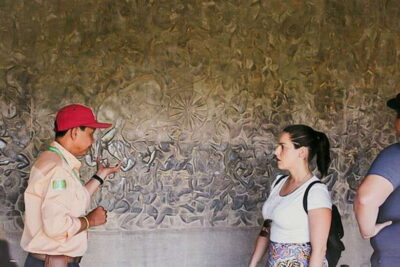 ★ 4.9Angkor Wat 2-Day Tour with Sunrise and SunsetFrom $344,429 reviews
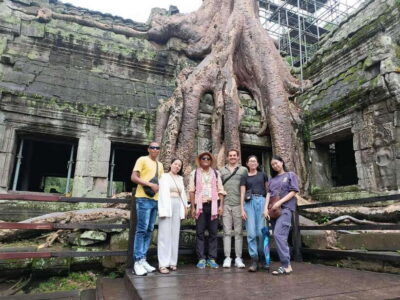 ★ 4.9Full-Day Angkor Wat Guided Tour with SunsetFrom $153,803 reviews
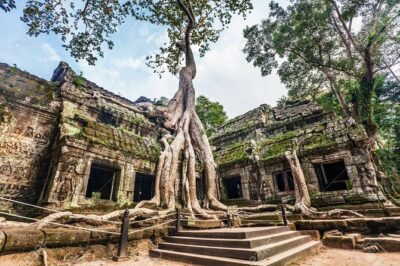 ★ 5.0Angkor Wat Sunrise tour with Small – Group and Guide toursFrom $143,655 reviews
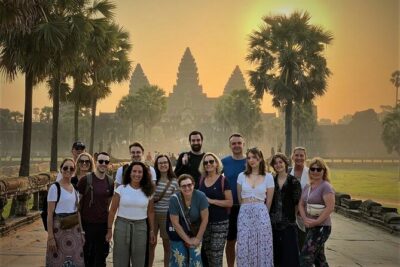 ★ 5.0Angkor Wat Highlights and Sunrise Guided Tour from Siem ReapFrom $233,213 reviews
 ★ 5.0Angkor Wat Sunset Small Group Tour with Lunch IncludedFrom $203,059 reviews
 ★ 5.0Full-Day Angkor Wat Sunrise Private Tour with Guide from Siem ReapFrom $602,920 reviews
Browse the lists this tour appears in