
Reviewed · ANGKOR TEMPLE TOURS
Bakong Temples & Floating Village Tour
Bakong temple-mountain meets Kampong Phluk on water. This half-day style tour packs two very different looks at Khmer-era design and Tonle Sap life. I especially love the chance to see Bakong as an early temple-mountain prototype, and I love how Kampong Phluk shows a whole community shaped around changing water levels. One thing to consider: key admission fees are not included for every stop, so your final total can be higher than the base price.
What makes it work is the pacing and the guide. You get an English speaking tour guide, plus pickup and drop-off in an air conditioned vehicle, which matters in Siem Reap heat. Guides such as Mr Oun Kosorl and Mr K have a reputation for connecting the sights to what they mean, not just reciting dates.
This is also a private tour, meaning it’s only your group. That can make the day feel less rushed, but it also means you should plan for a full 6 to 8 hours, not a quick grab-and-go outing.
Key things I’d plan for
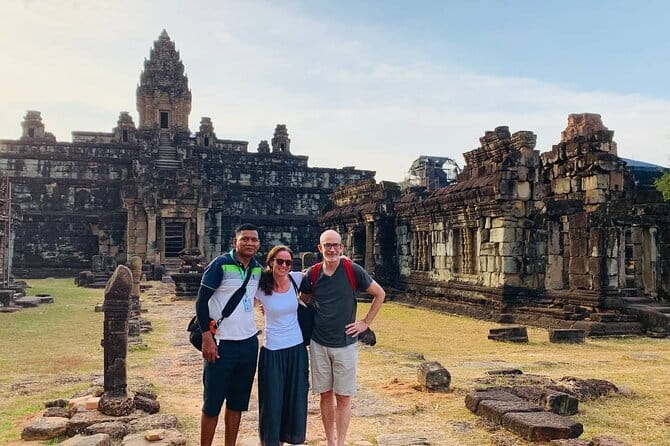
- Bakong’s prototype design: a five-tiered sandstone pyramid tied to Mount Meru symbolism
- Lolei and Preah Ko first-draft temple context within the Roluos group and Hariharalaya area
- Kampong Phluk’s seasonal build style: floating homes and high stilt structures for the dry season
- River boat time to reach the floating village area
- Ticket math: some stops are free, others are not included
- Solo-group feel thanks to private tour format
More temple circuits, set side by side
- Angkor Wat Sunrise or Sunset Tour with Guide from Siem Reap★ 5.0 · 12,109 reviews
- Siem Reap: Angkor Wat: Small-Group Sunrise or Sunset Tour★ 5.0 · 9,444 reviews
- Siem Reap: Angkor Wat 2-Day Tour with Sunrise and Sunset★ 4.9 · 4,429 reviews
- Siem Reap: Full-Day Angkor Wat Guided Tour with Sunset★ 4.9 · 3,803 reviews
Temple-Mountain Meets Floating Village, Same Day
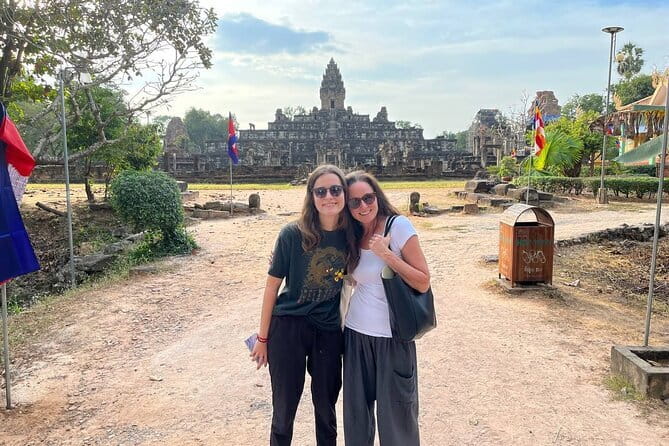
Siem Reap days often fall into a pattern: temples in the morning, more temples later, then you call it. This tour breaks that rhythm on purpose. You start with temple-mountain architecture from the Khmer Empire era, then you switch gears to a community built on water at Tonle Sap.
For me, the appeal is the contrast. Bakong helps you see how Khmer builders treated sacred geography, with layers that represent a cosmos you can walk through. Then Kampong Phluk shows the modern reality of water controlling daily life, from where buildings sit to how the village adapts when seasons change.
The day is long enough to feel satisfying, but short enough that you still have time to enjoy Siem Reap afterward. Expect a total duration of about 6 to 8 hours, with time set aside for three temple stops plus Kampong Phluk.
Lolei, Preah Ko, and Bakong: The Khmer Triangle You’ll See
This tour’s temple side is built like a compact lesson. You visit Lolei, then Preah Ko, then Bakong, all tied to the Khmer world near Angkor. The stops are timed so you get real viewing time without losing the day to constant moving.
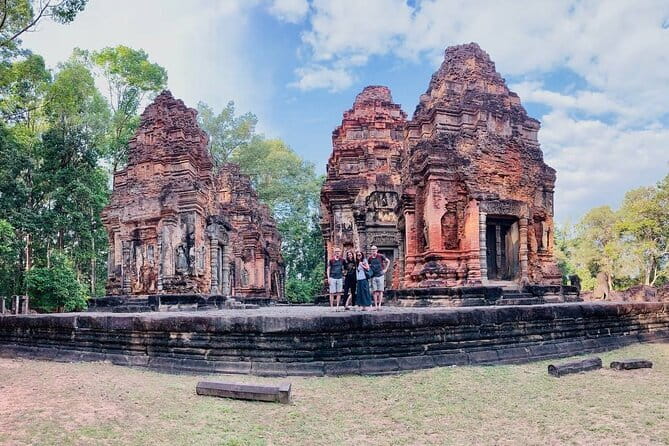
Lolei (about 1 hour) is the northernmost temple of the Roluos group, which includes Preah Ko and Bakong. It’s a late 9th century Hindu temple cluster, and seeing Lolei first helps you get your bearings on what the early Khmer style looked like before the later megaprojects.
Preah Ko (about 1 hour) is especially useful if you like learning how cities evolve. This temple was the first built in the defunct city of Hariharalaya, about 15 kilometers southeast of Angkor’s main temple group.
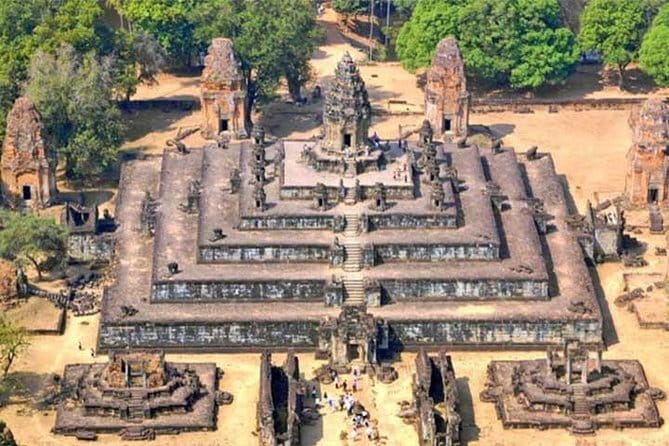
Bakong (about 2 hours) is the anchor stop. It’s a sandstone temple-mountain constructed in 881 AD by King Indravarman I, and it’s often treated as the prototype for later temple-mountain designs. You get the longer time here because it’s not just one structure. It’s a whole layout that connects to symbolism, engineering, and later influence.
A practical note: Lolei’s admission is not included on this tour, while Preah Ko and Bakong are free on the tour’s listed admissions. That affects your budgeting and how you plan tickets for the day.
Bakong’s Five Tiers, Moats, and Naga Causeway
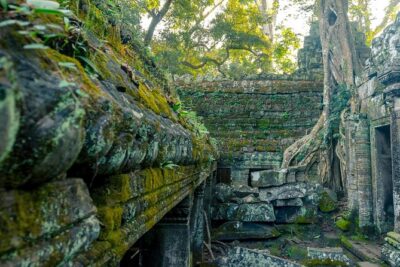
Bakong is the kind of place where the details change how you see the whole Angkor area. The big headline is that it’s a five-tiered sandstone pyramid. In Khmer symbolism, the layout represents Mount Meru, the sacred mountain concept. You’ll notice how the design includes moats and enclosing walls, which turn the pyramid into a staged journey.
Another reason it’s memorable is the earliest known example of a Naga causeway in Khmer architecture. If you’ve never paid attention to causeways, this is a good introduction. The Naga theme is part of the bridge-like design language that Khmer temples used to connect earth with the sacred spaces they represented.
Then there are the guardian statues: large preserved stone elephants and lions on the lower levels. Even if you only have a short time, these figures give you something tangible to focus on besides the tower silhouette. They also help explain how Khmer temples were meant to feel protected and alive, not just monumental.
If you want one reason to pick this tour specifically, it’s that you don’t just see a temple, you get an architectural explanation. The guide time at Bakong (about 2 hours) gives you room to look, then ask questions, instead of doing the classic walk-by photo circuit.
Kampong Phluk: A Whole Village Living on Tonle Sap Lake
After the temples, the day shifts to water life. Kampong Phluk is a floating village community built around Tonle Sap Lake. Tonle Sap is the largest lake in Southeast Asia and covers five Cambodian provinces, so the scale of the water system matters for how these communities function.
What makes Kampong Phluk more than a tourist backdrop is that it isn’t just houses on the water. The entire community infrastructure works with the seasons. That includes homes and schools and shops, and the village adapts as water levels rise and fall.
You’ll often hear the village described in two structure types. Some buildings float directly on the water. Others are built on stilts that rise high above the ground during the dry season. Watching this concept in person helps you understand the practical logic of it. The environment is not a background. It’s the blueprint.
One more context point I’d keep in mind while you’re there: floating village life can look simple from a distance, but it takes coordination to keep livelihoods going as the lake changes. The structures are flexible, but people still run schools, stores, and daily routines.
Back out on the lake, more stilted villages
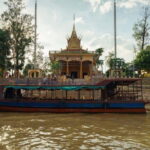
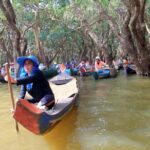


What the Floating Village Stop Feels Like (Boat Time Included)
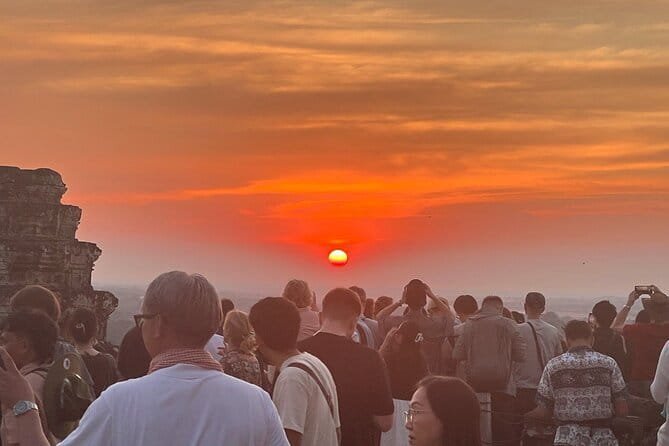
The Kampong Phluk portion runs about 3 hours. In practice, that’s the part of the day where you’ll likely spend more time going slowly, looking at how the village is arranged, and talking with your guide about what you’re seeing.
A highlight from past experiences on this route is the boat ride along the river to get to the village area. That short transition matters, because it puts you physically in the right frame of mind. You go from stone temple geometry to water-level decision-making.
Another moment that many people find meaningful is the chance to see a school in the village community, including grade school children learning English. If that topic matters to you, this tour can feel more personal than a purely scenic stop.
There can also be a sobering side. Floating villages face real challenges, and it may not look comfortable in every moment. At the same time, the people you meet often come across as proud and happy in their own routines. The best guides handle this balance well, giving you context without turning it into a sad spectacle.
Guide, Pickup, Vehicle Comfort, and Why the Day Runs Smooth
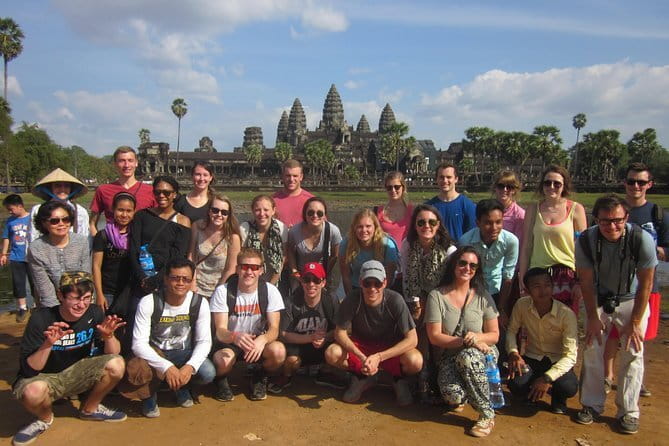
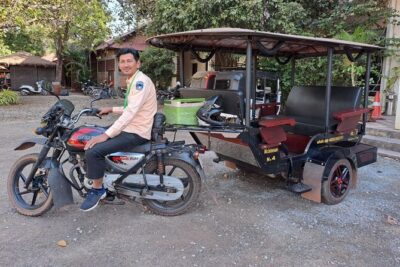
This tour includes an English speaking guide, cold drinking water, and pickup and drop-off in an air conditioned vehicle. That might sound like basic logistics, but it changes your experience.
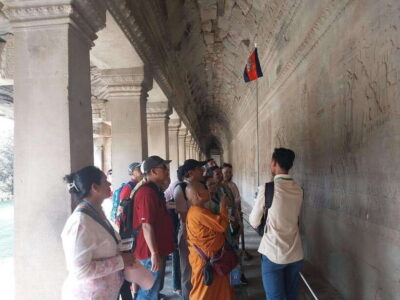
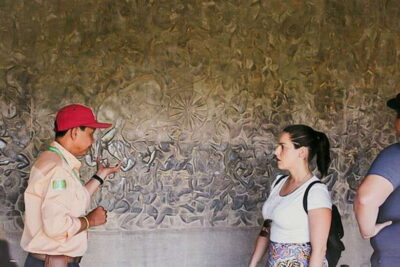
If you’re doing Bakong and then Kampong Phluk in one stretch, you want a guide who can keep transitions clear. You’re moving from temple areas to lake access points, and you’ll be switching between architectural detail and community life. A good guide helps you make sense of what you’re looking at, and why it was built that way.
The private format is also a real advantage. Instead of being squeezed into a large group rhythm, your guide can adjust pacing for your questions. If you’re traveling with kids, older relatives, or you simply hate feeling rushed, this matters.
In Siem Reap, comfort is not a luxury. The air conditioned vehicle and bottled water can take the edge off the day, especially if you’re traveling during hotter hours.
Price, Tickets, and the Real Value of the $45 Base
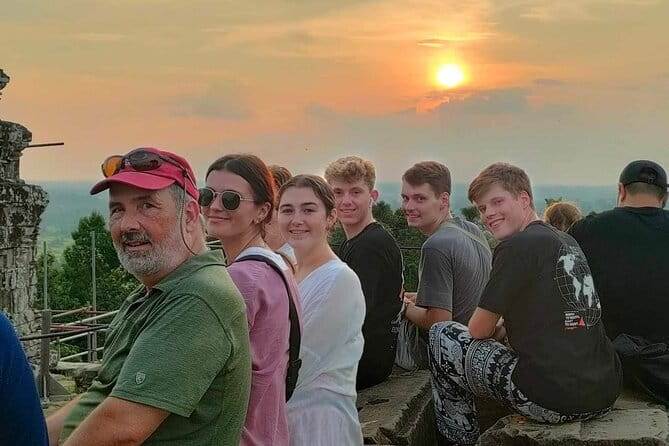
The tour price is $45.00 per person. On its face, that’s a fair deal because it includes the guide, pickup and drop-off, cold drinking water, and an air conditioned vehicle.
Then comes the part to plan carefully: admissions. Admission fees are not included for some stops. Lolei and Kampong Phluk are listed as not included, while Preah Ko and Bakong are listed as free.
There’s also a note about an Angkor Pass option: under of Angkor Pass $37.00 per person. The exact way that applies can vary based on the sites and what you already hold, but you should budget for it if you don’t already have coverage.
So how do you judge value? I think this tour is best when:
- you want both temples and the floating village in one organized day
- you care about interpretation, not just photos
- you’d rather pay a single package price than manage separate tickets and transport on your own
If you already have the right passes or you only care about the temple-mountain portion, you might find a simpler and cheaper plan. But for a one-day mix, this package price is reasonable.
Who Should Book This Tour, and Who Might Skip It
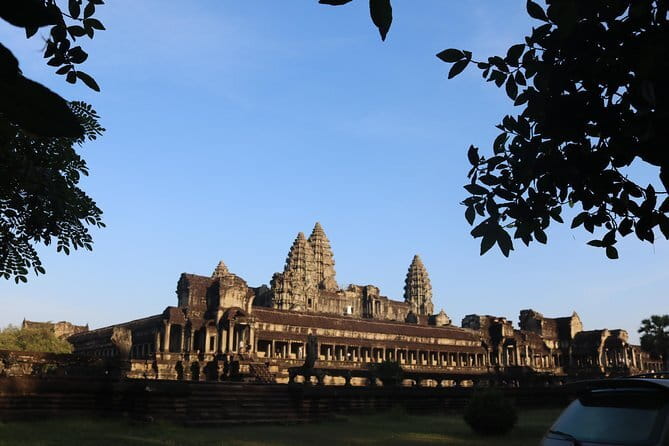
This is a strong choice if you:
- enjoy architecture and symbolism, especially Khmer temple-mountain design
- want a guided view of multiple temple sites, not just one
- are curious about how Tonle Sap communities are built and how they adapt to seasonal water levels
It’s also a good fit if you like having time to look. Bakong gets about 2 hours, which is enough to notice features like the Naga causeway theme and the guardian elephant and lion statues.
You might skip it if:
- you dislike ticket add-ons and want everything fully included
- you’re looking for a super short outing, since the total is about 6 to 8 hours
- you prefer only temples or only village life, since the day requires switching gears
Practical Tips That Keep the Day Enjoyable
You’ll get the most from this tour if you treat it as two experiences joined by transportation.
For the temples:
- wear shoes that handle uneven stone, since temple walkways can be slippery or dusty
- bring something for sun and water, even with cold drinking water provided
For Kampong Phluk:
- expect a water-related setting and bring simple items like a light layer
- take your time with the floating village layout, because the structure differences between floating sections and stilted sections are the real story
If you’re the type who likes learning, come with a few questions. For Bakong, ask about Mount Meru symbolism, moats, and the idea of this temple-mountain as a prototype. For Kampong Phluk, ask how the floating and stilt systems relate to the dry season versus higher water levels.
Should You Book Bakong Temples & Floating Village?
If you want a day that actually connects ideas, not just landmarks, I’d book it. Bakong gives you a strong architectural foundation: a five-tiered sandstone pyramid with the sacred mountain symbolism, plus clues like guardian elephants and lions and the Naga causeway concept. Then Kampong Phluk adds a real-life layer, where homes, schools, and shops are built around water that rises and falls.
The main reason to hesitate is budget, since admissions for Lolei and Kampong Phluk are not included and an Angkor Pass can add cost. If you’re okay doing that math, this tour is a solid way to see both Khmer-era temple design and Tonle Sap floating village life in one organized outing.
FAQ
How long is the Bakong Temples & Floating Village tour?
The tour lasts about 6 to 8 hours.
What is the price per person?
It costs $45.00 per person.
Do you get hotel pickup and drop-off?
Yes, pickup and drop-off are included.
Is there an English speaking guide?
Yes, the tour includes an English speaking tour guide.
Are admission fees included?
Not all of them are included. Admission fees are not included for Lolei and Kampong Phluk. Preah Ko and Bakong are listed as free.
Which places are visited during the tour?
You visit Lolei, Preah Ko, Prasat Bakong, and Kampong Phluk Floating Village.
How much time is spent at each stop?
Lolei is about 1 hour, Preah Ko is about 1 hour, Bakong is about 2 hours, and Kampong Phluk Floating Village is about 3 hours.
Is this tour private or shared?
It is private. Only your group participates.
What ticket method is used?
A mobile ticket is part of the experience.
Can I cancel for a full refund?
Yes. You can cancel up to 24 hours in advance for a full refund.
Is the tour suitable for most travelers?
The tour indicates that most travelers can participate.
Through the Siem Reap Countryside
- From Siem Reap: Kampong Phluk Floating Village Tour by Boat
★ 4.9 · 6,979 reviews - Kampong Phluk Floating Village Tour by Boat
★ 5.0 · 1,020 reviews - Siem Reap Countryside Bike Tour / E-Bike or Tuk Tuk
★ 5.0 · 935 reviews - Siem Reap: Tonle Sap, Kampong Phluk & Floating Village Tour
★ 4.4 · 397 reviews - Siem Reap Countryside Quad Biking Tour
★ 5.0 · 322 reviews
Out on Tonle Sap
- From Siem Reap: Kampong Phluk Floating Village Tour by Boat
★ 4.9 · 6,979 reviews - Sunset tour of Kampong Phluk stilts home village on the Tonle Sap
★ 5.0 · 4,865 reviews - Kompong Phluk Floating Village Half-Day Tour ( Morning / Sunset )
★ 5.0 · 1,494 reviews - Siem Reap: Kulen Mountain, Beng Mealea and Tonle Sap Tour
★ 5.0 · 1,483 reviews - Tonle Sap Lake & Kampong Phluk Village Half-Day Tour
★ 5.0 · 1,045 reviews
More Temple Circuits Around Siem Reap
- Angkor Wat Sunrise or Sunset Tour with Guide from Siem Reap
★ 5.0 · 12,109 reviews - Siem Reap: Angkor Wat: Small-Group Sunrise or Sunset Tour
★ 5.0 · 9,444 reviews - Siem Reap: Angkor Wat 2-Day Tour with Sunrise and Sunset
★ 4.9 · 4,429 reviews - Siem Reap: Full-Day Angkor Wat Guided Tour with Sunset
★ 4.9 · 3,803 reviews - Angkor Wat Sunrise tour with Small – Group and Guide tours
★ 5.0 · 3,655 reviews
Just Added: Fresh Siem Reap Tour Reviews
Angkor Temple Tours, compared.
 ★ 5.0Angkor Wat Sunrise or Sunset Tour with Guide from Siem ReapFrom $1812,109 reviews
 ★ 5.0Angkor Wat: Small-Group Sunrise or Sunset TourFrom $159,444 reviews
 ★ 4.9Angkor Wat 2-Day Tour with Sunrise and SunsetFrom $344,429 reviews
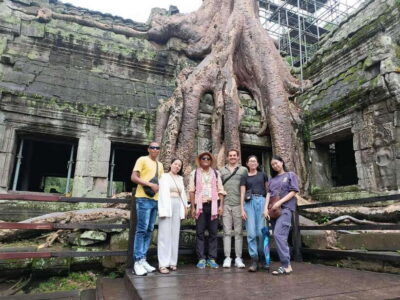 ★ 4.9Full-Day Angkor Wat Guided Tour with SunsetFrom $153,803 reviews
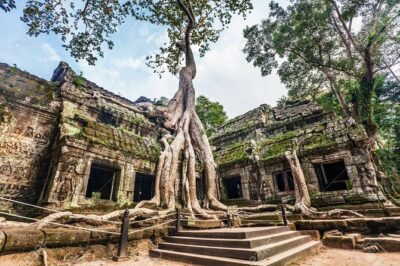 ★ 5.0Angkor Wat Sunrise tour with Small – Group and Guide toursFrom $143,655 reviews
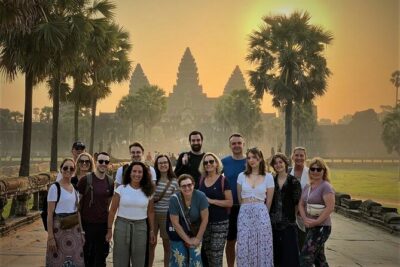 ★ 5.0Angkor Wat Highlights and Sunrise Guided Tour from Siem ReapFrom $233,213 reviews
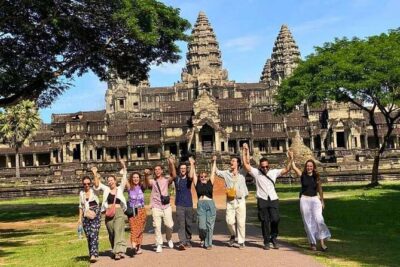 ★ 5.0Angkor Wat Sunset Small Group Tour with Lunch IncludedFrom $203,059 reviews
 ★ 5.0Full-Day Angkor Wat Sunrise Private Tour with Guide from Siem ReapFrom $602,920 reviews
Browse the lists this tour appears in