
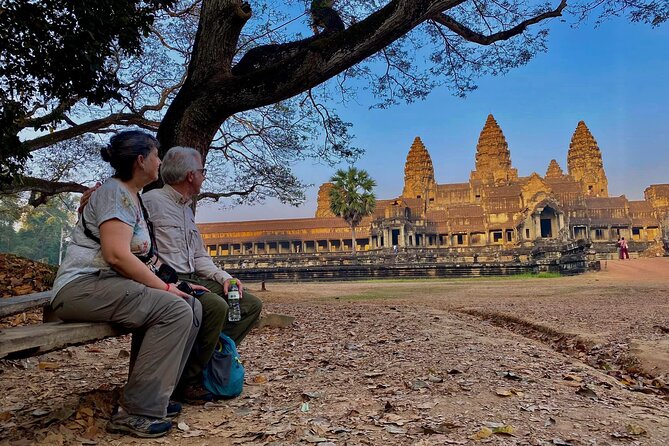
Reviewed · ANGKOR WAT TEMPLE TOURS
Angkor Wat Tour, Explore The Main Temples With Tour Guide
Angkor starts with an early, well-planned morning. This 8-hour shared tour takes you through the Angkor Archaeological Park highlights, with pickup in an air-conditioned minibus and a guide who helps you actually read the carvings and layout. You also get bottled water and a stop-by-stop plan that keeps you from wasting time.
Two things I really like: the English-speaking guide (and the story style, like Mao, who shared both facts and a personal touch) and the way the route hits the major “must-see” temples without feeling chaotic. The main drawback is simple: the entrance fee is not included, so you need to budget extra on top of the $12.50 tour price.
Key Things to Know Before You Go
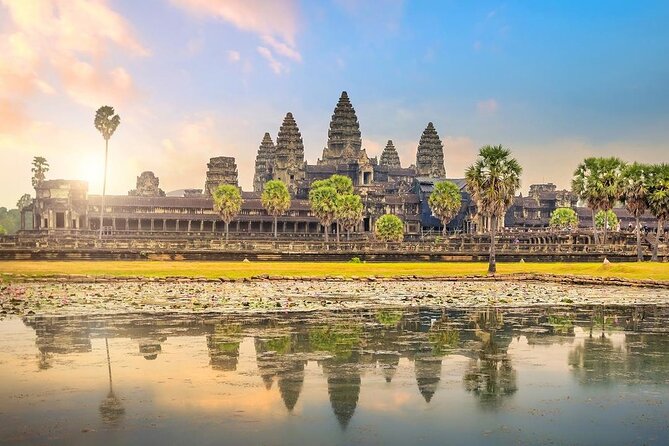
Early hotel pickup saves time so you start working through the park while it is still cooler.
You get the main temples in one day including Angkor Wat, Ta Prohm, Bayon, plus quieter stops like Banteay Kdei.
Focused time at each site (about 3 hours at Angkor Wat, then shorter blocks at the others) helps you avoid “temple burnout.”
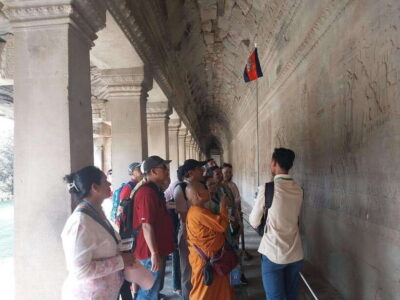
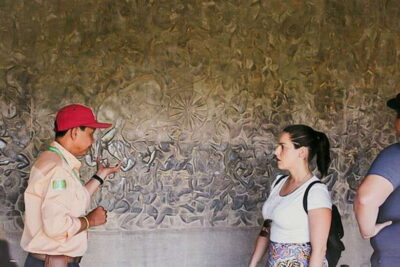
Your guide turns details into understanding with clear history and art notes, and some guides also share photos.
Shared group size stays manageable with a maximum of 30 travelers.
You will still pay entrance separately at $37.00 per person.
Other ways to walk the great temple
- Angkor Wat Sunrise or Sunset Tour with Guide from Siem Reap★ 5.0 · 12,109 reviews
- Siem Reap: Angkor Wat: Small-Group Sunrise or Sunset Tour★ 5.0 · 9,444 reviews
- Siem Reap: Angkor Wat 2-Day Tour with Sunrise and Sunset★ 4.9 · 4,429 reviews
- Siem Reap: Full-Day Angkor Wat Guided Tour with Sunset★ 4.9 · 3,803 reviews
How the 8-Hour Angkor Route Really Feels
This is not a long, slow wander where you can linger wherever you want. It is a structured highlights tour, built for people who want the big temples, plus enough context to make the experience click. The total time is about 8 hours, and each stop has a clear time block, from longer time at Angkor Wat to shorter visits at Bayon and the North Gate area.
That structure matters. Angkor can overwhelm you, especially when you are staring at walls full of carvings that look similar until someone explains what you are seeing. A guide gives you a mental map fast, so you are not just taking photos, you are noticing symbols, layout, and the meaning behind design choices.
Because it is a shared tour, you also need to accept one tradeoff. Your pace is partially the group’s pace. If you love lingering in quiet corners, you might feel the clock at the shorter stops. Still, the upside is that you get more of the park’s headline sights in one day.
Pickup to Angkor Wat: Start Early, Start Smarter
You begin with a hotel pickup in Siem Reap and head to the Angkor Archaeological Park by air-conditioned minibus. The key practical win here is timing. Early departures help you beat the worst heat and crowd crush, and that makes a difference when you are climbing steps and walking between temple zones.
Once you arrive, you handle the entry ticket on-site. You will buy the entrance fee of $37.00 per person separately from the $12.50 tour price. After that, you are ready for the big one: Angkor Wat.
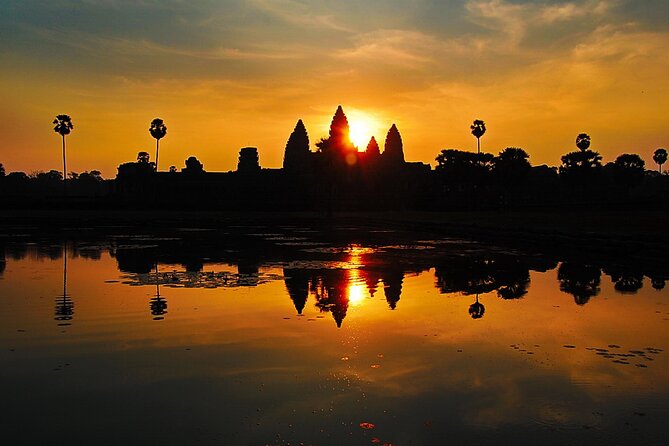
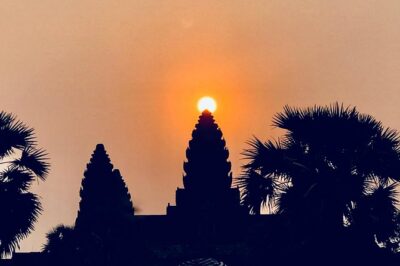
If you like photography, early arrival also gives you a better chance at the lighting people hunt for at Angkor Wat. Some experiences from the day include the sunrise moment, and at minimum you get that first-phase morning calm before the park fully swells.
Angkor Wat in 3 Hours: What to Look For
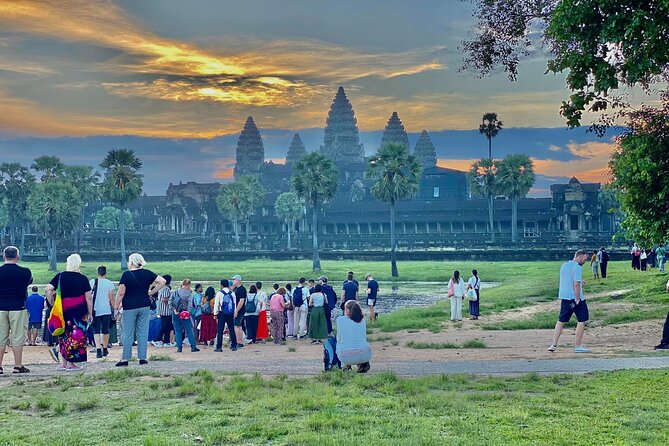
Angkor Wat gets the longest stop, about 3 hours. That time block is meaningful because Angkor Wat is not just one building. It is a whole visual system, with a layout that rewards walking and noticing changes in angle.
In a guided format, your focus can shift quickly from “wow” to “I get it.” A good guide will point out how the temple’s design sets up movement through the space, and how the carvings connect to the religious ideas Angkor’s rulers wanted people to absorb.
Here is how to make your 3 hours count:
- Start with orientation, then slow down for the key viewpoints.
- Watch for carved figures and repeated motifs. Even when you cannot read the story, you can recognize patterns.
- When you reach prominent areas, take a breath and look back, because the symmetry is part of the experience.
The best part of a guided Angkor Wat stop is that you are not guessing. You get a quick way to interpret what you are seeing, so your photos feel less random later.
Banteay Kdei: The “Citadel of Chambers” Moment
Next is Banteay Kdei, about 1 hour. This is often the kind of stop that turns into a favorite because it feels calmer than the biggest headline sites. Even if it is not the most famous name on the itinerary, the temple’s carvings and Buddhist-monastery character give you a different flavor of Angkor than what you get at Angkor Wat.
Banteay Kdei also comes with a helpful context point: it is known as the Citadel of Chambers, and it dates to the late 12th century. That matters because when you understand the era, you can notice how the style and symbolism fit the broader Angkor story.
One practical consideration: with only about an hour, you do not want to get stuck only at one angle. Use the time to do a quick circuit, then pause for the carvings that catch your eye. If you like quieter temples, this is the stop that can deliver that payoff.
More temple circuits, set side by side
Ta Prohm: The Temple With Tree Roots
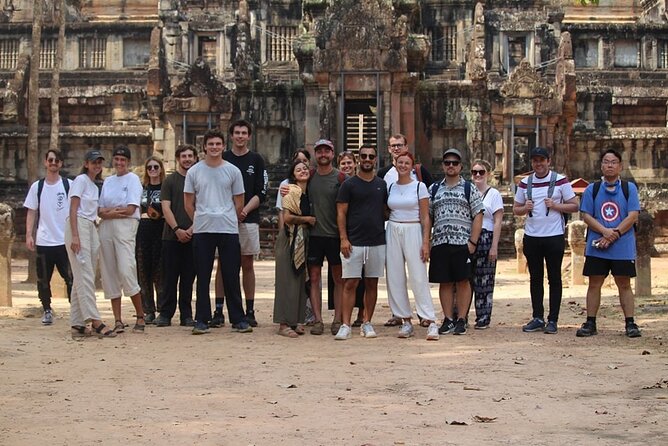
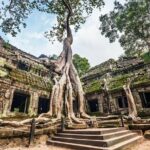
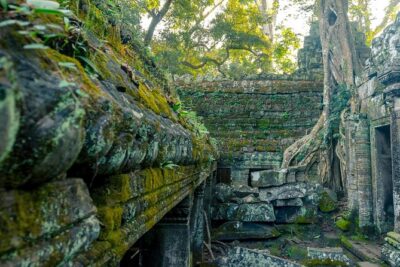
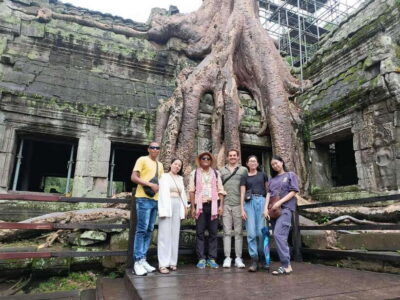
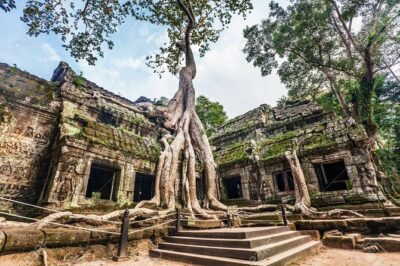
Then you move to Ta Prohm, about 2 hours. This is the temple most people picture before they even arrive. It is famous for the massive tree roots growing over the structures, and it is one of the most photogenic spots in the whole area.
What I like about Ta Prohm as a guided stop is that a good guide helps you understand why it looks the way it does. You are not just viewing “ruins with trees,” you are learning how this space was treated over time and how that history affects what you see today.
If you want great photos, plan to do two passes:
- First pass for wide shots and overall composition.
- Second pass for details, like roots, doorways, and the carved textures around where the vegetation has taken hold.
Two hours can feel like plenty, or it can vanish if you spend too long on only one corner. If you keep moving with the group while still taking your time at key spots, Ta Prohm becomes the emotional highlight of the day.
Bayon Temple: Faces, Towers, and Clear Geometry
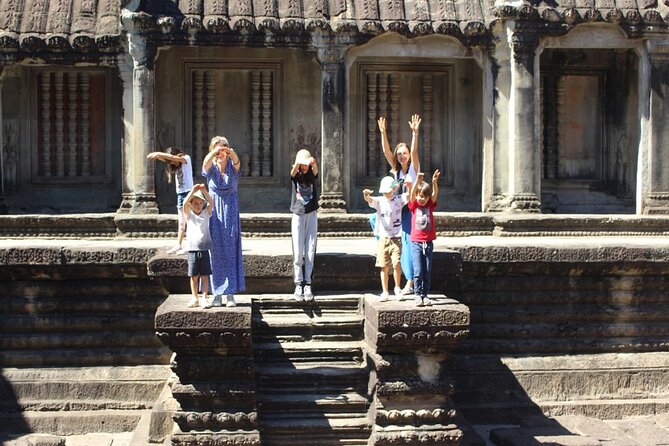
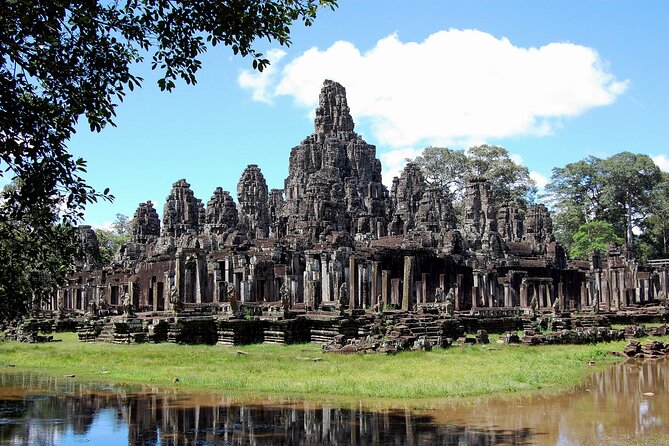
Bayon Temple is next, about 1 hour. It sits at the center of Angkor Thom, and it is famous for the 54 towers with massive, serene faces of Avalokiteshvara. It is the kind of site where your brain wants to pick one face and study it, but the experience works better when you keep stepping back and changing angles.
In a guided tour, Bayon often becomes easier to appreciate because the guide can point out how the faces relate to the temple’s overall design and how the carvings fit the larger Angkor Thom story.
My practical advice for Bayon is to time your pauses:
- Spend your first minutes getting oriented so you know where the faces are positioned.
- Then choose one level or viewing point to linger for a bit.
- Finally, move again so you see how the faces shift across towers.
Even with a shorter stop, Bayon tends to feel complete if you allow your eyes to adjust to the repeating face patterns.
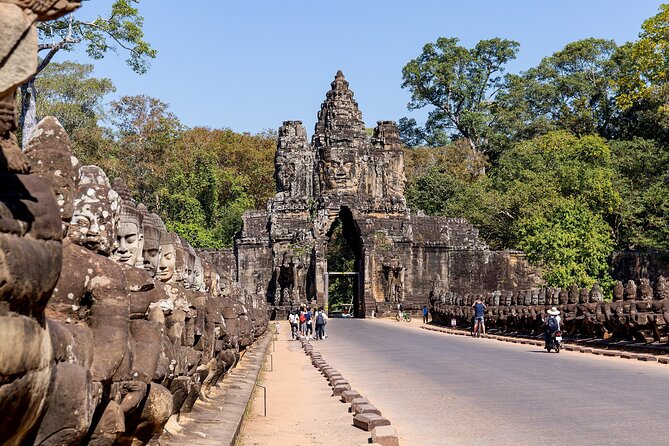
North Gate Bridge and Angkor Thom’s Entrance Atmosphere
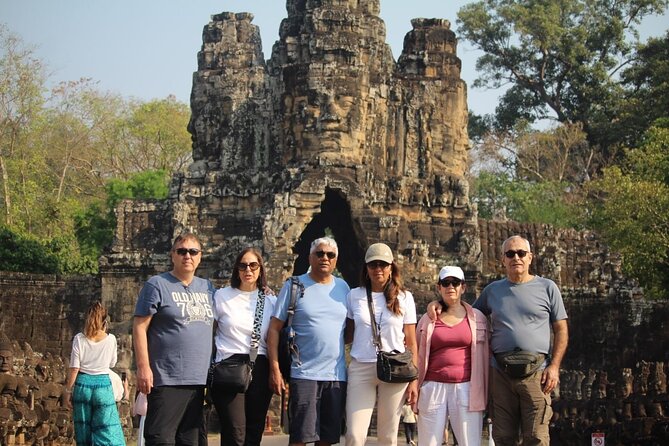
You finish the temple loop with a stop at Tonle Om Gate, also described as the South Gate of Angkor Thom, plus the nearby North Gate Bridge area for about 30 minutes. The highlight here is the entrance itself.
The causeway is lined with dramatic statues of gods and demons, and the gate is topped with sculptural details. Even if you only have half an hour, it is a satisfying close because it gives you the “approach” feeling. It is not just buildings inside the complex, it is the theatrical entry that tells you this city was meant to impress.
The best way to enjoy this final stop is to take a few steps up and down the causeway area, then pause for the symmetrical views. You will see why people remember this location even when the day has been long.
The Guide Factor: How Stories Make the Temples Easier
What makes this tour feel special is the human layer. The guide’s job is not just reading dates. It is translating architecture into meaning.
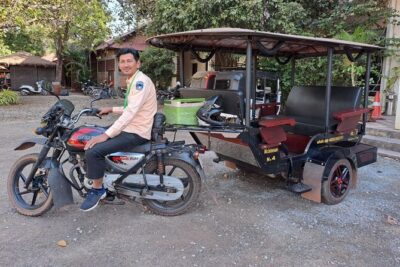
From the experiences shared, guides like Mao are praised for being extremely friendly, professional, and strongly focused on both history and storytelling. One key detail that stood out is that the guide did more than explain, they also added a personal touch and helped the group understand the Cambodian people and their past.
That kind of guidance is what turns your day from a checklist into a narrative. When you understand why a temple is built a certain way, you start seeing the place as a system, not scattered monuments.
Some guides also share photos with the group. That is a small thing, but it reduces stress when you are trying to capture everyone’s memories in a busy crowd.
Price and Value: $12.50 Plus the $37 Entrance
Let’s talk money, because Angkor is one of those places where your budget can get surprising if you do not do the math.
The tour price is $12.50 per person. What you get for that includes:
- Transportation in an air-conditioned minibus
- Pickup and drop-off
- English-speaking tour guide
- Water
- A guided route that covers multiple major temples in about 8 hours
Then there is the separate entrance fee: $37.00 per person, not included in the tour price.
So your real total is the tour price plus the entrance fee. In practical terms, this still tends to feel reasonable because the tour is not only getting you into Angkor, it is structuring how you experience it and helping you interpret the sites with an English guide. If you were to go independently, you would likely spend your time figuring out routes and meanings yourself, and you would still need transport.
If you hate crowds and hate group schedules, you might prefer a private arrangement. But for most people, this is a solid value way to see the headlines plus learn enough to feel satisfied.
Shared Group Touring: The Upside and the Tradeoffs
This tour caps at 30 travelers, which is large enough to be efficient but small enough to feel workable. The shared minibus also keeps you moving as a group, which matters when temples are spread across the park and you are trying to avoid long, expensive gaps between stops.
The tradeoff is what you would expect:
- You will not always linger exactly where you want.
- You may have to squeeze your walking pace into the group flow.
The good news is that the stop times are balanced. Angkor Wat gets the longer attention, and Ta Prohm and Banteay Kdei also get enough time to feel meaningful. Bayon and the gate area finish the day on shorter bursts, which helps prevent the last-stops fatigue from taking over.
What to Bring for Comfort (So You Enjoy the Stops)
The tour involves walking between temples and climbing around stone structures. You do not need to turn it into a hiking trip, but you will feel it if you show up unprepared.
I suggest you bring:
- Comfortable shoes with grip (stone can be slippery)
- Sunscreen and a hat, especially for the earlier Angkor hours
- A refillable water bottle, even though water is provided
- A light layer for morning air and for moving between shaded and sunny areas
Also, if you are someone who enjoys photos, plan to pause, then move. Angkor rewards both still moments and repositioning.
Who This Tour Fits Best
This is a great match if you:
- Want the major Angkor highlights in one day
- Prefer an English-speaking guide to explain what you are seeing
- Like having a plan for time, rather than spending your day guessing logistics
- Enjoy photography but also want historical context, not just pictures
It is less ideal if you:
- Want total freedom to roam slowly at your own pace
- Expect every stop to feel equally long
- Plan to ignore the entrance fee reality, because you will pay it separately
Should You Book This Angkor Wat Main Temples Tour?
If you want a day in Siem Reap that feels organized, educational, and actually efficient, I think this tour is an easy yes. You get pickup, transport, water, and an English guide, plus a route that hits Angkor Wat, Ta Prohm, Bayon, and a quieter supporting cast like Banteay Kdei.
Book it if you want your Angkor day to feel like a story you can follow, not a blur of stone. Skip it only if you know you need long, independent temple time, or you want to avoid group pacing altogether.
FAQ
How long is the Angkor Wat main temples tour?
The tour duration is approximately 8 hours.
Where does the tour run from?
The tour is based in Siem Reap, Cambodia, and includes hotel pickup and drop-off.
Is the entrance fee included in the $12.50 price?
No. The tour price is $12.50 per person, and the entrance fee is $37.00 per person, which is not included.
What is included in the tour price?
Included items are transportation, water, an English speaking tour guide, and pickup and drop off.
What temples are included during the day?
The tour focuses on the main highlights: Angkor Wat, Banteay Kdei, Ta Prohm, and Bayon, with a stop at the Tonle Om Gate (South Gate of Angkor Thom) area.
Does the tour offer a mobile ticket?
Yes. A mobile ticket is offered.
How big is the group?
The tour has a maximum of 30 travelers.
Is there an air-conditioned vehicle?
Yes. You travel in the comfort of an air-conditioned minibus.
What is the cancellation option?
There is free cancellation. You can cancel up to 24 hours in advance for a full refund.
More Tour Reviews in Siem Reap
- Angkor Wat Sunrise or Sunset Tour with Guide from Siem Reap
★ 5.0 · 12,109 reviews - Siem Reap: Angkor Wat: Small-Group Sunrise or Sunset Tour
★ 5.0 · 9,444 reviews - From Siem Reap: Kampong Phluk Floating Village Tour by Boat
★ 4.9 · 6,979 reviews - Sunset tour of Kampong Phluk stilts home village on the Tonle Sap
★ 5.0 · 4,865 reviews - Siem Reap: Angkor Wat 2-Day Tour with Sunrise and Sunset
★ 4.9 · 4,429 reviews
More Temple Circuits Around Siem Reap
- Angkor Wat Sunrise or Sunset Tour with Guide from Siem Reap
★ 5.0 · 12,109 reviews - Siem Reap: Angkor Wat: Small-Group Sunrise or Sunset Tour
★ 5.0 · 9,444 reviews - Siem Reap: Angkor Wat 2-Day Tour with Sunrise and Sunset
★ 4.9 · 4,429 reviews - Siem Reap: Full-Day Angkor Wat Guided Tour with Sunset
★ 4.9 · 3,803 reviews - Angkor Wat Sunrise tour with Small – Group and Guide tours
★ 5.0 · 3,655 reviews
Angkor Wat, a Few More Ways In
- Angkor Wat Sunrise or Sunset Tour with Guide from Siem Reap
★ 5.0 · 12,109 reviews - Siem Reap: Angkor Wat: Small-Group Sunrise or Sunset Tour
★ 5.0 · 9,444 reviews - Siem Reap: Angkor Wat 2-Day Tour with Sunrise and Sunset
★ 4.9 · 4,429 reviews - Siem Reap: Full-Day Angkor Wat Guided Tour with Sunset
★ 4.9 · 3,803 reviews - Angkor Wat Sunrise tour with Small – Group and Guide tours
★ 5.0 · 3,655 reviews
Just Added: Fresh Siem Reap Tour Reviews

Angkor Wat Temple Tours, compared.
 ★ 5.0Angkor Wat Sunrise or Sunset Tour with Guide from Siem ReapFrom $1812,109 reviews
 ★ 5.0Angkor Wat: Small-Group Sunrise or Sunset TourFrom $159,444 reviews
 ★ 4.9Angkor Wat 2-Day Tour with Sunrise and SunsetFrom $344,429 reviews
 ★ 4.9Full-Day Angkor Wat Guided Tour with SunsetFrom $153,803 reviews
 ★ 5.0Angkor Wat Sunrise tour with Small – Group and Guide toursFrom $143,655 reviews
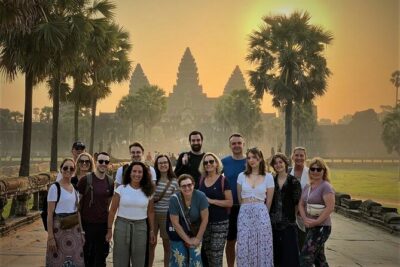 ★ 5.0Angkor Wat Highlights and Sunrise Guided Tour from Siem ReapFrom $233,213 reviews
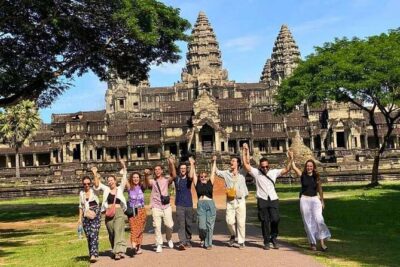 ★ 5.0Angkor Wat Sunset Small Group Tour with Lunch IncludedFrom $203,059 reviews
 ★ 5.0Full-Day Angkor Wat Sunrise Private Tour with Guide from Siem ReapFrom $602,920 reviews