
Temples and floating life, same day. I like how this tour strings together Angkor Wat and Angkor Thom with a private boat on Tonle Sap, not just a temple checklist. You also get an English-speaking driver guide and that small but helpful touch, cool towels, for a long day in the heat.
One consideration: Kompong Phluk may not fully match the idea of a whole village floating on the water. You’ll still see lake living up close, but expect a mix of water-season life, stilted homes, and boats rather than a single, continuous floating street.
Key Highlights Worth Booking For
- Private boat tour on Tonle Sap around Kompong Phluk
- Hotel pickup and drop-off in an air-conditioned vehicle
- UNESCO Angkor Archaeological Park stops, including Angkor Wat plus Angkor Thom
- English-speaking driver guide to help you understand what you’re seeing
- Cool towels during touring to make the day more comfortable
- Angkor Pass required and paid at the Angkor Wat Ticket Office
Other ways to walk the great temple
- Angkor Wat Sunrise or Sunset Tour with Guide from Siem Reap★ 5.0 · 12,109 reviews
- Siem Reap: Angkor Wat: Small-Group Sunrise or Sunset Tour★ 5.0 · 9,444 reviews
- Siem Reap: Angkor Wat 2-Day Tour with Sunrise and Sunset★ 4.9 · 4,429 reviews
- Siem Reap: Full-Day Angkor Wat Guided Tour with Sunset★ 4.9 · 3,803 reviews
Why This Angkor Wat and Tonle Sap Combo Works
Angkor Wat gets most of the attention in Siem Reap, but the Tonle Sap lake region is what makes Cambodia feel alive in a different way. This day tour takes you from carved temple walls that record ancient stories to a lake ecosystem that still shapes everyday life.
I like that the pacing is built around two very different settings. First you’re walking and looking inside the Angkor Archaeological Park, with key sights like Angkor Wat and Bayon. Then the day shifts to Kompong Phluk, where the “tourist part” is the boat ride and the real value is seeing how people live with the water.
Because it’s private, it feels less rushed than the big cattle-car group tours. Your English-speaking driver guide can steer you toward the important spots, and you’re not stuck waiting while a large group catches up.
Getting Started in Siem Reap and the Angkor Pass Reality Check
The day begins early, with pickup arranged between about 7:30 and 8:30am from your hotel in Siem Reap. You’ll ride in an air-conditioned vehicle, which matters because you’re about to spend hours on temple paths where the sun can hit hard.
Before you step into Angkor Wat, you’ll go to the Angkor Wat Ticket Office to purchase your Angkor Pass, which is required for entry. The pass is not included in the tour price, so you should plan for that cost up front. It’s also a good moment to confirm your timing, because once you’re at the park, the rest of the day becomes a steady flow of temple stops.
This is also where the tour’s practical side shows up: instead of you trying to figure out ticket logistics on your own, the driver handles the route, you handle the ticket purchase, and you move on.
Angkor Wat: How to Make Two Hours Count
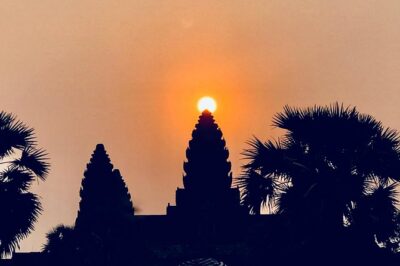
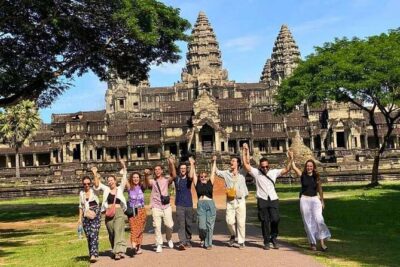
Angkor Wat is the headliner. Even if you’ve seen photos, nothing prepares you for the sheer scale of the place. The main takeaway here is that you’re visiting a state temple complex built for King Suryavarman II in the early 12th century, and it’s the best-preserved temple at Angkor.
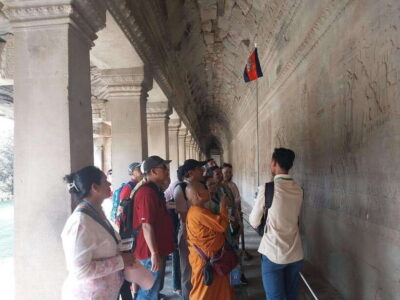
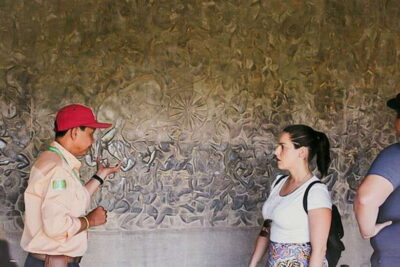
With about 2 hours at Angkor Wat, you’ll want to focus on the most meaningful “anchors” rather than trying to see everything. Look for the overall layout first, then shift to specific views where you can connect the carvings to the stories being told. A guide helps with this part, because the temple art can feel like decoration if you don’t know what you’re looking at.
Two practical notes for enjoying Angkor Wat within a limited time:
- Start with orientation. You don’t need to memorize the site, but you do want to understand where the key viewpoints are so your time doesn’t evaporate wandering.
- Pace your photos. It’s easy to spend too long taking pictures that look almost identical. Instead, take fewer photos but spend more time looking closely at carvings and lines.
Also, admission for Angkor Wat is not included, so your final day cost depends on the pass and any fees tied to entry.
Angkor Thom South Gate: The Photo Stop That Teaches You the Layout
After Angkor Wat, the tour moves to Angkor Thom, the fortified city area that covers a sprawling footprint. You enter from the South Gate, crossing a causeway that’s lined with figures, and that gateway moment is more than a quick picture.
This stop is only about 20 minutes, but it’s useful because it helps you understand how Angkor Thom is organized. A gate is a “map moment.” It gives you a sense of where the city core sits, so when you move on to Bayon, you’re not just walking randomly.
The drawback is simple: 20 minutes goes fast. If you love architecture and could spend longer studying gates and walls, you may feel you’re moving a bit quickly. The tradeoff is that the tour keeps the full day balanced, especially because the Kompong Phluk boat portion also takes time.
More temple circuits, set side by side
Bayon Temple: Faces, Symbols, and a Slightly Different Mood
Bayon is the emotional center for many people. It’s a richly decorated Khmer temple, built in the late 12th or early 13th century as the state temple of King Jayavarman VII. The famous feature here is the temple’s carved faces, which help Bayon feel more personal than some of the bigger monument spaces.
You’ll spend about 1 hour at Bayon. That is enough time to see it in stages: first the overall look, then the details up close where you can spot how the ornament works and how the carvings connect across surfaces.
What I like about this timing is that it balances your day. After Angkor Wat’s grand scale, Bayon’s dense details feel like a change of gear. If Angkor Wat is the big scene, Bayon is the close look.
And because Bayon is not included in the tour admissions, you should be ready for the final ticket math. Still, the hour here usually feels like real value because it’s not just passing through.
Kompong Phluk on Tonle Sap: The Boat Ride Plus Real Living
Then comes the change of scenery. The tour drives about 45 minutes from the temple area out toward the countryside to reach the quay. From there, you board a local boat for about a 1.5-hour ride on Tonle Sap Lake.
This is the part that turns your day from monuments into daily life.
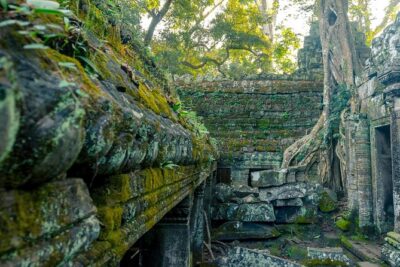
The tour includes a private boat tour, described as exploring floating villages and flooded forests with a guided driver. That phrasing is important because it sets expectations. Tonle Sap is seasonal, and the lake’s water level affects what you’ll see. In some conditions, you get more visible water life, and in others you’ll notice stilted structures and the ways the shoreline becomes a living area.
One thing to keep in mind, based on common disappointment that I think you can avoid: don’t assume Kompong Phluk will look like a perfect, fully floating theme-park village. You may see scattered floating homes and clusters of stilt housing, with the real action tied to the lake environment itself. If you go in expecting “a single floating street,” you may feel let down. If you go in expecting “people adapting to water,” you’ll likely enjoy it much more.
The tour also gives you time in this area within a total 5-hour block at Kompong Phluk. Your best strategy is to treat the boat ride as the main event, then use the extra time to observe how daily life changes with the water season.
Lunch on Your Own: Build a Simple Plan
Lunch is not included. You’ll have a lunch break on your own account during the Kompong Phluk portion.
This is one of those small details that can affect your comfort, especially if you’re tired from temple walking and then switching gears to boat time. I’d plan to eat somewhere close to where you’ll be during the tour block, or at least keep it simple. The priority is staying energized without losing time.
If you’re sensitive to spice or heat, pick a place with quick service. The day’s schedule is not long enough to waste time hunting for the perfect meal.
Price and Value: Why $40 Might Be a Great Deal, and When It Isn’t
At $40 per person, this tour price looks like a bargain for what you get: air-conditioned pickup, private transport, a private boat tour, cool towels, and an English-speaking driver guide. For many visitors, that combo saves the hassle of arranging separate temple visits and lake excursions.
But you should also understand what pushes the total higher:
- Entrance costs for temple stops are not included, and the Angkor Pass is required and purchased at the ticket office.
- A government tax and community development fee of $20 per person is listed as not included.
- Tips are not included.
So is it still good value? For the kind of day you’re getting, yes, especially if you want privacy and a real lake segment rather than a quick photo stop. If you’re traveling on a tight budget, do the math early so surprises do not ruin your mood.
Also, it’s listed as having group discounts and mobile tickets, but because it’s a private tour where only your group participates, your main value driver is the boat plus temple pairing.
Practical Tips That Make the Whole Day Easier
A day that includes temples and a boat ride needs a few smart choices.
1) Dress for sun and sacred spaces. Temple areas often require shoulders and knees to be covered, and you’ll be walking outdoors. Lightweight, breathable clothing helps, but keep it respectful.
2) Bring a small layer. Boat time can feel cooler, especially if there’s a breeze on the lake.
3) Hydrate before you feel thirsty. The day runs long, and even with cool towels, you’ll want water.
4) Expect real walking. Angkor Wat, Angkor Thom, and Bayon all involve uneven ground and lots of moving between points.
5) Keep Kompong Phluk expectation flexible. If you arrive thinking you’ll see only one type of floating settlement, you might get frustrated. If you arrive ready to see a range of lake-adapted living, you’ll notice more and enjoy more.
One more small comfort note: the tour includes free cool towels during touring. Don’t overlook it. Use it right when you step out of the car, not after you already feel drained.
Who This Private Tour Fits Best
This tour is a strong fit if you want:
- A single day that connects Angkor’s major sights with Tonle Sap living
- A private experience with an English-speaking driver guide
- A boat-based Kompong Phluk stop, not just a quick roadside look
It also works well for first-time visitors to Siem Reap who want the headline temples but don’t want to miss the lake context.
Where you might hesitate is if you expect a perfectly consistent floating village aesthetic at Kompong Phluk. If your mental picture is something closer to a full, continuous floating neighborhood, you could be disappointed. But if you’re interested in how water levels shape life, you’ll likely feel satisfied.
Should You Book This Angkor Wat and Tonle Sap Private Day Tour?
I’d book this tour if you want your day in Siem Reap to feel balanced. Angkor Wat and Bayon give you the big cultural scene, and Kompong Phluk turns that knowledge outward into real, present-day life.
You should book it especially if you value privacy, air-conditioned comfort, and a guided approach that helps you understand what you’re looking at. The private boat portion is often the piece that makes the tour memorable, not just the temples.
Skip or reconsider if your priority is only maximizing temple time, or if you want Kompong Phluk to look like a single, fully floating village. Otherwise, this is a practical way to see both sides of Siem Reap in one go.
FAQ
How long is the Angkor Wat and Tonle Sap lake private day tour?
The tour lasts about 9 hours.
Is hotel pickup and drop-off included?
Yes. Pickup and return drop-off from your hotel in Siem Reap are included with private transport.
Do I need an Angkor Pass for the temple visits?
Yes. You will go to the Angkor Wat Ticket Office to pay and get your Angkor Pass, which is required.
Which parts are included by boat?
The Kompong Phluk portion includes a local boat ride on Tonle Sap Lake for about 1.5 hours.
Is lunch included during the tour?
No. Lunch is a break you take on your own account.
What costs are not included in the price?
Tips, travel insurance, and a government tax and community development fee of $20 per person are not included. Admissions for the temple stops are also listed as not included.
Can I cancel for a full refund?
Yes, you can cancel for free up to 24 hours in advance for a full refund.
Out on Tonle Sap
- From Siem Reap: Kampong Phluk Floating Village Tour by Boat
★ 4.9 · 6,979 reviews - Sunset tour of Kampong Phluk stilts home village on the Tonle Sap
★ 5.0 · 4,865 reviews - Kompong Phluk Floating Village Half-Day Tour ( Morning / Sunset )
★ 5.0 · 1,494 reviews - Siem Reap: Kulen Mountain, Beng Mealea and Tonle Sap Tour
★ 5.0 · 1,483 reviews - Tonle Sap Lake & Kampong Phluk Village Half-Day Tour
★ 5.0 · 1,045 reviews
More Temple Circuits Around Siem Reap
- Angkor Wat Sunrise or Sunset Tour with Guide from Siem Reap
★ 5.0 · 12,109 reviews - Siem Reap: Angkor Wat: Small-Group Sunrise or Sunset Tour
★ 5.0 · 9,444 reviews - Siem Reap: Angkor Wat 2-Day Tour with Sunrise and Sunset
★ 4.9 · 4,429 reviews - Siem Reap: Full-Day Angkor Wat Guided Tour with Sunset
★ 4.9 · 3,803 reviews - Angkor Wat Sunrise tour with Small – Group and Guide tours
★ 5.0 · 3,655 reviews
Angkor Wat, a Few More Ways In
- Angkor Wat Sunrise or Sunset Tour with Guide from Siem Reap
★ 5.0 · 12,109 reviews - Siem Reap: Angkor Wat: Small-Group Sunrise or Sunset Tour
★ 5.0 · 9,444 reviews - Siem Reap: Angkor Wat 2-Day Tour with Sunrise and Sunset
★ 4.9 · 4,429 reviews - Siem Reap: Full-Day Angkor Wat Guided Tour with Sunset
★ 4.9 · 3,803 reviews - Angkor Wat Sunrise tour with Small – Group and Guide tours
★ 5.0 · 3,655 reviews
Just Added: Fresh Siem Reap Tour Reviews

Angkor Wat Temple Tours, compared.
 ★ 5.0Angkor Wat Sunrise or Sunset Tour with Guide from Siem ReapFrom $1812,109 reviews
 ★ 5.0Angkor Wat: Small-Group Sunrise or Sunset TourFrom $159,444 reviews
 ★ 4.9Angkor Wat 2-Day Tour with Sunrise and SunsetFrom $344,429 reviews
 ★ 4.9Full-Day Angkor Wat Guided Tour with SunsetFrom $153,803 reviews
 ★ 5.0Angkor Wat Sunrise tour with Small – Group and Guide toursFrom $143,655 reviews
 ★ 5.0Angkor Wat Highlights and Sunrise Guided Tour from Siem ReapFrom $233,213 reviews
 ★ 5.0Angkor Wat Sunset Small Group Tour with Lunch IncludedFrom $203,059 reviews
 ★ 5.0Full-Day Angkor Wat Sunrise Private Tour with Guide from Siem ReapFrom $602,920 reviews
Browse the lists this tour appears in