
Reviewed · ANGKOR WAT TEMPLE TOURS
Angkor Wat: Sunrise: Ta Prohm and Bayon Temple Tour
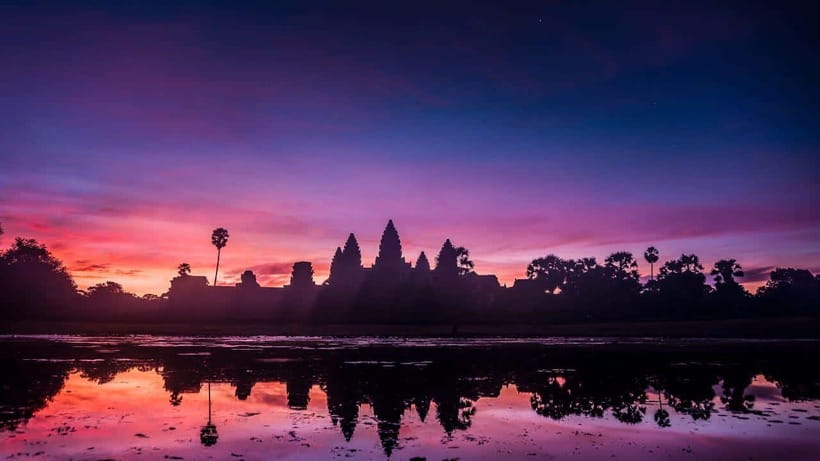
Sunrise at Angkor Wat is a reset button. This tour pairs a pre-dawn start with structured temple time, so you see the Big Moments without wasting your morning. Guides like Mr. Sokpee, Sopheaprath, Chhay, and Kiz are repeatedly praised for steering you to good sunrise viewing spots and making the history make sense.
Two things I really like: first, you get a real guided visit inside Angkor Wat, including corridors and upper terraces, not just a quick look at the outside. Second, the day has variety, from the jungle look of Ta Prohm to the fortress-and-faces drama of Angkor Thom and Bayon. A potential drawback is the schedule: it is an 8-hour day that ends around noon to 1:30 pm, and you will be on your feet on temple paths and steps early and often.
If you can handle early wake-ups and temple walking, this is a very efficient way to experience Angkor at sunrise and still have time for the rest of your day.
Key moments that make this tour worth your time
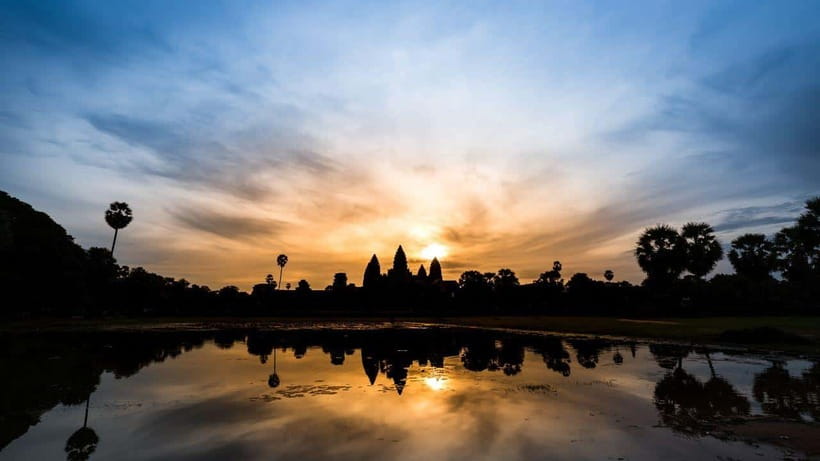
- Angkor Wat sunrise positioning, with guides who know where to stand for photos and reflections
- A guided walk through Angkor Wat interiors, including corridors, central chambers, and upper terraces
- Ta Prohm’s jungle atmosphere, tied to the story of Henri Mouhot’s early rediscovery
- Bayon Temple’s face towers, plus the southern Gate of Angkor Thom and its gods-and-demons figures
- Comfort between stops, with an air-conditioned vehicle, bottled water, and cool towels
- A history focus that stays practical, with guides explaining Khmer architecture and meaning as you walk
Still deciding? Line this one up against a few Siem Reap favourites first.
- Small Group Countryside Sunset Bike Tours★ 5.0 · 39 reviews
- Elephant Sanctuary Cambodia, Pickup and drop off included★ 4.9 · 31 reviews
- Kayaking & Floating Village in Siem Reap★ 4.2 · 10 reviews
- Phnom Penh Airport (KTI) to Siem Reap, Safe Reliable Taxi Driver★ 5.0 · 6 reviews
Why this Angkor sunrise plan feels worth the 8-hour day
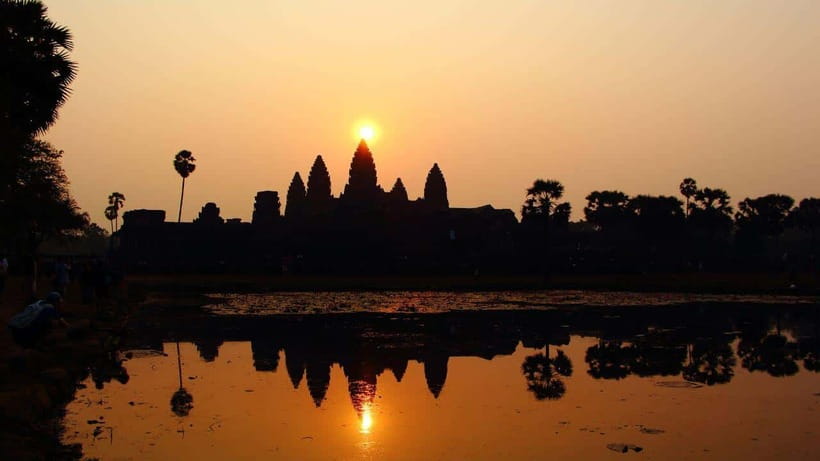
Angkor works best when you pace it. You need quiet for sunrise, then enough time to actually read the temple carvings and understand the layout. This tour is built around that idea. It starts before dawn, then it keeps moving in logical order, so you spend less energy figuring out where to go next.
What helps most is the way the day is framed: you are not only visiting temples, you are learning how they fit together. That matters at Angkor, where every corridor, courtyard, and doorway can tell part of the Khmer Empire story. With an English-speaking guide and a clear flow through Angkor Wat, Ta Prohm, and Angkor Thom, you are less likely to feel like you are just walking through random stone.
You also get comfort that actually helps on a long day. The bus is air-conditioned, and you receive bottled water and cool towels after stops. That may sound small, but in Siem Reap heat, it can make the difference between enjoying the last temple and wanting to rush out.
Arriving before dawn at Angkor Wat, and why the eastern side matters
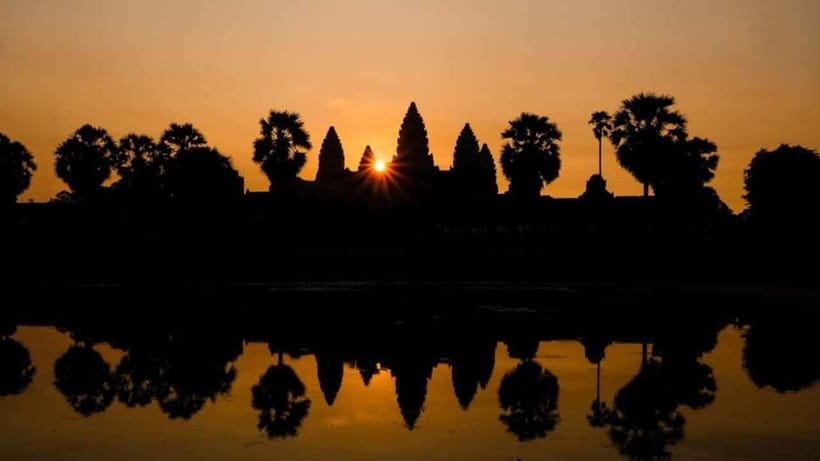
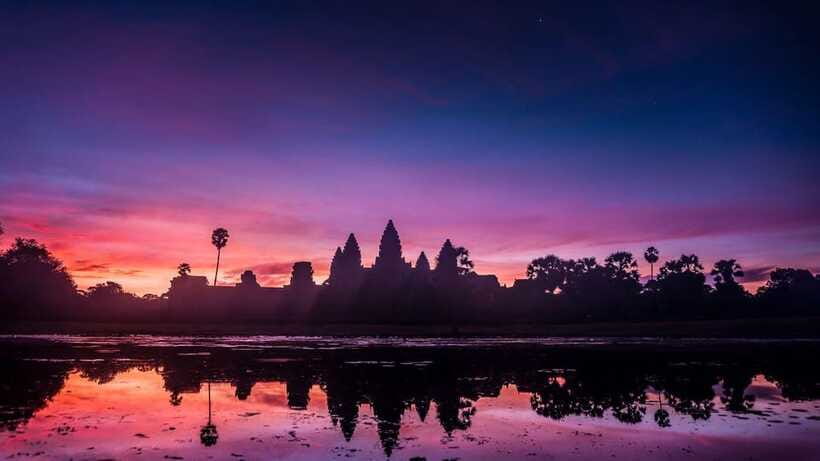
This tour is a pre-dawn departure from your hotel in Krong Siem Reap, with you heading out while the sky is still dark. The big target is sunrise outside Angkor Wat, and the guides are praised for bringing people to good viewing positions. In other words, you are not left wandering in the dark with a crowd, hoping you find a decent angle.
One detail that sounds simple but makes a difference is how you enter. You go into the great temple from the eastern side, in darkness. That early entry changes the feeling. At first you are not distracted by midday light or background noise. You are just orienting yourself inside a huge sacred space.
If you want to photograph the reflection and the first light on the stone, your timing matters. You are arriving early enough to get a good spot, which is exactly what several guides have helped guests do. And because it is dark on arrival, you should take the torch recommendation seriously.
Practical note: dress for early morning temple areas. Casual is fine, but shoulders and knees must be covered inside temples. Shorts are not allowed.
Angkor Wat at full detail, corridors, chambers, and upper terraces
Angkor Wat is the main event, and this tour treats it like one. You get about two hours inside, which is a sweet spot: long enough to move beyond the obvious highlights, short enough that you are not drained before Ta Prohm and Bayon.
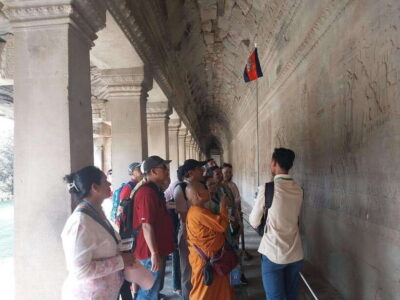
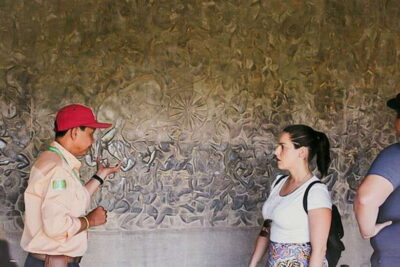
Here is what that inside time feels like in practice. You creep along hoary cloistered corridors past long stretches of bas-relief carvings. The carvings are a big reason people visit, and this tour gives you a way to actually understand what you are looking at.
Your guide is there to decode stories behind the bas-relief scenes and explain what life looked like in the Khmer Empire at its height. That is what keeps the carvings from becoming just stone patterns. Instead of only seeing figures, you start noticing what kinds of scenes show up repeatedly, and how the temple layout supports that message.
You also get time on the upper terraces. Upper areas can be steeper and brighter as the day warms up, so wear comfortable shoes and plan for some effort. But the payoff is a better sense of how the temple complex is organized.
One timing tip: after sunrise and your interior time, you will need a reset. This tour builds in a break later, so you can recover before continuing.
Srah Srang break and a mid-morning reset before Ta Prohm
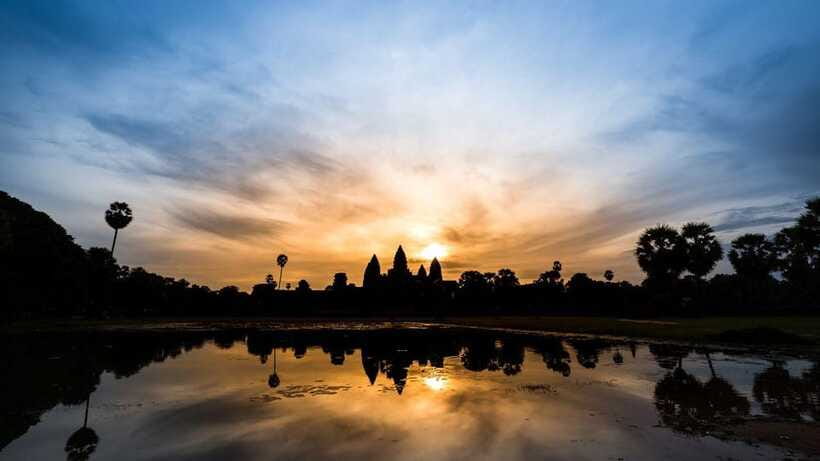
Between temple zones you stop at Srah Srang. This part of the flow matters, because it gives you a chance to eat and regroup. The schedule includes break time and breakfast availability, plus free time, which helps if you want a quick meal without rushing.
Breakfast itself is not included in the price, but food options are available at local places. Several guests note it is not overly priced, and having the option to buy a box breakfast from your hotel is also a smart move. If you like controlling your own food and pace, that is worth considering.
At this point in the day, you will likely feel the early start. The best strategy is to treat this as your energy checkpoint. Drink water, use bathroom time, then gear up mentally for Ta Prohm, which is atmospheric but also a lot of walking.
Chasing the light? More dawn and dusk runs
Ta Prohm’s jungle look, from monk stories to Mouhot’s rediscovery
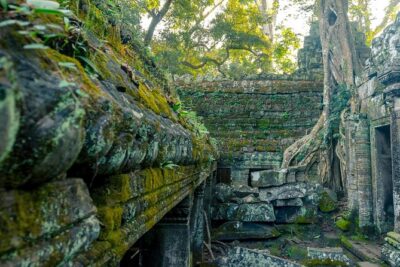
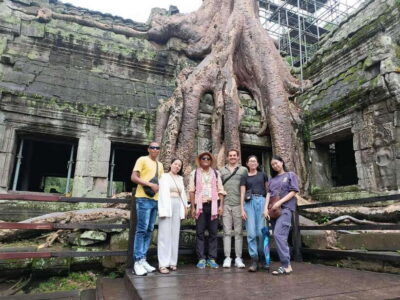
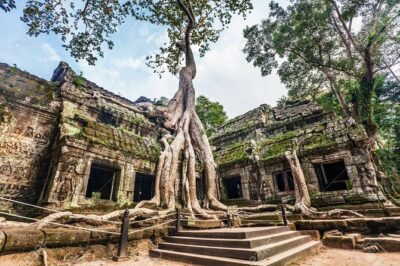
Ta Prohm is famous for a reason. It is the temple where nature and stone seem to share the same space. This tour keeps you moving through the jungle-enveloped setting for about an hour, and it is one of the most atmospheric parts of the whole day.
You are also not just looking at ruins. You get context: Ta Prohm was once home to 2,740 monks, and the site today looks much the same as it did in the early 1850s, when French explorer Henri Mouhot rediscovered it. That historical framing changes the vibe. You start seeing the ruin as a snapshot in time, not just an abandoned building.
What to watch for here: uneven ground, roots, and shaded areas. Comfortable shoes are not optional. Also, bring a biodegradable sunscreen or you will feel it later, especially once the sun gets higher.
Ta Prohm is also a place where photography can become a rabbit hole. If you care about photos, go slowly at least once, find a composition, then keep moving. You want time for Bayon and the Angkor Thom gates without sprinting.
Angkor Thom city walks, Leper King, Elephants, and Bayon faces
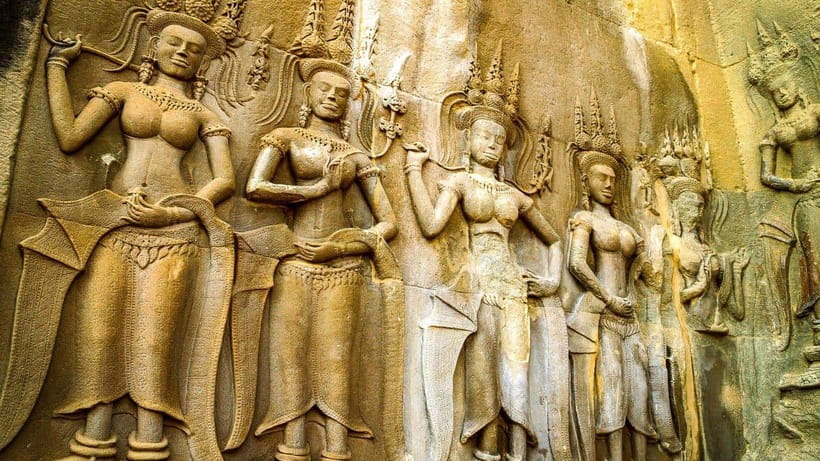
After Ta Prohm, the day shifts into the fortress-and-power story. You move toward Angkor Thom, passing by iconic spots on the way. Two of the stops highlighted are the Terrace of the Leper King and the Terrace of Elephants. Even if you only get a quick look, they are useful wayfinding moments. They signal that you are now in the heart of the royal city layout.
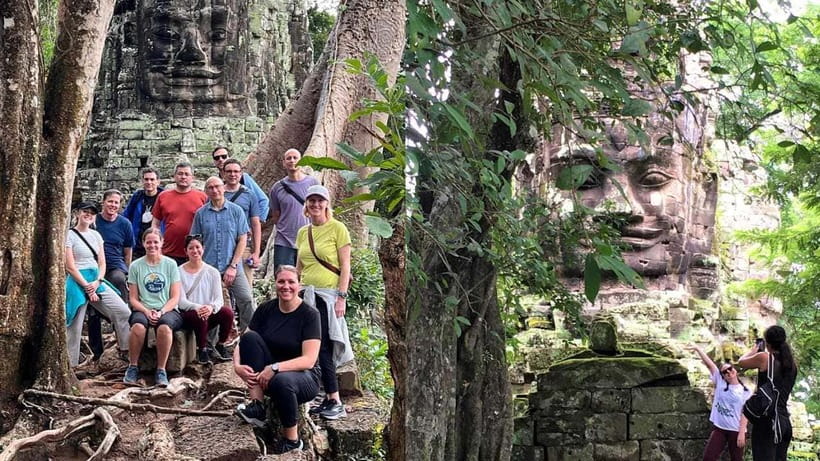
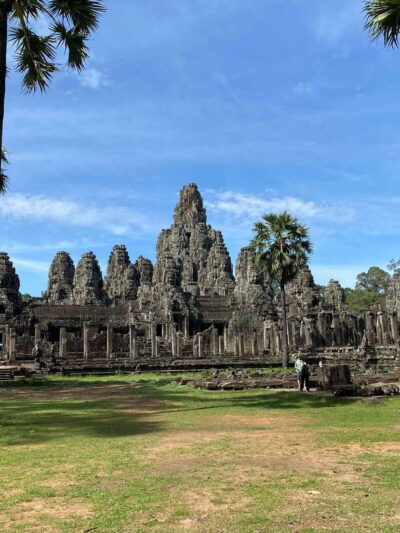
Then comes Bayon Temple, often the crowd favorite for good reason. You reach the central towers covered with more than 200 enormous faces. This is not subtle architecture. It is presence, repeated. Standing among those faces changes your scale sense because you feel watched from every direction.
A guide helps you understand what you are seeing so it stays more than a photo backdrop. You learn how Bayon ties into the wider Angkor Thom setting and how the city’s design supports the empire’s power message.
You then continue to the southern Gate of Angkor Thom, flanked by a row of 54 stone figures on each side. The symbolism is clear in the design: gods on the left and demons on the right. That kind of detail is exactly what a good guide brings to life. Without explanation, you might notice the figures. With explanation, you start connecting the symbolism to the larger temple storytelling.
The route keeps the pacing steady: walk, pause, understand, walk again.
Tonle Om Gate wrap-up, finishing at Angkor Archaeological Park, and what to watch for
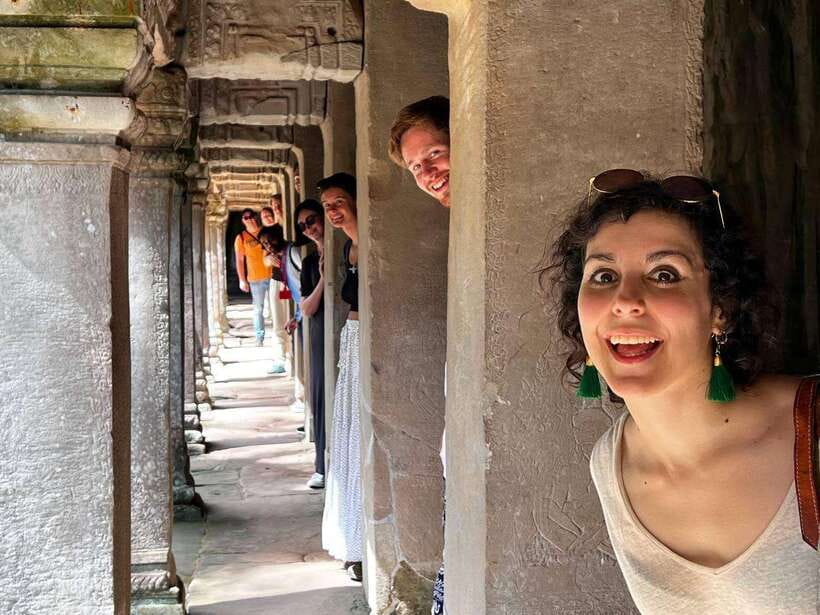
The tour continues with more time in the Angkor area atmosphere before heading back to your hotel. You do not end immediately after Bayon. You get a little breathing room in the Angkor Archaeological Park setting, which helps the day feel less like a nonstop sprint.
Your finish time is typically between 12:30 and 1:30 pm. That is a big plus if you want a lunch plan, a swim, or just a quiet afternoon. Angkor is exhausting, even when you love it. Ending earlier than late-afternoon tours can help you avoid the feeling of being wiped out the second you return to town.
What you might notice: this tour gives you a strong selection of the best-known temples in a single day, but it does not cover every corner of Angkor. If you have extra days and you are the type who likes to keep exploring off-script, you may still want more time later. But for one day, it is a very organized, high-impact loop.
Price and logistics, what you really pay for and what you should budget
The price you see, $16 per person, is low for a structured sunrise temple day. What makes it feel fair is what is included. You get:
- English-speaking tour guide
- Hotel pickup and drop-off
- Air-conditioned vehicle
- Bottled water and cool towels
- Temple visits across Angkor Wat, Ta Prohm, Angkor Thom, and Bayon
- Skip the ticket line
Those pieces matter. Sunrise timing with transport and a guide who can steer the group is hard to replicate on your own, especially if you do not know the temple flow. The cool towels and water also reduce friction during stops.
Now, the big separate cost is temple entrance fee: US$37. This covers all temples in one day. So your real budget is roughly $53 total per person, plus whatever you choose to eat for breakfast. Breakfast is available, but it is not included.
If you are deciding between options, compare like with like. A cheap tour without a guide might still cost you in time and confusion. A guided sunrise day that includes transport and internal temple time tends to be worth it because it reduces wasted hours.
Practical tips so your photos and feet cooperate
A few on-the-ground details will help this tour go smoothly.
Plan for early and warm. You are out pre-dawn and moving through large stone spaces. Even if the morning feels cool, temples warm up fast once the sun rises.
Wear shoes you can trust. You will walk on temple paths and steps, and Ta Prohm involves uneven ground and roots.
Bring a torch. It is recommended for the early morning start, when you are entering in darkness and moving before sunrise.
Follow the temple dress code. Shoulders and knees must be covered inside temples. Shorts are not allowed.
Use sunscreen. Bring biodegradable sunscreen, especially if you burn easily.
Keep some cash. Cash is listed as recommended, which usually helps for meals and any small purchases during breaks.
Respect the walk pace. Even with an organized route, you still need stamina. If you are sensitive to long walks, plan for breaks and hydration.
Also, note who should skip this one: children under 8 years and wheelchair users are not suitable based on the tour information.
Should you book this tour?
Yes, if you want a high-value Angkor day with the right mix of sunrise and meaningful guided temple time. This tour makes sense for first-timers who want to see Angkor Wat, Ta Prohm, and Bayon without guessing where to go, and for anyone who likes their photos better when a guide knows the best angles.
Skip it or consider a different pace if you hate early starts, or if long temple walking and stairs will be tough for you. Also remember the day is about 8 hours and ends around noon to 1:30 pm, so it is not a late-day lounging kind of plan.
If your goal is one unforgettable morning, then a structured continuation through the rest of Angkor’s big highlights, this is a solid choice.
FAQ
How long is the Angkor Wat sunrise and temple tour?
The tour duration is 8 hours.
What does the US$16 price include?
It includes hotel pickup and drop-off, an English-speaking tour guide, air-conditioned transportation, bottled water and cool towels, and visits to Angkor Wat sunrise plus Angkor Wat, Ta Prohm, Angkor Thom City, and Bayon Temple. It also includes skipping the ticket line.
How much is the temple entrance fee?
Temple entrance fee is US$37.00 and it covers all temples in one day.
Is breakfast included?
Breakfast is not included, but breakfast is available at local restaurants during the break.
When does the tour end?
The tour ends between 12.30 and 1.30 pm.
What should I bring for the early morning start?
Bring comfortable shoes, a camera, biodegradable sunscreen, comfortable clothes, and cash. A torch is recommended for the early morning start.
What is the dress code for the temples?
Dress code is casual, but shoulders and knees must be covered inside temples. Shorts are not allowed.
Do I get hotel pickup and drop-off?
Yes, convenient hotel pickup and drop-off services are included.
Is this tour suitable for children or wheelchair users?
It is not suitable for children under 8 years and it is not suitable for wheelchair users.
What is the cancellation policy?
You can cancel up to 24 hours in advance for a full refund.
Dawn and Dusk Over Angkor
- Small Group Countryside Sunset Bike Tours
★ 5.0 · 39 reviews - SiemReap Sunset Dinner Riding an Ox-Cart at Rice Paddy Field
★ 5.0 · 3 reviews - Siem Reap: Angkor Sunrise Private Tour – World Heritage Site
★ 5.0 · 3 reviews - Private Angkor Sunrise, Guide Breakfast and Tuktuk included
★ 3.9 · 3 reviews
Just Added: Fresh Cambodia Tour Reviews
Angkor Wat Temple Tours, compared.
 ★ 5.0Angkor Wat Sunrise or Sunset Tour with Guide from Siem ReapFrom $1812,109 reviews
 ★ 5.0Angkor Wat: Small-Group Sunrise or Sunset TourFrom $159,444 reviews
 ★ 4.9Angkor Wat 2-Day Tour with Sunrise and SunsetFrom $344,429 reviews
 ★ 4.9Full-Day Angkor Wat Guided Tour with SunsetFrom $153,803 reviews
 ★ 5.0Angkor Wat Sunrise tour with Small – Group and Guide toursFrom $143,655 reviews
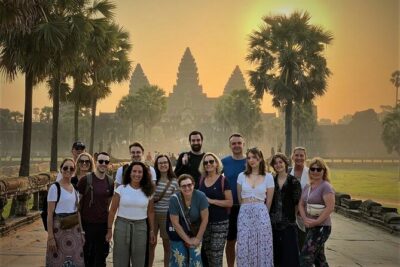 ★ 5.0Angkor Wat Highlights and Sunrise Guided Tour from Siem ReapFrom $233,213 reviews
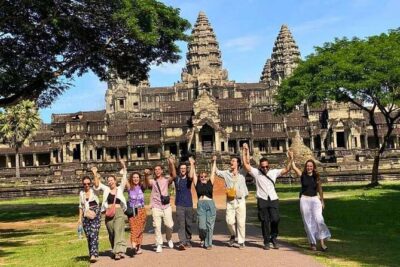 ★ 5.0Angkor Wat Sunset Small Group Tour with Lunch IncludedFrom $203,059 reviews
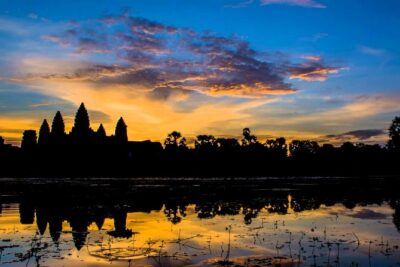 ★ 5.0Full-Day Angkor Wat Sunrise Private Tour with Guide from Siem ReapFrom $602,920 reviews
Browse the lists this tour appears in