
Reviewed · ANGKOR WAT TEMPLE TOURS
Angkor Wat: Sunrise 2.5 Days Temples & Tonle Sap-Small Group
Angkor Wat at sunrise hits different because the world feels quiet. This 2.5-day small-group tour packs major temples with smart pacing, plus a real look at life around Tonle Sap Lake (or an alternate show in the dry season). I love how the day is shaped around the big moments, not just a checklist.
I especially liked the guide-led storytelling. On the second day, you walk the rarely visited eastern side at night with torchlight, and your local guide explains what those bas-reliefs are saying. It also helps that you get hotel pickup in an air-conditioned vehicle, with mineral water ready so you are not scrambling before temple time.
One thing to consider: this is a lot of walking on stone paths, and it is not suitable for mobility impairments. Also, temple entrance fees and breakfast are extra, so the headline price is only part of the real cost.
Key highlights worth planning for
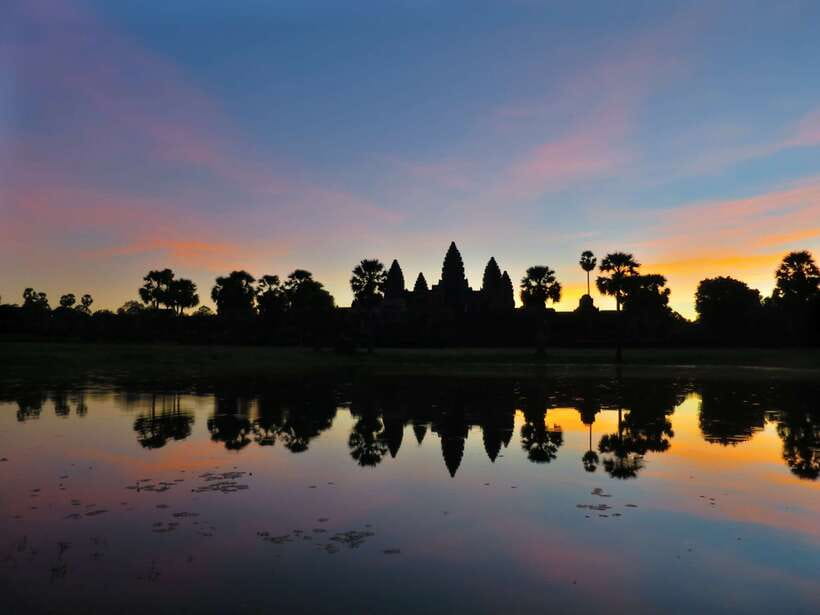
- Angkor Wat sunrise outside the temple, pre-dawn departure, then an after-dark walk with torchlight
- Rarely visited eastern side, plus the long bas-relief corridors that your guide helps you read
- Outside-Angkor Thom temples on Day 1, including the finely carved Banteay Srei
- Tonle Sap boat cruise to Kampong Phluk, flooded-forest views and homes on stilts
- Small group limited to 15, with licensed English-speaking guides and hotel pickup
- Seasonal swap, Tonle Sap Lake in most seasons, Cambodia Phare Circus in the dry season (March 1 to June 31)
Other ways to walk the great temple
- Angkor Wat Sunrise or Sunset Tour with Guide from Siem Reap★ 5.0 · 12,109 reviews
- Siem Reap: Angkor Wat: Small-Group Sunrise or Sunset Tour★ 5.0 · 9,444 reviews
- Siem Reap: Angkor Wat 2-Day Tour with Sunrise and Sunset★ 4.9 · 4,429 reviews
- Siem Reap: Full-Day Angkor Wat Guided Tour with Sunset★ 4.9 · 3,803 reviews
A 2.5-day Angkor plan that does not feel rushed
Angkor is big, hot, and often crowded. The smartest part of this tour is that it spreads the temple work across two full temple days, then finishes with a change of scenery on Day 3. You are not just bouncing between photo spots. You are guided from temple to temple with enough breaks to keep your brain awake.
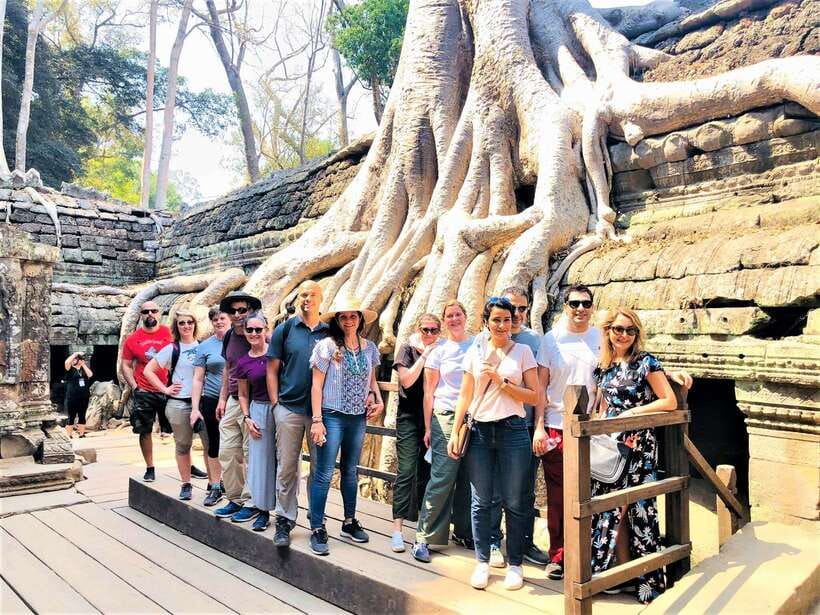
The small-group size matters here. With a maximum of 15 people, you are less likely to get lost in a sea of bodies at key viewpoints. In my experience of places like this, that difference shows up fast: better timing, calmer movement, and more room to ask questions when you actually want answers.
Day 1: Pre Rup to Preah Khan, the quieter Angkor outside Angkor Thom
Day 1 focuses on temples outside the Angkor Thom city core. That choice is practical, because it lets you start your Angkor experience with variety before you hit the busiest sites.
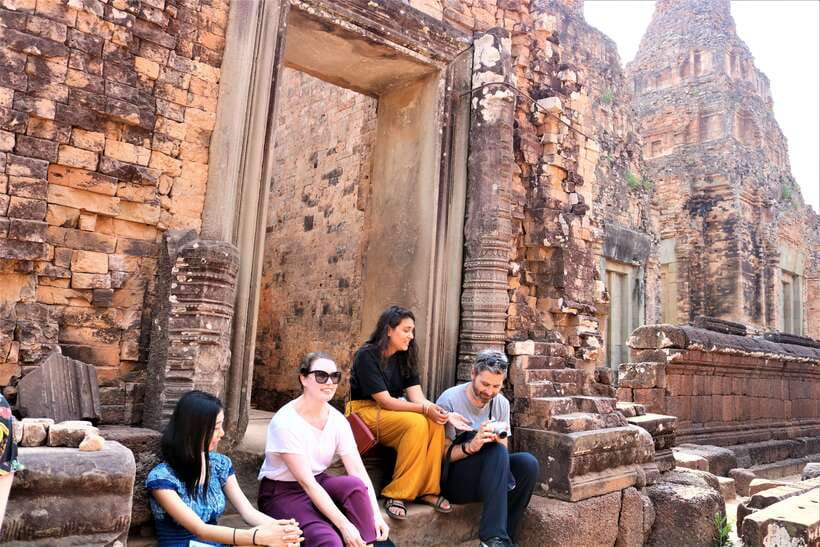
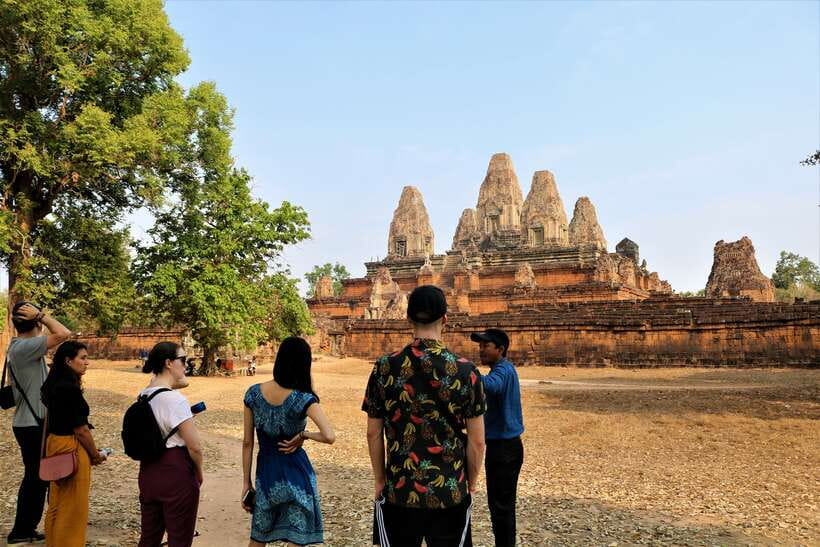
Pre Rup, a mountain-temple built like layers
Your first stop is Pre Rup, a Hindu temple with a “mountain temple” feel, made from brick, laterite, and sandstone. The structure is described as a state temple, which usually means it was designed for ceremony and symbolism, not just decoration. Expect a strong sense of geometry and a lot of texture in the stones as you climb and look around.
What I like about starting here: you get an early lesson in how Khmer temple design works. It sets you up to understand later temples like Bayon and Ta Prohm, where the visuals are more dramatic and the storytelling gets more complex.
Banteay Srei, sandstone carvings that take patience
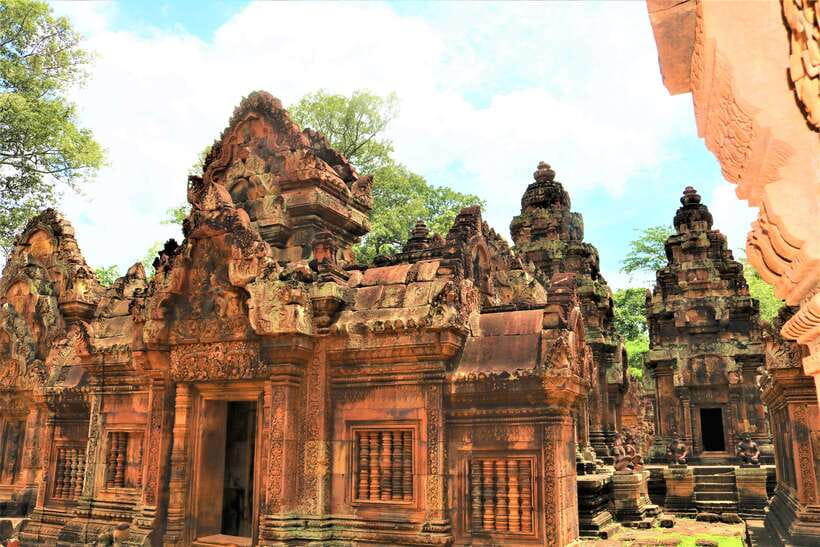
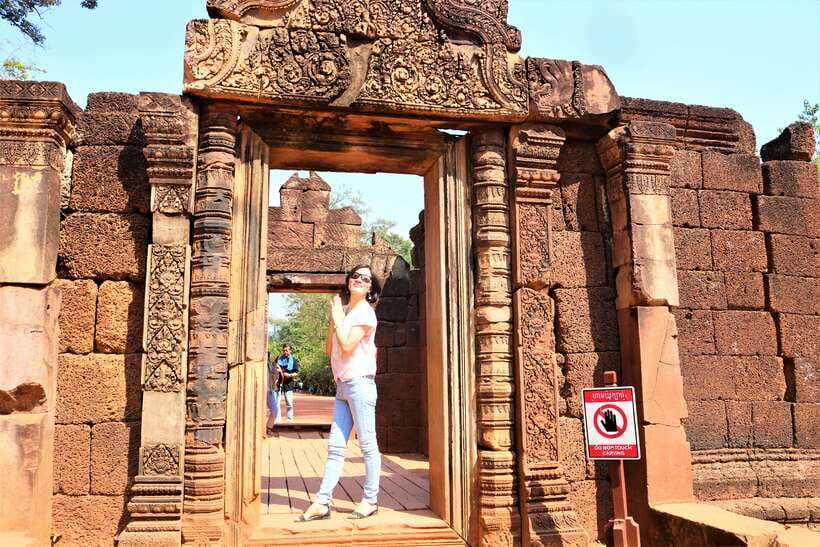
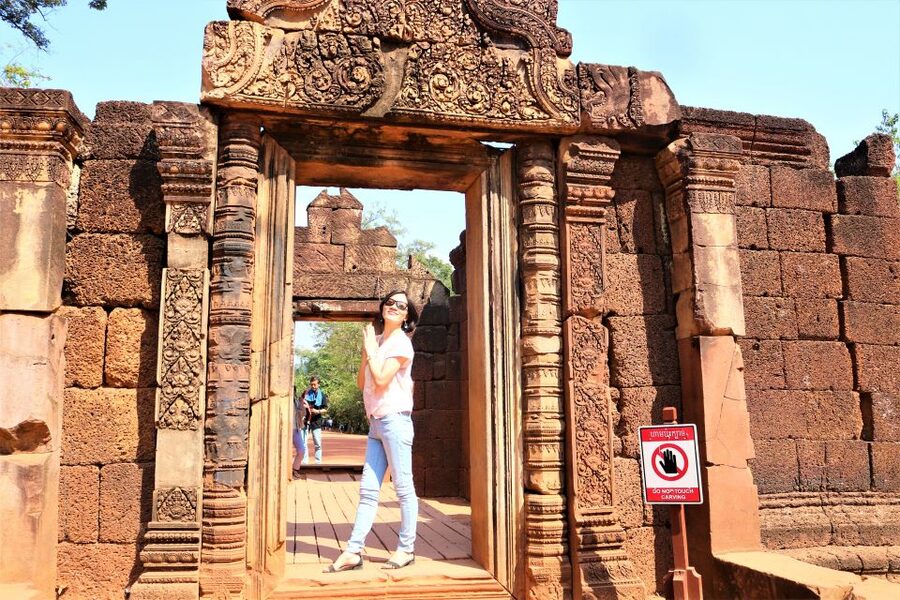
Next comes Banteay Srei, one of Cambodia’s finest small sandstone structures. It is known for intricate, well-preserved reliefs, and your guide will connect those carvings to the bigger Khmer Empire story. The tour notes that Banteay Srei was only accessible again after the Khmer Rouge left the area, so there is a real historical weight behind the beauty.
This stop is also where you feel the benefit of a guide who can translate what you are seeing. The carvings can look “just decorative” if you do not know what figures and scenes represent. With a good guide, you start spotting recurring characters and themes.
Chasing the light? More dawn and dusk runs
Neak Pean, an artificial island with Buddhist calm
On your return journey, you visit Neak Pean, an artificial island temple with a Buddhist presence on a circular island. This is a more reflective stop compared to the more outward, staged feeling of other temples. It also gives your legs a small break from constant climbing.
If you like temples that feel slightly off the main route, this is a good one. It tends to feel more intimate, and you can take in the setting rather than just chasing angles for photos.
Preah Khan, ruined and atmospheric with tree roots
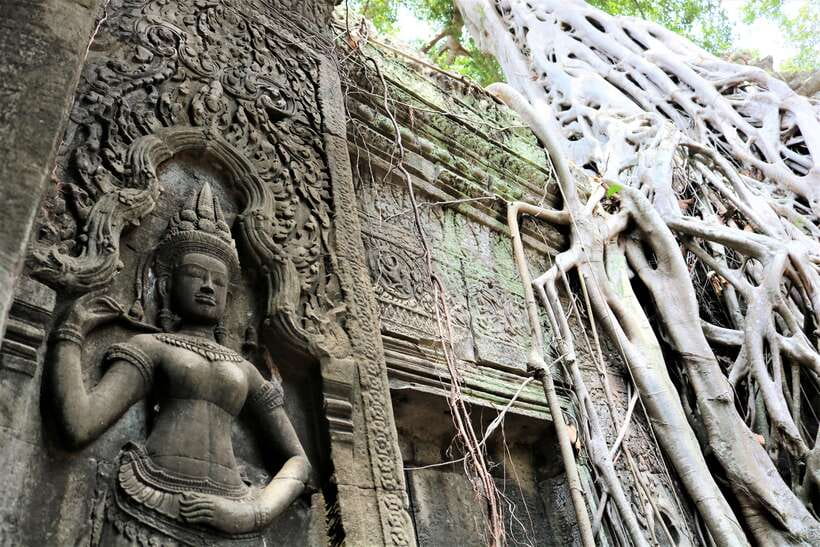
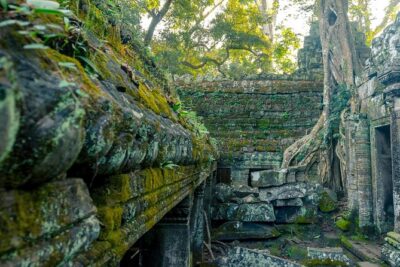
You finish Day 1 at Preah Khan, described as ruined but highly atmospheric, with crumbling stone structures and tree roots. This is the kind of place where Angkor’s “alive in the jungle” look feels real, not staged.
Drawback? Preah Khan can feel more time-warp and less “single must-see view.” If you are the type who wants one big wow picture and then a quick exit, you might want to slow down, because the interest here is in wandering.
Day 2: Angkor Wat sunrise, torchlit corridors, then South Gate and Bayon
Day 2 is your big classic day, and it starts with pre-dawn departure from your hotel. You go to Angkor Wat to see sunrise from outside first, then enter while it is still dark.
The sunrise and the moment you feel why people wake up early
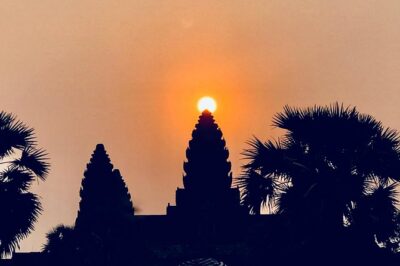
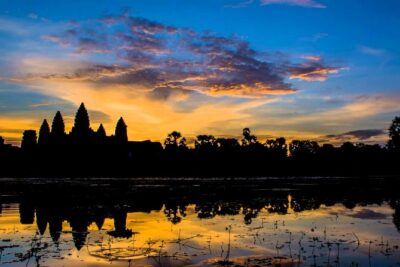
Sunrise at Angkor Wat is not a marketing line. It is the point. In early light, the temple takes on a calm seriousness. You also avoid the worst heat and the thickest crowds, which makes the experience easier on your body.
Inside Angkor Wat at night, the eastern side you do not normally get
After the sunrise moment, the tour takes you into Angkor Wat darkness with the light from your torch. The description emphasizes the rarely visited eastern side and cloistered corridors.
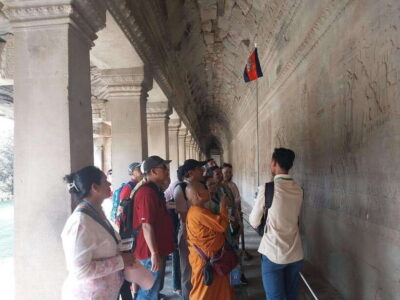
That rarely visited detail is why the tour feels different from the rushed day trips. Instead of only photographing open courtyards, you get to see how the bas-relief storytelling stretches across long corridors. The tour notes the corridors include the longest stretch of bas-relief carvings in the world, and your local guide deciphers the stories behind the scenes.
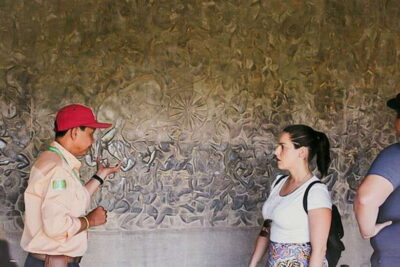
This is where you will either love the tour or feel lost, depending on whether you engage with the explanation. I think it is worth leaning in. When your guide points out what scenes represent, the carvings turn into a narrative instead of wall art.
Breakfast near the temple, then the work continues
The morning tour ends with breakfast outside the temple and a short rest. Then you continue with the southern Gate of Angkor Thom, flanked by 54 stone figures of gods and demons.
If you are picturing a simple entrance photo, pause. Those figures are part of a symbolic balance, and the tour’s framing helps you notice that. After that you enter the fortified city of Angkor Thom.
Bayon, then Ta Prohm in the later-day light
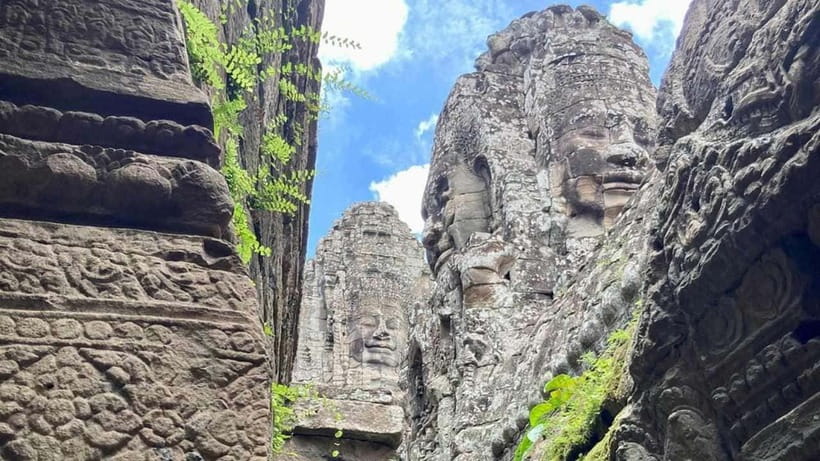
Next you visit Bayon, famous for central towers covered with more than 200 enormous faces. This is the moment many people picture when they think of Angkor. With a guide, you also get perspective on what the faces represent and how Bayon fits into the broader Khmer Empire worldview.
After lunch and a rest break, the tour heads to Ta Prohm, described as jungle-enveloped and one of the most atmospheric temples in Angkor. If Day 2 is about reading the stone stories and learning temple grammar, Ta Prohm is about feeling the place. You will see the roots, the ruined stones, and the sense that nature is part of the temple’s current look.
Day 3: Tonle Sap at Kampong Phluk, or Phare Circus in the dry season
Day 3 is the big change from temple focus. You head out through the countryside to Tonle Sap Lake, described as the world’s second-largest freshwater lake.
The boat trip to Kampong Phluk, houses on stilts in a flooded forest
You take a boat trip to Kampong Phluk, a collection of three small fishing villages in an atmospheric flooded forest setting. The tour includes cruising through the village and seeing unique houses on stilts, plus locals working in the floating forest.
What I like about this ending: it reminds you Angkor is not a museum-era story. It sits in a living country where livelihoods still depend on water and seasonal change. The boat format is also a smart way to see the village without needing to scramble through muddy paths.
You might also notice you see both the “scenery” and the “work.” That mix makes your photos feel more human.
Seasonal alternative: Phare Circus from March 1 to June 31
The tour also offers an alternative to Tonle Sap during the dry season, Cambodia Phare Circus, which your ticket includes with seat C. The season window is listed as March 1 to June 31.
This matters because it changes the feel of the last day. A boat through the flooded forest is one kind of memory. A circus show is another. Either way, it is built into the same 2.5-day structure, so you still get the full schedule without scrambling for options at the last minute.
Small group dynamics, hotel pickup, and guides who manage the experience
This tour is built around comfort and clarity. You get hotel pickup and drop-off in an air-conditioned vehicle, plus mineral water.
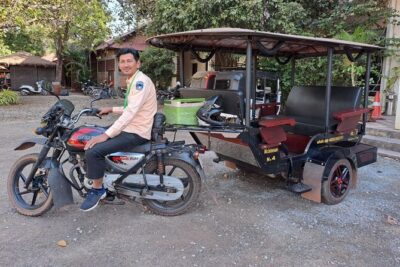
In the reviews, the pattern is consistent: drivers show up promptly and help with heat management. I saw notes about cold towels and water after temple stops, and that is exactly what you want after hours in the Cambodian sun. A small-group format also helps the vehicle timing. It is easier to regroup quickly and keep the day moving.
The guide makes or breaks the temple day
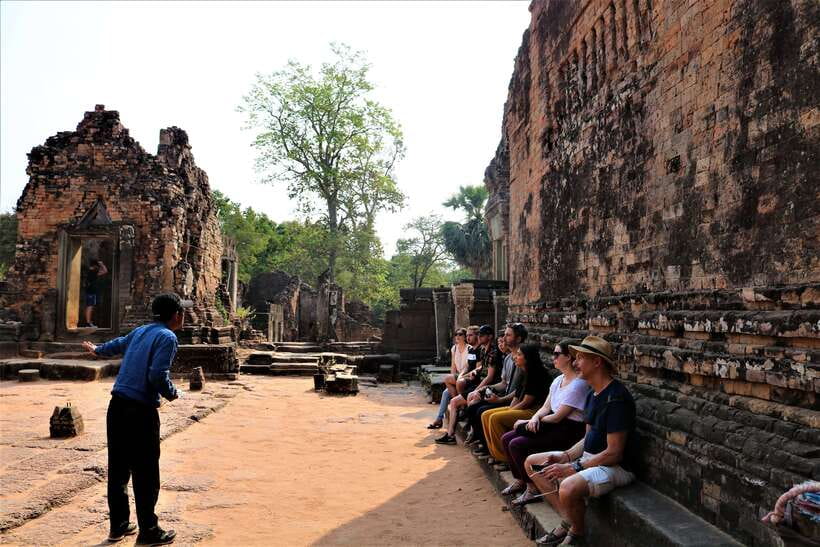
The most praised part across the feedback is the guide experience. I saw names like Saruon Pal, Pireak, AJ, Pi, Sam, Usa, and a mention of Mao as a driver. Many people singled out how patiently they explained temple meaning and Khmer culture, and how they helped with photos.
If you do not want to just stare at stones, pick the tour for the interpretation. On the night walk in Angkor Wat, in particular, the guided explanation of bas-reliefs is what turns the darkness into an experience you remember, not just a cool start before sunrise crowds.
Price and value: what you pay, what you do not, and how it adds up
The tour price is listed at $69 per person for 2.5 days. Temple entrance fees are not included. You need a 3-day pass for $62 per person, and breakfast is also not included.
So what is the real cost shape? In plain numbers, you are looking at about $131 total for the core tour plus temple pass, before you add breakfast and any meals along the way. That is still not bad for a guided program that includes hotel pickup, a licensed English-speaking guide, and included activities like the Tonle Sap boat cruise (or Phare Circus alternative).
Where the value shows up:
- You pay for a guide to translate the carvings and temple symbolism.
- You avoid the stress of coordinating routes and timing across multiple major sites.
- You get a small-group setup, which reduces crowd friction.
- You get included water, and the driver support tends to help with heat.
Where to watch your budget:
- Breakfast is not included.
- Lunch and other meals are not listed as included.
- The temple pass is an extra line item you should plan for from day one.
What to bring for Angkor: shoes, sun, and clothing rules
The tour specifically asks for comfortable shoes. That is non-negotiable. Angkor paths can be uneven, and you will likely spend long hours on stone surfaces.
Clothing note: short skirts are not allowed. That rule is often enforced in temple areas, so it is better to dress with it in mind.
Timing note: Day 2 starts pre-dawn, and the early morning can feel cooler before you hit the midday heat. Wear layers you can manage easily, especially since you will be moving between temples and vehicle breaks.
Also, the sunrise walk portion is described as happening in darkness with torchlight. So plan to be comfortable in low-light conditions and follow the guide’s pace. If you prefer to control your own lighting, you might want to confirm what is provided versus what you should bring.
Who should book this tour, and who might feel it is not a match
This experience is a strong fit if you want:
- Major Angkor temples plus the outside-of-Angkor Thom sequence on Day 1
- A true Angkor Wat sunrise experience, not a late start
- A guided explanation style that helps you understand bas-reliefs and Khmer culture
- A Day 3 cultural shift, either Tonle Sap at Kampong Phluk or the Phare Circus alternative
It is less ideal if:
- You have mobility limitations, since it is not suitable for mobility impairments
- You want very minimal walking, because the temple days involve a lot of ground coverage
- You get impatient with explanation-heavy stops, because the guide time is a big part of the value
Should you book it?
I’d book this tour if you care about context, timing, and comfort. The combination of an early Angkor Wat sunrise, the rarely visited eastern side and bas-relief reading, plus Tonle Sap’s flooded village world gives you a balanced Angkor experience instead of a straight temple sprint.
If you are sensitive to early mornings, still consider it. The pre-dawn start pays off quickly with the sunrise and calmer movement. Just go in knowing it is a full couple of days, and that the total temple cost includes the $62 pass plus breakfast.
If you want to maximize your chances of a great guide experience, you will likely be in good hands based on the repeated praise for guides like Saruon Pal, Pireak, AJ, Pi, Sam, and Usa in the feedback, plus drivers like Keal, Mao, and Keai.
FAQ
What is included in the 2.5 days exploring Angkor and Tonle Sap
The tour includes exploring major temples and either Tonle Sap Lake or Cambodia Phare Circus (depending on the season), a licensed English-speaking guide, Tonle Sap entrance fee and boat cruise or Phare Circus (seat C), hotel pickup and drop-off in an air-conditioned vehicle, and mineral water.
Are the Angkor temple entrance fees included
No. You need to buy a 3-day temple pass for $62 per person. Breakfast is also not included.
How early do we leave for Angkor Wat sunrise
You have a pre-dawn departure from your hotel to see sunrise outside Angkor Wat, then enter the temple in darkness with torchlight.
Does the tour include Tonle Sap Lake every time
Not always. Cambodia Phare Circus is the alternative during the dry season, listed as March 1 to June 31.
What group size should I expect
It is a small group limited to 15 participants.
What should I bring and wear
Bring comfortable shoes. Short skirts are not allowed.
Is the tour suitable for people with mobility impairments
No. The tour is not suitable for people with mobility impairments.
More Temple Circuits Around Siem Reap
- Angkor Wat Sunrise or Sunset Tour with Guide from Siem Reap
★ 5.0 · 12,109 reviews - Siem Reap: Angkor Wat: Small-Group Sunrise or Sunset Tour
★ 5.0 · 9,444 reviews - Siem Reap: Angkor Wat 2-Day Tour with Sunrise and Sunset
★ 4.9 · 4,429 reviews - Siem Reap: Full-Day Angkor Wat Guided Tour with Sunset
★ 4.9 · 3,803 reviews - Angkor Wat Sunrise tour with Small – Group and Guide tours
★ 5.0 · 3,655 reviews
Dawn and Dusk Over Angkor
- Angkor Wat Sunrise or Sunset Tour with Guide from Siem Reap
★ 5.0 · 12,109 reviews - Siem Reap: Angkor Wat: Small-Group Sunrise or Sunset Tour
★ 5.0 · 9,444 reviews - Sunset tour of Kampong Phluk stilts home village on the Tonle Sap
★ 5.0 · 4,865 reviews - Siem Reap: Angkor Wat 2-Day Tour with Sunrise and Sunset
★ 4.9 · 4,429 reviews - Siem Reap: Full-Day Angkor Wat Guided Tour with Sunset
★ 4.9 · 3,803 reviews
Angkor Wat, a Few More Ways In
- Angkor Wat Sunrise or Sunset Tour with Guide from Siem Reap
★ 5.0 · 12,109 reviews - Siem Reap: Angkor Wat: Small-Group Sunrise or Sunset Tour
★ 5.0 · 9,444 reviews - Siem Reap: Angkor Wat 2-Day Tour with Sunrise and Sunset
★ 4.9 · 4,429 reviews - Siem Reap: Full-Day Angkor Wat Guided Tour with Sunset
★ 4.9 · 3,803 reviews - Angkor Wat Sunrise tour with Small – Group and Guide tours
★ 5.0 · 3,655 reviews
Just Added: Fresh Siem Reap Tour Reviews
Angkor Wat Temple Tours, compared.
 ★ 5.0Angkor Wat Sunrise or Sunset Tour with Guide from Siem ReapFrom $1812,109 reviews
 ★ 5.0Angkor Wat: Small-Group Sunrise or Sunset TourFrom $159,444 reviews
 ★ 4.9Angkor Wat 2-Day Tour with Sunrise and SunsetFrom $344,429 reviews
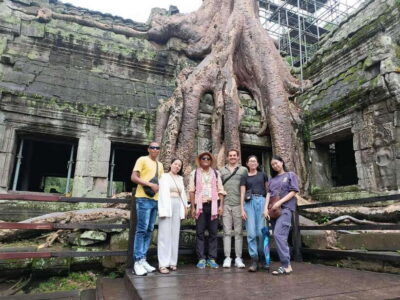 ★ 4.9Full-Day Angkor Wat Guided Tour with SunsetFrom $153,803 reviews
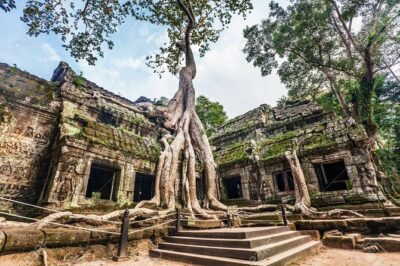 ★ 5.0Angkor Wat Sunrise tour with Small – Group and Guide toursFrom $143,655 reviews
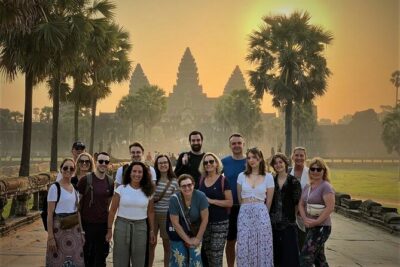 ★ 5.0Angkor Wat Highlights and Sunrise Guided Tour from Siem ReapFrom $233,213 reviews
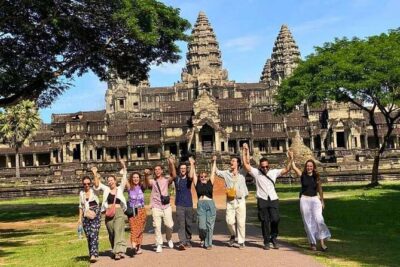 ★ 5.0Angkor Wat Sunset Small Group Tour with Lunch IncludedFrom $203,059 reviews
 ★ 5.0Full-Day Angkor Wat Sunrise Private Tour with Guide from Siem ReapFrom $602,920 reviews
Browse the lists this tour appears in