
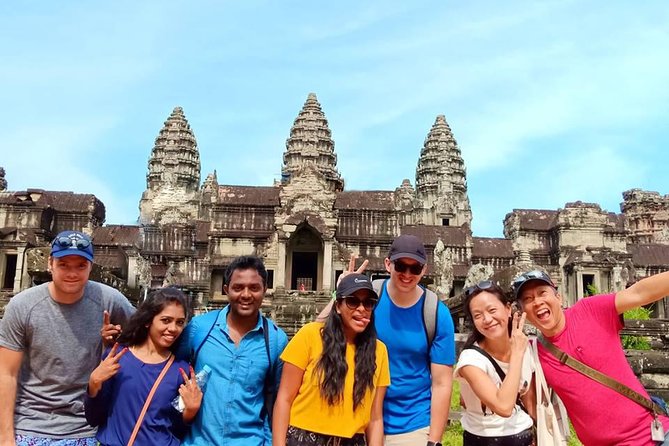
Reviewed · ANGKOR WAT TEMPLE TOURS
Angkor Wat Private Tour in a Tuk Tuk
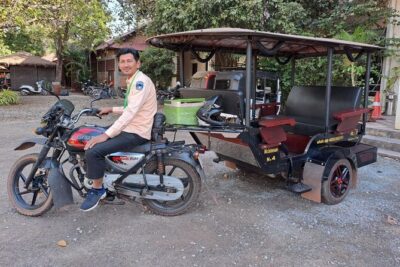
Tuk-tuk keeps Angkor from feeling huge. This private full-day circuit is built around getting you into the right places fast, with a live English-speaking guide who connects temple carvings to the stories behind them. I really like the way the guides, including names like Soydy, Vantha, Phy Phy, Long, Voath Vinh, Phuy Phy, and Nak, help you read what you are seeing instead of just snapping photos.
Two things I especially like. First, you get hotel pickup and drop-off, so your day starts without logistics stress. Second, you also get mineral water during the tour, which sounds small until you are walking and sitting in the heat all day.
One drawback to plan for: the big gate ticket is not included. The Angkor National Park ticket office charges $37.00 per person, and you will also want to budget for food since meals and drinks are not included.
Quick hits before you go
- Private tuk-tuk comfort for moving around Angkor Archaeological Park without fighting long walks
- Live English guide commentary to turn carvings and temple layout into something you understand
- Hotel pickup and drop-off in Siem Reap, starting around 8 am
- Key stops in a smart sequence, including Angkor Thom, Bayon, the Terrace of the Elephants, Ta Prohm, and Angkor Wat
- Bottled mineral water provided to help you stay steady in the midday sun
- Park admission ticket extra, so add $37 per person to the price
Other ways to walk the great temple
- Angkor Wat Sunrise or Sunset Tour with Guide from Siem Reap★ 5.0 · 12,109 reviews
- Siem Reap: Angkor Wat: Small-Group Sunrise or Sunset Tour★ 5.0 · 9,444 reviews
- Siem Reap: Angkor Wat 2-Day Tour with Sunrise and Sunset★ 4.9 · 4,429 reviews
- Siem Reap: Full-Day Angkor Wat Guided Tour with Sunset★ 4.9 · 3,803 reviews
Why a private tuk-tuk works at Angkor
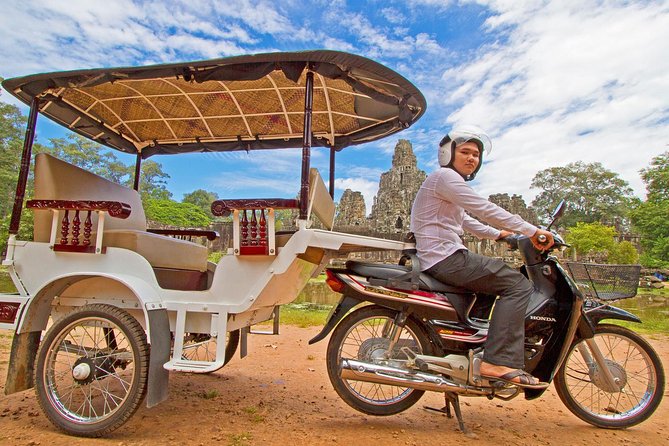
Angkor is big, and it can also feel spread out in a way that punishes slow travel. A private tuk-tuk helps because it gets you through the site in short hops, then lets you focus on what you actually came for. The route also benefits from the fact that Angkor has lots of tight lanes and narrow passageways, so being on a tuk-tuk can be less of a chore than constantly re-planning how to move.
The best part, though, is how this setup changes your brain. Instead of thinking about transportation every hour, you are thinking about temples. And when you pair that with a local guide, you start noticing details you would otherwise miss, like Hindu legends represented in intricate carvings. Even if you know nothing about Khmer temple symbolism, the commentary gives you a map in your head.
Your day is also private, meaning only your group rides together. That matters if you want a slower pace at one stop, or if someone needs a little extra time to regroup. A guide-transport team also tends to work smoothly, and people doing this tour often mention that the guide and driver move as a real unit.
Price and the real value math (plus the $37 ticket)
The tour price is $45.00 per person, and it covers a full-day tuk-tuk tour with a local live English-speaking guide, hotel or airport pickup and drop-off, and bottled water during the tour. That is a solid base value, especially if you want the guide to handle timing and temple order.
But you also need to plan for the mandatory admission. The Angkor National Park ticket office charges $37.00 per person, and that fee is not included in the tour price. So your realistic day cost becomes $45 plus $37, plus your own food and drinks.
That does not make the tour a bad deal. It just means you should decide early how you want to spend your money. If you like a guided day where you are not figuring out ticket lines, transport, and temple logistics, the value holds up well. If you prefer total DIY control and you already know exactly where you want to go, you might not need a guide and tuk-tuk at every stop.
Also note that there is a mobile ticket included and group discounts. That can add extra value if you are traveling with friends and can bundle the experience.
8 am pickup and how the day flows inside Angkor
Your day starts with pickup from your hotel in Siem Reap at 8:00 am, then you head out to the Angkor Archaeological Park circuit by tuk-tuk. There is a short start period, but the point is clear: you are not wasting your morning searching for transport.
The tour runs about 6 to 7 hours in total. The pacing is built around a mix of shorter temple stops and a longer anchor stop later in the day. That balance matters because Angkor is not a museum where you stroll for 10 minutes, then move on. You are sitting in heat, walking uneven surfaces, and stopping for explanations. If your tour is too long at every location, you end up tired and you stop listening.
In this route, you get a pattern:
- Angkor Thom and Bayon for context and major Khmer temple architecture
- Terrace of the Elephants for how kings watched their victories
- Ta Prohm for the dramatic ruin-with-nature feeling
- Angkor Wat for the biggest visual and the most time
The guide commentary keeps all those stops connected, so the day does not feel like random temple hopping.
Angkor Thom: the Khmer capital stop that sets the stage
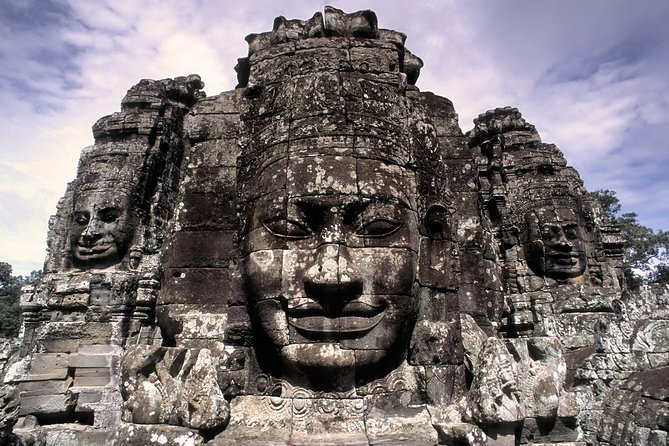
You first move into Angkor Thom, the capital city of the Khmer empire built at the end of the 12th century. It is linked to King Jayavarman VII, and the location is described as being north of Angkor Wat, between West Baray and East Baray. You have about 40 minutes here.
This stop is valuable because it frames the rest of your day. Angkor Wat is the best-preserved headline temple, but Angkor Thom gives you the broader political and religious setting. Even when a temple is not your personal style, a guide explanation can help you see why it matters in the Khmer story.
Practical note: 40 minutes goes fast. You will likely be doing a lot of looking while also moving to key points. If you want time to take photos slowly, you will need to make peace with a tighter window, or let the guide set the order for you.
More temple circuits, set side by side
Bayon Temple: Mahayana Buddhist meaning behind the carvings
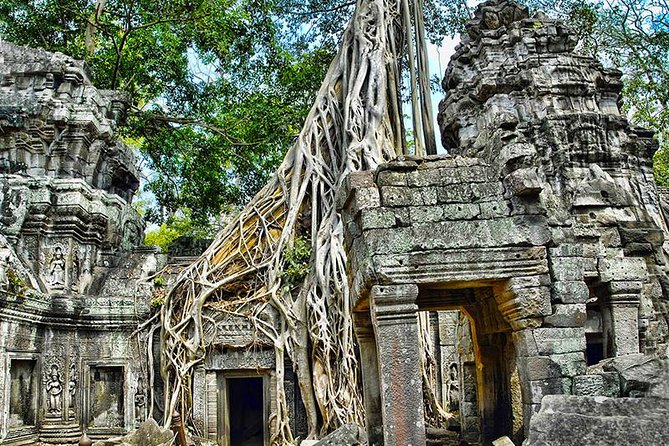
Next is Bayon Temple, another major Jayavarman VII site. It is described as a richly decorated Khmer temple, built in the late 12th or early 13th century as the state temple of the Mahayana Buddhist King Jayavarman VII. You get about 40 minutes at this stop.
Bayon is one of those places where the guide makes the difference. If you just look at stone, it can all blur together. But when someone explains how Hindu legends and religious ideas are represented in the intricate carvings, your attention changes. You start noticing patterns, themes, and why certain details are repeated.
If you like history that you can see, this is a great pairing. Angkor Thom gives you the capital context, and Bayon helps you understand the religious tone of that moment in Khmer rule.
One caution: Bayon and nearby areas can feel busy, and you can also have limited space for lingering. Treat your time here like a museum gallery visit with a professor. Listen, look, and move with purpose.
Terrace of the Elephants: kings watching victory, then the Leper King
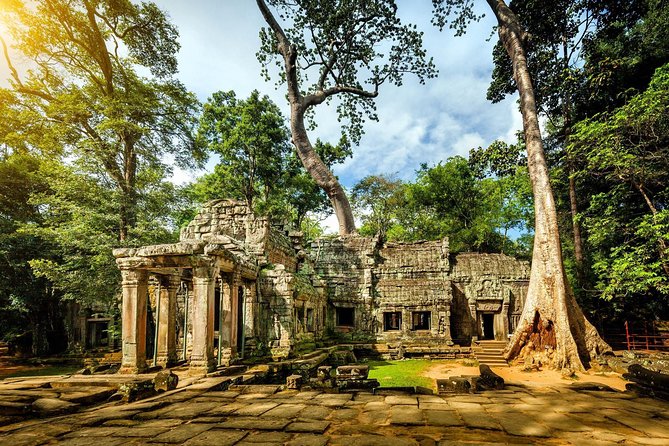
After Bayon, you head to the Terrace of the Elephants for about 30 minutes. The terrace is described as a platform from where the king viewed the victorious return of his army. That one sentence gives the stop real drama. You are not just touring stone, you are imagining a moment of power and celebration.
Then the route includes the Terrace of the Leper King, which is noted for detailed carvings. Again, this is the kind of stop where carvings become information. If your guide is good at explaining themes, this is where you often feel you are learning more than taking pictures.
The only downside is the time constraint. Thirty minutes can work if you have a guide directing you to what matters most. If you are the type who wants to read every panel and study every texture, you might wish you had another 20 minutes.
Ta Prohm: the state of ruin that feels like a living story
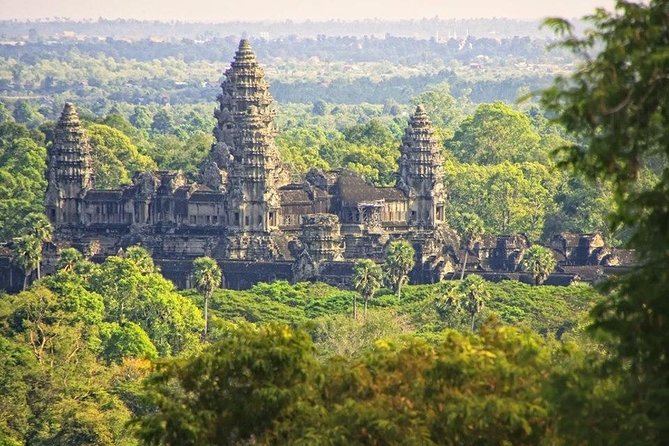
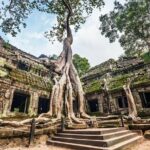
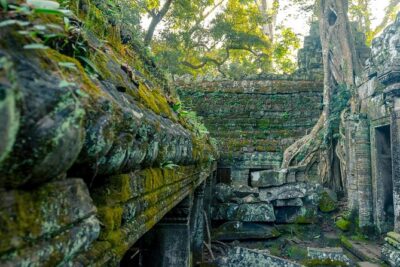
Ta Prohm is the dramatic “stop and stare” moment. You get about 1 hour here. The temple is described as a state of ruin that is also a state of beauty, which many people find memorable. It was built about mid-12th to early 13th century (around 1186) by King Jayavarman VII.
This is the point in the day where your camera usually gets busy. More importantly, your imagination does too. Ruins force you to see the scale and the passage of centuries. And when a guide adds context, you stop thinking only about the visuals and start thinking about what the site represents in the Khmer timeline.
The practical takeaway: by the time you reach Ta Prohm, you have already done multiple stops. You will likely be a bit more tired, so having an hour is helpful. Use that time to stand still for a few minutes, not only walk around for photos.
If you have mobility limitations, this hour also gives a chance to pause. People with a walking pole or limited mobility have shared that their guide managed to take them closer to monuments to minimize unnecessary walking, and that kind of flexibility can matter a lot at a ruin like this.
Angkor Wat: the best-preserved anchor with the most time
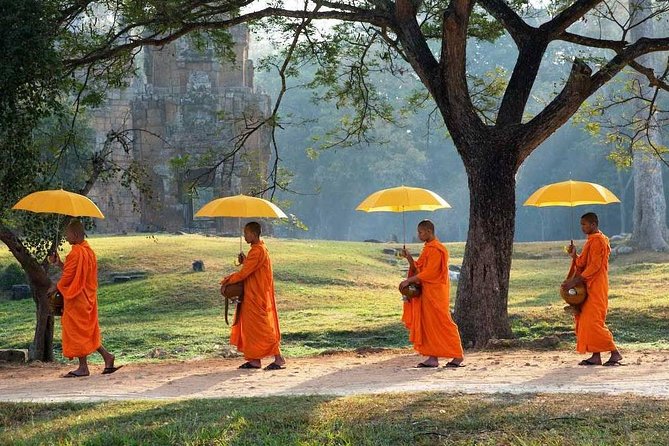
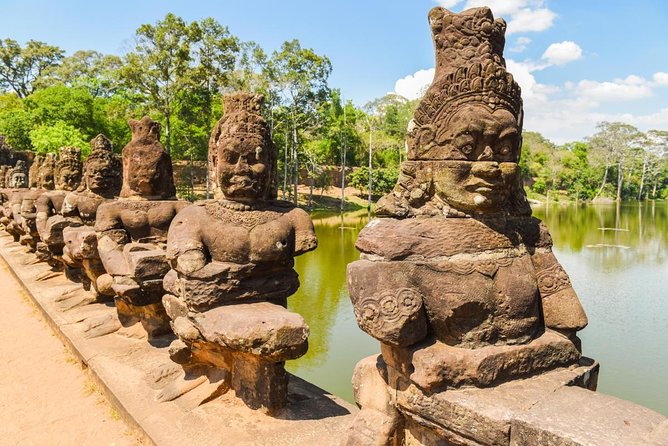
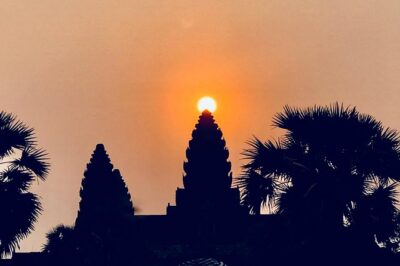
Finally, you reach Angkor Wat, the main event, with about 2 hours at the site. Angkor Wat is described as a temple complex built for King Suryavarman II in the early 12th century as his state temple and capital city. It is also highlighted as the best-preserved temple at the site, and it typically feels like the day’s payoff.
Two hours is a smart amount of time. It gives you room for the big views and it gives your guide space to explain what you should pay attention to. For many first-timers, Angkor Wat is the first place where the temple layout starts to make sense because you have already learned context at Angkor Thom and Bayon.
If you came for the “I want to understand this” version of Angkor, this stop is where your effort pays off. The guided commentary is most helpful when you can connect the architecture to religious and political meaning. With the earlier stops fresh in your head, Angkor Wat becomes more than a pretty landmark.
Guide quality and pacing: why some days feel effortless
This tour’s real strength is the live English-speaking guide. A theme running through the experience is that guides bring a huge amount of detail, with strong English, and a style that helps you connect stories to stone. If you are the kind of traveler who hates generic explanations, you will probably appreciate how specific the commentary can be.
You may even end up with a guide whose name you remember, such as Soydy, Vantha, Phy Phy, Long, Voath Vinh, Phuy Phy, or Nak. Across those guides, the consistent value is not just facts. It is clarity, timing, and a sense of what to point out at each stop.
Pacing also matters. The day is long enough to feel like you really did something, but structured enough that you are not exhausted by logistics. A tuk-tuk tour can work like a rhythm section: you travel, stop, listen, look, move again. When the guide and driver work as a team, the transitions feel smooth.
If you want to be extra efficient, let the guide set the pace. Trying to go off-script can turn a 6 to 7 hour day into a stressed scramble.
What to bring, and how to avoid the common sore-day problems
The tour includes mineral water, but you will still want to bring your own comfort basics. Wear comfortable shoes with grip. Temple surfaces can be uneven. Pack light, because tuk-tuk rides are not about hauling heavy bags.
Think about sun and heat. Even with a guide and water, you will be outside for much of the day. A hat and sunscreen are practical. Bring a small towel or tissues if you like being prepared.
If you have limited mobility, ask the guide about minimizing walking where possible. There is evidence this can be handled thoughtfully, including managing closer approaches to monuments and reducing unnecessary distance.
Finally, since admission is separate, keep payment planning simple. Make sure you know that you are paying the $37 per person Angkor National Park ticket fee at the ticket office. That way you are not surprised at the most expensive moment of the day.
Who this private Angkor Wat tuk-tuk tour is best for
This is a strong match if you want:
- A private tuk-tuk day without planning the order of temples yourself
- A live English guide to explain Hindu legends, religious meaning, and why carvings matter
- A sensible mix of stops that includes Angkor Thom, Bayon, Terrace of the Elephants, Ta Prohm, and Angkor Wat
It is especially good for first-timers who feel overwhelmed by the sheer scale of the park. The guide commentary gives you a way to understand what you are looking at, not just where to stand.
It is also a good option if you are traveling with family or friends who do not want a DIY day. Hotel pickup and drop-off remove a big chunk of friction.
If you are a hardcore “I want to linger for hours per temple” person, the schedule may feel tight. But if you want a strong overview with real explanations, this route hits the right balance.
Should you book this Angkor Wat private tour?
Yes, I think you should book it if your priority is a guided, efficient Angkor day with hotel pickup, a private tuk-tuk, and clear temple storytelling. The biggest reason is that the tour does not only move you around. It helps you interpret what you are seeing, including the Hindu legends and meaning behind intricate carvings.
Be sure you also plan for the extra $37.00 per person admission fee and budget for your own food. If you do that math up front, the rest becomes straightforward: a long, satisfying day focused on the core Angkor highlights.
If you want a first-time Angkor experience that feels organized, human, and easy to follow, this is a good choice.
FAQ
What is the duration of the Angkor Wat private tour by tuk-tuk?
The tour lasts about 6 to 7 hours.
What time does pickup start from Siem Reap hotels?
Pickup starts at 8:00 am from your hotel in Siem Reap.
Is hotel pickup and drop-off included?
Yes. Hotel or airport pickup and drop-off are included.
Is the Angkor National Park admission fee included in the $45 price?
No. Admission is not included. The Angkor National Park Ticket Office charges $37.00 per person.
Does the tour provide bottled water?
Yes. Bottled mineral water is provided during the tour.
What is the cancellation window?
You can cancel for a full refund up to 24 hours in advance of the experience start time, with no refund if you cancel less than 24 hours before.
The Temples by Tuk-Tuk
- Siem Reap: Angkor Wat Private Tuk-Tuk Tour
★ 4.9 · 2,222 reviews - Siem Reap Countryside Bike Tour / E-Bike or Tuk Tuk
★ 5.0 · 935 reviews - Angkor Sunrise Bike Tour / E-Bike or Tuk Tuk
★ 5.0 · 615 reviews - Angkor Wat Private Tuk-Tuk Tour (sunrise Option) & more
★ 5.0 · 439 reviews - Old Siem Reap Sunset Food Tour by Tuk-tuk
★ 5.0 · 311 reviews
More Temple Circuits Around Siem Reap
- Angkor Wat Sunrise or Sunset Tour with Guide from Siem Reap
★ 5.0 · 12,109 reviews - Siem Reap: Angkor Wat: Small-Group Sunrise or Sunset Tour
★ 5.0 · 9,444 reviews - Siem Reap: Angkor Wat 2-Day Tour with Sunrise and Sunset
★ 4.9 · 4,429 reviews - Siem Reap: Full-Day Angkor Wat Guided Tour with Sunset
★ 4.9 · 3,803 reviews - Angkor Wat Sunrise tour with Small – Group and Guide tours
★ 5.0 · 3,655 reviews
Angkor Wat, a Few More Ways In
- Angkor Wat Sunrise or Sunset Tour with Guide from Siem Reap
★ 5.0 · 12,109 reviews - Siem Reap: Angkor Wat: Small-Group Sunrise or Sunset Tour
★ 5.0 · 9,444 reviews - Siem Reap: Angkor Wat 2-Day Tour with Sunrise and Sunset
★ 4.9 · 4,429 reviews - Siem Reap: Full-Day Angkor Wat Guided Tour with Sunset
★ 4.9 · 3,803 reviews - Angkor Wat Sunrise tour with Small – Group and Guide tours
★ 5.0 · 3,655 reviews
Just Added: Fresh Siem Reap Tour Reviews
Angkor Wat Temple Tours, compared.
 ★ 5.0Angkor Wat Sunrise or Sunset Tour with Guide from Siem ReapFrom $1812,109 reviews
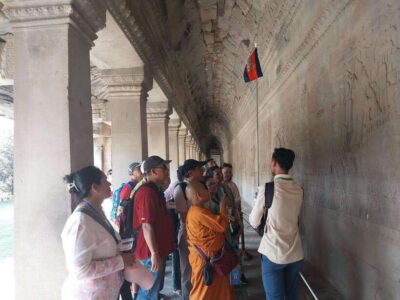 ★ 5.0Angkor Wat: Small-Group Sunrise or Sunset TourFrom $159,444 reviews
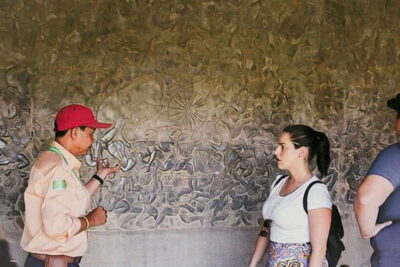 ★ 4.9Angkor Wat 2-Day Tour with Sunrise and SunsetFrom $344,429 reviews
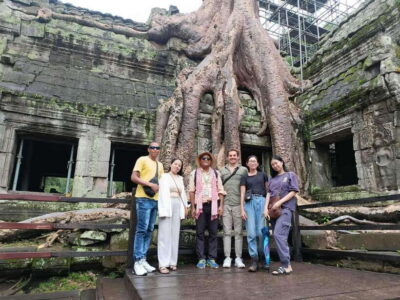 ★ 4.9Full-Day Angkor Wat Guided Tour with SunsetFrom $153,803 reviews
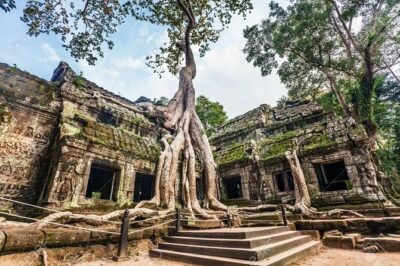 ★ 5.0Angkor Wat Sunrise tour with Small – Group and Guide toursFrom $143,655 reviews
 ★ 5.0Angkor Wat Highlights and Sunrise Guided Tour from Siem ReapFrom $233,213 reviews
 ★ 5.0Angkor Wat Sunset Small Group Tour with Lunch IncludedFrom $203,059 reviews
 ★ 5.0Full-Day Angkor Wat Sunrise Private Tour with Guide from Siem ReapFrom $602,920 reviews
Browse the lists this tour appears in