
Sunrise at Angkor Wat feels like a reset, and this private tour strings together the temple highlights before the day gets heavy. I like how the route mixes iconic stone carvings with calmer countryside moments, all in one tight morning-to-early-afternoon plan.
I love the sunrise focus at Angkor Wat, especially the soft dawn color and mirror-like reflections when conditions are right. I also like the private setup, with hotel pickup, an air conditioned ride, and cold drinking water so you can start the day without extra hassle.
The main drawback to watch is timing and guide delivery. If your pickup is late, the best sunrise viewing spot can disappear fast, and even though the tour is sold with an English speaking guide, the depth of the explanation can vary from day to day.
Key Things To Know Before You Go
- 4:30 am start sets you up for dawn light, but only if you are ready early.
- Private means private: your group only, up to 15 people, with a licensed guide.
- Angkor Wat first is the payoff, then you move quickly through Angkor Thom highlights.
- Countryside add-ons include an orange farm and viewpoint stops like Wat Damrei Sor and Phnom Banan.
- Battambang theme shows up in the concept, including a bamboo train ride and French colonial atmosphere.
- Entrance fees are on you: the tour price does not include tickets or meals.
Other ways to walk the great temple
- Angkor Wat Sunrise or Sunset Tour with Guide from Siem Reap★ 5.0 · 12,109 reviews
- Siem Reap: Angkor Wat: Small-Group Sunrise or Sunset Tour★ 5.0 · 9,444 reviews
- Siem Reap: Angkor Wat 2-Day Tour with Sunrise and Sunset★ 4.9 · 4,429 reviews
- Siem Reap: Full-Day Angkor Wat Guided Tour with Sunset★ 4.9 · 3,803 reviews
4:30 am Sunrise Timing at Angkor Wat
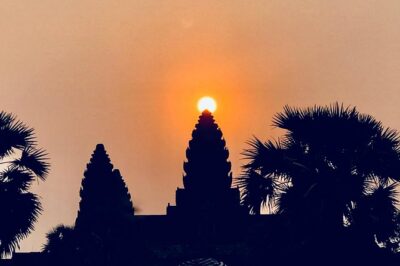
This is a morning tour in the truest sense. With a start time of 4:30 am, you trade sleep for the light that makes Angkor Wat feel almost otherworldly. The payoff is that you can see the complex while it is still cool, calm, and at its most photo friendly.
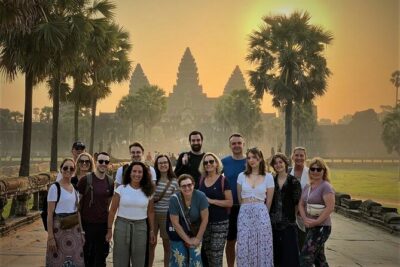
The tour is designed around getting you to Angkor Wat at sunrise time. That matters because the colors and reflections you want are all tied to that window, and it is also when the first wave of crowds begins to gather. Plan to be ready before pickup so you do not lose minutes to the start.
One practical thought: with an early start, you will feel the day more than usual. Even if you pace the temples slowly, you are going to cover a lot of ground, and you will want a steady energy source. If you usually get hungry early, consider bringing something small to tide you over before meals later.
Angkor Wat at Dawn: Reflection Time and Ticket Reality
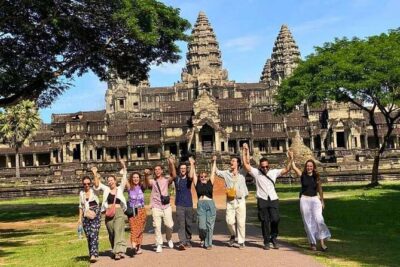
Angkor Wat is the star, and the schedule puts it first for a reason. You spend about 2 hours at Angkor Wat, which gives you time to walk, pause, and actually look instead of rushing through stone corridors like you are on a conveyor belt.
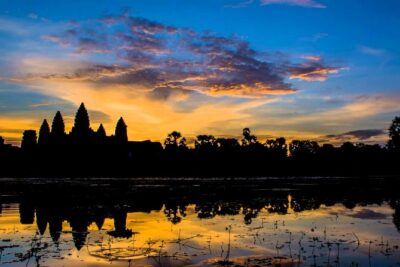
The key moment is sunrise color and reflection. Dawn turns the stone tones softer, and it can create that glassy look in the surrounding areas if the conditions cooperate. The complex is famous, but the experience still feels personal because you are seeing it before most people have fully arrived and settled.
Do note the ticket detail. Entrance fees are not included, so you should budget for your Angkor tickets separately. Since the tour includes a mobile ticket, it may be smoother on the day-of process, but the cost is still extra. If you want fewer surprises, check that you have what you need ahead of time and keep a little extra cash or card access for any add-ons.
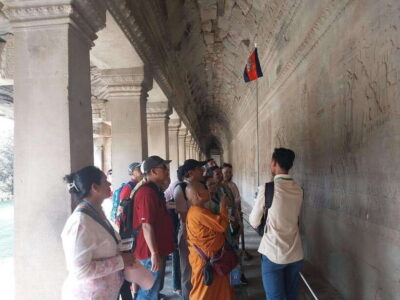
As for the guide, the tour includes a licensed, English speaking storyteller. You are not just getting a route. You are getting context, like how Angkor Wat began during the Khmer Empire and how the area later became connected to Siamese provincial administration before the modern era. That kind of framing helps you recognize what you are looking at, even if you only catch a portion of the explanation.
Angkor Thom Circuit: South Gate and Bayon Faces
After sunrise, you shift into the Angkor Thom area. This is where the tour moves from awe to momentum, with stops that are short, focused, and packed with visual payoff.
First up is the South Gate. You get about 1 hour here, and the highlights are the Deva and Asura figures along with the strong walls built to protect the city. You will also see the four faces of Buddha, which is one of those details that looks symbolic even before someone explains it. The gate is also a great place to slow down briefly, because you can stand back and take in how everything lines up.
Next is Bayon Temple, also about 1 hour. Bayon is known as the mountain of victory, and you will see the famous 49 towers with over 200 faces of Buddha. The faces can feel oddly human, like they are watching you from every angle. With a guide, it lands better, because the meanings behind the design make it more than a photo backdrop.
The practical trick here is posture and pacing. When you walk through clustered carvings at temple speed, it is easy to miss the best angles. Ask your guide to point out where to stand for the face views so you do not spend your time wandering for the perfect angle.
Ta Prohm Jungle Ruins and Photography Tips
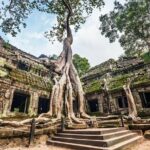
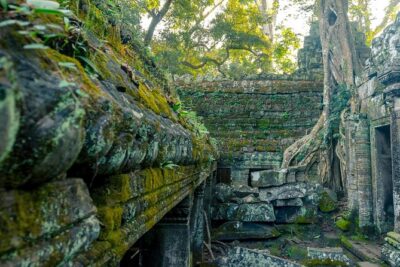
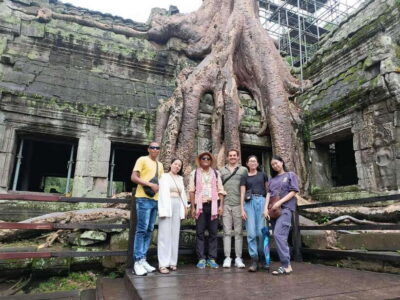
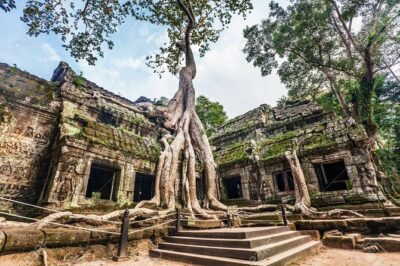
Then the tour turns toward the wild side with Ta Prohm. You get about 1 hour here, and it is known as the Tomb Raider or jungle temple, largely because tree roots and greenery have taken hold around the stone. It is dramatic in a way that feels less formal than the earlier stops.
This temple is a lesson in patience. You will want to look up at the roots, then look at the way the stone blocks were shaped, then step back for wider views where the whole scene makes sense. If you try to do it all while rushing, it turns into blur.
The good news is that Ta Prohm often works well even if you are not a hardcore ruins person. It has atmosphere. The mix of ancient design and living growth makes the place feel alive, even though it is thousands of years old.
For photos, plan for shaded and bright spots. Early in the day you will have better light balance, but you will still move in and out of openings where the jungle frames the stone. If your camera struggles, your phone will still do fine, just take a few seconds to tap focus and keep your hands steady.
Chasing the light? More dawn and dusk runs
Rural Viewpoints: Wat Damrei Sor and Phnom Banan
The tour does not stay only in Angkor. It also includes rural viewpoints, and that is where your day gets breathing room.
You will visit Wat Damrei Sor pagoda and Phnom Banan, a hilltop temple where you can enjoy panoramic views. These stops are valuable because they remind you that Cambodia is more than temples and tickets. They also give you a chance to refuel your eyes after hours of tight corridors and close carvings.
The “panoramic views” piece matters because it changes how you understand the geography. From hilltop viewpoints, the region looks layered and expansive, and it is easier to imagine how ancient Khmer power sat in the middle of an agricultural landscape. That context fits with how this northwest area ties into rice production and rural life.
If you want a smoother experience, bring a calm mindset for these viewpoints. You are not chasing another famous face carved in stone. You are trying to see distance, light, and how the day is unfolding around you.
Battambang Countryside Add Ons: Bamboo Train and Colonial Streets
This tour is described as exploring rural northwest Cambodia, including the French colonial city of Battambang. It also includes a ride on a bamboo train, which is one of those experiences that feels more like local life than sightseeing.
Battambang’s mention matters because it signals a slightly different day from the usual Angkor-only pattern. Instead of returning to the hotel right after the main temple circuit, you are meant to spend time in the wider region. That gives you more variety, which can be worth it if you already plan to see Angkor Wat and the classic trio on other days.
For the bamboo train ride, keep expectations practical. You are not going for luxury comfort. You are going for the novelty and the local rhythm, plus the sense of place that a small transport experience can create. It is also a nice contrast to stone temples, because it feels physical and immediate.
One note: the tour duration is listed at about 6 hours. That means time is tight, so treat every stop as “brief but meaningful.” If you want the most time inside temples, a longer Angkor-focused day may suit you better. If you want one early start that mixes icons and countryside, this format can be a good match.
Orange Farm Stop and Cambodian Grape Wine Tasting
Another highlight is a stop at an orange farm, followed by tasting locally produced Cambodian grape wine. This is one of the more memorable extras because it shifts the day from monuments to people and production.
Why this is worth your attention: it is not just a snack stop. It is a chance to see how local agriculture supports daily life, and it adds a sensory break from temples and stone. You will get to taste something you cannot buy in the same way back home, which makes it easier to remember the day beyond the photos.
The grape wine tasting is optional in spirit, but it is included in the experience highlights. If you enjoy trying small samples, it is an easy win. If you do not drink much alcohol, you can still enjoy the context and the farm setting.
This kind of stop also helps you understand Cambodia as a living place, not a museum. Even if you only have a few hours outside the temple circuit, you get one grounded moment that feels real.
Price, What You Pay For, and What Costs Extra
At $49 per person for a private tour, this price can look like a bargain, and in many ways it is. You are paying for hotel pickup and drop off, a licensed guide, an air conditioned vehicle, and cold drinking water. Private sunrise timing is usually where costs jump, so the value here is mostly in the combination.
But here is the reality check: entrance fees are not included, and meals are not included either. That means your final total depends on your ticket choices and what you eat later. If you are traveling with family or a group, it can still be good value, but do not assume the advertised price is the whole bill.
The tour is described as having group discounts and offering a mobile ticket. That suggests the operator tries to simplify parts of the logistics. It helps, but the big missing cost items are still tickets and meals.
What makes the value feel right is the pacing. You are not only seeing one temple. You are going through Angkor Wat and major Angkor Thom stops, then adding rural viewpoints and a farm tasting. If that mix is exactly what you want, the price can feel fair even with entrance fees added.
Pickup, Vehicle Comfort, and How to Avoid a Bad Morning
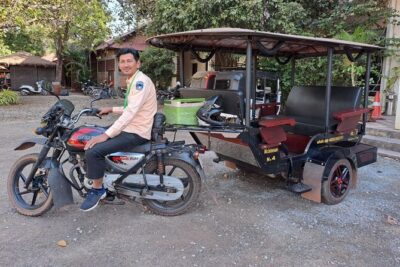
Start time is 4:30 am, and that is early enough to mess with the smoothest plans. The tour includes pickup and drop off from Siem Reap hotels, plus an air conditioned vehicle and cold drinking water. That is a solid comfort combo when you are moving before sunrise.
Here is the main practical caution. If your pickup runs late, you can miss the best sunrise spot at Angkor Wat. That is not a small issue, because the sunrise window is short and crowds build quickly once people start arriving. Your best move is simple: confirm your pickup time the day before and be ready at the meeting area early, not at the last second.
Also consider language. The tour promises an English speaking guide, and the value of the stories depends on how clearly you can follow them. If you prefer lots of detail, ask your guide to speak slowly at the start so you catch the key points about what you are seeing.
Finally, the tour is private, with a maximum of 15 people. That is large enough that the experience might feel lively, but it is still your group only, not a shared bus situation with strangers. If you want a quieter, more personalized pace, you will likely appreciate a smaller group within that cap.
Should You Book This Private Sunrise Tour?
Book it if you want a sunrise-first Angkor experience with a private guide and extra rural flavor. I think it works best for first-time Angkor visitors who want the main sights, plus a bit of local agriculture and viewpoints without spending multiple days. The mix of Angkor Wat, Angkor Thom, Ta Prohm, viewpoint stops, and a bamboo train concept gives you variety in a compressed timeline.
Skip or upgrade if you are very sensitive to schedule precision or you strongly rely on guide storytelling. Because the start is early, any pickup delay can dent your sunrise results, and you may not get the same level of explanation quality every day. If you want maximum temple time and zero stress, you might consider paying for a more time-rich or more tightly managed option.
For most people, though, the combination of private pickup, sunrise timing, and countryside stops at a reasonable price makes this an efficient way to see a lot of Cambodia in one go. If you pack smart for an early start and plan for entrance fees and meals, you will likely feel like you got good value for your time.
FAQ
What time does the sunrise tour start?
The start time is 4:30 am.
How long is the tour?
It runs for about 6 hours.
Is hotel pickup and drop off included?
Yes, hotel pick up and drop off are included.
Is the tour private?
Yes. It is a private tour, and only your group participates.
What is the group size limit?
The minimum is 1 pax and the maximum is 15 pax.
Are entrance fees included?
No. Admission tickets are not included.
Are meals included?
No. Meals are not included.
Does the tour include a guide and transportation?
Yes. You get a licensed tour guide and an air conditioned vehicle, plus cold drinking water.
Is there any ticket format included?
Yes, the tour includes a mobile ticket.
What is the cancellation policy?
You can cancel for free up to 24 hours in advance for a full refund. Changes within 24 hours of the start time are not accepted.
More Temple Circuits Around Siem Reap
- Angkor Wat Sunrise or Sunset Tour with Guide from Siem Reap
★ 5.0 · 12,109 reviews - Siem Reap: Angkor Wat: Small-Group Sunrise or Sunset Tour
★ 5.0 · 9,444 reviews - Siem Reap: Angkor Wat 2-Day Tour with Sunrise and Sunset
★ 4.9 · 4,429 reviews - Siem Reap: Full-Day Angkor Wat Guided Tour with Sunset
★ 4.9 · 3,803 reviews - Angkor Wat Sunrise tour with Small – Group and Guide tours
★ 5.0 · 3,655 reviews
Dawn and Dusk Over Angkor
- Angkor Wat Sunrise or Sunset Tour with Guide from Siem Reap
★ 5.0 · 12,109 reviews - Siem Reap: Angkor Wat: Small-Group Sunrise or Sunset Tour
★ 5.0 · 9,444 reviews - Sunset tour of Kampong Phluk stilts home village on the Tonle Sap
★ 5.0 · 4,865 reviews - Siem Reap: Angkor Wat 2-Day Tour with Sunrise and Sunset
★ 4.9 · 4,429 reviews - Siem Reap: Full-Day Angkor Wat Guided Tour with Sunset
★ 4.9 · 3,803 reviews
Angkor Wat, a Few More Ways In
- Angkor Wat Sunrise or Sunset Tour with Guide from Siem Reap
★ 5.0 · 12,109 reviews - Siem Reap: Angkor Wat: Small-Group Sunrise or Sunset Tour
★ 5.0 · 9,444 reviews - Siem Reap: Angkor Wat 2-Day Tour with Sunrise and Sunset
★ 4.9 · 4,429 reviews - Siem Reap: Full-Day Angkor Wat Guided Tour with Sunset
★ 4.9 · 3,803 reviews - Angkor Wat Sunrise tour with Small – Group and Guide tours
★ 5.0 · 3,655 reviews
Just Added: Fresh Siem Reap Tour Reviews

Angkor Wat Temple Tours, compared.
 ★ 5.0Angkor Wat Sunrise or Sunset Tour with Guide from Siem ReapFrom $1812,109 reviews
 ★ 5.0Angkor Wat: Small-Group Sunrise or Sunset TourFrom $159,444 reviews
 ★ 4.9Angkor Wat 2-Day Tour with Sunrise and SunsetFrom $344,429 reviews
 ★ 4.9Full-Day Angkor Wat Guided Tour with SunsetFrom $153,803 reviews
 ★ 5.0Angkor Wat Sunrise tour with Small – Group and Guide toursFrom $143,655 reviews
 ★ 5.0Angkor Wat Highlights and Sunrise Guided Tour from Siem ReapFrom $233,213 reviews
 ★ 5.0Angkor Wat Sunset Small Group Tour with Lunch IncludedFrom $203,059 reviews
 ★ 5.0Full-Day Angkor Wat Sunrise Private Tour with Guide from Siem ReapFrom $602,920 reviews
Browse the lists this tour appears in