
Reviewed · ANGKOR WAT TEMPLE TOURS
Angkor Wat Cycling Tour
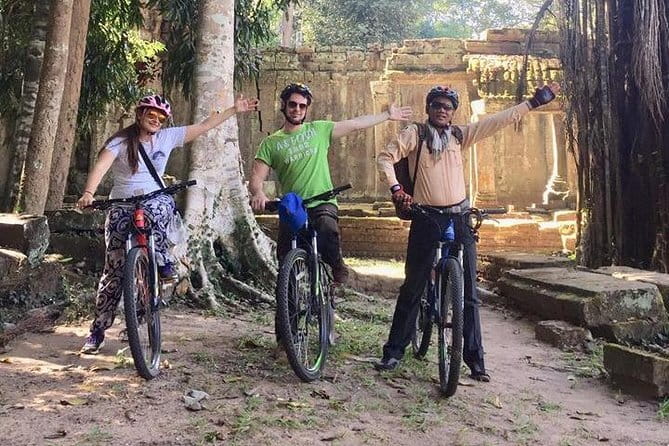
Angkor Wat is famous, but cycling makes it personal. This Angkor Wat cycling tour uses safe routes and a relaxed pace to get you from temple to temple, including quieter jungle edges and backroads beyond the busiest lanes. I like the way the trip feels more eco-friendly than squeezing into vehicles, and I like that you get to mix big names with smaller sites. One thing to consider: you still need the Angkor Temple Pass for at least Angkor Wat, and the ride can feel adventurous if the roads are busy or uneven.
You leave at 7:30 am from your hotel and spend about 6 to 8 hours cycling, stopping at major highlights like Angkor Wat and Bayon, plus several lesser-visited temples. I also love that the tour is private, so it stays easy to manage, and the guide can adjust how much cycling you want. A possible drawback is the early start, plus it is a real bike day, so bring sensible expectations if you are hoping for only short rides between stops.
Key highlights you’ll feel on this bike day
- 7:30 am hotel pickup keeps the morning moving and helps you beat the heaviest crowds
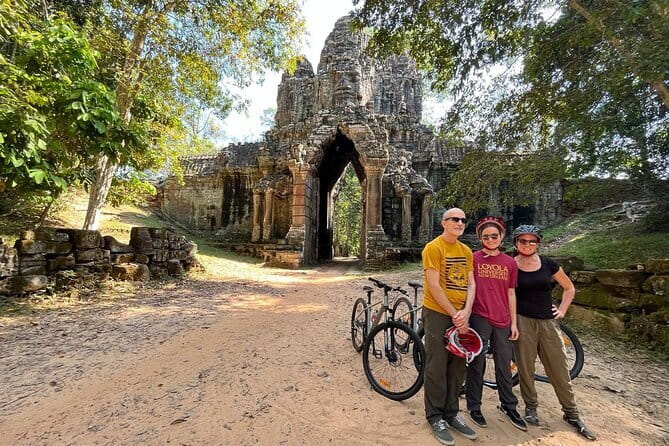
- Mountain bike and helmet included, and the bikes are high quality
- Angkor Wat plus quieter temples like Chau Say Tevoda and Ta Nei
- A chance to see real rural life and backroads around Angkor, not just the main circuit
- English-speaking guide, with Mr. K praised for being organized and friendly
- Admission split on the plan, with Angkor Wat listed as not included, while several other stops are marked free
Other ways to walk the great temple
- Angkor Wat Sunrise or Sunset Tour with Guide from Siem Reap★ 5.0 · 12,109 reviews
- Siem Reap: Angkor Wat: Small-Group Sunrise or Sunset Tour★ 5.0 · 9,444 reviews
- Siem Reap: Angkor Wat 2-Day Tour with Sunrise and Sunset★ 4.9 · 4,429 reviews
- Siem Reap: Full-Day Angkor Wat Guided Tour with Sunset★ 4.9 · 3,803 reviews
Why cycling Angkor feels different from the usual route
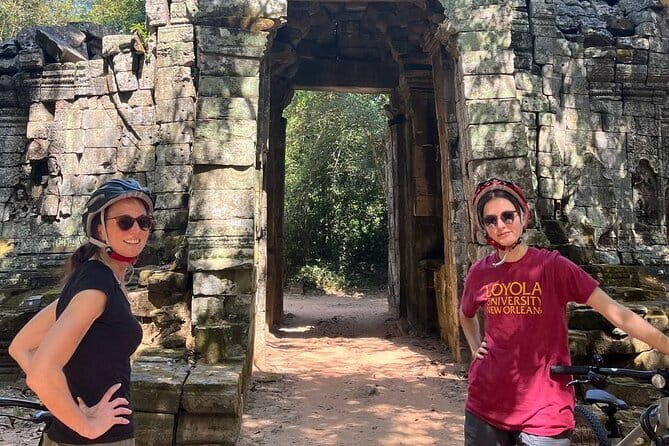
Angkor is one of those places where walking is the default, but biking changes the rhythm fast. Instead of lining up with a stream of feet and tour groups, you get a sense of moving through the region like locals do, with fresh air and shorter stretches between viewpoints. The overview for this tour emphasizes dedicated, safer cycling paths, and that matters, because Angkor is spread out. A bike day also helps you cover ground without turning every temple stop into a grind of heat, steps, and backtracking.
What makes this tour especially appealing is the mix of famous and less-visited. You start with Angkor Wat, then move through Angkor Thom areas like Bayon and gate views, and you also hit smaller temples such as Chau Say Tevoda and Ta Nei. That blend is a good way to get the big postcard moments and still feel like you discovered something.
The other big plus is flexibility. Several experiences with this tour style focus on how the guide can accommodate how much cycling you want. That is useful in real life. Some days you feel great and want to pedal more. Other days you would rather keep it relaxed and save energy for exploring temple details.
The day at a glance, from hotel to temples
The schedule runs about 6 to 8 hours, starting 7:30 am. It is a private tour, so you are not sharing your ride with random strangers. The kit is covered too: pickup and drop-off, an English-speaking guide, cold drinking water, plus a mountain bike and helmet.
Here is how the stops shape the experience.
Stop 1: Angkor Wat, the main stage for your morning
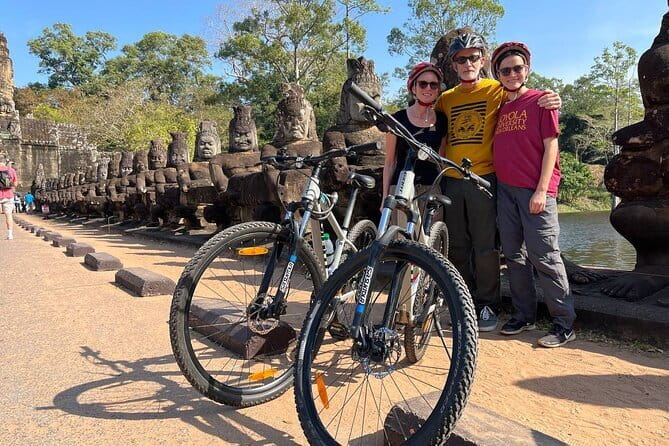
You begin with pickup from your hotel at 7:30 am, then roll into the Angkor Wat area for a stop that runs about 2 hours. Angkor Wat is the largest and most famous Khmer temple, built in the 12th century during Suryavarman II’s reign, and the plan lists it as PRASAT ANGKOR WAT with a height of 65 meters.
This is the moment most people come for, so the value here is time and context. Cycling gets you into the complex with less fuss than a longer day of walking from your start point, and a 2-hour window gives you breathing room to see the scale without feeling rushed.
One practical consideration: the Angkor Temple Pass is not included (listed at $37.00 per person), and the stop notes admission ticket not included. That means you should plan for entry costs separately. If you are budgeting, add that $37 to the tour price.
Stop 2: Bayon Temple, 54 towers and a calmer feel
Next up is Bayon Temple, listed for about 2 hours. This is PRASAT BAYON or ANGKOR THOM, built in the late 12th to early 13th century by Jayavarnam VII in the Angkor Thom area. Bayon is famous for its 54 towers tied to the provinces before and during the Khmer empire, and that detail gives you a framework for what you are seeing beyond the famous faces.
The plan marks admission free for this stop. Even when admission is free, it still helps to bring patience. The temple’s design invites you to look up, then around, then back again. Cycling puts you there at a point in the day when you can take breaks between sections without feeling like you need to sprint to catch up.
More temple circuits, set side by side
Stop 3: Chau Say Tevoda, a short stop with big atmosphere
After Bayon, you shift to Chau Say Tevoda, about 30 minutes. It is listed as directly east of Angkor Thom, and it sits across the Victory Way from Thommanon. Built in the mid-12th century, it is described as a Hindu temple in the Angkor Wat period.
This is a good “reset” stop. A half hour means you get a change of pace without losing momentum for the main temples later. It also tends to feel less intense than the most famous sections, so you can absorb details at a comfortable speed.
The plan marks this stop as admission free, which is a nice value moment during a day that includes one paid attraction.
Stop 4: Ta Prohm, where trees and stones meet
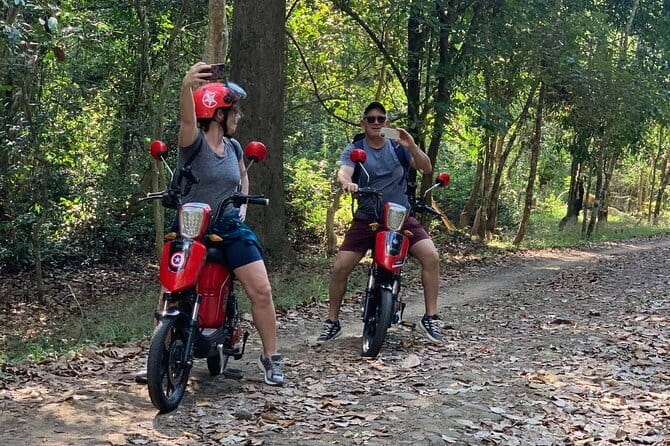
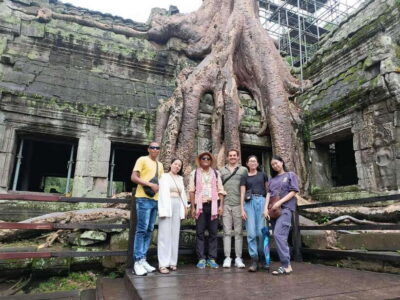
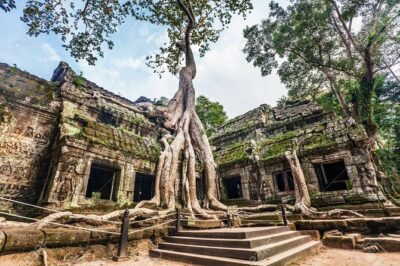
Then comes Ta Prohm Temple, about 2 hours. It is PRASAT TA PROMH, built in the late 12th century by Jayavarman VII and dedicated in 1186 to his mother. The listing notes it started with a Buddhist background and was later converted to Hindu, which is a reminder that Angkor is not just one era, but a place shaped by changing beliefs.
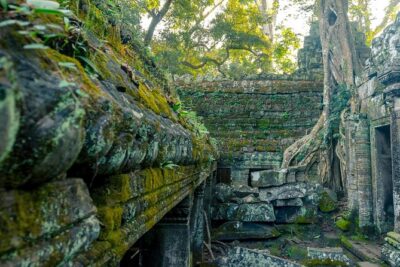
Ta Prohm is the kind of site where you can walk slow and still feel busy. If you have seen photos, you know the look, but photos rarely show the full mix of stone texture, roots, and framing angles. The bike tour’s value here is that you reach it by ride, not by another long walk. That keeps your energy for the looking part.
This stop is marked admission free on the plan. Like other free stops, you still benefit from water and shade breaks, especially if the day is hot.
Stop 5: Ta Nei, a quieter reservoir-side visit
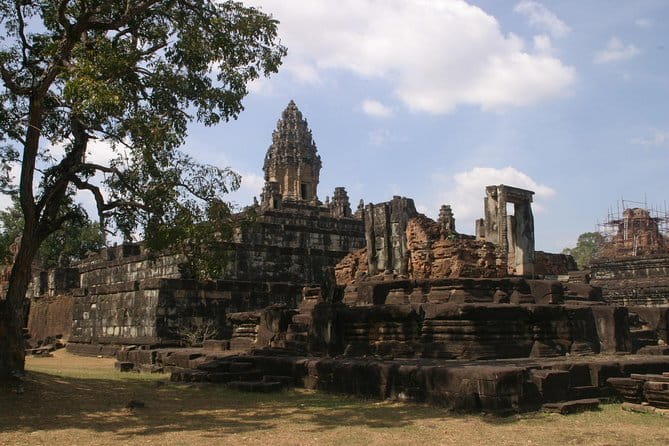
You continue to Ta Nei Temple, about 1 hour. It is described as a late 12th-century stone temple dedicated to the Buddha, and it sits near the northwest corner of the East Baray, a large holy reservoir.
Ta Nei tends to feel more local. Because it is shorter and less famous than Angkor Wat or Ta Prohm, you often get a different kind of experience: fewer “look and go” moments, more time to notice stonework and the feel of the setting around you. If you like temples that reward close viewing, this stop is a smart addition.
The plan marks it admission free.
Stop 6: Bayon East (Death) Gate, a fast closing beat
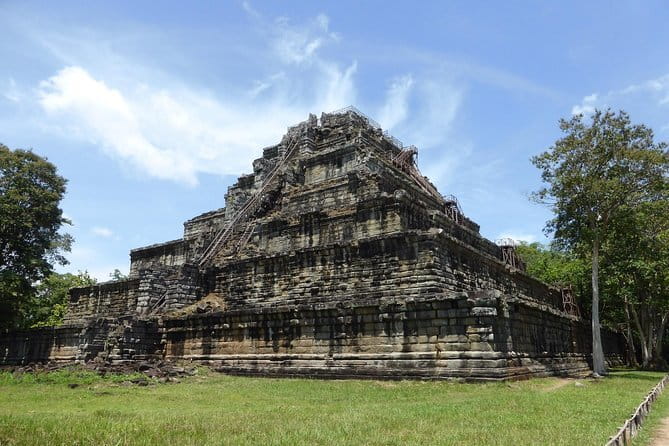
Finally, you end at Bayon Temple East (Death) Gate, about 30 minutes. It is listed as one of five gates guarding Angkor Thom, built in the late 12th century by King Jayavarman VII as part of the city’s reconstruction following the victory era.
Even a short gate stop can matter, because it adds “city layout” context. You start the day at Angkor Wat, then move through Bayon and other temples. Finishing at a gate gives your brain a sense of how the spaces connect, not just a sequence of individual monuments.
This stop is also marked admission free.
What you get for $45, and what can add up
The base price is $45.00 per person, and the tour is often booked about 42 days in advance on average. For a cycling tour with pickup and drop-off, plus a guide and included bike gear, that is a fair value tier for Siem Reap.
But the biggest budgeting point is the Angkor Temple Pass, which is listed as $37.00 per person and not included. Your plan indicates Angkor Wat is a separate paid entry point, so you should assume you will need the pass at least for that stop. If you do the pass plus the tour price, your combined temple entry cost is a significant part of your total day budget, so it is worth planning ahead.
On the upside, most other listed stops show admission free. That helps keep the day from turning into a long list of extra fees.
Also included is cold drinking water, which is small but practical. In this heat, you feel every little support.
The guide and bike setup that make it feel safe
This kind of day rises or falls on two things: how well your guide manages routing and how comfortable your bike setup is.
From the experience details, you get a mountain bike and helmet, and the tour is run with an English-speaking guide. In multiple experiences with this tour style, Mr. K is specifically praised for being friendly, organized, and able to handle different cycling desires. That is exactly what you want when you are mixing major monuments with quieter roads. You are not just getting transported. You are getting direction on what to look for and when to pedal versus slow down.
Safety is also part of the design. The overview emphasizes dedicated, safe cycling paths and avoiding busy crowds by using routes meant for riders. If you are wary of riding in traffic, that is reassurance. Still, the day is described as having adventurous jungle and backroad stretches, so you should expect real-world road texture, not a perfect theme-park surface.
Who this tour fits best
This tour is a strong fit if you:
- Want an Angkor day that feels calmer than bus tours, with a more flexible pace
- Like biking and want a practical way to see multiple temples without exhausting yourself walking every step
- Enjoy a mix of major sights and less-famous temple stops like Ta Nei and Chau Say Tevoda
- Prefer a private tour so your group can move together without waiting on a larger crowd
It may be less ideal if you:
- Get uncomfortable with early starts at 7:30 am
- Want a fully passive sightseeing day, because this is still cycling between stops
- Have limited tolerance for uneven, backroad-style sections (even if routes are meant to be safe)
How to make the most of your temple time
Cycling reduces travel time, but your success still comes down to how you use your stops.
Plan to:
- Bring a little patience for Angkor Wat and Bayon, since those stops are long enough to reward slowing down
- Use Ta Prohm as your “wow” moment. It is where you can take your time to notice how stone and roots shape the scene
- Keep moving during short stops like Chau Say Tevoda and Bayon East Gate. They are quick, but they fill in the story of the bigger sites
Also, if you want to ride less and explore more, this tour’s style has shown flexibility in how much cycling you do. Ask your guide what the route options are for your group energy level.
Should you book the Angkor Wat Cycling Tour?
I think you should book it if you want a practical, greener-feeling way to see Angkor with a schedule that makes sense. The biggest wins are the private bike approach, the included bike and helmet, and the smart mix of iconic Angkor Wat plus free admission stops like Bayon, Ta Prohm, and Ta Nei.
If you only care about one or two temples, a longer all-temple day might not be necessary. But if you want variety, a calmer pace, and the chance to see Angkor beyond the main crowd lanes, this is a solid choice.
One last budgeting tip: do the math before you go. Add the $37 Angkor Temple Pass to the $45 tour price, then you will know your true total for the day. If you are okay with that, you are in good shape to have a memorable Angkor day that feels more like a ride through the region than a checklist of stops.
Siem Reap on Two Wheels
- Siem Reap Countryside Bike Tour / E-Bike or Tuk Tuk
★ 5.0 · 935 reviews - Angkor Sunrise Bike Tour / E-Bike or Tuk Tuk
★ 5.0 · 615 reviews - Siem Reap: Bike the Angkor Temples – Full-Day 30km Tour
★ 5.0 · 463 reviews - Siem Reap: Angkor Wat Sunrise Bike Tour & Jungle Breakfast
★ 5.0 · 415 reviews - Siem Reap: Guided Countryside Bike Tour
★ 4.9 · 294 reviews
More Temple Circuits Around Siem Reap
- Angkor Wat Sunrise or Sunset Tour with Guide from Siem Reap
★ 5.0 · 12,109 reviews - Siem Reap: Angkor Wat: Small-Group Sunrise or Sunset Tour
★ 5.0 · 9,444 reviews - Siem Reap: Angkor Wat 2-Day Tour with Sunrise and Sunset
★ 4.9 · 4,429 reviews - Siem Reap: Full-Day Angkor Wat Guided Tour with Sunset
★ 4.9 · 3,803 reviews - Angkor Wat Sunrise tour with Small – Group and Guide tours
★ 5.0 · 3,655 reviews
Angkor Wat, a Few More Ways In
- Angkor Wat Sunrise or Sunset Tour with Guide from Siem Reap
★ 5.0 · 12,109 reviews - Siem Reap: Angkor Wat: Small-Group Sunrise or Sunset Tour
★ 5.0 · 9,444 reviews - Siem Reap: Angkor Wat 2-Day Tour with Sunrise and Sunset
★ 4.9 · 4,429 reviews - Siem Reap: Full-Day Angkor Wat Guided Tour with Sunset
★ 4.9 · 3,803 reviews - Angkor Wat Sunrise tour with Small – Group and Guide tours
★ 5.0 · 3,655 reviews
Just Added: Fresh Siem Reap Tour Reviews
Angkor Wat Temple Tours, compared.
 ★ 5.0Angkor Wat Sunrise or Sunset Tour with Guide from Siem ReapFrom $1812,109 reviews
 ★ 5.0Angkor Wat: Small-Group Sunrise or Sunset TourFrom $159,444 reviews
 ★ 4.9Angkor Wat 2-Day Tour with Sunrise and SunsetFrom $344,429 reviews
 ★ 4.9Full-Day Angkor Wat Guided Tour with SunsetFrom $153,803 reviews
 ★ 5.0Angkor Wat Sunrise tour with Small – Group and Guide toursFrom $143,655 reviews
 ★ 5.0Angkor Wat Highlights and Sunrise Guided Tour from Siem ReapFrom $233,213 reviews
 ★ 5.0Angkor Wat Sunset Small Group Tour with Lunch IncludedFrom $203,059 reviews
 ★ 5.0Full-Day Angkor Wat Sunrise Private Tour with Guide from Siem ReapFrom $602,920 reviews
Browse the lists this tour appears in