
Reviewed · ANGKOR WAT TEMPLE TOURS
Angkor Wat & Banteay Srey Tour
Temple mornings in Siem Reap feel like a time machine. This Angkor Wat and Banteay Srei tour is a practical way to see the big names without getting lost in logistics. You get picked up from your hotel, head to the ticket office for your temples pass, then spend the day moving temple to temple with a guide who explains what you are actually looking at.
I like that the tour builds in comfort: A/C transportation, plus cool towels and drinking water. I also like the guide style, with standout names such as Mr Oun Kosorl and Sinann showing up in guest notes for history plus helpful photo guidance.
One thing to plan for: entrance fees are not included, and Angkor Wat is the one stop where you will likely pay as part of your temples pass. Also, meals are not included, so you will want to handle lunch on your own or go with whatever timing the day gives you.
Key Highlights to Know Before You Go
- Hotel lobby pickup at your selected time, so you start the day without hunting for a meeting spot
- Cool towels and drinking water in the vehicle, a small detail that matters when temples are hot and tiring
- Angkor Wat plus Angkor Thom highlights in one day, including Bayon’s 54 towers and over 200 smiling faces
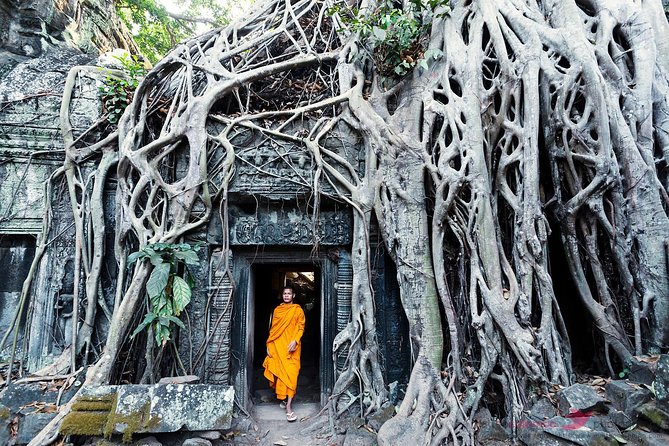
- Ta Prohm’s spung trees growing over sandstone, with the real twist of Buddhist to Hindu changes
- Banteay Srei, the pink sandstone Lady Temple, plus a mid-way stop to see locals making sugar palm products
- Private format where only your group participates, which keeps the pacing from getting chaotic
Other ways to walk the great temple
- Angkor Wat Sunrise or Sunset Tour with Guide from Siem Reap★ 5.0 · 12,109 reviews
- Siem Reap: Angkor Wat: Small-Group Sunrise or Sunset Tour★ 5.0 · 9,444 reviews
- Siem Reap: Angkor Wat 2-Day Tour with Sunrise and Sunset★ 4.9 · 4,429 reviews
- Siem Reap: Full-Day Angkor Wat Guided Tour with Sunset★ 4.9 · 3,803 reviews
A Smooth Start: Hotel Lobby Pickup and the Temples Pass
This tour is built around a simple rhythm. At your selected time, your guide or driver meets you in your hotel lobby, then you head toward the ticket office to pick up your temples pass. If you have ever arrived at Angkor sites feeling like you spent half the morning waiting in lines, you will appreciate the “start organized” approach here.
Because you get A/C transportation and included cool towels and drinking water, you can focus on the sites rather than surviving the ride. The drive time matters on days like this. Banteay Srei is about 35 kilometers from the main Angkor area, so you are trading more time on the road for a stop that many people find more delicate and less crowded than the biggest complexes.
The tour runs roughly 7 to 10 hours, which is long enough to feel like a proper day, but not long enough to turn into a blur if your guide keeps you moving with purpose.
Angkor Wat: Moat Views, 65-Meter Tower, and Bas-Reliefs Up Close
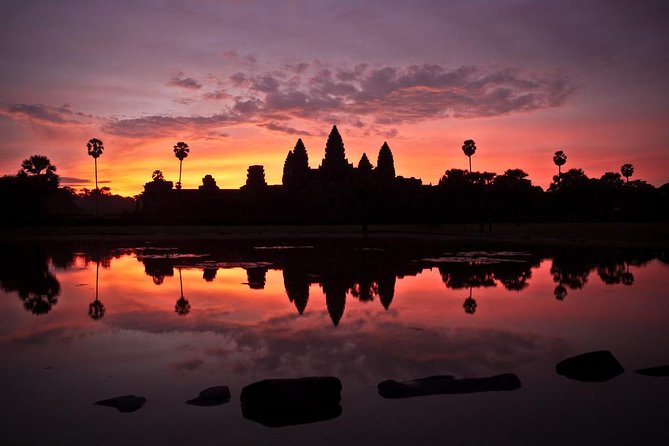
Angkor Wat is the anchor of the day, and the tour gives it the time it deserves, about 3 hours. You are looking at the largest and most famous Khmer temple, built in the 12th century during the reign of Suryavarman II, with construction dated between 1113 and 1150. It rises around 65 meters tall and sits within a large moat, the kind of setting that makes the temple feel ceremonial even before you step inside.
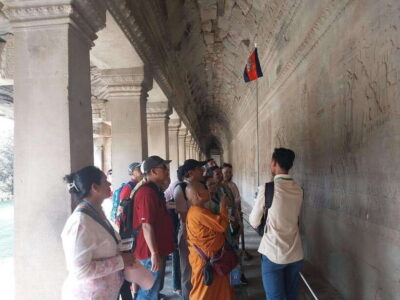
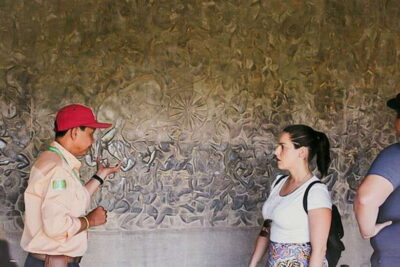
What you will notice, if you let yourself slow down, is the amount of base-reliefs covering both exterior and interior walls. These carvings are not decoration only. They are storytelling, built to make the temple feel like a living text. A good guide helps you see patterns in what you are looking at, instead of treating every wall as a random panel of stone.
Plan for one cost reality up front. Entrance fees are not included, and Angkor Wat is listed as not included for admission. In practice, this is why the tour starts with the ticket office. You will want to budget for your temples pass so the day does not turn into a last-minute surprise.
A small practical note from the overall tour design: the day includes multiple stops, so you will want your guide to help you pick how much time you spend climbing or lingering for photos. One guest story highlighted how a guide was determined to help with steep steps when someone had arthritic knees, which is a good sign if you want pacing that can be adjusted.
Bayon at Angkor Thom: 54 Towers and Over 200 Smiling Faces
After Angkor Wat, the route moves to Bayon, also known as Prasat Bayon or part of Angkor Thom. You get about 2 hours here. Bayon is a Buddhist-style temple built in the late 12th and early 13th centuries by Jayavarman VII.
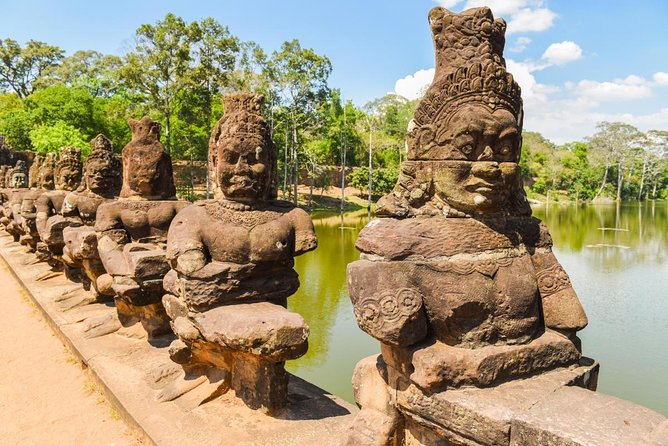
The design detail that tends to grab people is the tower set. Bayon has 54 towers, and the tour framing connects them to the 54 provinces before and during the Khmer empire. Then you face the thing people come back for: there are over 200 smiling faces carved on the towers.
It helps to understand the emotional mood of the place. Those faces are not random. They are meant to project presence and authority, so you will get more out of your visit if your guide points out how placement and repetition change the feeling from angle to angle.
This stop is also marked as admission free in the tour details, which makes the day feel better value-wise because only one main site carries a paid entrance charge.
There is one trade-off worth thinking about. Bayon is visually intense. If you rush, it can feel like you are counting faces and not learning what the carving style is communicating. If you want the most out of your two hours, keep your pace steady and ask your guide to focus you on a few key features rather than trying to absorb everything at once.
Ta Prohm: spung Trees and the Buddhist-to-Hindu Shift
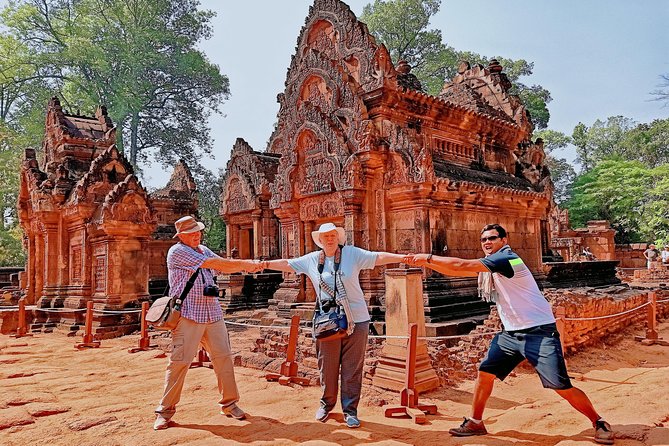
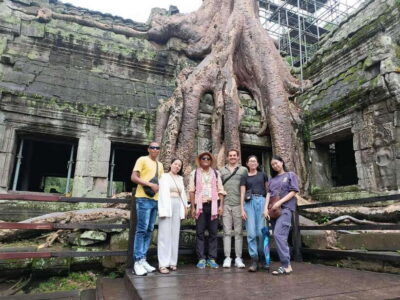
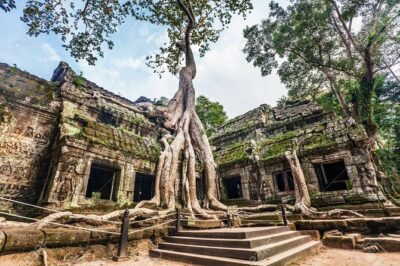
Ta Prohm is one of those temples that looks like it grew into the jungle. The tour schedules about 2 hours here, and the centerpiece is the trees called spung, which grow strongly up, on, and over the sandstone blocks.
The temple was built in the late 12th century by Jayavarman VII and dedicated in 1186 to his mother. That date is useful, because it helps explain why the temple’s spiritual tone changes as Khmer influence changed. The site originally had a Buddhist background, but later it was converted to Hindu, which is why some Buddhist galleries were destroyed and replaced with Hindu symbols such as yoni and lingam.
This is also a stop where a good guide changes everything. Without context, Ta Prohm can feel like a photo spot. With context, you start to see why the changes matter, how religious shifts leave physical marks, and why parts of the complex feel layered rather than uniform.
Like Bayon, Ta Prohm is listed with admission free in the tour details. So you get a dramatic, time-consuming stop without another ticket price added on.
The possible drawback is simply movement and attention. Ta Prohm is visually busy, and tree roots and carved stone can make it easy to zigzag. If you have limited stamina, talk to your guide early and set expectations for slower viewing around the most important areas.
More temple circuits, set side by side
Banteay Srei: Pink Sandstone, Lady Temple Craft, and a Sugar Palm Stop
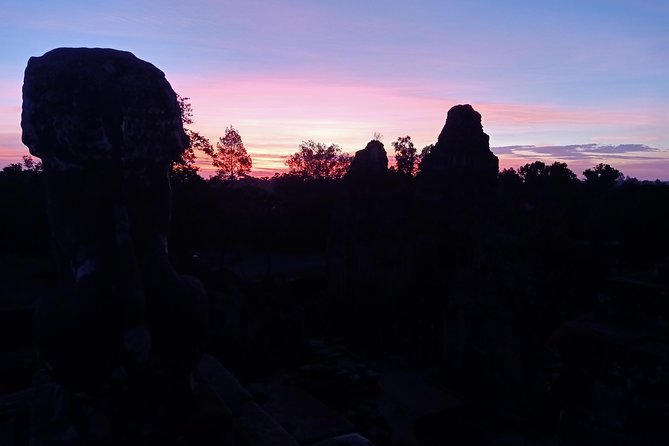
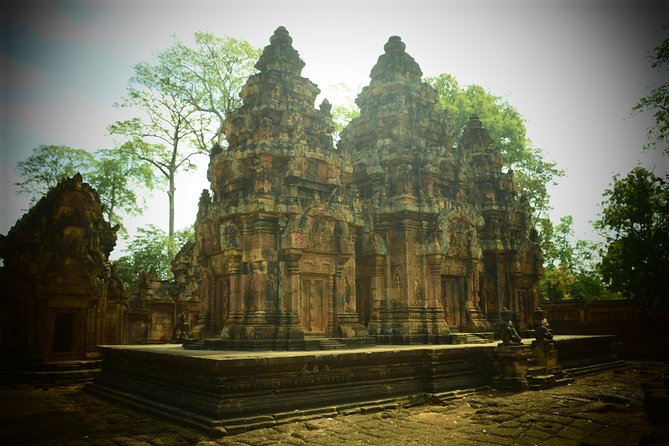
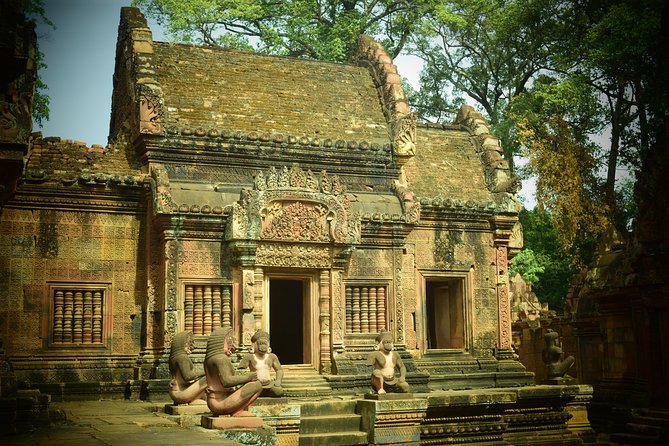
Then you get to the part many people love for its finer feel: Banteay Srei, sometimes called the Lady Temple. This temple is known for pink sandstone and especially detailed carving work, which is why it earns the “lady” nickname.
The tour includes about 2 hours at Banteay Srei and notes it is 35 kilometers away from the grand tour sites. That distance is exactly why it feels different. You spend more time traveling, but you also get a chance to see a temple that is more about craftsmanship than scale.
There is also a bonus mid-way experience in this area. The tour notes that you can stop mid-way to see locals making natural sugar products from the sugar palm. This is the kind of add-on that turns an Angkor day from only monuments into something more human. Even if you are not buying anything, watching how products are made can give you a quick, grounded look at rural life outside the main tourist circuit.
The main “consideration” here is time and pacing. A two-hour stop plus travel time means you should not plan to rush through Banteay Srei just to fit in extra photos everywhere else. If you want the carvings to register, you need a little calm attention.
Also, the tour lists admission for Banteay Srei as free, which again keeps the budget logic simple after you have covered Angkor Wat’s entrance cost.
Banteay Samre: A Quick Hindu-Style Reset Between the Big Stops
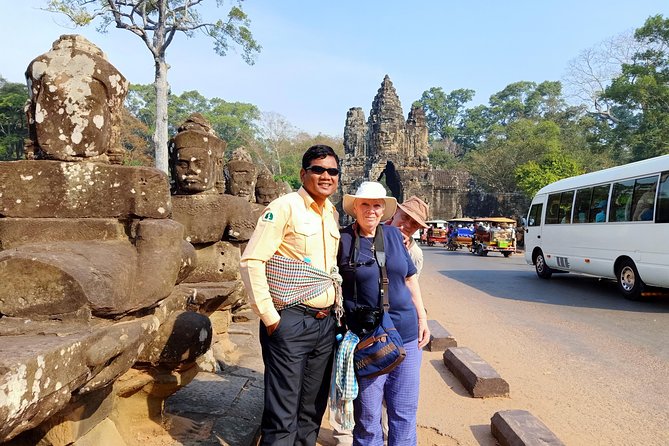
The route finishes with Banteay Samré, about 1 hour. This temple sits around 400 meters east of the East Baray. It was built during the reign of Suryavarman II and Yasovarman II in the early 12th century.
Like Angkor Wat, Banteay Samre is a Hindu temple in the Angkor Wat style. That means it can feel like a “reset” after Ta Prohm and Banteay Srei. The carvings and layout have a different energy, and the shorter time slot helps you avoid ending the day completely stone-saturated.
This stop is also listed as admission free in the tour details, so again it supports the value side of the equation.
The drawback is that one hour goes fast. If Banteay Samre is the only temple you love during the day, you might wish you had more time here. But as a final add-on, it helps round out the story of what the Khmer temple tradition did across different spaces and spiritual influences.
Price and Value: What $50 Gets You, and What to Plan For
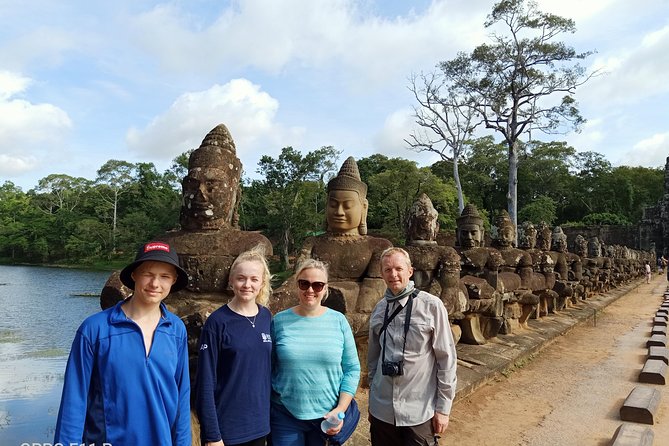
At $50 per person, this tour can feel like a bargain if you care about two things: getting comfortable transport and getting a guide who can explain the temples while you move.
Here is what is included:
- A/C transportation
- Cool towels
- Cool drinking water
- Speaking guide and driver
Then there are items not included:
- Entrance fees
- Meals (B/L/D)
- Personal expenses
- Travel insurance
- Sunrise extra charge
Value-wise, entrance fees are the big one. But notice the structure: Angkor Wat is not included for admission, while Bayon, Ta Prohm, Banteay Srei, and Banteay Samre are listed as admission free. That means you are not paying big gate costs multiple times across the route. The paid part is concentrated, which makes the math simpler for your day.
Meals are not included either, so you will want to think about how you handle lunch. You can treat it like a chance to eat Cambodian food in Siem Reap, or you can plan to bring something if your day timing allows. Either way, do not assume lunch is solved for you.
The sunrise note is also useful. If you want the famous early light, the tour mentions a sunrise extra charge. Since this tour description focuses on a full day visit, you should decide upfront whether you want to spend extra money for sunrise or keep the plan streamlined.
Guide Quality You Can Feel: Names, Photo Help, and Practical Flexibility
What repeatedly pops up in the guide stories is enthusiasm that goes beyond “point and name.” Guides like Mr Oun Kosorl show up in guest notes for being both energetic and organized, with detailed explanations that connect Khmer art and Cambodian life today. Another name you will see is Sinann, praised as a friendly, polite guide who stepped in when another guide could not make it.
There is also a theme of helpfulness with real-world issues. One guest mentioned that when an issue came up, the guide handled it calmly and even lent a hat. Another guest described how the guide worked hard to help someone with arthritic knees with the steep temple steps.
You should treat that as a green flag for a tour that can adjust your pace. It does not mean every physical limitation is fully solved, but it suggests the guide will try. If you have concerns about stairs or walking, tell your guide early in the day and ask how you can pace Angkor Wat so you do not feel rushed.
Finally, several guest notes highlight excellent photography skills and creative photo help. Even if you do not care about selfies, this matters because it usually means your guide understands where angles work and when to slow down for the best light. That is how temple photos become more than just a snapshot of stone.
Who This Tour Fits Best in Your Cambodia Plan
This tour fits you if:
- You want the core Angkor sites in one 7 to 10 hour day without building a route yourself
- You like having a guide who explains meaning, not just facts
- You care about comfort, with A/C, cool towels, and drinking water during temple hopping
- You want a balance of the big icons and a more detailed stop like Banteay Srei
It might not fit you as well if:
- You only want Angkor Wat and nothing else, because the day is designed as a circuit
- You are counting on meals being included
- You are sensitive to crowds and want a very slow, solo-style visit of one temple only
If you are traveling with someone who needs pacing support, this tour looks promising because guide notes mention flexibility with physical constraints. Still, ask your guide what the day’s walking and steep-step time will look like for each site so you can plan your comfort.
Should You Book This Angkor Wat and Banteay Srei Tour?
I would book this tour if your goal is a well-rounded Angkor day with comfort, a guided explanation, and high-value temple stops. The Angkor Wat plus Bayon plus Ta Prohm combo covers the stories people come for, and Banteay Srei adds a different kind of beauty with pink sandstone carvings and a local sugar palm stop mid-way.
I would pass or shop around if you need entrance fees included in the price, if you are expecting meals to be part of the package, or if sunrise is your top priority and you do not want to pay extra for it.
If you do book, one small tip: budget for your temples pass and decide your lunch plan before the day starts. That way, the tour can stay focused on temples, not paperwork and last-minute decisions.
More Tour Reviews in Siem Reap
- Angkor Wat Sunrise or Sunset Tour with Guide from Siem Reap
★ 5.0 · 12,109 reviews - Siem Reap: Angkor Wat: Small-Group Sunrise or Sunset Tour
★ 5.0 · 9,444 reviews - From Siem Reap: Kampong Phluk Floating Village Tour by Boat
★ 4.9 · 6,979 reviews - Sunset tour of Kampong Phluk stilts home village on the Tonle Sap
★ 5.0 · 4,865 reviews - Siem Reap: Angkor Wat 2-Day Tour with Sunrise and Sunset
★ 4.9 · 4,429 reviews
More Temple Circuits Around Siem Reap
- Angkor Wat Sunrise or Sunset Tour with Guide from Siem Reap
★ 5.0 · 12,109 reviews - Siem Reap: Angkor Wat: Small-Group Sunrise or Sunset Tour
★ 5.0 · 9,444 reviews - Siem Reap: Angkor Wat 2-Day Tour with Sunrise and Sunset
★ 4.9 · 4,429 reviews - Siem Reap: Full-Day Angkor Wat Guided Tour with Sunset
★ 4.9 · 3,803 reviews - Angkor Wat Sunrise tour with Small – Group and Guide tours
★ 5.0 · 3,655 reviews
Angkor Wat, a Few More Ways In
- Angkor Wat Sunrise or Sunset Tour with Guide from Siem Reap
★ 5.0 · 12,109 reviews - Siem Reap: Angkor Wat: Small-Group Sunrise or Sunset Tour
★ 5.0 · 9,444 reviews - Siem Reap: Angkor Wat 2-Day Tour with Sunrise and Sunset
★ 4.9 · 4,429 reviews - Siem Reap: Full-Day Angkor Wat Guided Tour with Sunset
★ 4.9 · 3,803 reviews - Angkor Wat Sunrise tour with Small – Group and Guide tours
★ 5.0 · 3,655 reviews
Just Added: Fresh Siem Reap Tour Reviews

Angkor Wat Temple Tours, compared.
 ★ 5.0Angkor Wat Sunrise or Sunset Tour with Guide from Siem ReapFrom $1812,109 reviews
 ★ 5.0Angkor Wat: Small-Group Sunrise or Sunset TourFrom $159,444 reviews
 ★ 4.9Angkor Wat 2-Day Tour with Sunrise and SunsetFrom $344,429 reviews
 ★ 4.9Full-Day Angkor Wat Guided Tour with SunsetFrom $153,803 reviews
 ★ 5.0Angkor Wat Sunrise tour with Small – Group and Guide toursFrom $143,655 reviews
 ★ 5.0Angkor Wat Highlights and Sunrise Guided Tour from Siem ReapFrom $233,213 reviews
 ★ 5.0Angkor Wat Sunset Small Group Tour with Lunch IncludedFrom $203,059 reviews
 ★ 5.0Full-Day Angkor Wat Sunrise Private Tour with Guide from Siem ReapFrom $602,920 reviews