
Reviewed · ANGKOR WAT TEMPLE TOURS
Angkor Wat Admission Ticket
Angkor Wat sunrise waits for nobody. This Angkor Archaeological Park pass is built for the real-world problem of queues, timing, and paperwork, with hotel delivery so you can walk into temples instead of hunting for the ticket office. In practice, it turns your day into temple time, not line time.
I like two things a lot: first, the pass is designed to protect your sunrise plan, since you do not have to gamble on getting tickets before the first light. Second, the ticket is issued with your details and a lanyard-style way to show it, which helps when you keep getting checked at different entrances.
The main downside is the price for the convenience. You will pay more than the face value you see at official counters, and the pass is not refundable or transferable, so you need to be sure your dates work.
Key points before you commit
- Hotel delivery the evening before helps you skip the ticket-office rush
- 1, 3, or 7-day validity lets you match how many temples you can realistically handle
- Photo requirements after booking are strict, so send passport photos promptly
- Sunrise to sunset access works well for early starts when tuk tuk lines and ticket lines form
- Some places need separate tickets, like Phnom Kulen and Koh Ker Temples
- You pay a service premium, which is worth it only if timing matters for you
Other ways to walk the great temple
- Angkor Wat Sunrise or Sunset Tour with Guide from Siem Reap★ 5.0 · 12,109 reviews
- Siem Reap: Angkor Wat: Small-Group Sunrise or Sunset Tour★ 5.0 · 9,444 reviews
- Siem Reap: Angkor Wat 2-Day Tour with Sunrise and Sunset★ 4.9 · 4,429 reviews
- Siem Reap: Full-Day Angkor Wat Guided Tour with Sunset★ 4.9 · 3,803 reviews
Why the Angkor Wat sunrise matters more than you think
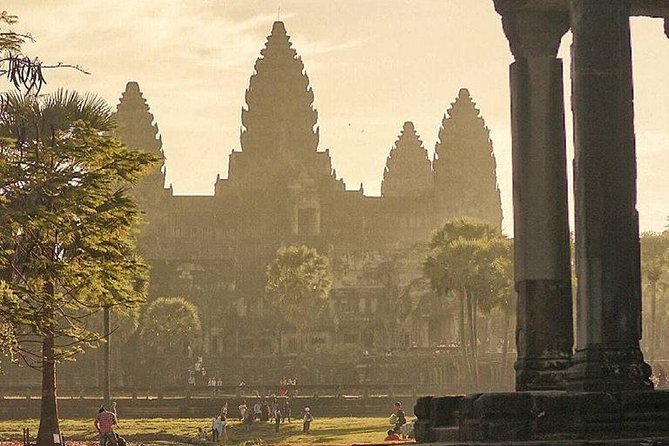
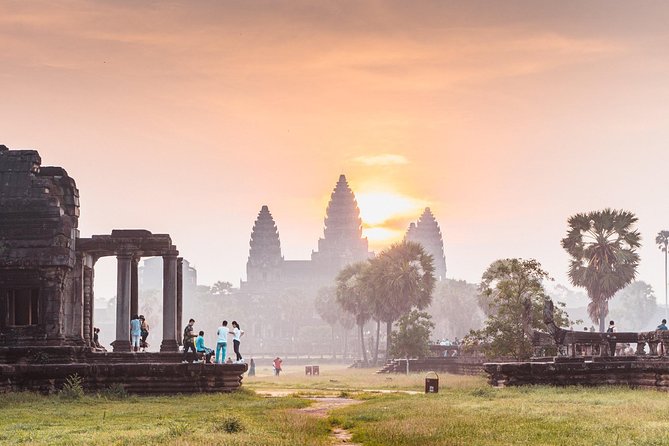
Angkor is famous, yes, but what surprises most first-timers is how fast the day fills up. Sunrise at Angkor Wat is its own mini-event. You wake up early, you travel in the dark, and you want to be in place when the light hits the towers. Anything that adds waiting, confusion, or second-guessing is energy you will not get back.
This pass service helps by delivering your ticket to your hotel front desk under your name, at about 6 pm for your visit the next day. That means you can do the simple thing: wake up, grab your day bag, and go straight to temples with your ticket already in hand. One clear theme from real experiences is that people felt the difference most on sunrise trips, because not having to line up for tickets keeps your morning on schedule.
Price and value: what you’re really paying for
The price you see advertised for this experience is $59 per person, and the pass itself has different options. The data provided also shows these ticket baselines:
- 1-day is $37 plus services and other fees
- 3-day is $62 plus services and other fees
- 7-day is $72 plus services and other fees
So, what are you buying with that extra amount? Not temple access, since that comes from the Angkor National Park ticket. You are buying convenience and reduced risk:
- You avoid standing in line at the ticket office on the day of your temple trip.
- You reduce the chance of missing sunrise because the paperwork is sorted in advance.
- You get delivery to your hotel, so the ticket is ready before you head out.
Is it worth it? For me, it depends on your timing and your stress level. If your itinerary is tight, if you arrive late, or if sunrise is a priority, the service fee can be money well spent. If you have a flexible schedule, plenty of buffer time, and you enjoy administrative errands, you might decide you would rather handle tickets directly and skip the premium.
Hotel delivery, passport photos, and how the ticket works at the gates
This service has a few rules that matter for smooth entry:
- Your ticket is delivered to your hotel front desk under your name in the evening, and you should plan around next-day use.
- You need to email passport photos of all travellers after booking. If they do not receive your photos, they say you will not be issued a ticket.
- You must keep the ticket and show it when requested by the ticket controller.
- The pass is not transferable and contains a photo of you, so you cannot share it between people.
One practical detail I really like from the provided experiences is the lanyard aspect. Temples often mean repeat checks. A lanyard makes it easier to pull the pass out fast without digging through your bag every time.
Also, note the validity rule: passes are not valid after the printed validity date, and they are not valid beyond their from and to dates. If you are the kind of traveler who tends to shift plans, this is a point to think about before paying.
What a 1-day pass gets you versus 3 and 7 days
The biggest mistake people make with Angkor is trying to do everything in one go. The sites are spread out, walking between stops adds up, and the heat can be real.
Here’s the practical way I think about the options you can choose:
- 1-day pass: Best if you already know your must-sees. Think one tight route, starting early, and finishing before you collapse.
- 3-day pass: Best for balancing the heavy hitters with a few additional stops. You can split your time instead of forcing long days every day.
- 7-day pass: Best if you want a slower pace, return to favorite spots for better light, or you might add a special stop without stress.
Even though the itinerary you provided lists many possible stops, your pass length determines how much of that you can enjoy without feeling rushed. Sunrise trips often cost extra energy. A longer pass gives you a cushion for that, plus time for breaks, snacks, and the small detours that make the day fun.
More temple circuits, set side by side

Angkor Wat to Bayon: the core temples you build your day around
If you only do a few places, you build your plan around the “centers” of the complex.
Angkor Wat
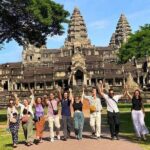
Angkor Wat is the star. It is described as the largest religious monument in the world, built on a site measuring 162.6 hectares. It was originally constructed as a Hindu temple dedicated to Vishnu. In real-life terms, that means you get huge scale plus layers of meaning when you look at carvings and layout. Your visit block here is listed at about 2 hours with admission included.
Practical tip: go early if you care about light and fewer crowds. The whole point of pre-arranged passes is to keep you from losing time to ticket lines, so you can spend that time looking.
Angkor Thom
Angkor Thom was the last and most enduring capital city of the Khmer empire, established in the late twelfth century by King Jayavarman VII. This stop is listed around 1 hour 20 minutes. It is a different vibe from Angkor Wat, more urban, more about the empire’s power and organization rather than pure temple grandeur.
Bayon Temple
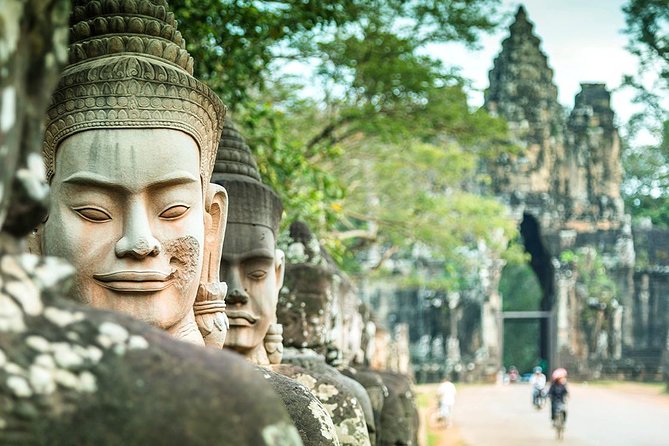
Bayon is where the visual identity of Angkor really hits. It is a richly decorated Khmer temple, built as the state temple of the Mahayana Buddhist King Jayavarman VII, and it sits at the center of the complex. Expect about 1 hour here.
If you want the feel of “I cannot believe this is real,” Bayon is the place that delivers it. But give yourself time to slow down. Fast touring makes these faces and stone details blur together.
Ta Prohm, Banteay Srei, and Preah Khan: temples with strong character
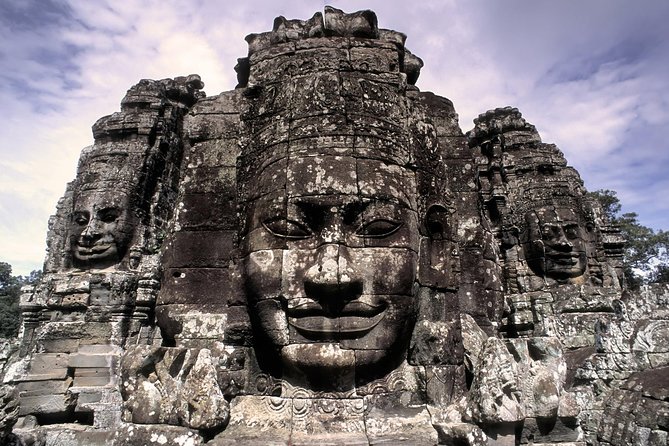
Angkor is not one uniform style. Some temples feel open and airy. Others feel like stone forests. Two of the most memorable listed stops are Ta Prohm and Banteay Srei.
Ta Prohm (the Tomb Raider temple)
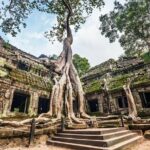
Ta Prohm is described as a Bayon style temple built largely in the late twelfth and early thirteenth centuries, originally called Rajavihara. It also has the familiar modern name from the Tomb Raider movie era. Your scheduled time is about 1 hour.
Why I think it works: it feels both grand and intimate, with lots of visual texture. You can lose track of time here because your eyes keep jumping between stone structure and the way the site reads as part temple, part nature.
Banteay Srei (Ladies temple)
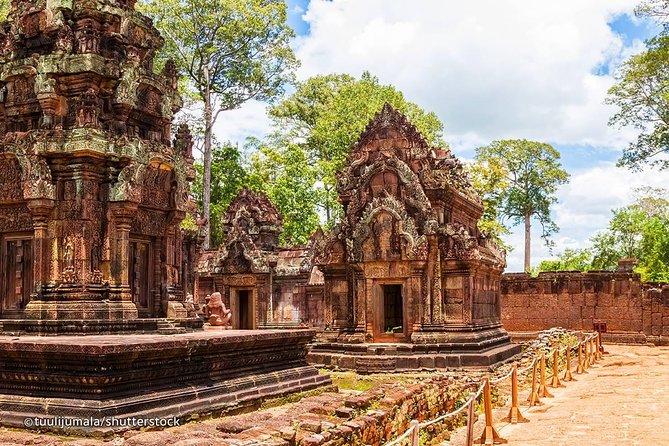
Banteay Srei is a 10th-century Cambodian temple dedicated to Shiva. It is near the hill of Phnom Dei and is listed about 25 km north-east of the main area (the rest of that sentence is cut off in the data you provided, but the key detail is the distance and that it is off-center). The time here is about 1 hour.
The value of Banteay Srei for you is contrast. If you do too many mega sites back-to-back, everything starts to look similar. This one slows you down because it is smaller in scope and known for its distinctive feel.
Preah Khan
Preah Khan was built in the twelfth century by order of King Jayavarman VII to honor his father. It is located northeast of Angkor Thom and near Jayatataka baray. Your listed time is about 1 hour 20 minutes.
This is the sort of temple where moving slowly pays off. The complexity of the layout can reward patient looking. If you tend to rush, you might miss the best parts.
Outside the headline temples: Bakong, Neak Pean, and the “small but mighty” stops
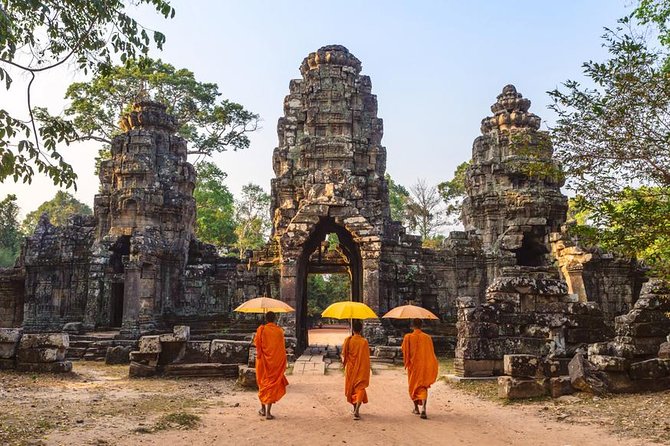
Not every listed stop is a headline. That is good news, because some of the smaller ones can feel more personal.
Bakong
Bakong is described as the first temple mountain of sandstone constructed by Khmer rulers in the ninth century, near modern Siem Reap, about 15 km from town. Listed time is about 1 hour.
This works as an earlier anchor or a day-break stop. It helps you understand the evolution of Khmer temple building without feeling like you are only sprinting between the big five.
Neak Pean
Neak Pean is an artificial island with a Buddhist temple on a circular island in Jayatataka Baray. It is associated with Preah Khan temple. Listed time is about 1 hour.
If you like “architectural ideas,” Neak Pean is satisfying. It is not only stone. It is stone designed around water and a circular plan.
Baksei Chamkrong
Baksei Chamkrong is a small Hindu temple dedicated to Shiva, next to Phnom Bakheng Hill. Listed time is about 30 minutes.
This is ideal when your legs need a break but you still want to see something that feels specific.
Small circuit highlights and water features: Pre Rup, Ta Keo, Ta Som, Srah Srang
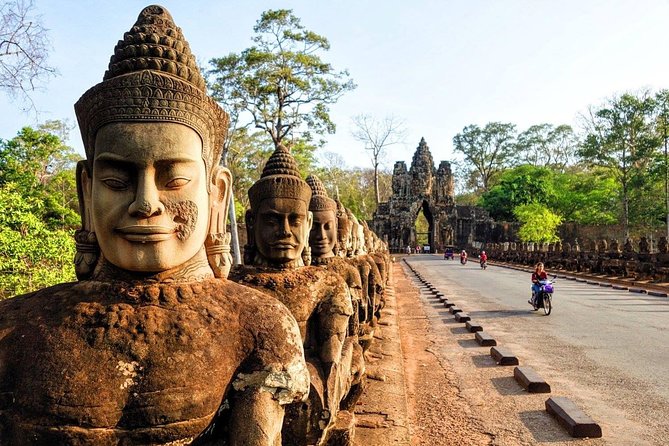
This section is where you get that “I’m getting it now” feeling, because you start noticing patterns: temple mountains, reservoirs, and the way the complex manages space.
Pre Rup
Pre Rup is a Hindu temple at Angkor built as the state temple of Khmer king Rajendravarman, dedicated in 961 or early 962. It is described as a temple mountain made with brick, laterite, and sandstone. Listed time is about 30 minutes.
This is often a quick win stop, but that means you should plan your time well. If you are there at the wrong moment of the day, you might feel rushed.
Ta Keo
Ta Keo is a temple-mountain, possibly the first built entirely of sandstone by Khmers in the 11th century, and it is noted on the small circuit. Listed time is about 40 minutes.
From a visitor point of view, Ta Keo can be a nice change of texture if you have been surrounded by other stone styles.
Ta Som
Ta Som is a small temple built at the end of the twelfth century for King Jayavarman VII, and it is located north-east of Angkor Thom and just east of Neak Pean. Listed time is about 40 minutes.
This is a “wander and notice” stop. If you treat it like a sprint, you will miss what makes it feel different from the larger complexes.
Srah Srang (Royal Bath)
Srah Srang is a baray or reservoir at Angkor, located south of the East Baray and east of Banteay Kdei Temple on the small circuit. Listed time is about 20 minutes.
Reservoirs are easy to overlook when you are focused only on dramatic towers. If you give Srah Srang a short visit, it helps you understand how the Khmer planned water as part of sacred and everyday space.
Roluos group temples and hilltop stops when you want fewer crowds
If you want variety, the Roluos group and hill sites can give you a different rhythm.
Lolei and Preah Ko (Roluos group)
Lolei is described as the northernmost temple of the Roluos group of three late ninth-century Hindu temples, along with Preah Ko and Bakong, and it is about 15 km east of Siem Reap. Listed time is 25 minutes.
Preah Ko is located at Roluos between Bakong and the road, and you enter and leave from the east. Listed time is 30 minutes.
These can work well for an afternoon when you want lower pressure than the main sites.
Phnom Krom
Phnom Krom is a hill about 12 kilometers southwest of Siem Reap, with a spectacular ninth-century Angkorian temple called Prasat Phnom Krom. Your listed time is about 2 hours 20 minutes.
The hill location often means the experience feels more like a viewpoint and a walk, not just a static photo moment. Plan for more time here, and do not treat it like a quick stop.
Phnom Bok
Phnom Bok is a hill in the northeast of Eastern Baray, with a prasat on it. It is described as one of the trilogies of mountains, each with a temple with similar layout. Listed time is about 2 hours.
This is a good pick for travelers who enjoy temple layouts and symmetry. If you love architecture, you will probably linger.
Beng Mealea, Kbal Spean, and the separate-ticket caveat
Not every item in a long list is treated the same way. The data you provided flags separate-ticket requirements for Phnom Kulen and Koh Ker Temples.
Also, Kbal Spean appears more than once and is listed both with admission included and as admission ticket free in different parts of the provided itinerary. Since you only asked for your admission pass review, the safe practical advice is this: double-check the exact gate rules for each stop on the day you visit, especially for Kulen-area sites.
Prasat Beng Mealea
Prasat Beng Mealea is described as a temple from the Angkor Wat period, located about 40 km east of the main group. The itinerary data labels it as admission ticket free. Listed time is about 2 hours.
For value, this is the sort of stop that can feel less hurried than the central complexes, because it is farther out.
Kbal Spean
Kbal Spean is described as an Angkorian era archaeological site on the southwest slopes of the Kulen Hills, along a 150 m stretch with carvings and stone features. Listed time varies depending on which part of the itinerary list you follow. For you, it is best treated as a half-day style add-on, not a five-minute stop.
What to wear, what to do, and how to avoid annoying rules at Angkor
Angkor has rules, and they are for respect and preservation, not just control. You should expect frequent ticket checks and constant signage.
Wear respectful clothing: shoulders and knees covered. Bring comfortable shoes, because you will do plenty of walking, and the experience described in the provided information repeatedly points out how important footwear is for long temple days. A hat and water also make sense even though they are not listed in the data, because Angkor can be hot and tiring in real life.
Keep these behavior basics in mind:
- Please respect monks.
- Please respect signs.
- Do not give money or candy to children.
- Do not litter.
- Do not smoke.
- Do not touch carvings.
If you bring a drone or plan professional filming for commercial purposes, note the rule provided: you need a permit from the APSARA National Authority.
So, should you book this Angkor Wat admission ticket service?
If your schedule includes sunrise and you want less risk, I think this kind of pre-arranged pass is a smart move. Having the ticket delivered to your hotel the evening before means you can start your morning with fewer unknowns. It is also a good option if your travel style involves tight connections, late arrivals, or you just hate queuing.
I would hesitate if:
- you are comfortable spending time at the official ticket office,
- your dates are flexible enough that you can absorb small delays,
- or you want the lowest possible total cost and do not care about the convenience premium.
My practical rule: pay the service fee when time is scarce and sunrise matters. Skip it when you have buffer days and you are fine handling tickets yourself.
FAQ
Do I need to buy an Angkor National Park ticket in advance?
Yes. This experience is for an Angkor National Park ticket, and it is delivered to your hotel so you can avoid waiting at the ticket office on the day you visit.
When will the ticket be delivered to my hotel?
The information provided says the ticket is delivered in the evening, around 6 pm, for your visit on the next following days.
Can I visit from sunrise to sunset?
Yes. The included details say you can visit from sunrise to sunset, on your own arrangement.
How long is the ticket valid for?
You can choose a 1-day, 2-day, 3-day, or 7-day Angkor National Park ticket, and the pass is only valid within the printed from and to dates.
Do children under 12 need a ticket?
The data says children below 12 do not need a ticket to the national park, but they need to show a passport to proof the age.
What do I get besides the admission ticket?
The included items list delivery to your hotel front desk under your name and access via your Angkor National Park ticket. Visit from sunrise to sunset is also included on your own arrangement.
Is transportation or a tour guide included?
No. Transportation to the sites and a tour guide are not included, though a guide can be hired in most languages.
Are Phnom Kulen and Koh Ker included with this pass?
No. The information provided says visiting Phnom Kulen and Koh Ker Temples requires a separate ticket.
Can I transfer or share my pass with someone else?
No. The pass is not transferable and contains a photo of you.
Do I need a permit for drones or professional filming?
Yes. Flying drones and taking pictures with professional equipment for commercial purposes requires a permit from the APSARA National Authority.
Passes and Tickets Sorted
- Siem Reap: Angkor Wat Admission Ticket
★ 4.7 · 106 reviews - Kullen Waterfall Park with Small Group included entrance fee
★ 5.0 · 105 reviews - Phnom Kulen National Park Admission Ticket
★ 4.7 · 30 reviews - Angkor Eye Standard Ride Ticket
★ 5.0 · 26 reviews - Siem Reap: Angkor Wat Admission Ticket
★ 5.0 · 20 reviews
More Temple Circuits Around Siem Reap
- Angkor Wat Sunrise or Sunset Tour with Guide from Siem Reap
★ 5.0 · 12,109 reviews - Siem Reap: Angkor Wat: Small-Group Sunrise or Sunset Tour
★ 5.0 · 9,444 reviews - Siem Reap: Angkor Wat 2-Day Tour with Sunrise and Sunset
★ 4.9 · 4,429 reviews - Siem Reap: Full-Day Angkor Wat Guided Tour with Sunset
★ 4.9 · 3,803 reviews - Angkor Wat Sunrise tour with Small – Group and Guide tours
★ 5.0 · 3,655 reviews
Angkor Wat, a Few More Ways In
- Angkor Wat Sunrise or Sunset Tour with Guide from Siem Reap
★ 5.0 · 12,109 reviews - Siem Reap: Angkor Wat: Small-Group Sunrise or Sunset Tour
★ 5.0 · 9,444 reviews - Siem Reap: Angkor Wat 2-Day Tour with Sunrise and Sunset
★ 4.9 · 4,429 reviews - Siem Reap: Full-Day Angkor Wat Guided Tour with Sunset
★ 4.9 · 3,803 reviews - Angkor Wat Sunrise tour with Small – Group and Guide tours
★ 5.0 · 3,655 reviews
Just Added: Fresh Siem Reap Tour Reviews
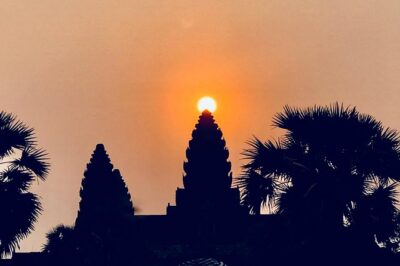

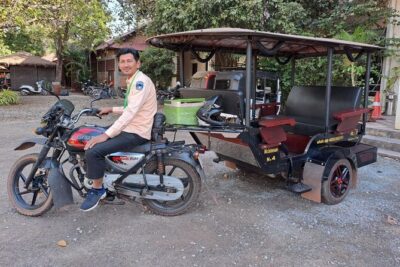
Angkor Wat Temple Tours, compared.
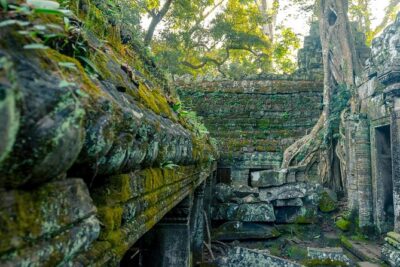 ★ 5.0Angkor Wat Sunrise or Sunset Tour with Guide from Siem ReapFrom $1812,109 reviews
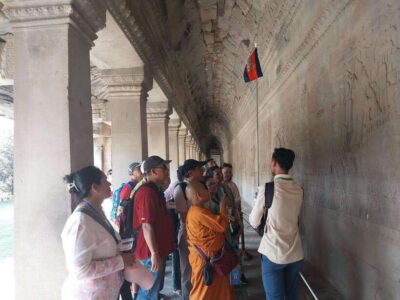 ★ 5.0Angkor Wat: Small-Group Sunrise or Sunset TourFrom $159,444 reviews
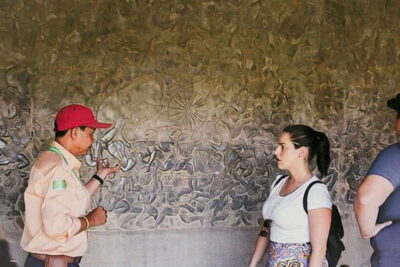 ★ 4.9Angkor Wat 2-Day Tour with Sunrise and SunsetFrom $344,429 reviews
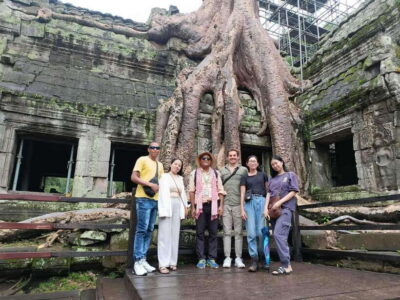 ★ 4.9Full-Day Angkor Wat Guided Tour with SunsetFrom $153,803 reviews
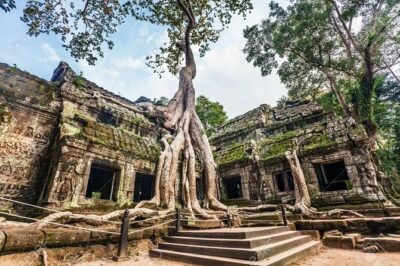 ★ 5.0Angkor Wat Sunrise tour with Small – Group and Guide toursFrom $143,655 reviews
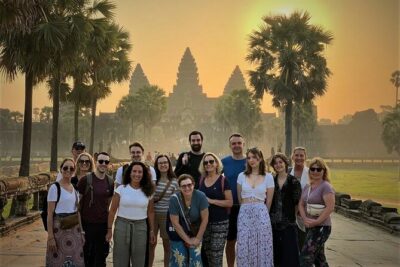 ★ 5.0Angkor Wat Highlights and Sunrise Guided Tour from Siem ReapFrom $233,213 reviews
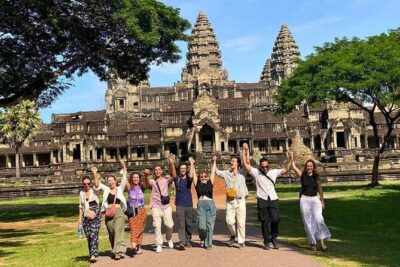 ★ 5.0Angkor Wat Sunset Small Group Tour with Lunch IncludedFrom $203,059 reviews
 ★ 5.0Full-Day Angkor Wat Sunrise Private Tour with Guide from Siem ReapFrom $602,920 reviews
Browse the lists this tour appears in