
Reviewed · ANGKOR TEMPLE TOURS
Angkor Region & Rainforest Bike Tour
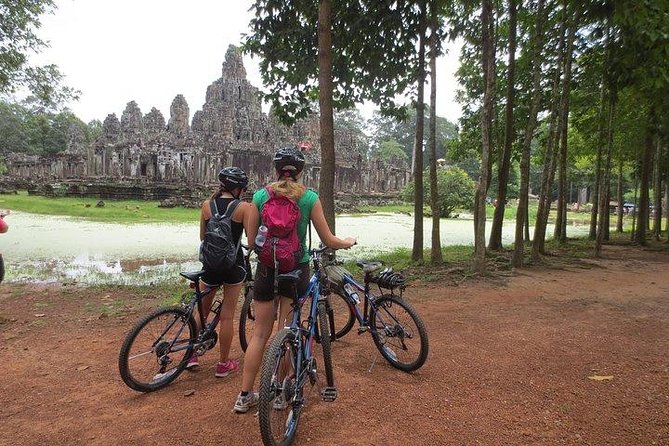
Angkor is better on two wheels. This Angkor Region & Rainforest Bike Tour helps you skip the worst crowd crunches by using less-traveled paths through forest and temple roads, guided by an English-speaking team. I love that your Trek mountain bike and helmet are included, and that lunch plus coconut water and drinking water are handled for you. One thing to plan for: the temple pass is not included, so you need to budget extra for entry fees.
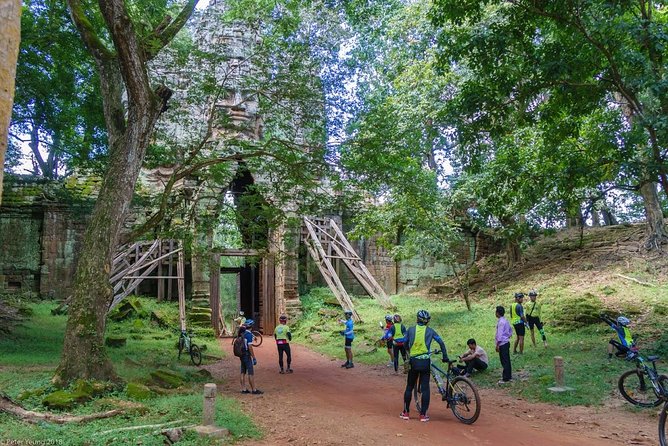
This is an early start day, and it includes a mix of major sights and more jungle-heavy stops. You’ll ride past Angkor Thom’s gates and walls, then spend time at temples like Bayon, Preah Khan, Tanei, and Taprom, with a rainforest trail built into the morning. The big consideration is simple: you’re biking in real weather and real terrain, so come ready for mud if it has rained.
Key points before you go
- Rainforest and off-route riding to reduce crowd pressure
- Premium Trek bike and helmet included so you do not waste time on rentals
- Five major temple stops: Angkor Wat, Bayon, Preah Khan, Tanei, Taprom
- Lunch plus coconut water and drinking water included for a smoother day
- Small group size, max 10 which makes the pace feel less rushed
- Temple pass not included, so budget separately
More temple circuits, set side by side
- Angkor Wat Sunrise or Sunset Tour with Guide from Siem Reap★ 5.0 · 12,109 reviews
- Siem Reap: Angkor Wat: Small-Group Sunrise or Sunset Tour★ 5.0 · 9,444 reviews
- Siem Reap: Angkor Wat 2-Day Tour with Sunrise and Sunset★ 4.9 · 4,429 reviews
- Siem Reap: Full-Day Angkor Wat Guided Tour with Sunset★ 4.9 · 3,803 reviews
Angkor by bike, without the queue nightmare
Angkor can be intense. Even if you love temples, big foot traffic can turn sightseeing into a slow-moving puzzle. This bike tour is built around the idea that you should spend your energy on riding and looking, not waiting in lines or funneling through the same chokepoints as everyone else.
The rainforest portion matters because it changes the mood fast. Instead of starting your day straight in the densest visitor zones, you get a more natural path feel, with the dense vegetation acting like a buffer. That means the day starts with discovery and movement, not just spectacle.
I also like that the tour does not try to cram in everything. You still see the headline temples, but the route is designed so you can actually enjoy the spaces around them, including defensive walls and gates at Angkor Thom, instead of only snapping photos in place.
Price and value, plus what you still need to pay
The price is $50 per person, and that includes more than a lot of “cheap” tours do. Your day is not just a guide with no plan. You also get a quality Trek mountain bike and helmet, an English-speaking guide, lunch, coconut water, and pure drinking water.
Here is the key budget reality: the temple pass costs $37 for one-day entry, and it is not included. So your total trip cost will be the tour price plus your temple entry fee.
Also note hotel pick-up and drop-off are not included. If you are staying outside easy walking or taxi reach of the meeting point, you might spend a bit on getting there early. The meeting point is on Taphul Rd in Siem Reap, and the tour starts at 7:30 am.
When a tour includes bike gear and food like this, it usually saves you from a two-step problem. You do not have to find a rental, you do not have to figure out lunch on a tight schedule, and you do not have to negotiate hydration in heat. For many people, that added simplicity is the real value.
The morning logistics that shape the whole day
You start early, 7:30 am, and the ride lasts about 8 hours. That timing is not random. Going earlier helps you avoid the most chaotic visitor flow, and it also gives your guide room to move through temple areas with fewer bottlenecks.
The tour meets at Taphul Rd, Krong Siem Reap 17252, and it ends back at the meeting point. You should treat this as a half-day plan that begins quickly and finishes still in the morning-to-early-afternoon window, depending on conditions and pace.
Group size is capped at 10 travelers, which I appreciate. Smaller groups typically mean less waiting, fewer traffic jams on narrow paths, and a more natural flow when you stop for photos or explanations.
The tour uses a mobile ticket, and you’ll get confirmation at booking time.
What you ride, how it feels, and how to pack
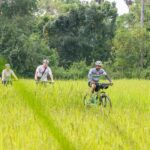
The bike is a premium mountain bike (Trek) and you also get a helmet. That is a big deal in Angkor because you are not on a flat, smooth track. You will be on a mix of paths, and you can expect uneven surfaces, dust, and sometimes mud.
The rainforest riding is part of the appeal, and it also means your day can turn wet fast. In past rides, people have described muddy forest trails and rain-friendly riding, so pack for that reality. Bring sunglasses, and consider something simple for rainy conditions, like a lightweight rain layer that you can keep in a small bag.
A practical detail that can affect comfort: you must advise passenger height at booking. That helps the operator fit you with a bike setup that works for your body, rather than forcing you to ride something that feels awkward.
For temple rules, plan your clothing ahead. Angkor is an active spiritual site for Buddhists and local worship. Revealing clothes are prohibited in sacred palaces. Shorts or skirts above the knees and bare shoulders are not allowed, so you’ll want a respectful outfit ready. That is not just about rules, it also makes it easier to move between places without feeling like you are constantly being watched.
Bring a camera if you want temple and wall views. Sunscreen is smart, too, since you are outside for much of the day.
Siem Reap by pedal, a couple more rides
Stop-by-stop: Angkor Wat, Angkor Thom gates, and Bayon faces
Your day builds like a story, starting with the big name and then shifting into the defensive structure of Angkor Thom.
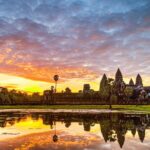
Angkor Wat is your first major anchor point. It is one of the seven wonders of the ancient world, and even if you have seen photos, being there in person is different. The guide helps you place what you are looking at in a larger setting, rather than treating it like a single photo spot.
From there, you move through Angkor Thom, hitting key entry points including the south gate and then later the west and north gates. These gates are not just entrances. They are part of how Angkor functioned as a fortified religious and political center.
One of the more memorable moments is the climb onto Angkor Thom’s protection wall area, where you can see the view from above, including Prasat Chrung. Getting a perspective from a wall changes the way you understand the layout. Suddenly you see how temples relate to each other across the grounds.
Then you reach Bayon, famous for its 54 towers and 216 smiling faces. That design detail can sound like trivia until you stand in the right place. The expressions are repetitive, but the effect still hits you, because the faces shift as you move and the temple framing pulls your eye around.
A benefit of this bike format is that stops feel more like you are arriving from different directions, rather than being herded into the same viewing angles. You still get the key sights, but you are not just stuck in a crowd line waiting for a single moment.
Potential drawback here: climbs and steps exist at temple areas, especially if you go up walls or move through uneven ground. It is manageable for most people, but it is not a fully flat, easy walk day either. If you have mobility limitations, you should ask how steep the segments feel for your specific condition.
Preah Khan, Tanei, and Taprom in the jungle light
After the iconic structures, the tour shifts into temples where the surroundings start doing some of the storytelling.
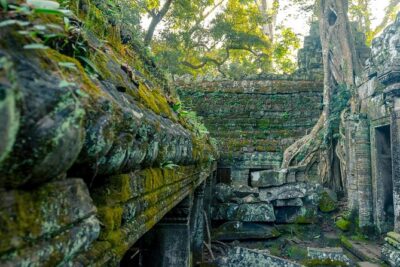
Preah Khan is described as a temple covered by jungle. That matters because jungle growth changes how a temple feels. It can look more secretive, more lived-in, and less like an exhibit. Expect the air and light to feel different once you are surrounded by dense vegetation.
Then you go to Tanei. The tour framing calls it an ancient hospital and notes it is untouched by archaeologists, embraced by the natural setting around it. That combination of historical function and current forest atmosphere gives you a different kind of experience than the most famous photo temples. Instead of only looking at carved stone, you also feel how the place sits inside the landscape.
Finally, you visit Taprom. Even without adding extra story, this is one of the major temple stops on the route, and it is typically a highlight because the temple environment is dramatic. With a bike tour, you are more likely to experience it from a flow that feels like exploration rather than standing in the most crowded spot.
The biggest advantage in this jungle stretch is the pacing. Instead of spending all day in high-traffic zones, you split your attention between grand monuments and more atmospheric, forest-wrapped ruins.
The main consideration is timing and weather. Rain can make these areas slick, and jungle paths can get muddy. That is not a reason to skip the tour, just a reason to wear shoes you trust on uneven ground.
Bo Bo and the English-speaking guide team, what that means for you
The operation is led by an experienced team, and in at least one past ride, the guide named Bo Bo and his crew were specifically praised for professionalism and well-maintained bikes. That aligns with what you want from a temple bike tour: someone who knows how to keep schedules reasonable, who can guide you safely through different surfaces, and who can explain what you are seeing without turning it into a lecture.
Because the guides are English-speaking, you will get context on what the Khmer Empire left behind between the 9th and 15th centuries, and you’ll understand why specific gates and walls matter, not just where to stand for the best photo.
Also, small groups help here. A guide can actually notice if your bike fit feels off, if you’re struggling on a particular segment, or if you need a quick adjustment before you continue.
Lunch, coconut water, and drinking water that saves your day
A lot of tour days fail on the simple stuff. You bike or walk for hours, then you end up hungry and dehydrated at the exact moment you want to be fully present.
This tour solves that with included lunch, coconut water, and pure drinking water. In Siem Reap’s heat, those small details matter. Coconut water is refreshing fast, and having drinking water provided means you are not constantly buying small bottles while also trying to keep moving.
I love that you do not have to plan meal stops or waste time negotiating food locations mid-tour. It keeps the day’s rhythm steady.
If you have dietary needs, you should mention them at booking. The operator asks for that, which is a good sign that they can try to match you with the right lunch option.
Who should book this bike tour, and who should think twice
This experience is a great match if you want Angkor without turning the day into a queue contest. It is also ideal if you like outdoorsy travel, because the route includes rainforest trail riding and off-beat paths.
It is also a strong option if you do not want the hassle of gear rental. Since the bike and helmet are included, you can pack lighter and spend your mental energy on sightseeing instead of logistics.
You might think twice if:
- You dislike muddy terrain or wet weather surprises, since rainforest trails can get slick.
- You need hotel pick-up, because this starts and ends at the meeting point on Taphul Rd.
- You are hoping for a fully flat, low-effort day, since there are climbs and temple areas with steps.
Most people can participate, but you still want to be honest about comfort on a mountain bike, plus your ability to handle temple stairs and uneven ground.
Should you book the Angkor Region and Rainforest Bike Tour?
Yes, if you want a smarter way to see Angkor: bike movement, fewer crowd headaches, and a tour structure that includes the stuff you would otherwise pay for yourself. The best part is that you get more than a list of temples. You get a ride that connects the sights into a full day.
Book this tour if:
- You value included bike gear and do not want to rent.
- You care about temple pass budgeting, since that is the only major extra cost listed.
- You are okay with a 7:30 am start and a full about-8-hour outing.
- You want a mix of iconic Angkor Wat and more jungle-set temples like Preah Khan and Tanei.
Skip or compare if you cannot handle uneven terrain, if you require hotel transport, or if you feel uncomfortable dressing respectfully at active religious sites.
If that sounds like you, this is one of those days where the method matters. Riding well changes what you notice, and it makes the temples feel less like a checklist.
FAQ
Which temples are included?
The tour includes five temple visits: Angkor Wat, Bayon, Preah Khan, Tanei, and Taprom.
Does the tour price include the temple pass?
No. The temple pass is not included. The listed one-day entry price is $37.
What time does the tour start and how long is it?
It starts at 7:30 am and runs for about 8 hours.
Are the bike and helmet included?
Yes. You get a premium mountain bike (TREK) and a helmet included in the tour.
Is lunch included?
Yes. Lunch is included, along with coconut water and pure drinking water.
Where do I meet the group?
The meeting point is Taphul Rd, Krong Siem Reap 17252, Cambodia. The tour ends back at the same meeting point.
Is hotel pick-up or drop-off included?
No. Hotel pick-up and drop-off are not included.
What should I wear at Angkor?
Angkor is an active spiritual site. Revealing clothes, including shorts or skirts above the knees and bare shoulders, are prohibited in sacred palaces. Dress respectfully.
Can I cancel, and do I get a refund?
Yes. Free cancellation is available. You can cancel up to 24 hours in advance for a full refund.
More Tour Reviews in Siem Reap
- Angkor Wat Sunrise or Sunset Tour with Guide from Siem Reap
★ 5.0 · 12,109 reviews - Siem Reap: Angkor Wat: Small-Group Sunrise or Sunset Tour
★ 5.0 · 9,444 reviews - From Siem Reap: Kampong Phluk Floating Village Tour by Boat
★ 4.9 · 6,979 reviews - Sunset tour of Kampong Phluk stilts home village on the Tonle Sap
★ 5.0 · 4,865 reviews - Siem Reap: Angkor Wat 2-Day Tour with Sunrise and Sunset
★ 4.9 · 4,429 reviews
Siem Reap on Two Wheels
- Siem Reap Countryside Bike Tour / E-Bike or Tuk Tuk
★ 5.0 · 935 reviews - Angkor Sunrise Bike Tour / E-Bike or Tuk Tuk
★ 5.0 · 615 reviews - Siem Reap: Bike the Angkor Temples – Full-Day 30km Tour
★ 5.0 · 463 reviews - Siem Reap: Angkor Wat Sunrise Bike Tour & Jungle Breakfast
★ 5.0 · 415 reviews - Siem Reap: Guided Countryside Bike Tour
★ 4.9 · 294 reviews
More Temple Circuits Around Siem Reap
- Angkor Wat Sunrise or Sunset Tour with Guide from Siem Reap
★ 5.0 · 12,109 reviews - Siem Reap: Angkor Wat: Small-Group Sunrise or Sunset Tour
★ 5.0 · 9,444 reviews - Siem Reap: Angkor Wat 2-Day Tour with Sunrise and Sunset
★ 4.9 · 4,429 reviews - Siem Reap: Full-Day Angkor Wat Guided Tour with Sunset
★ 4.9 · 3,803 reviews - Angkor Wat Sunrise tour with Small – Group and Guide tours
★ 5.0 · 3,655 reviews
Just Added: Fresh Siem Reap Tour Reviews
Angkor Temple Tours, compared.
 ★ 5.0Angkor Wat Sunrise or Sunset Tour with Guide from Siem ReapFrom $1812,109 reviews
 ★ 5.0Angkor Wat: Small-Group Sunrise or Sunset TourFrom $159,444 reviews
 ★ 4.9Angkor Wat 2-Day Tour with Sunrise and SunsetFrom $344,429 reviews
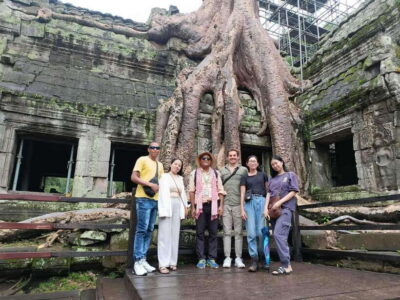 ★ 4.9Full-Day Angkor Wat Guided Tour with SunsetFrom $153,803 reviews
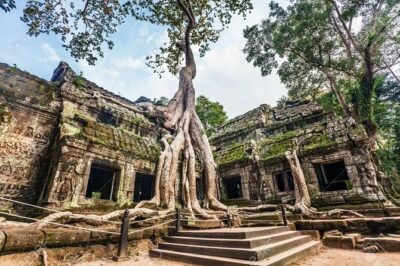 ★ 5.0Angkor Wat Sunrise tour with Small – Group and Guide toursFrom $143,655 reviews
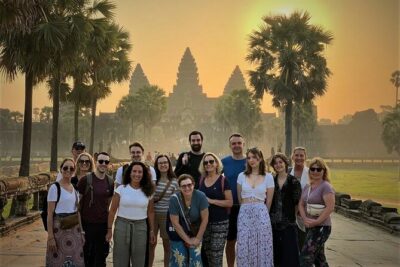 ★ 5.0Angkor Wat Highlights and Sunrise Guided Tour from Siem ReapFrom $233,213 reviews
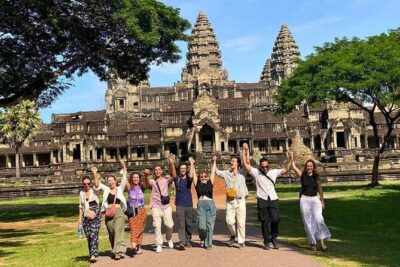 ★ 5.0Angkor Wat Sunset Small Group Tour with Lunch IncludedFrom $203,059 reviews
 ★ 5.0Full-Day Angkor Wat Sunrise Private Tour with Guide from Siem ReapFrom $602,920 reviews
Browse the lists this tour appears in