
Pedal into Angkor from the quiet side. This private cycling tour from Siem Reap takes you off the main roads and into shaded jungle paths and older temple routes, so you see Angkor Wat, Bayon, and Ta Prohm with a calmer rhythm. You’ll ride with an English-speaking guide, stop often, and get a crowd-light view you cannot get from a bus window.
I especially love the 25 to 40 km mix of jungle trail and temple roads, because it turns the day into real motion, not just standing and waiting. I also love the storytelling from your guide, with Khmer Empire context and temple architecture explained in a way that actually sticks, from guides like Leap and Sok who’ve been singled out for clear, energetic commentary.
One possible drawback: Angkor admission tickets are not included, and you should plan for moderate cycling fitness because the route covers a solid distance for a half day to full day. In hot weather, that matters.
Quick hits before you pedal
- Private group, crowd-light pacing so you spend less time fighting flows of people.
- English-speaking cycling guide with Khmer history and temple architecture explained at each stop.
- Mountain bike and helmet included, plus water and snacks during the ride.
- Angkor ticket support, the guide helps you buy tickets at the entrance.
- 25 to 40 km loop-style route through rainforest trails and quiet temple roads.
More temple circuits, set side by side
- Angkor Wat Sunrise or Sunset Tour with Guide from Siem Reap★ 5.0 · 12,109 reviews
- Siem Reap: Angkor Wat: Small-Group Sunrise or Sunset Tour★ 5.0 · 9,444 reviews
- Siem Reap: Angkor Wat 2-Day Tour with Sunrise and Sunset★ 4.9 · 4,429 reviews
- Siem Reap: Full-Day Angkor Wat Guided Tour with Sunset★ 4.9 · 3,803 reviews
Why biking the Angkor back trails feels different
Angkor is famous for a reason, but most visits feel like a checklist under pressure. Cycling changes that. You get to move slowly enough to notice details, but actively enough to feel like you are part of the landscape.
This tour focuses on getting you away from the busier roads and into shaded jungle riding and older, temple-connected routes. The result is a different kind of temple seeing: you arrive with less stress, and you can linger without feeling like you’re holding up a tour bus.
If you want Angkor to feel more human and less hurried, this format is a smart match. It also helps you cover more ground in the same time window, because bikes keep you from losing the day to transfers and gridlocked sightseeing.
Getting to Angkor Park: pickup, bike setup, and timing
Your day starts with pickup from your hotel lobby in Siem Reap, and you’ll transfer to the start point before heading toward Angkor Park. The tour is built to be convenient on paper and smooth in practice, with the guide handling the cycling plan and the driver supporting the logistics.
Once you’re suited up, you’ll ride a mountain bike with a helmet, and you’ll have bottled water and snacks along the way. That small package matters because Angkor days can run hot, and you do not want to spend energy stopping to hunt for basic supplies.
The tour runs about 7 to 8 hours, which is long enough to feel like a proper outing, but not so long that you lose the day to fatigue. You should plan your energy accordingly, especially if you’re not used to steady riding.
Angkor Wat: the entry moment and what makes the stop worthwhile
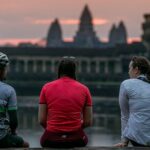
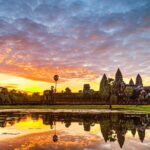
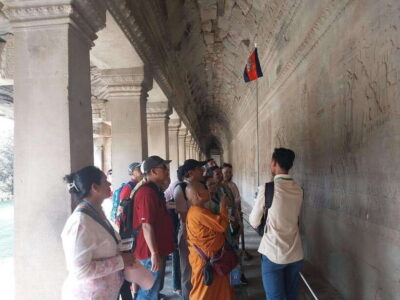
Angkor Wat is the obvious headline, and it’s still a stunner. You’ll spend about 2 hours here, with your guide bringing context so the scale and design feel more intentional and less random.
A practical note: the ticket counter area is usually the first big point of concentration, and your guide will guide you to the efficient entry process and help you purchase your Angkor admission ticket. Since the admission ticket is not included in the tour price, this is one of the first things you should plan for mentally.
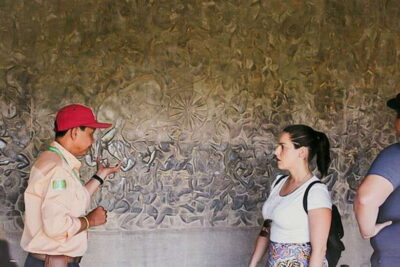
As you move through, keep an eye on symmetry and the way carvings and reliefs are arranged. Angkor Wat is prized for its balanced proportions and refined sculpture work, and even a short pause at the right angle can help you see why people call it the best-preserved monument in the Angkor group.
If you get to ride between temple zones instead of only walking from one end to the other, you also get less time “in transit” and more time at the places that demand attention.
Ta Nei Temple: a quieter 30 minutes near the East Baray
After Angkor Wat, you’ll hit Ta Nei Temple for about 30 minutes. It’s a late 12th century stone temple, tied to the reign of King Jayavarman VII, and it sits near the northwest corner of the East Baray.
This stop works as a tonal shift. Instead of staying in the most famous flow, you get a calmer pocket where you can appreciate the temple details without constant crowd pressure. Ta Nei also connects to the broader religious shifts of the era, including its dedication to the Buddha.
You should treat this as a short but meaningful break in your day. Thirty minutes sounds brief, but when the goal is understanding, it’s enough time to notice layout and carvings rather than just take photos and move on.
Cycling helps here too. You arrive with your body warmed up and your mind less overstimulated, which makes the explanation feel more grounded.
Siem Reap by pedal, a couple more rides
French Dam: 19 minutes for water sounds and bird noise
Next is a short scenic stop at the French Dam (often written with Khmer script as well). You’ll spend about 19 minutes, and the point is not a museum-style viewing. It’s a sensory reset.
Think water sounds, big trees, and a calmer feeling than temple courtyards. Even if you only linger briefly, you’ll often remember this kind of break more than another stop that was all stone and stairs.
This is also a smart pacing tool. After temple time, your body needs a moment to breathe and rehydrate, and a quick scenic stop can make the rest of the cycling feel easier.
Bring that mindset. You are not “skipping” anything here. You’re giving your attention a different channel before the more iconic city-center sights.
Bayon Temple: the faces, the royal-city feeling, and a 1-hour stop
Bayon takes about 1 hour, and it’s one of the best examples of why Angkor feels like a planned city, not just isolated temples. The temple was built nearly a century after Angkor Wat, and it sits at the center of a royal city.
Even without going deep into dates, the design tells you what matters. Bayon is most famous for its stone faces, and your guide’s job is to help you connect the architectural choices to the political and spiritual role the site played.
This is also a good time to pace your attention. In a famous place, it’s easy to rush from face to face. A guided cycling day helps because you can slow down when you need to and speed up when the site layout naturally does the work for you.
If you’re prone to overheating, Bayon is a good place to take small water breaks rather than trying to push through. The day is active, and you want your best photos, not just your fastest escape.
Angkor Thom South Gate: restoration impact and route positioning
Then comes the South Gate of Angkor Thom, with about 30 minutes set aside. This gate is popular because it has been fully restored and many of the decorative heads remain in place.
The value of this stop is partly visual and partly positional. Your day is structured so you approach from the right angle and sequence. That matters because gates can feel like backdrops if you see them out of context, but if you see them as the entry to a larger walled city, they start to make sense.
Try standing back for a moment before you walk in. With your guide’s explanation, you can read the gate not just as a photo target, but as an intentional threshold.
Since your tour includes cycling between zones, you also spend less time doing long, open walking stretches that can feel exposed in the heat.
Ta Prohm: the trees-and-stone experience you cannot fake
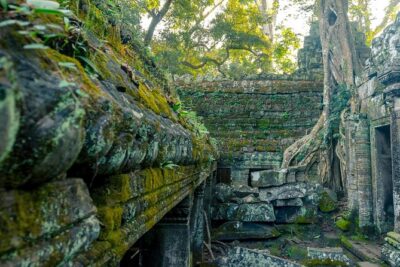
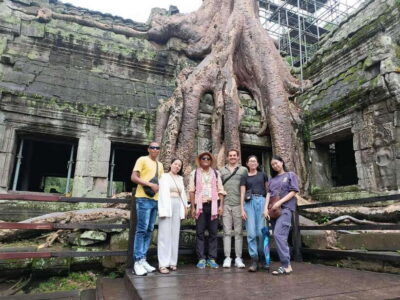
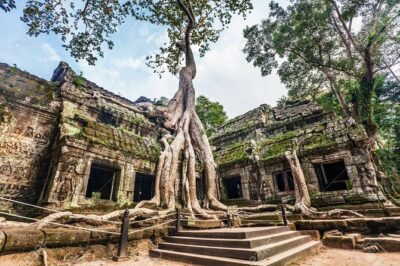
Ta Prohm is about 1 hour, and it’s famous for being left largely untouched by archaeologists, except for clearing visitor paths and strengthening some structures. It’s often described as the kingdom of trees, and that idea is not marketing fluff.
Here’s the practical truth: Ta Prohm is visually dramatic and physically uneven. You want your guide to help you navigate at an easy tempo, point out structural choices, and explain what you’re seeing without turning it into a lecture you cannot follow.
Cycling makes this stop better than if you only walked all day. Your body feels less “sore from continuous walking,” and you can focus on the interplay between roots, stone, and the framing effect the vegetation creates.
If your guide is someone like Leap or Sok, the day tends to feel animated, with history and architecture explained in a way that connects to what you’re looking at, not just facts floating past you.
Comfort, safety, and fitness for 25 to 40 km
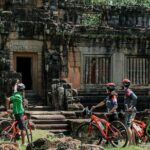
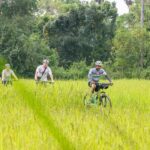
This is not a casual stroll tour. You should have moderate physical fitness, because you’ll ride about 25 to 40 km through a mix of shaded jungle trails, quiet temple roads, and older causeway-style paths.
The good news is the route is guided and supported, not a self-guided pedal where you guess your way through. You’ll have a helmet, water, and snacks, and the tour structure gives you time at stops so the day doesn’t become nonstop cycling.
Still, plan like a cyclist. Wear comfortable footwear that can handle dusty paths, and bring sun protection. The tour includes water, but it helps to think like, how will you feel at the halfway point?
Also, since this is private, you can often match your pace to your group’s comfort level better than in a large group setting.
Price and value: what $61.75 covers, and what you must budget
At $61.75 per person, this tour can feel like a strong value if you care about active sightseeing. You’re paying for real logistics: hotel pickup and drop-off, a biking guide, a mountain bike and helmet, and support with water and snacks.
The tradeoff is that your temple admission tickets are not included. Your guide assists you with purchasing the Angkor ticket at the entrance, but you still need to budget for it. You also eat lunch on your own at local restaurants, typically around $3 to $10 per dish, with both vegetarian and non-vegetarian options.
So the fair way to judge value is this: you’re not just buying temple time. You’re buying access to quieter routes, more varied stops, and a ride format that reduces the stress of moving through a huge complex.
If you’re a family group, a couple, or anyone who wants a mix of culture and outdoor activity, the price makes sense because you’re getting the whole package, not just a guide walking alongside you.
Who should book this Angkor jungle biking tour
You’ll probably love this if you:
- Want Angkor Wat, Bayon, and Ta Prohm in one day without spending your time trapped in crowd surges.
- Prefer active travel, cycling over standing still.
- Like your history explained with energy, not delivered like homework.
- Are comfortable with a moderate ride and can handle heat and some uneven ground.
You might skip it if you hate cycling distances, have mobility limits, or want a mostly seated, slow-paced day. Also, if you’re hoping tickets are included, you’ll need to plan for the extra admission cost.
Private tours are great when you want your day to feel customized, and this one is built for that with only your group participating.
Should you book this Angkor Jungle Biking Adventure?
If your goal is a more personal Angkor day, I’d book it. The combination of quiet routing, frequent stops, and an English guide who brings the Khmer Empire and temple architecture to life is the real draw. You’re also getting practical inclusions that keep the day from turning into a scavenger hunt.
Just budget for the Angkor admission ticket, dress for heat, and make peace with a real cycling distance. Do that, and you’ll see Angkor in a way that feels closer to the place itself, not just the postcard version.
FAQ
Is this a private tour?
Yes. It’s a private tour/activity, and only your group will participate.
How long does the Angkor jungle biking tour take?
The duration is about 7 to 8 hours.
What’s included in the tour price?
Pickup and drop-off from your hotel, an English-speaking cycling guide, a mountain bike and helmet, bottled water, and snacks.
Do I need to buy the Angkor ticket?
Yes. Angkor admission tickets are not included, and your guide will assist you in purchasing them at the entrance of Angkor Park.
Is lunch included?
Lunch is not included. You can buy lunch at local restaurants during the tour, with prices roughly $3 to $10 per dish.
What fitness level do I need?
You should have a moderate physical fitness level.
What is the cancellation policy?
You can cancel for a full refund if you cancel at least 24 hours in advance of the experience start time.
Are hotel pickup details needed?
Yes. You’ll need to provide your hotel name for pickup.
Just Your Group: Private Days
- Full-Day Angkor Wat Sunrise Private Tour with Guide from Siem Reap
★ 5.0 · 2,920 reviews - Siem Reap: Angkor Wat Private Tuk-Tuk Tour
★ 4.9 · 2,222 reviews - Angkor Wat Private Day Tour from Siem Reap
★ 5.0 · 834 reviews - Angkor Wat Private Tuk-Tuk Tour (sunrise Option) & more
★ 5.0 · 439 reviews - Private Angkor Wat Day Tour – Best of Angkor
★ 5.0 · 269 reviews
Siem Reap on Two Wheels
- Siem Reap Countryside Bike Tour / E-Bike or Tuk Tuk
★ 5.0 · 935 reviews - Angkor Sunrise Bike Tour / E-Bike or Tuk Tuk
★ 5.0 · 615 reviews - Siem Reap: Bike the Angkor Temples – Full-Day 30km Tour
★ 5.0 · 463 reviews - Siem Reap: Angkor Wat Sunrise Bike Tour & Jungle Breakfast
★ 5.0 · 415 reviews - Siem Reap: Guided Countryside Bike Tour
★ 4.9 · 294 reviews
More Temple Circuits Around Siem Reap
- Angkor Wat Sunrise or Sunset Tour with Guide from Siem Reap
★ 5.0 · 12,109 reviews - Siem Reap: Angkor Wat: Small-Group Sunrise or Sunset Tour
★ 5.0 · 9,444 reviews - Siem Reap: Angkor Wat 2-Day Tour with Sunrise and Sunset
★ 4.9 · 4,429 reviews - Siem Reap: Full-Day Angkor Wat Guided Tour with Sunset
★ 4.9 · 3,803 reviews - Angkor Wat Sunrise tour with Small – Group and Guide tours
★ 5.0 · 3,655 reviews
Just Added: Fresh Siem Reap Tour Reviews
Angkor Temple Tours, compared.
 ★ 5.0Angkor Wat Sunrise or Sunset Tour with Guide from Siem ReapFrom $1812,109 reviews
 ★ 5.0Angkor Wat: Small-Group Sunrise or Sunset TourFrom $159,444 reviews
 ★ 4.9Angkor Wat 2-Day Tour with Sunrise and SunsetFrom $344,429 reviews
 ★ 4.9Full-Day Angkor Wat Guided Tour with SunsetFrom $153,803 reviews
 ★ 5.0Angkor Wat Sunrise tour with Small – Group and Guide toursFrom $143,655 reviews
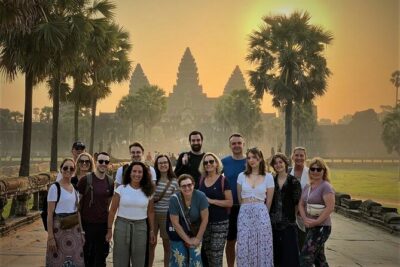 ★ 5.0Angkor Wat Highlights and Sunrise Guided Tour from Siem ReapFrom $233,213 reviews
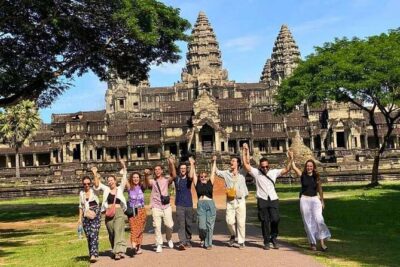 ★ 5.0Angkor Wat Sunset Small Group Tour with Lunch IncludedFrom $203,059 reviews
 ★ 5.0Full-Day Angkor Wat Sunrise Private Tour with Guide from Siem ReapFrom $602,920 reviews
Browse the lists this tour appears in