
Reviewed · ANGKOR WAT TEMPLE TOURS
2-Day Angkor Wat, Kulen Mountain, Beng Mealea and Tonle Sap
Angkor Wat at sunrise is a wow switch. This 2-day loop stacks big Angkor icons with Kulen Mountain nature stops, the jungle maze of Ta Prohm and Beng Mealea, and a real-world look at life on Tonle Sap. It is a lot to pack into two days, but the plan is built around early starts and smart pacing.
I especially love the Angkor Wat sunrise timing, with pickup before dawn and time to walk and take photos before the busiest crowd crush. I also like that the trip mixes temples with hands-on rural moments, like breakfast at a local family restaurant, grilled picnic food near Kulen waterfalls, and a boat ride to Kampong Phluk.
One consideration: this is physically demanding. You will be outside a lot, on hot stone and uneven paths, with a very early wake-up call on Day 1.
Key highlights that make this tour worth your time
- Angkor Wat sunrise above the towers, with enough time to walk and get photos before peak crowds
- Small-group feel (limited to 14) plus A/C van comfort and cold towels after long stops
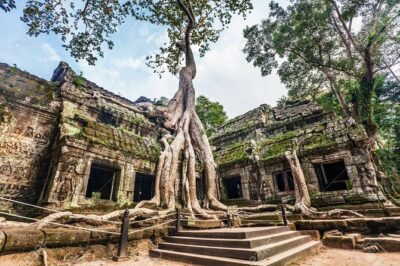
- Ta Prohm’s tree roots and Beng Mealea’s overgrown, “left behind” jungle ruins
- Kulen Mountain sights including waterfalls, a reclining Buddha, and the River of Thousand Lingas
- Kampong Phluk on Tonle Sap, boat cruising through mangroves and stilt-house daily life
- Guides who add meaning, with explanations you can actually connect to what you see
Other ways to walk the great temple
- Angkor Wat Sunrise or Sunset Tour with Guide from Siem Reap★ 5.0 · 12,109 reviews
- Siem Reap: Angkor Wat: Small-Group Sunrise or Sunset Tour★ 5.0 · 9,444 reviews
- Siem Reap: Angkor Wat 2-Day Tour with Sunrise and Sunset★ 4.9 · 4,429 reviews
- Siem Reap: Full-Day Angkor Wat Guided Tour with Sunset★ 4.9 · 3,803 reviews
Why this 2-day Angkor Wat plus Kulen plus Tonle Sap combo makes sense
Siem Reap is famous for Angkor, but if you only do temples, you miss the Cambodia that sits around them. This tour does a strong job balancing the iconic stone monuments with nature and daily life on the lake.
The structure matters. Day 1 is set up to hit Angkor at the best light, then flow through classic “big faces, big gates” Angkor Thom, and finally end with a jungle temple atmosphere. Day 2 swaps early temple queues for hilltop views, waterfalls, a rainforest ruin, and then the floating village boat ride.
Also, the guide layer is important here. Several guides named in real-world feedback, like Mr Sam, Seila, and Mr Kim, are praised for clear explanations and for making photo time actually useful, not random.
Sunrise Angkor Wat: the early pickup that changes everything
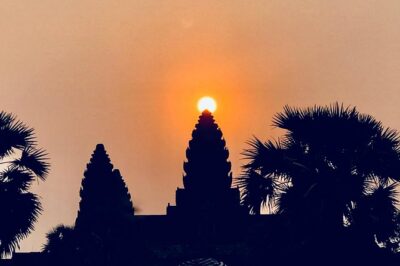
Day 1 starts with a serious early call, hotel pickup typically between 4:30 am and 5:00 am. That early timing is not a gimmick. It is what lets you see Angkor Wat in calmer light, before the biggest surge of visitors.
Once you arrive, you spend about 1 hour 30 minutes walking and covering the temple building. I like that this is not rushed sightseeing by bus. You get time to move at a human pace, pause for photos, and really register the scale of the place.
What makes Angkor Wat work best at sunrise is the contrast. The temple reads as architecture when the light is harsh midday sun, but at dawn it turns into mood, with softened shadows and that blue-gray sky glow. If you are the type who likes details, this is the moment to slow down, because you will spot more carvings and geometry when the light is kind.
Practical note: bring closed-toe shoes and expect early morning cool that often turns hot fast. You will be standing, walking, and aiming your camera for long moments.
Angkor Thom, Bayon faces, and the terraces that explain royal power
After Angkor Wat, the route continues to the South Gate of Angkor Thom. This is a smart transition, because it shifts you from a single monumental icon to a city-scale experience with gates, towers, and carved stories everywhere.
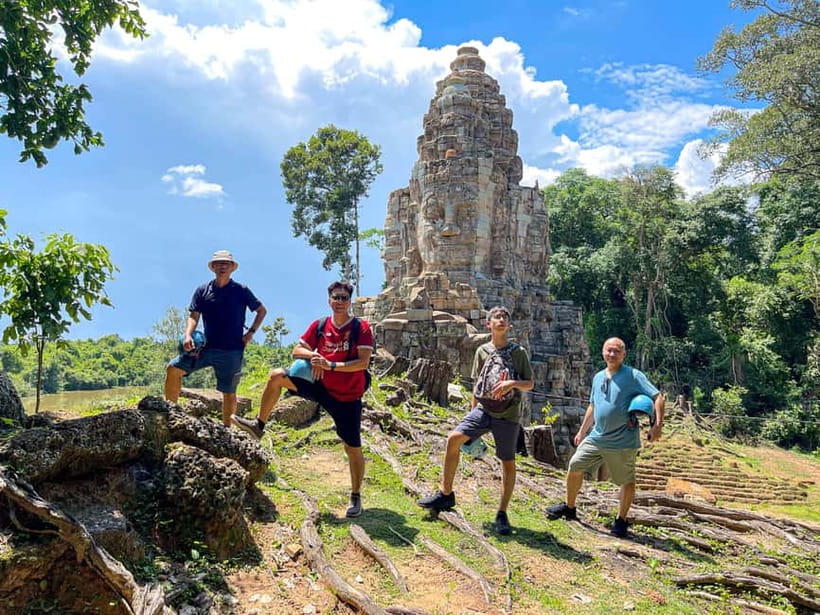
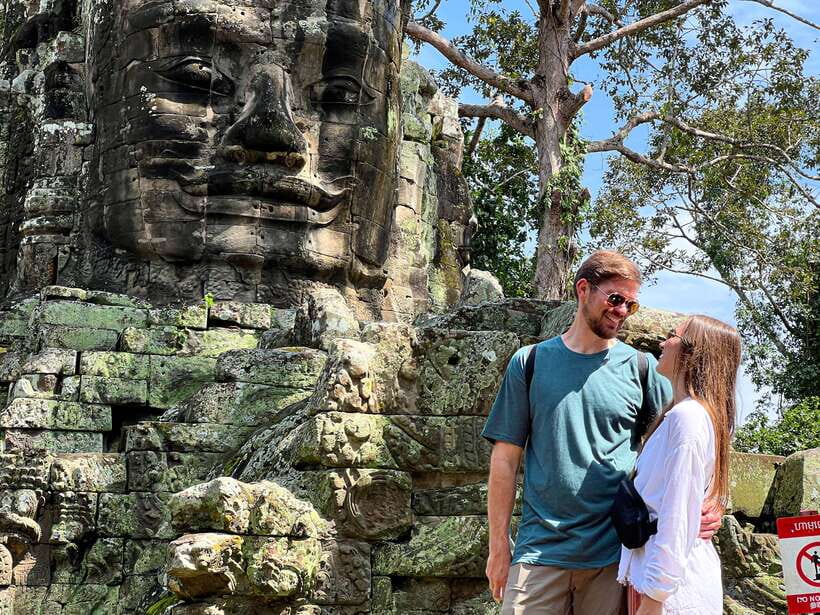
The star stop is Bayon Temple, known for 54 towers and 216 faces of Avalokiteshvara. If you stand in the right spots, the faces feel like they are watching you from multiple angles. That effect is one reason the temple is such a crowd magnet, and why the earlier Day 1 rhythm is a real advantage.
Next you visit Baphoun, plus two terraces that can be easy to miss if you just walk through: the Terrace of the Elephant and the Terrace of the Leper King, described as the royal viewing platform and the stage for the king’s great audience hall. I like that the guide is part of this experience. These names point you toward what the carvings were meant to communicate: status, spectacle, and ritual, not just decoration.
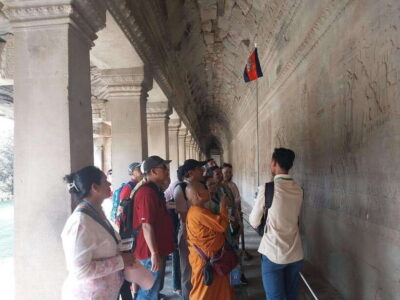
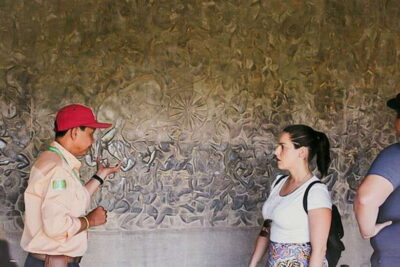
You also get historical context along the way. The tour format includes your guide explaining temple facts and the Khmer empire, which helps the stone carvings stop being random patterns and start feeling like a language you are finally learning.
Ta Prohm and Beng Mealea: when the jungle takes back the ruins
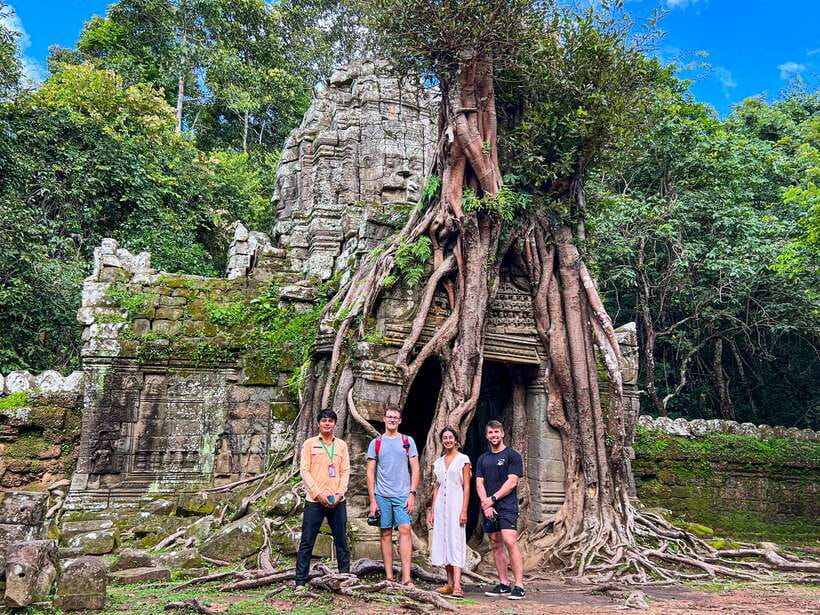
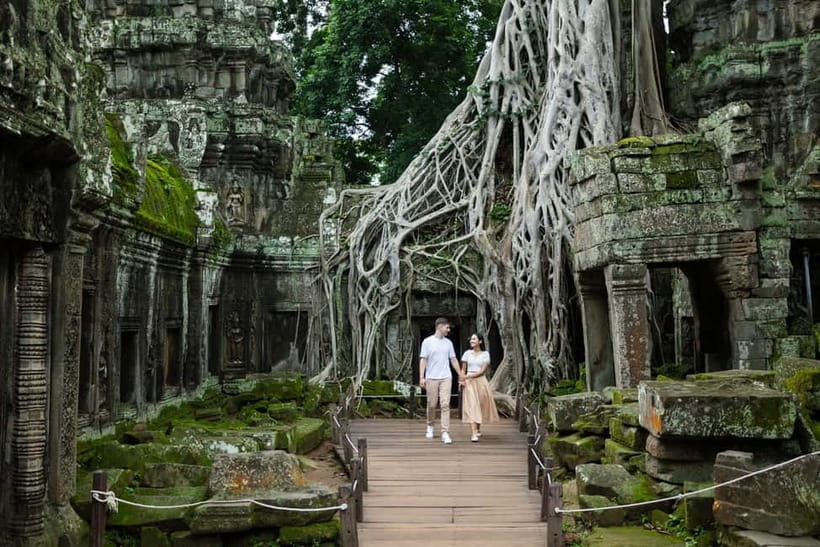
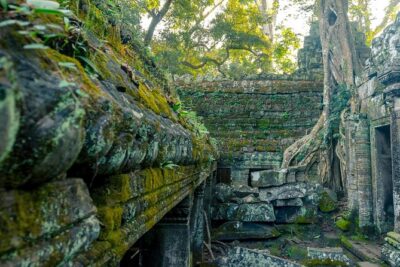
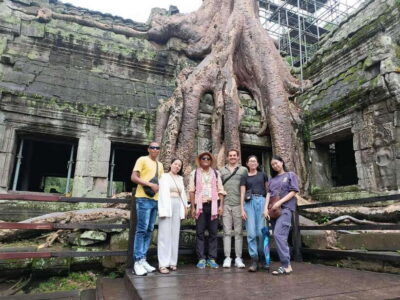
Then the tour goes full jungle-temple mode with Ta Prohm. Ta Prohm is left in its original state, meaning parts of the structure are literally entangled with tree roots and thick growth. That is why this stop feels different from Angkor Wat. You are not looking at clean symmetry, you are looking at nature and history sharing the same space.
The benefit for you is emotional, not just visual. Ta Prohm gives you that sense of time passing, of the ruin being “paused” in the real world rather than restored into something perfect. It is a good counterbalance after the more geometric Angkor sites.
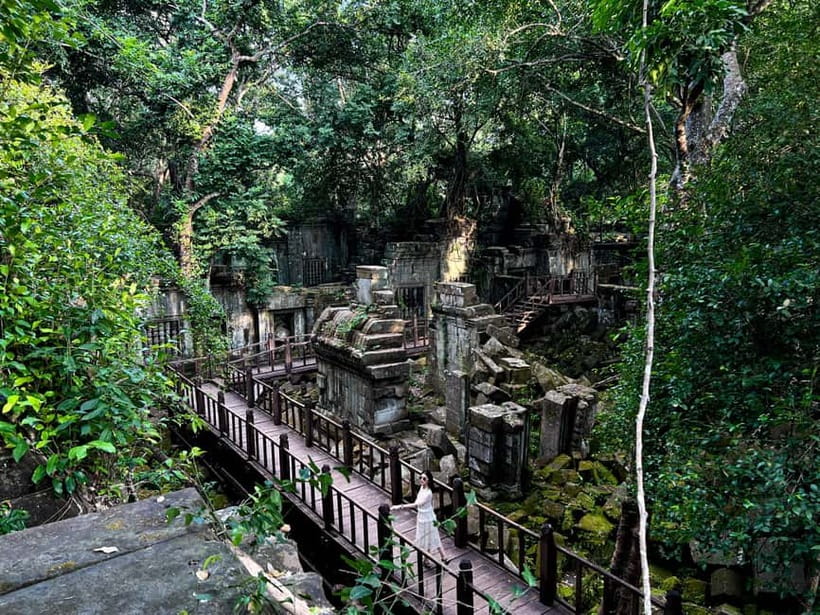
Day 1’s final temple shift is capped with Beng Mealea on Day 2, and that is where the jungle feeling really goes up a level. Beng Mealea is described as a 12th-century temple overgrown after about 300 years of vegetation, with trees, lianas, and moss. This is not a tidy walking circuit like some major sites. You will move through a maze of collapsed walls and root tangles.
Here is the tradeoff. Beng Mealea is thrilling if you like “wander and discover” travel. If you prefer clear paths and minimal climbing, you might find it slower and more tiring. Either way, it is one of the most memorable parts of the itinerary because it does not feel curated for maximum photo impact, it feels like the ruin is still in conversation with the forest.
Deeper into the jungle temple
Kulen Mountain: waterfalls, reclining Buddha, and the River of Thousand Lingas
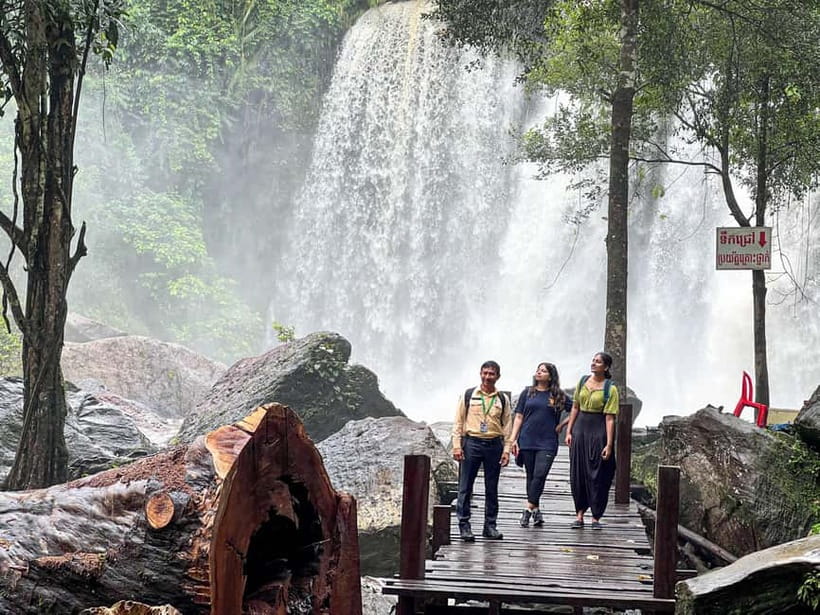
Day 2 begins with morning pickup in Siem Reap and then a scenic 1-hour drive through rice paddies before ascending to Phnom Kulen. That drive is useful. It shifts you away from temple crowds and gives your brain a new setting before you hit the next set of sights.
Once in the park, you explore with a local guide after securing your Kulen Mountain ticket. The main highlights include:
- Amazing Cliff of Poeng Ta Kho
- Waterfalls
- A reclining Buddha sculpture
- The River of Thousand Lingas from 802 AD
The River of Thousand Lingas is one of those stops where context changes everything. Lingas are religious symbols, and seeing them lined up along a riverbed helps you understand why this place mattered in Khmer spiritual life long before modern tourism infrastructure existed.
The reclining Buddha is another moment that feels more human-scale than the giant temple walls. It is still monumental, but the posture draws you in, and the surrounding natural setting gives it a different energy than the Angkor stone enclosures.
Picnic lunch, waterfall time, and how heat affects the day
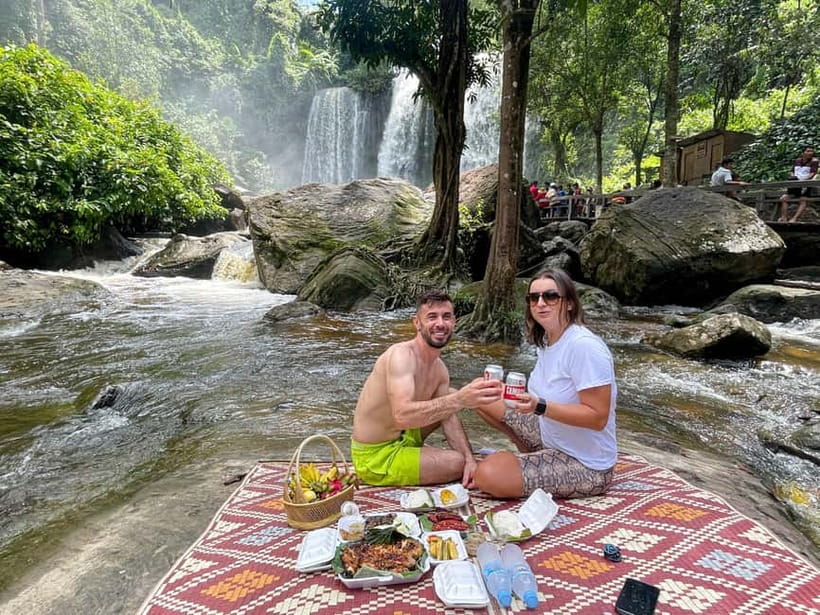
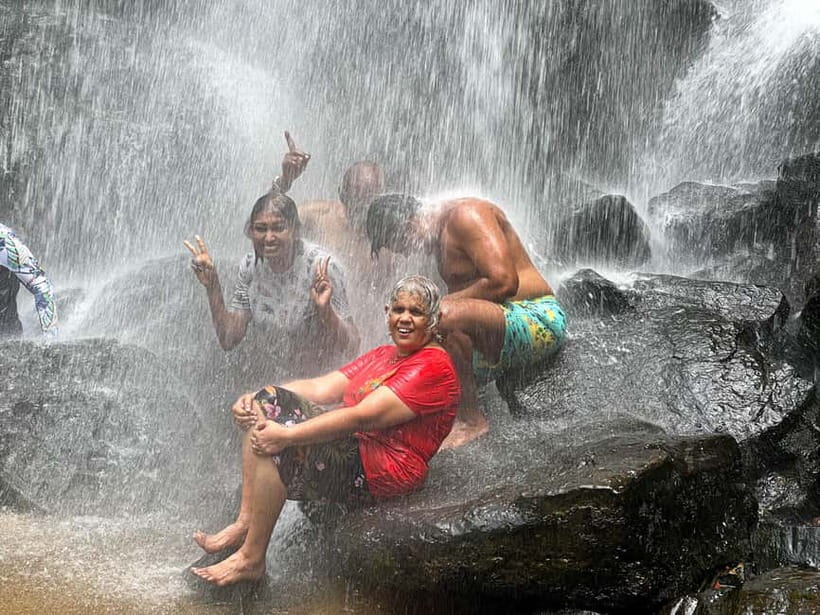
After the Kulen Mountain highlights, the tour includes a stop for a picnic near a waterfall. The food is described as grilled chicken with seasonal fruits. You also get a chance to swim in the waterfall area, which is a big quality-of-life win on a hot day.
I like that this is not just sitting at a viewpoint. It gives you a real break and a chance to cool down so you do not feel like you are only collecting monuments with your feet.
Still, plan around heat. Bring sunscreen, a hat, and insect repellent. Closed-toe shoes matter because you are moving through park terrain, and that is not the place to wear sandals if the ground is slippery or uneven.
Kampong Phluk on Tonle Sap: boat life, stilt houses, and mangrove wildlife
To finish strong, the tour moves from rainforest stone to lake life with a boat ride to Kampong Phluk. This is a floating village on Tonle Sap Lake, and the boat time is central to the experience.
You get to see daily life up close, including families dependent on fishing and colorful homes on stilts. The details that stick with me here are the everyday ones: how the houses are set up for water levels, and how the village life follows the rhythm of the lake rather than ignoring it.
As you boat through the mangrove forest, you may see wildlife, including crab-eating macaques. Even if you do not spot macaques every time, the mangrove route helps you understand the ecosystem behind the village lifestyle.
Timing can also add a bonus. In one guide-led day, the floating village visit was timed with sunset, and that kind of light can make the stilt houses and water reflections look extra dramatic. If your tour day allows it, it is worth being ready with your camera and a clear view from your seat.
Price and passes: the real cost picture for this 2-day value
The tour price is listed at $69 per person for two days, but you should budget for site passes on top. The tour includes guide service, A/C transportation, hotel pickup and drop-off, bottled water and towels, plus breakfast only on Day 1 and picnic lunch only on Day 2.
Here is the pass math you should expect:
- Angkor pass: $37 per pax
- Kulen Mountain pass: $20 per person
- Beng Mealea pass: $10 per person, or you can use a valid Angkor pass
- Tonle Sap lake pass with boat ride: $15 per person
So your total likely lands around $69 + $72 = $141, and could go up by about $10 if your Angkor pass does not cover Beng Mealea. Soft drinks are not included.
Is it good value? For most people, yes, because you are buying three things at once: early-morning logistics, an organized multi-site route that would be a headache to string together, and an English-speaking guide for context at nearly every stop. If you were to DIY Angkor Wat sunrise and also coordinate Kulen, Beng Mealea, and Tonle Sap in two days, you would probably lose time and pay more in separate transport and guide hires.
Small-group comfort, guide quality, and the service details that matter
This is set up as a small group limited to 14 participants, which matters a lot during temple days. It is easier to hear explanations, easier for the guide to manage timing, and less stressful when you are moving between crowded entrances.
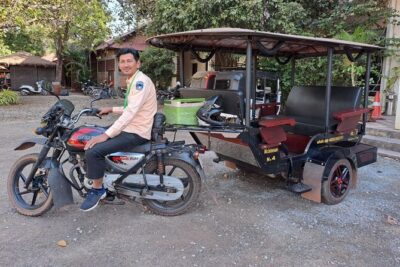
Transport is described as A/C, and multiple guide-and-driver combinations were praised for cleanliness and comfort. One theme in feedback is that the vehicle stays cool during hot walks, and that cold towels and cool water show up when you actually need them.
The guide names that came up in real-world feedback include:
- Mr Sam and Mr Moon (Day 2 highlights)
- Seila (praised for taking time and explaining)
- Mr Kim (including timing for a great floating village moment)
- Mr Theara (driver praised for attentiveness)
- Mr Ho and Youk Makara (recognized for strong temple explanations and photo work)
- Jan (noted for photo help and context around culture)
One booking also flagged a problem with a different guide using inappropriate comments as jokes and said it made them uncomfortable. I cannot judge which guide you will get, but the lesson for you is simple: if anything about the tone of conversation feels off, speak up early. A tour that respects cultural sensitivities makes the day better for everyone.
What to bring and how to dress for temple rules
You will be in the sun and on uneven surfaces, so pack like you are going to walk a lot, not like you are going to sit and admire. The tour list includes:
- Camera
- Comfortable clothes
- Sunscreen, hat, sunglasses
- Closed-toe shoes
- Insect repellent
- Power bank
Dress matters. Sleeveless shirts are not allowed, so plan for shoulders covered at temple sites. Long pants are comfortable, but you can choose breathable fabric if it is hot out.
Also, bring a light layer if you get cold in early morning pickup hours. Sunrise days start cool and then flip quickly into heat.
Who this tour fits best, and who should think twice
This tour fits best if you want a structured two-day sampler that covers:
- Angkor Wat sunrise
- Major Angkor Thom temples like Bayon
- Jungle ruins (Ta Prohm and Beng Mealea)
- A nature day on Kulen Mountain with waterfalls and a swim break
- Tonle Sap lake life at Kampong Phluk
You should think twice if you are sensitive to early mornings or if long temple walking plus rainforest terrain is not your thing. The itinerary includes plenty of time outdoors, and Beng Mealea in particular can feel more rugged than the main Angkor highlights.
If you love history explanations, you will likely enjoy the guide format. If you love photos, you will also appreciate that multiple guides are praised for knowing good photo spots and timing.
Should you book this 2-day Angkor Wat, Kulen, Beng Mealea, and Tonle Sap tour?
Book it if you want a smart, time-saving route that does sunrise right, includes real jungle ruin energy, and ends with a lake experience that feels connected to daily Cambodian life. The small-group size, A/C transport, and cold towel and water service are practical wins.
Do not book it blindly if you want a slow and restful pace, because this plan is full. Also budget for the passes so there are no surprise costs.
If you match the sweet spot, you will leave Siem Reap with more than photos of stone. You will have sunrise memories, jungle ruin moments, waterfall cooling, and a better sense of how people live where the water is the main calendar.
FAQ
What time is hotel pickup for Angkor Wat sunrise?
Pickup is typically between 4:30 am and 5:00 am for Day 1.
How long do you spend at Angkor Wat?
The tour includes about 1 hour 30 minutes walking and seeing Angkor Wat’s main building.
Is breakfast included?
Yes. Breakfast is included on Day 1, and it is at a local family restaurant.
Is lunch included on Day 2?
Yes. Day 2 includes a picnic lunch near a waterfall, with grilled chicken and seasonal fruits.
Are tickets and passes included in the $69 price?
No. The Angkor pass, Kulen Mountain pass, Beng Mealea pass (or valid Angkor pass), and the Tonle Sap pass with boat ride are not included.
Do I need separate passes for Kulen Mountain and Beng Mealea?
Yes. Kulen Mountain requires its own pass, and Beng Mealea requires a pass or a valid Angkor pass.
Does the tour include a boat ride at Tonle Sap?
Yes. The itinerary includes a boat ride to Kampong Phluk on Tonle Sap Lake.
How big is the group?
The tour is a small group limited to 14 participants.
What should I bring and what should I avoid?
Bring camera, sunscreen, hat, closed-toe shoes, sunglasses, insect repellent, and a power bank. Alcohol and drugs are not allowed, and sleeveless shirts are not permitted.
More Temple Circuits Around Siem Reap
- Angkor Wat Sunrise or Sunset Tour with Guide from Siem Reap
★ 5.0 · 12,109 reviews - Siem Reap: Angkor Wat: Small-Group Sunrise or Sunset Tour
★ 5.0 · 9,444 reviews - Siem Reap: Angkor Wat 2-Day Tour with Sunrise and Sunset
★ 4.9 · 4,429 reviews - Siem Reap: Full-Day Angkor Wat Guided Tour with Sunset
★ 4.9 · 3,803 reviews - Angkor Wat Sunrise tour with Small – Group and Guide tours
★ 5.0 · 3,655 reviews
Into the Jungle at Beng Mealea
- Siem Reap: Kulen Mountain, Beng Mealea and Tonle Sap Tour
★ 5.0 · 1,483 reviews - Kulen Mountain with Beng Mealea and Tonle Sap Small Group Tour
★ 5.0 · 780 reviews - Koh Ker Temple Group & Beng Mealea Full-Day Join-in Tour
★ 5.0 · 710 reviews - From Siem Reap: Koh Ker and Beng Mealea Temples Tour
★ 4.9 · 293 reviews - Banteay Srei, Kulen Waterfall & Beng Mealea Exploration
★ 5.0 · 185 reviews
Angkor Wat, a Few More Ways In
- Angkor Wat Sunrise or Sunset Tour with Guide from Siem Reap
★ 5.0 · 12,109 reviews - Siem Reap: Angkor Wat: Small-Group Sunrise or Sunset Tour
★ 5.0 · 9,444 reviews - Siem Reap: Angkor Wat 2-Day Tour with Sunrise and Sunset
★ 4.9 · 4,429 reviews - Siem Reap: Full-Day Angkor Wat Guided Tour with Sunset
★ 4.9 · 3,803 reviews - Angkor Wat Sunrise tour with Small – Group and Guide tours
★ 5.0 · 3,655 reviews
Just Added: Fresh Siem Reap Tour Reviews

Angkor Wat Temple Tours, compared.
 ★ 5.0Angkor Wat Sunrise or Sunset Tour with Guide from Siem ReapFrom $1812,109 reviews
 ★ 5.0Angkor Wat: Small-Group Sunrise or Sunset TourFrom $159,444 reviews
 ★ 4.9Angkor Wat 2-Day Tour with Sunrise and SunsetFrom $344,429 reviews
 ★ 4.9Full-Day Angkor Wat Guided Tour with SunsetFrom $153,803 reviews
 ★ 5.0Angkor Wat Sunrise tour with Small – Group and Guide toursFrom $143,655 reviews
 ★ 5.0Angkor Wat Highlights and Sunrise Guided Tour from Siem ReapFrom $233,213 reviews
 ★ 5.0Angkor Wat Sunset Small Group Tour with Lunch IncludedFrom $203,059 reviews
 ★ 5.0Full-Day Angkor Wat Sunrise Private Tour with Guide from Siem ReapFrom $602,920 reviews
Browse the lists this tour appears in