
Reviewed · ANGKOR TEMPLE TOURS
1-Day private Angkor Temple Tour by Tuk Tuk from Siem Reap
Angkor in a single day is a lot to manage. This private tuk-tuk tour keeps it smooth, guided, and flexible. I like how you get an English-speaking expert guide and a plan that hits big names like Angkor Wat, Bayon, and Ta Prohm without feeling rushed. The main catch to consider: Angkor Wat entrance is not included, so you’ll need to sort that e-ticket ahead of time.
You’ll spend about 8 hours moving through Angkor’s key zones, with hotel pickup and drop-off. I also appreciate the small comforts that make a hot day easier, like bottled water and a very clean ride, plus photo stops that don’t feel like a checklist.
This kind of private day is ideal if you want guidance and pacing that match your group. It may be less ideal if you prefer total freedom with zero schedule, because your route and timing are built around temple flow and walking.
Key highlights worth planning for
- Tuk-tuk mobility for a temple circuit, which helps you avoid the stop-and-start frustration of longer transfers
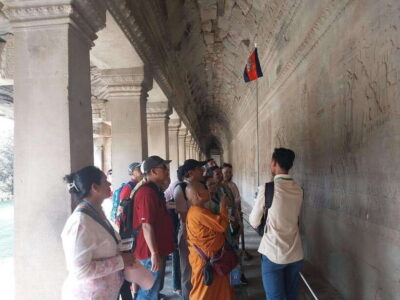
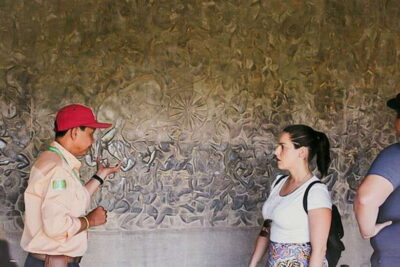
- English-speaking guide explanations so you understand what you are seeing, especially on the carved galleries
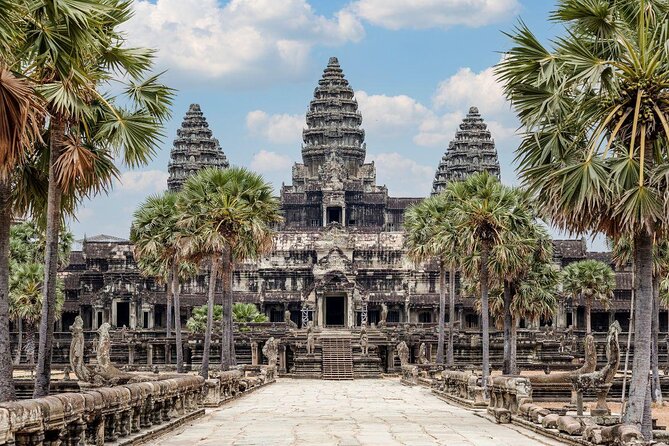
- Angkor Wat from the less crowded side, including a walk through jungle paths and time in central chambers
- Bayon face towers plus bas-reliefs that mix myth, daily life, and historical scenes
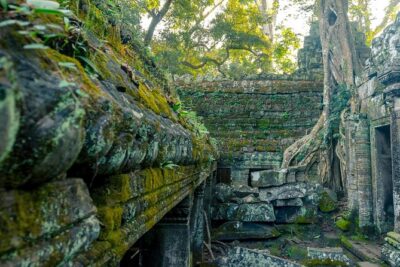
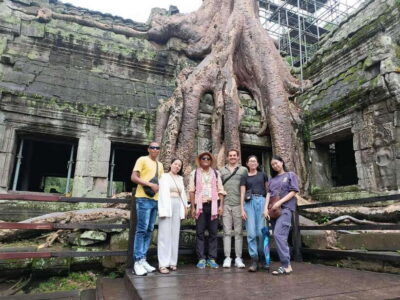
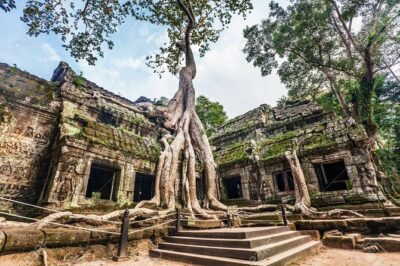
- Ta Prohm in its iconic jungle setting, with enough time to photograph the trees and ruin textures
- Short surprise stops added by your guide, designed for quieter moments and fresh angles
More temple circuits, set side by side
- Angkor Wat Sunrise or Sunset Tour with Guide from Siem Reap★ 5.0 · 12,109 reviews
- Siem Reap: Angkor Wat: Small-Group Sunrise or Sunset Tour★ 5.0 · 9,444 reviews
- Siem Reap: Angkor Wat 2-Day Tour with Sunrise and Sunset★ 4.9 · 4,429 reviews
- Siem Reap: Full-Day Angkor Wat Guided Tour with Sunset★ 4.9 · 3,803 reviews
A private tuk tuk means your Angkor day runs like a plan
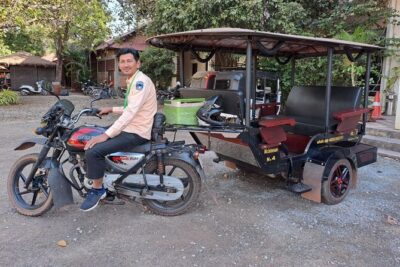
Angkor works best when you can move fast enough to beat the crowds, but slow enough to actually look. With a private tuk-tuk, you get that balance. Your guide keeps the day flexible, so if your group wants extra photos at a viewpoint, you can usually build it in without the whole schedule collapsing.
I also like that you start with hotel pickup and drop-off. That matters in Siem Reap, because reaching the temples is half the day hassle for many people. Having a driver and guide already set means you can focus on the temples, not navigation.
Small comfort details add up too. One standout point from guest feedback is that the ride can feel like a step above, with a clean vehicle and extras like cold towels and bottled water. Even if your day is hot, those moments keep your energy up for the next walk.
Angkor Wat from the eastern side, plus the jungle path to the ancient library pool
Angkor Wat is the big one, the world-famous religious complex built in the early 12th century. What makes this version feel smarter is that you enter from the eastern side, described as a little-visited approach. That alone can change the feel of your first hour, because you are not arriving through the most obvious flow.
You get around 2 hours here, and the route includes a walk on foot. There is even a jungle path segment leading toward the North ancient library pool, which gives your guide room to explain what you are seeing as you move. This is the kind of in-between time that makes a guided temple stop feel more like understanding, not just passing through.
Once you’re in the central chambers, the guide focuses on history, myths, and the stone bas-reliefs. The carvings are described as the longest stretch of bas-relief work in the world. Even if you do not memorize details, you start spotting patterns and themes instead of staring at random images.
Practical note: Angkor Wat admission is not included. Your guide will send you a link to buy the entrance e-ticket days in advance. Plan for this so you do not lose time on the day.
South Gate of Angkor Thom: a short stop that sets the mood
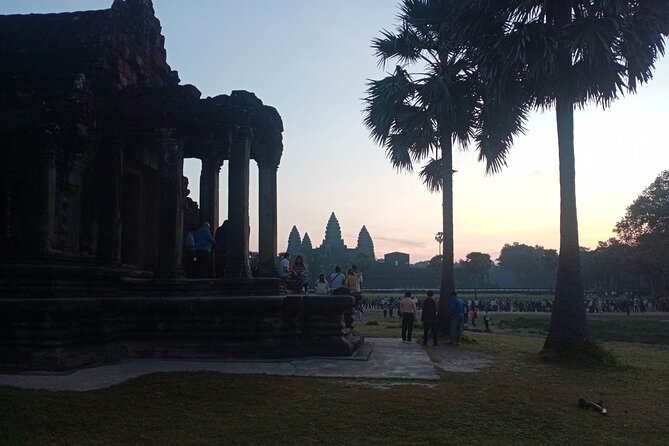
After Angkor Wat, you head into Angkor Thom territory. The South Gate is a dramatic entry point, one of five gates of the ancient capital city. This gate is flanked by rows of 54 stone figures on each side, which gives you an immediate sense of scale and power.
This is scheduled for about 20 minutes. That timing is useful because the gate is both impressive and photo-friendly, but you do not want to burn your whole day lingering in one spot. Instead, it works as a gear shift from Angkor Wat’s grand symmetry into Angkor Thom’s denser inner-world.
Even better, the gate is listed as admission free. That helps keep your cost predictable while still letting you get the full “you are here” impact of the main walled city entrance.
Bayon Temple: smiling faces, big bas-reliefs, and a 50-minute sweet spot
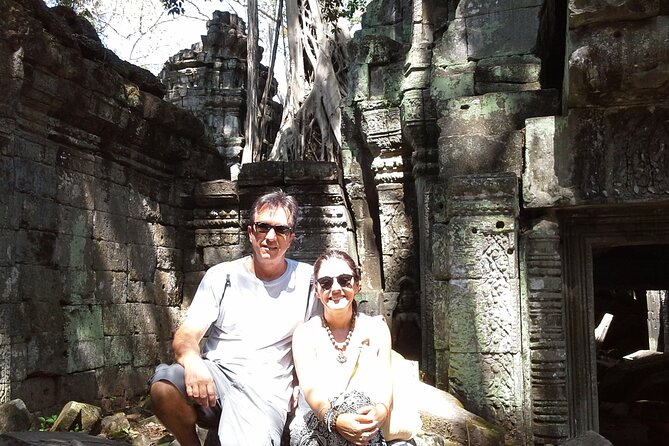
Bayon is the heart of Angkor Thom for many first-timers. Built in the 13th century as the state temple of King Jayavarman VII, it’s famous for towers covered in more than 200 enormous faces. These are not just decorative. They create a sense that the temple is watching you.
You’ll spend about 50 minutes, which is a good length. It gives you time to shift viewpoints and notice how the faces cluster around the central peak. It also gives your guide room to point out the temple’s structure and what to notice while you walk.
Bayon also has two sets of bas-reliefs, mixing mythological, historical, and mundane scenes. That mix is why a guide helps here. Without explanations, you can end up with a bunch of images that look similar. With a guide, you start reading the carvings like a story.
Bayon is admission free during this tour, so it’s a strong value stop. It’s also one of the places where a private day can feel quieter, because you are not stuck in the most intense foot traffic lines.
The temples by tuk-tuk, other routes




Baphuon and Phimeanakas: royal palace territory in two very different temple styles
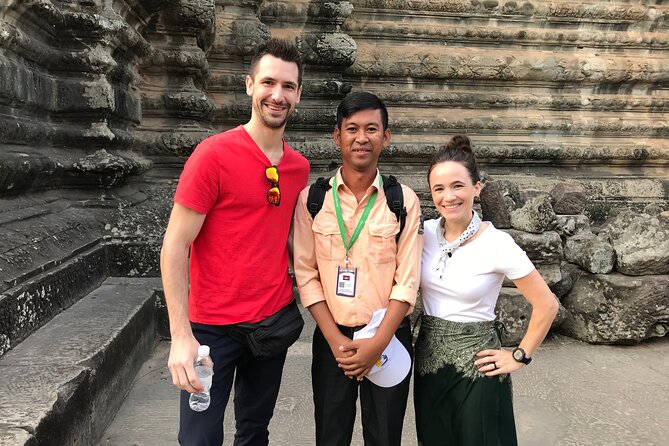
Baphuon is the first of the royal-zone temples you’ll visit. It sits in Angkor Thom, northwest of Bayon, and dates to the mid-11th century. The description emphasizes its temple-mountain design and state temple role. It’s scheduled for about 40 minutes.
What I find useful here is the size and proportion context. It’s described as measuring 120 meters by 100 meters at the base, and standing 34 meters tall without its tower. That explanation helps you understand how massive it is, even when some parts look incomplete today. There’s also a comparison mentioned from a late 13th-century observer, an envoy named Chou Ta-kuan, who reportedly compared Bayon to a Tower of Gold and Baphuon to a Tower of Bronze. That kind of reference helps you connect Bayon’s face towers to Baphuon’s more fortress-like presence.
Then the tour continues to Phimeanakas (also spelled Vimeanakas in the tour info). This is inside the walled enclosure of the Royal Palace area. It’s described as dating from the end of the 10th century, under Rajendravarman, then completed by Suryavarman I. The structure is described as three-tier pyramids for a Hindu temple, with a tower on top and galleries around the upper platform.
You’ll have about 35 minutes here. This stop is a good match if you like temples that feel more grounded and architectural, not just sculptural. And because it is admission free, you can spend your attention on details rather than thinking about ticket math.
Terraces of the Elephants and the Leper King: ceremonial space, plus a name with a story
The terraces are where Angkor feels less like a museum and more like infrastructure, built for real events.
The Terrace of the Elephants is about 350 meters long and was used as a giant reviewing stand for public ceremonies, serving as a base for the king’s grand audience. Local Khmer residents call it Ancient Khmer Stadium. That phrasing is helpful because it frames the terrace as a viewing platform, not just a wall of carvings. You’ll spend around 30 minutes here.
Then you’ll see the Terrace of the Leper King for about 30 minutes. This U-shaped structure is thought by some to have been used as a royal cremation site, built in the 13th century under King Jayavarman VII. The modern name comes from a 15th-century sculpture found there, depicting the Hindu god Yama, the god of death.
These terraces work best with a guide because they give you reasons to look at the carvings and layout, not just the overall form. If you rush, you might miss the way the spaces connect to each other and to royal movements within Angkor Thom.
Both terrace stops are listed as admission free for this tour, so they add a lot of value without extra ticket cost.
Lunch with cold drinks near a 12th-century temple complex
Midday is where many Angkor days fail, because people go hungry or end up eating something random that leaves them drained for the afternoon.
This tour includes a lunch break with cold drinks at a local restaurant located at a 12th-century temple complex. That is a neat touch because you keep the experience connected to the place you are visiting. It also gives you a proper pause before the most photogenic, most atmospheric afternoon stop.
I suggest using this break to reset your shoes and hydration. Angkor walking adds up fast, even when the route looks compact on a map.
Ta Prohm: jungle-enveloped ruins and UNESCO-level atmosphere
If you only had time for one “wow, I get it now” stop, Ta Prohm is a top contender. This is the jungle-enveloped temple many people associate with the Tomb Raider look, and the tour gives you about 1 hour here.
Ta Prohm was built in the 13th century. What makes it special is that, unlike most Angkorian temples, it is in much the same condition as when it was found. The result is part architecture, part plant life, and part time capsule. Trees grow out of the ruins, and the jungle surroundings are a big part of the visual story.
The tour info also notes that UNESCO inscribed Ta Prohm on the World Heritage List in 1992, and that it has been a popular stop in recent years. One extra historical note included in the description is that Ta Prohm was a religious temple within the center of the Ancient Khmer University during the 12th and 13th centuries.
Ta Prohm is listed as admission free for this tour. That makes the stop feel even better value-wise: you get major atmosphere without needing to calculate another entrance cost beyond Angkor Wat.
Practical tip for your photography time: move slowly through the main frames, then circle back for different angles. With a guide, you will usually have enough time to do that without feeling like you are holding up the group.
Those quick surprise stops: why private touring can feel better
Two parts of your day are framed as brief “surprise stops,” each around 10 minutes. One is described as a hidden gem where most tourists have not gone. Another is a secret stop that sets the tone for the adventure.
Even without the exact details spelled out, these moments are one of the perks of private touring. They help you avoid the exact same loop everyone else does. More importantly, they create breathing room between the biggest monuments, so you are not constantly bracing for the next crowd-heavy highlight.
You can use these short stops to reset your eyes. After Bayon and the royal temples, a quieter viewpoint helps your brain absorb what you have already seen.
Price and value: what you pay for and what costs extra
The tour price is $30 per person for about 8 hours. The big reason it can feel like good value is what’s included: an English-speaking tour guide, a private tuk-tuk, hotel pickup and drop-off, and bottled water.
It also includes flexibility, photo opportunities, and the idea of avoiding crowds and escaping the heat. Those benefits are hard to measure on paper, but they matter in real life, especially in peak daytime temperatures.
Here is the key cost detail: Angkor Wat entrance is not included. Your guide will send you a link for the Angkor Wat e-ticket in advance. The rest of the listed temples are marked as admission free in the tour plan, including South Gate, Bayon, Baphuon, Phimeanakas, the terraces, and Ta Prohm.
Another small scheduling point from the tour data: the average booking window is about 24 days in advance. That is a hint that this day plan is in demand. If your dates are fixed, book early so you have a better shot at the exact private timing you want.
Who should book this private Angkor day
This tour makes sense if you want:
- Guided explanations while you walk, so you understand bas-reliefs and temple layout
- A private vehicle that keeps you from juggling rides between far-apart temple zones
- A full day that covers major sites like Angkor Wat, Bayon, and Ta Prohm, plus important terraces
It’s also a good match for most people, since the tour info says most travelers can participate. You will still want comfortable flat shoes, because temple walking is real work, even when your schedule is well paced.
If your group includes someone who likes learning, Bayon and Angkor Wat are especially strong. If your group is more about photos and atmosphere, Ta Prohm and the terraces do a lot of the heavy lifting.
Should you book this 1-day private Angkor tour?
I’d book it if you want an efficient, guided Angkor day with private tuk-tuk comfort and a plan that mixes big-ticket sites with quieter temple spaces. The $30 price feels reasonable because you’re paying for a guide, transport, and a full circuit, not just a list of monuments.
Before you commit, plan for two things. First, budget for Angkor Wat entrance, since it is not included and you’ll need to buy the e-ticket using the link your guide provides. Second, pack for heat and sun: cover-up clothing rules apply in some temples, and flat shoes will make or break the day.
If you want a calmer experience with expert guidance, this private format is a smart way to see Angkor in one go.
FAQ
How long is the private Angkor Temple Tour?
The tour is listed as about 8 hours.
What’s included in the tour price?
The tour includes an English-speaking guide, a private vehicle by tuk-tuk, hotel pickup and drop-off, bottled water, and a mobile ticket.
Is Angkor Wat entrance included?
No. Angkor Wat entrance fees are not included, and your guide will send a link to buy an e-ticket days in advance.
Do we visit Angkor Thom and Ta Prohm in the same day?
Yes. The day includes stops at Angkor Thom areas like the South Gate, Bayon, and other temples, plus Ta Prohm in the afternoon.
Is lunch included?
Yes. The tour description includes lunch with cold drinks at a local restaurant at a 12th-century temple complex.
Do I need to buy tickets for the other temples?
For the listed stops like the South Gate, Bayon, Baphuon, Phimeanakas, the terraces, and Ta Prohm, the tour info marks admission as free. Angkor Wat is the exception.
What should I wear for the temples?
For some temples, you need clothes that cover your knees and shoulders. Casual clothing is fine if it meets those coverage needs, and you should wear comfortable flat shoes.
Can I cancel and get a full refund?
Yes, you can cancel for a full refund if you cancel at least 24 hours before the experience starts.
Just Your Group: Private Days
- Full-Day Angkor Wat Sunrise Private Tour with Guide from Siem Reap
★ 5.0 · 2,920 reviews - Siem Reap: Angkor Wat Private Tuk-Tuk Tour
★ 4.9 · 2,222 reviews - Angkor Wat Private Day Tour from Siem Reap
★ 5.0 · 834 reviews - Angkor Wat Private Tuk-Tuk Tour (sunrise Option) & more
★ 5.0 · 439 reviews - Private Angkor Wat Day Tour – Best of Angkor
★ 5.0 · 269 reviews
The Temples by Tuk-Tuk
- Siem Reap: Angkor Wat Private Tuk-Tuk Tour
★ 4.9 · 2,222 reviews - Siem Reap Countryside Bike Tour / E-Bike or Tuk Tuk
★ 5.0 · 935 reviews - Angkor Sunrise Bike Tour / E-Bike or Tuk Tuk
★ 5.0 · 615 reviews - Angkor Wat Private Tuk-Tuk Tour (sunrise Option) & more
★ 5.0 · 439 reviews - Old Siem Reap Sunset Food Tour by Tuk-tuk
★ 5.0 · 311 reviews
More Temple Circuits Around Siem Reap
- Angkor Wat Sunrise or Sunset Tour with Guide from Siem Reap
★ 5.0 · 12,109 reviews - Siem Reap: Angkor Wat: Small-Group Sunrise or Sunset Tour
★ 5.0 · 9,444 reviews - Siem Reap: Angkor Wat 2-Day Tour with Sunrise and Sunset
★ 4.9 · 4,429 reviews - Siem Reap: Full-Day Angkor Wat Guided Tour with Sunset
★ 4.9 · 3,803 reviews - Angkor Wat Sunrise tour with Small – Group and Guide tours
★ 5.0 · 3,655 reviews
Just Added: Fresh Siem Reap Tour Reviews

Angkor Temple Tours, compared.
 ★ 5.0Angkor Wat Sunrise or Sunset Tour with Guide from Siem ReapFrom $1812,109 reviews
 ★ 5.0Angkor Wat: Small-Group Sunrise or Sunset TourFrom $159,444 reviews
 ★ 4.9Angkor Wat 2-Day Tour with Sunrise and SunsetFrom $344,429 reviews
 ★ 4.9Full-Day Angkor Wat Guided Tour with SunsetFrom $153,803 reviews
 ★ 5.0Angkor Wat Sunrise tour with Small – Group and Guide toursFrom $143,655 reviews
 ★ 5.0Angkor Wat Highlights and Sunrise Guided Tour from Siem ReapFrom $233,213 reviews
 ★ 5.0Angkor Wat Sunset Small Group Tour with Lunch IncludedFrom $203,059 reviews
 ★ 5.0Full-Day Angkor Wat Sunrise Private Tour with Guide from Siem ReapFrom $602,920 reviews
Browse the lists this tour appears in