
Reviewed · ANGKOR WAT TEMPLE TOURS
1-Day Angkor Wat Cycling Tour: Scenic Bike Adventure in Siem Reap
Cycling through Angkor feels like time travel on wheels, and this private tour keeps the pace human while you hit Angkor Wat and Angkor Thom. I like that the route is planned for you, with an English guide who puts the sights into context as you ride.
One thing to plan for is cost beyond the tour price, the Angkor Temple Pass is not included (listed at $37 per person), and temples will still require that entry.
Key highlights worth your attention
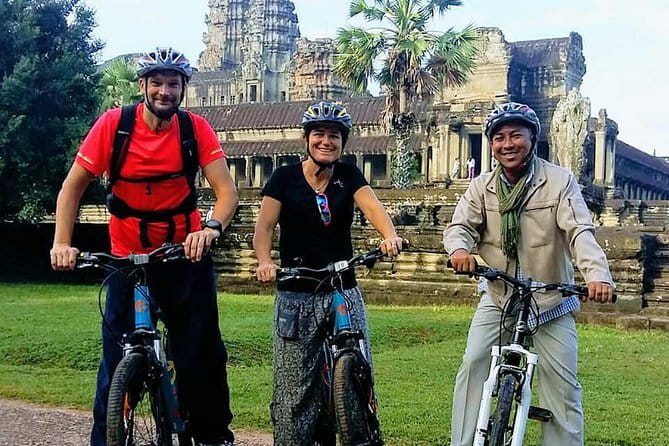
- Private pace, planned route: Your guide sets the timing so your group pedals together without stress
- Big three sights plus extras: Angkor Wat, Angkor Thom, and Ta Prohm, plus Ta Nei and Prasat Kravan
- Easy riding style: About 12 miles (20 kilometers) on mostly flat terrain
- Heat helpers included: Cool water and cool towels, plus local snacks
- Hotel pickup and drop-off: Direct collection and return, saving you the hassle of transfers
Other ways to walk the great temple
- Angkor Wat Sunrise or Sunset Tour with Guide from Siem Reap★ 5.0 · 12,109 reviews
- Siem Reap: Angkor Wat: Small-Group Sunrise or Sunset Tour★ 5.0 · 9,444 reviews
- Siem Reap: Angkor Wat 2-Day Tour with Sunrise and Sunset★ 4.9 · 4,429 reviews
- Siem Reap: Full-Day Angkor Wat Guided Tour with Sunset★ 4.9 · 3,803 reviews
Why Angkor Looks Different From a Bike Seat
Angkor is famous for its scale, but the real magic is how the temples change as you move around them. Walking gives you close views, but biking changes your rhythm, so you see more of the complex while still getting that “I’m really here” feeling.
This kind of cycling tour also helps you avoid the trap of only seeing the headline spots. You get the big names, then you keep moving through areas that feel calmer, like the forest temple stop at Ta Nei and the village-style experience near Prasat Kravan.
And because it’s private, your group controls the tempo. If you want short breaks for photos or questions, you can take them without making strangers wait or feeling rushed.
Price and What You Actually Pay For
The tour price is $49 per person, and that covers practical things you would otherwise spend time and money on. You get the bicycle, an English tour guide, cool water and towels, and local snacks, which matters in a place where heat and walking distances can drain you fast.
The big separate expense is the Angkor Temple Pass, listed at $37 per person. That total matters when you compare alternatives, because the pass is the real “must-pay” in Angkor.
My value tip: if you’re already planning to ride and want more than just the main entrance temples, this day format tends to make sense. You are paying for transportation style, guided context, and a route that strings together multiple areas efficiently.
Hotel Pickup at 8:00 and the Flow of a Full Day
The day runs about 6 to 7 hours, starting at 8:00 am. The early start is a plus because mornings in Siem Reap can feel more manageable than mid-day, and you’ll be doing a mix of temple time and riding time all in one stretch.
Pickup is direct from your hotel, and you also get dropped back at your hotel when you finish. That door-to-door rhythm is a real quality-of-life upgrade, especially if your day includes other plans later.
Since this is a private tour, you won’t be waiting for a slow group or trying to match the pace of people on different schedules. Your guide plans the route for your group, and that is exactly why the experience works better than trying to wing it on your own.
The Ride Plan: Flat Terrain, Real Road, and Plenty of Break Points
The cycling distance is about 12 miles (20 kilometers), described as flat terrain. In practical terms, that makes it approachable for many riders, and the tour also states that most travelers can participate.
Still, it’s not “all smooth bike path.” One review noted a mix of road and trail, but the key point was that it always felt safe and the pace fit the group. If you’re a confident casual cyclist, you’ll likely feel comfortable, and if you’re less confident, the group pace and safety gear can help you settle in.
You also get water and cool towels during the tour, which is more important than it sounds. When you’re cycling in humid heat, the temperature can sneak up on you fast, and those breaks help you keep your energy for temple time.
More temple circuits, set side by side
Stop by Stop: From Angkor Wat to Ta Prohm and Beyond
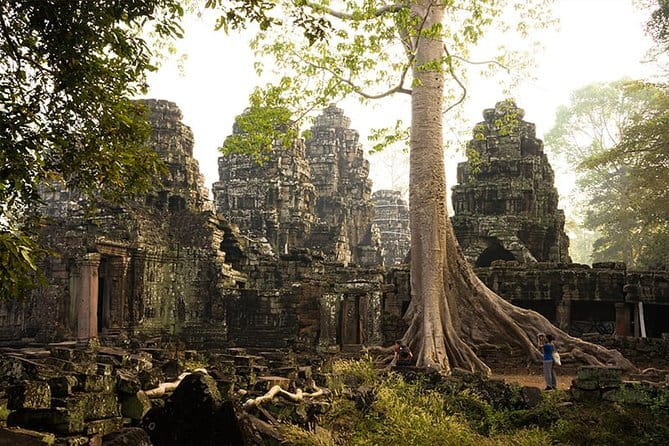
This day is built around a smart route, starting with the most iconic sights and then moving outward to add calmer contrast. At each stop, your guide connects what you’re seeing to the Khmer world, so the temples feel less like random stone piles and more like a story.
Stop 1: Angkor Wat, then a Village and Forest Loop
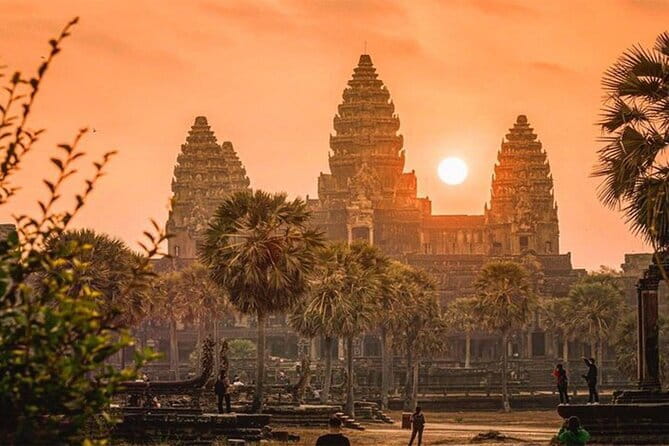
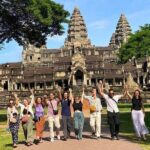
You start at Angkor Wat with roughly 2 hours at the complex. This is the anchor of the day, the place you came for, and having enough time matters because Angkor Wat is full of layers, from major structures to details you might miss if you rush.
The plan also includes cycling through local villages and the forest around Angkor, which helps you switch your brain from temple-only mode to landscape-and-life mode. Instead of arriving, seeing, leaving, you get a sense of how the area lives alongside the ruins.
Drawback to consider: Angkor Wat ticket time and sun exposure can be intense, even in the morning. Wear the right clothing and plan for shade breaks when you can.
Stop 2: Angkor Thom via the South Gate, with Bayon and Key Gate Views
Next comes Angkor Thom, entered through the South Gate. You’ll spend about 1 hour in that zone, moving on to major highlights like Bayon, the Elephant Terrace, and the Victory Gate.
Angkor Thom works best when you treat it like a grid of experiences. You don’t just look at one temple, you move between parts of the walled ancient city. Cycling helps here because it speeds up the transitions between areas without turning it into a checklist.
After seeing several structures, you also stop for something to eat during this portion. That’s an underrated part of the route, because a lot of “temple days” forget that your energy is the limiter, not your curiosity.
Stop 3: Bayon Temple, the Center That Feels Like a Crowd
You’ll get about 30 minutes at Bayon. Bayon is in the center of Angkor Thom and is associated with King Jayavarman VII, built and dedicated to Lord Lokesvara.
Why it matters: the design and placement make Bayon feel like the emotional center of the city. Short timing can work here because Bayon is visually intense. You’ll want enough minutes to see multiple angles without burning the day.
Practical note: bring patience for photo moments. Many areas are busy, and you’ll feel it more at the big focal points.
Stop 4: Terrace of the Elephants, Royal Power in a Single Stop
Next is the Terrace of the Elephants for about 30 minutes. This structure is described as a royal conference hall in front of the royal palace area.
The most useful context to carry here is the elephant symbolism. Elephants were used to transfer kings, royal family, and generals between places, so the terrace isn’t just “decorative stone,” it signals authority and movement.
This stop is a great breather between temple excitement bursts, and it pairs well with the Bayon viewing because both feel like “center of rule” spaces.
Stop 5: Ta Nei Temple, Peace in the Forest
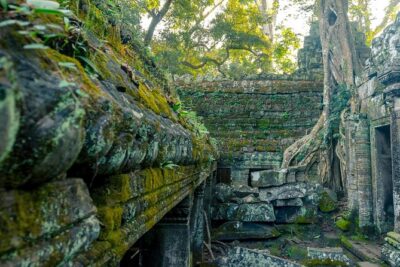
You then cycle through a small forest path to visit Ta Nei, another 30-minute stop. Ta Nei is described as a small complex with a peaceful jungle setting, and that difference is the whole point of adding it.
This is where the day can feel like a reset. After major sites, Ta Nei gives you a quieter, more intimate view of stone and greenery, and your pace slows naturally because the setting asks for it.
Potential drawback: if you’re expecting a major landmark-level spectacle, Ta Nei can feel smaller. Think of it as a calm moment that makes the day feel less repetitive.
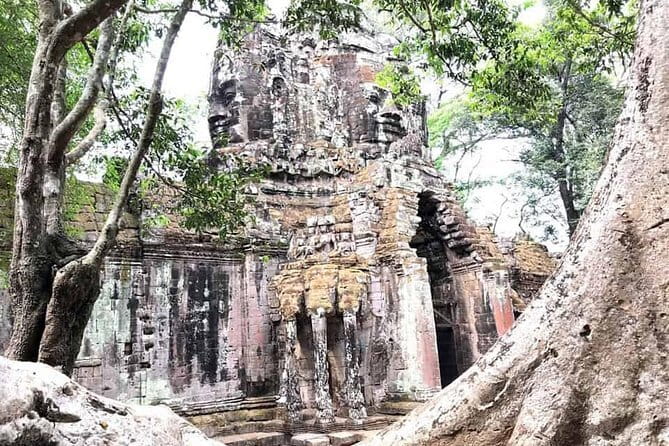
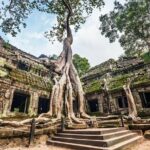
Stop 6: Ta Prohm, the Jungle Temple Everyone Photographs
Next is Ta Prohm for about 1 hour. Ta Prohm is known as the most popular jungle temple in Cambodia, and it has been used as a film location for The Tomb Raiders.
This stop is famous for a reason, and cycling makes the transition feel smooth. You arrive from areas that feel open and structured, then you step into a setting that feels wilder, where trees and stone share the frame.
Timing note: an hour can be perfect for Ta Prohm because you want time to walk around and catch multiple viewpoints, but you also want enough energy to keep the day going strong.
Stop 7: Prasat Kravan, Village Cycling and Local Interaction
Finally, you bike to Prasat Kravan for about 30 minutes. Between stops, you’ll cycle through local villages for local interaction and to learn more about local lives, local living-culture, and traditions.
This is where the tour adds value beyond ruins. Ruins are the headline, but the everyday setting is what keeps your day from feeling like a theme park. A village stop also helps you understand the ruins as part of a living region rather than isolated attractions.
Consideration: village time is often more about conversation than formal sightseeing, so if you prefer “mostly monument time,” you might want to mentally treat this as a cultural add-on rather than a big temple block.
Return Ride: Back to Your Hotel
After the last temple stop and local time, you cycle back to your hotel. The return is built into the flow of the day, so you don’t have to negotiate transport or figure out a final route.
In other words, you finish with a clean ending. You’re tired, but you’re not stuck.
What to Wear and How to Stay Comfortable in Angkor Heat
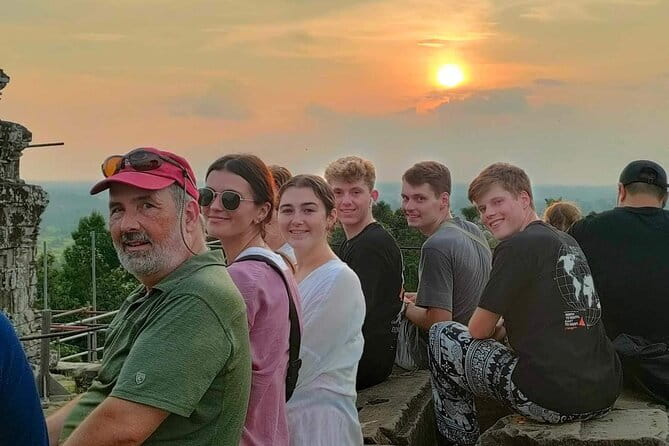
The tour advises that you wear clothes that cover your shoulders and knees. That’s not just about rules, it helps you feel better when you’re moving between sun and shaded parts of the route.
Plan for heat even if it’s not blazing. You’ll be cycling and also spending time at temples, where sun exposure can stack quickly. The tour includes cool water and towels, but your clothing and timing still affect how good you feel.
If you’re thinking of bringing your own gear, prioritize comfort. A breathable top that still meets the shoulder requirement, and shorts or pants that meet the knee coverage rule, go a long way.
Bikes, Safety Gear, and Why the Pace Feels Right
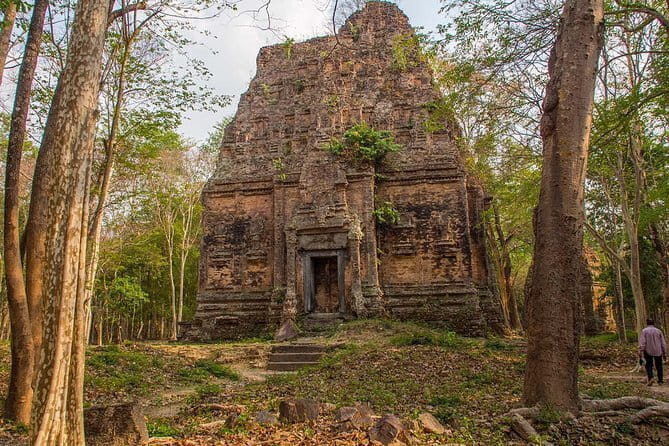
The tour provides safety equipment, and bikes are included. That matters because you’re doing both riding and temple stops in a single day, so the ride itself needs to be predictable.
What I liked in the way the tour is described is the pacing. The tour is private, and your guide plans the route so you can pedal at a pace that suits your group. One review highlighted how safe it felt with a mix of road and trail and a pace that worked for them.
If you’re traveling as a couple, a small family, or friends who want more control than a big-group bus tour, this format tends to click. You get the structure of a guided day, but you don’t feel trapped in one speed.
Who This Tour Suits Best (And Who Might Want Another Option)
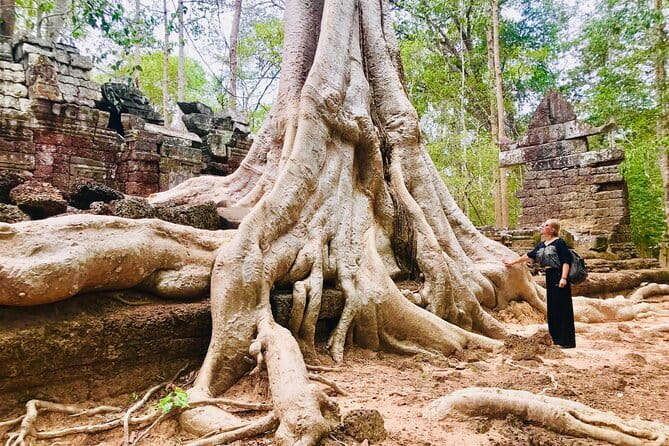
This cycling day fits best if you want Angkor highlights without spending your whole day in lines or trying to piece together transport. It also works if you like a mix of monuments and human-scale moments, because the route includes forest scenery and village interaction.
It may be less ideal if you want only the biggest, most elaborate stops with lots of time at each. The day intentionally rotates several temples, so you’ll see a lot, but you won’t linger forever at any single site.
Also, if you have limited mobility or worry about riding for 6 to 7 hours, think carefully. The tour says most travelers can participate, and the terrain is described as flat, but it’s still an active day.
Should You Book This Angkor Wat Cycling Tour?
Book it if you want a private, guide-led Angkor day that mixes iconic temples with calmer stops, and you value efficiency without feeling rushed. The $49 price becomes more compelling when you factor in bike, English guide, cool towels, and snacks, plus the fact that hotel pickup and drop-off remove a common pain point.
Skip it or look for another style if you’d rather spend your day purely at one or two temples, or if you’d rather avoid the need to manage the $37 Angkor Temple Pass separately.
If you do book, do it with the right mindset. This is a “see a lot, keep moving” day. Wear the shoulder and knee covered clothing, hydrate early, and let the route guide your attention from stone to forest to village life.
FAQ
Is the Angkor Temple Pass included in the tour price?
No. The Angkor Temple Pass is not included. It’s listed as $37 per person and you’ll need it for temple entry.
What time does the tour start, and how long is it?
The tour starts at 8:00 am and runs about 6 to 7 hours.
Does the tour include hotel pickup and drop-off?
Yes. The guide collects you at your hotel and drops you back at your hotel after the tour.
What’s included in the $49 per person price?
Included are the bicycle, an English tour guide, cool water and towels, and local snacks.
About how far will we cycle?
You’ll cycle around 12 miles (20 kilometers) over flat terrain.
Is this a private tour?
Yes. It’s a private tour/activity, and only your group participates.
Do I need to dress a certain way?
Yes. You should wear clothes that cover your shoulders and knees. All safety equipment is provided.
Siem Reap on Two Wheels
- Siem Reap Countryside Bike Tour / E-Bike or Tuk Tuk
★ 5.0 · 935 reviews - Angkor Sunrise Bike Tour / E-Bike or Tuk Tuk
★ 5.0 · 615 reviews - Siem Reap: Bike the Angkor Temples – Full-Day 30km Tour
★ 5.0 · 463 reviews - Siem Reap: Angkor Wat Sunrise Bike Tour & Jungle Breakfast
★ 5.0 · 415 reviews - Siem Reap: Guided Countryside Bike Tour
★ 4.9 · 294 reviews
More Temple Circuits Around Siem Reap
- Angkor Wat Sunrise or Sunset Tour with Guide from Siem Reap
★ 5.0 · 12,109 reviews - Siem Reap: Angkor Wat: Small-Group Sunrise or Sunset Tour
★ 5.0 · 9,444 reviews - Siem Reap: Angkor Wat 2-Day Tour with Sunrise and Sunset
★ 4.9 · 4,429 reviews - Siem Reap: Full-Day Angkor Wat Guided Tour with Sunset
★ 4.9 · 3,803 reviews - Angkor Wat Sunrise tour with Small – Group and Guide tours
★ 5.0 · 3,655 reviews
Angkor Wat, a Few More Ways In
- Angkor Wat Sunrise or Sunset Tour with Guide from Siem Reap
★ 5.0 · 12,109 reviews - Siem Reap: Angkor Wat: Small-Group Sunrise or Sunset Tour
★ 5.0 · 9,444 reviews - Siem Reap: Angkor Wat 2-Day Tour with Sunrise and Sunset
★ 4.9 · 4,429 reviews - Siem Reap: Full-Day Angkor Wat Guided Tour with Sunset
★ 4.9 · 3,803 reviews - Angkor Wat Sunrise tour with Small – Group and Guide tours
★ 5.0 · 3,655 reviews
Just Added: Fresh Siem Reap Tour Reviews
Angkor Wat Temple Tours, compared.
 ★ 5.0Angkor Wat Sunrise or Sunset Tour with Guide from Siem ReapFrom $1812,109 reviews
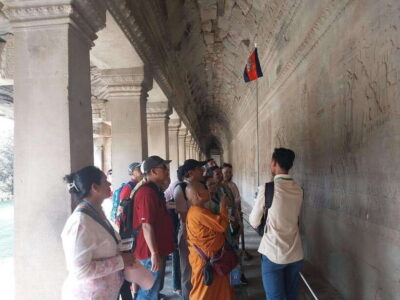 ★ 5.0Angkor Wat: Small-Group Sunrise or Sunset TourFrom $159,444 reviews
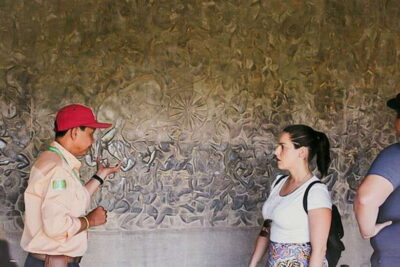 ★ 4.9Angkor Wat 2-Day Tour with Sunrise and SunsetFrom $344,429 reviews
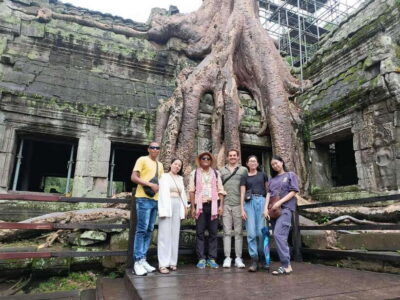 ★ 4.9Full-Day Angkor Wat Guided Tour with SunsetFrom $153,803 reviews
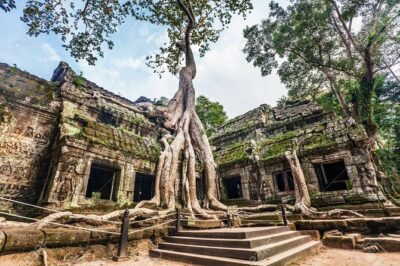 ★ 5.0Angkor Wat Sunrise tour with Small – Group and Guide toursFrom $143,655 reviews
 ★ 5.0Angkor Wat Highlights and Sunrise Guided Tour from Siem ReapFrom $233,213 reviews
 ★ 5.0Angkor Wat Sunset Small Group Tour with Lunch IncludedFrom $203,059 reviews
 ★ 5.0Full-Day Angkor Wat Sunrise Private Tour with Guide from Siem ReapFrom $602,920 reviews
Browse the lists this tour appears in