
Lotus silk turns a calm lake morning into real craft time. I love the hands-on making (you take home what you create), and I love the boat ride through the lotus fields tied to Khmer and Buddhist meaning. One heads-up though, the experience can run well over the stated time window once you count pick-up to drop-off.
This is built around one idea: lotus plants turned into useful things with almost no waste, including textiles, paper, tea, and cosmetics. You also get a clear view of why lotus silk is so rare, from the UNESCO recognition to the fact that the exported fibers support high-end fashion markets. If you are short on time in Siem Reap, schedule this early and keep your next plan flexible.
Key highlights you will actually care about
You make three take-home items: lotus stem paper, lotus fiber yarn, and a seed bracelet.
Boat ride on lotus fields: you glide by wooden boat and learn the flower’s sacred symbolism.
Circular economy storytelling: stems, seeds, and flowers get used for different products.
Price includes a lot: shuttle from Biolab Café plus guided guide time, workshops, tea, and a lotus bouquet.
Small group feel: up to 30 travelers.
Why lotus silk in Siem Reap feels different
Lotus silk is not just a souvenir story. It is a rare Khmer technique that turns lotus stems into fiber, then into yarn and fabric, and it has been kept alive by artisans who pass skills down carefully.
What I like is how this experience treats the lotus as the center of everything, not a decorative background. The production part connects to the workshop part, and the boat part connects to the meaning of the flower. You will leave with a stronger sense of why this craft matters, not just a list of facts.
Another thing I appreciate is the focus on social enterprise. The farm supports 150 women artisans through genuine cultural preservation, not staged performances.
Price and value: is $40 worth it?
At $40 per person, the value depends on what you compare it to. You are not paying only for a guided tour. You are paying for transport from downtown via a round-trip shuttle meeting point, a guided bilingual experience, a boat ride, a tea break, a fresh lotus bouquet, and workshop time to create three items.
Also, you take home three tangible pieces. That is usually where these types of experiences win or lose, because the memory is nice, but the craft in your hands is the real payback.
The only costs you should plan for are optional tips and any purchases from the on-site boutique. If you want to buy lotus silk textiles or jewelry, you can, but you are not pushed into it based on what is included.
The 2.5-hour promise, and the reality of your morning
The activity is listed as about 2 hours 30 minutes. In practice, you should plan for a longer morning because the day starts with shuttle pick-up and ends when you return back to the same meeting point.
A couple of practical tips for your schedule:
- Book this earlier in the day when you can absorb delays.
- Keep your next appointment light, like a casual lunch or a flexible temple visit.
You will likely still feel like you get a lot for the time, since the itinerary is packed, but the timing can stretch beyond the headline duration.
Getting there from Biolab Café: the part that makes or breaks timing
Meet at Biolab Café in Wat Bo Village. The shuttle departs from downtown at 8:30 AM, 10:00 AM, 12:00 PM, and 2:00 PM.
The van is a grey shuttle. You should arrive about 5 minutes early in front of the garden area near Biolab Café, since the plan depends on keeping the group on pace. The tour ends back at the same meeting point, so there is no separate hotel drop-off included.
The group size is capped at 30 travelers, so it feels manageable, not chaotic.
Production tour: where the lotus fiber story starts
The first stop is the production tour, about 30 minutes. This is where you see lotus stems turned into fibers and learn how a circular system works.
You can expect to learn the practical chain of uses:
- Lotus stems become materials for textiles.
- Seeds get used for jewelry.
- Stems also become paper.
- Flowers get used for tea.
The big idea here is waste reduction. The concept is that a single plant can supply multiple products instead of becoming compost after the first extraction step. Even if you do not care about sustainability as a buzzword, it helps you understand why lotus silk is labor-intensive and why it has to be protected as a craft.
Boat ride on the lotus lake: more meaning than scenery
Next comes the boat journey, about 30 minutes. You travel across the lotus fields by wooden boat, moving slowly enough to notice details instead of rushing past them.
What makes this boat part feel meaningful is the connection to Buddhism. The lotus is treated as a sacred symbol tied to purity and transformation, so you are not just floating on pretty water. You also watch flower folding, then receive a fresh bouquet.
This is often the moment people remember most because it is active and visual at the same time. You get to look, listen, and keep moving forward through the story of the plant.
Artisan workshops: making paper, fiber yarn, and a seed bracelet
The main hands-on block is about 1 hour, and you create three pieces using traditional techniques. The best part is that you actually make them, not just watch from the sidelines.
Here is what you will craft:
- Lotus stem paper: stems get transformed into handmade paper.
- Fiber yarn: you spin rare lotus fiber in a traditional way.
- Seed bracelet: you design a bracelet using seeds and beads.
Taking home your paper, yarn work, and bracelet is what turns the day from a lecture into something personal. You can also use your creations as a memory cue later, like when you are shopping in Siem Reap and trying to spot genuine craft work versus mass products.
One consideration: some people feel the workshop can move a bit fast, mostly because the whole tour is packed. If you learn best at a slower pace, keep your questions ready and ask for a repeat of any step you missed.
Tea ceremony in the green garden
After the craft time, you get a break with a tea ceremony, about 15 minutes. You enjoy lotus tea with homemade biscuits.
This part is not meant to be heavy. It is a soft reset after hands-on work and before the final boutique time. You also get a quieter setting to absorb what you just learned, especially the circular economy theme and how each product links back to the plant.
Boutique time: what to look for without overbuying
The cultural boutique is where you browse lotus silk textiles, jewelry, and artisan creations. Since your tour includes making a bracelet and seeing how fiber becomes product, you will likely have better eyes for quality details.
If you are thinking about purchases, do this:
- Compare items to the materials you made in the workshop.
- Decide if you want something wearable (like jewelry) or display-worthy (like textiles or crafted paper).
Since personal purchases are not included, it is a choose-your-own-adventure section. You can browse quietly and still get full value from the tour itself.
Who should book this lotus silk experience
This is a great fit if you want:
- A hands-on craft day rather than another temple circuit.
- An understanding of lotus silk that connects to production, not just the finished fabric.
- A short boat experience that adds meaning, not only photos.
It is also a good option if you like socially conscious travel. The craft work supports a network of women artisans, and the focus is on preserving a technique that could easily disappear.
If you are time-starved, schedule it carefully. And if you care strongly about just one specific component, like only the boat part, confirm your expectations before you go, because the day’s flow can affect what you feel you get.
Practical tips to get more from the day
A few small things will help:
- Bring a water bottle if you get thirsty easily, since the pace is active.
- Wear clothes that you do not mind getting a little messy during paper or fiber steps.
- Keep your next plan flexible if you are on a tight Siem Reap schedule.
- Ask your guide to slow down on the key steps if you miss something, especially during workshop time.
Should you book Lotus Silk Farm: my decision checklist
Book it if you want a morning where you learn, make, float on the lotus lake, and leave with something you created yourself. At $40, the value is strong because so many parts are included: shuttle from Biolab Café, guide time, boat ride, tea, a bouquet, and workshop materials.
Skip or rethink it if:
- You need a strict 2.5-hour block in your calendar.
- You prefer passive sightseeing only, since this is designed around making three items.
- You are trying to fit in too many other activities back-to-back.
If you want an authentic craft encounter in Siem Reap, this one is a solid choice.
FAQ
How long is the Lotus Silk Farm tour?
The experience is listed at about 2 hours 30 minutes. In practice, the time from pick-up to drop-off can run longer.
What is included in the price?
The price includes a bilingual guide, round-trip shuttle from the Biolab Café meeting point, tea (including homemade biscuits), a fresh lotus bouquet, and all fees and taxes. You also create three items during the workshops.
Where do I meet for the tour?
You meet at Biolab Café in Wat Bo Village, Siem Reap. The tour starts and ends back at this same meeting point.
What time does the shuttle run?
Departures are at 8:30 AM, 10:00 AM, 12:00 PM, and 2:00 PM. Arrive about 5 minutes early in front of the garden area at Biolab Café.
What will I make during the workshops?
You make three take-home pieces: lotus stem paper, fiber yarn, and a seed bracelet.
Is the guide available in English and French?
Yes. The guide is available in English and French.
How big is the group?
The experience has a maximum of 30 travelers.
Siem Reap Countryside & Village Tours, compared.
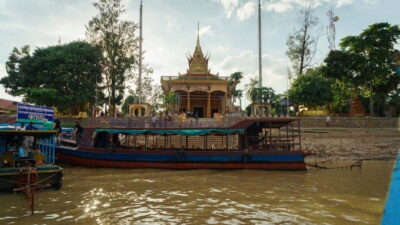 ★ 4.9From Siem Reap: Kampong Phluk Floating Village Tour by BoatFrom $206,979 reviews
 ★ 4.9Kampong Phluk Floating Village Tour with BoatFrom $193,843 reviews
 ★ 5.0Kampong Phluk Floating Village Tour by BoatFrom $201,020 reviews
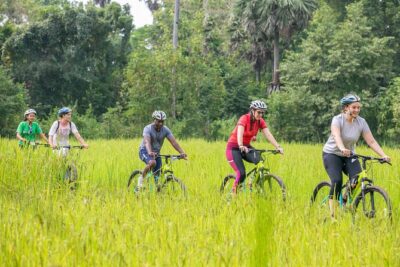 ★ 5.0Siem Reap Countryside Bike Tour / E-Bike or Tuk TukFrom $35935 reviews
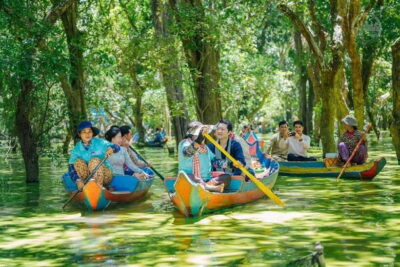 ★ 4.4Tonle Sap, Kampong Phluk & Floating Village TourFrom $17397 reviews
 ★ 5.0Siem Reap Countryside Quad Biking TourFrom $45322 reviews
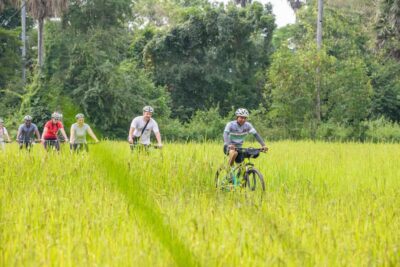 ★ 4.9Guided Countryside Bike TourFrom $35294 reviews
 ★ 4.7Siem Reap Lotus Silk Farm Discovery tour & Lake experienceFrom $20291 reviews
Browse the lists this tour appears in